10 Biggest Video Game Financial Disasters This Generation
Oh, Crackdown 3. We hardly knew ye.

The video game industry, from a financial perspective, is only going from strength to strength. Love them or hate them (but let's face it, most people fall on the latter side of this argument), microtransactions and DLC has resulted in publishers making more money than ever before, while the biggest titles on the market are reaching the largest audience they possibly can.
The dawn of the new generation really reinvigorated the industry as a whole, and it's difficult to remember that, before Microsoft and Sony unveiled their new consoles, many pundits were hypothesising that we could have been heading for another video game crash. That hasn't happened, but it doesn't mean the desire for more sales hasn't become any less cutthroat.
There are more games coming out than ever, and while that means more devs get a shot at success, it also means way more end up in ruin. The worst thing as well, is what constitutes a "financial disaster" these days is rather puzzling. A big title might appear to make a ridiculous amount of money on the surface, but still be a total disappointment for the people who made it, resulting in the franchise being put on ice or, worse, the studios themselves going under.
10. Hitman 1 & 2
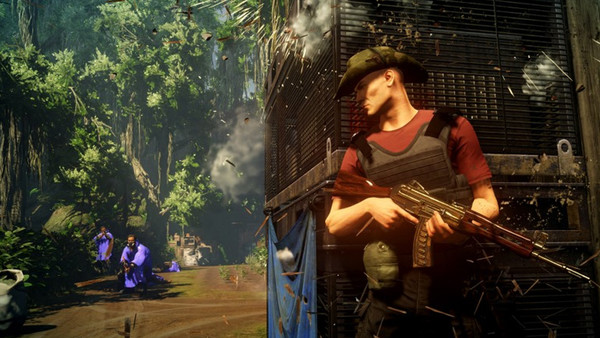
The Hitman franchise just can't catch a break. Despite releasing two of the best stealth games of the entire generation so far, sales figures for both have been incredibly disappointing, for reasons that seem entirely out of the developer's control. The first title's episodic focus both helped and hindered, resulting in sales figures which were initially soft. Launch numbers were down over 90% on the last physical release, Absolution, selling only around 200,000 copies across its first few weeks, but over time as more content was released, recognition was gained.
The second game, however, has no one issue to really point to. After splitting with original publisher Square Enix and moving to WB, the messaging for the sequel was all over the place. A lot of people didn't even know Hitman 2 was going to release as a full game as opposed to episodic instalments, while the marketing in the run up to release was muted at best.
Throw in a ridiculously crowded November launch date, which put it in direct competition with Fallout 76, Spyro Reignited, Pokemon: Let's Go as well as the residual power of Red Dead Redemption 2 and Call of Duty Black Ops IV, and it's easy to see how the sequel was suffocated.
9. The Amazing Spider-Man 2

In the run up to release, it was difficult to find any information on The Amazing Spider-Man 2. Beenox's original title at least had a little bit of buzz surrounding it, with the developers enthusiastically showing off the new swinging mechanics and how they were expanding on the story of the movie counterpart.
TASM 2 seemed to receive no promotion whatsoever, dropping with zero fanfare and without even the basic reviews at launch to let players know if it was any good. Of course, it wasn't, and this title (even more so than most other licensed games) felt phoned in and incredibly sloppy. Despite coming out on next-generation consoles, it somehow looked worse than its predecessor, and the whole thing stunk of contractual obligations rather than anything relating to passion.
As a result, the title sold poorly across its launch window, and to this day has only sold about 750,000 copies. In fairness, that's probably decent for a game nobody knew was coming out and which you actually can't buy anywhere other than second-hand shops now.
8. Battlefield V

While Battlefield V's sales are in the millions, you need to remember that video game success and failure is all relative, and when it comes to the big publishers like EA, even something which sells seemingly well can be viewed as a massive financial failure.
Battlefield V is a victim of this mentality, viewed as a let down for the publisher for "only" selling 7.3 million copies. It sounds ridiculous that a game with those numbers could ever disappoint, but in the context of the franchise as a whole, it's easy to see why. Despite being a sequel, Battlefield V sold only half of its predecessor's take, and launched even behind maligned spin-off Hardline when it came to physical sales.
Perhaps to make it more appealing, EA quickly slashed the title's price and put it on sale, which no doubt helped boost its numbers a little bit. That's a tactic a few disappointing multiplayer games have adopted recently, lowering the price to get more players in, in the hopes of making most of the money on recurring spending and microtransactions.
Still, that didn't help too much, and the game was cited as one of the major reasons EA underperformed in 2018.
7. Overkill's The Walking Dead

Overkill's The Walking Dead has been shambling along since 2014, suffering through one delay after another without any real fanfare. Despite most video game adaptations of Robert Kirkman's comic (that aren't made by Telltale) being piss-poor, Overkill continued to stress how they wanted to deliver a genuinely great co-op shooter that did the source material justice.
Sadly, all sings pointed to that not happening. Even without the litany of delays, Overkill's The Walking Dead was poorly marketed, with its PC release day sneaking up on just about everyone. Unsurprisingly, without any real push the game launched to sales that were below expectations, with the developer's other game, Payday 2, having a higher player count despite being five years old.
At the end of 2018, publisher Starbreeze announced poor earnings and began procedures to cut costs in the future. Then, in January 2019, the console versions of the game were scrapped unceremoniously. By the end of February, Skybound (the owner of The Walking Dead licence) announced they were terminating the contract with Starbreeze and development on the game would be discontinued.
6. Battleborn

Battleborn was supposed to be Gearbox's next big blockbuster. Putting the Borderlands franchise on the backburner to turn to a brand new IP, the project was going head to head with Overwatch (which was launching more or less at the same time), with both titles delivering similar hero shooter goodness.
Unfortunately, the problem was right there, and despite the developers insisting that Battleborn was completely different from Blizzard's world-conquering phenomenon, it didn't really convince players, who were already enamoured with Overwatch. Still, the sales for the game were initially strong, apparently similar to the launch week success of the original Borderlands, but unfortunately it was all downhill from there.
Players quickly dropped off once Blizzard's shooter shipped a few weeks later, and publisher Take-Two commented that sales were below expectations at the end of the year. A year after it launched, the off-peak number of concurrent players on PC regularly dropped below 100, leading to rumours the title could go free-to-play.
Despite the devs repeatedly ruling this out, that's exactly what happened, but it didn't boost popularity, and active support ended a year later.
5. Destiny 2

Throw this in with Battlefield V as a game which made a ridiculous amount of money, but is still viewed as a total financial disaster by those who made it.
Destiny 2 initially made all the right moves. It was clear that Bungie had listened to the complaints players had about the first title, releasing a sequel that amended those past mistakes, introduced a robust story and gave players more content to tackle.
Unfortunately, its monetisaiton issues were absolutely not solved, and the way Activision continued to nickel-and-dime customers eventually turned many of them off. Despite enjoying strong launch sales, retention was far less than the original game, and the player count dwindled even as solid expansion packs were regularly released.
Then came the news that the publisher was disappointed with the title's sales (sales which made it the second best-selling game of 2017), and a few months later, Activision and Bungie had split, with the latter keeping the IP. When talking at their end-of-year shareholder report, reps for the publisher stated the title didn't meet their projections or expectations, and that losing the franchise wouldn't hurt their bottom line too much.
4. Fallout 76

On paper, Fallout 76's 2.4 million copies sold doesn't seem that bad, but in comparison to the other games in the series, and the titles it was directly competing against, it indicates a project that wholly underperformed. The last game in the franchise, Fallout 4, sold an astonishing 15 million copies, while the lowest-performing release under Bethesda's oversight has been New Vegas - a game which overcame its bugs to still sell well over 8 million units.
Of course, a lot of this disappointment had to do with the game's disastrous launch. Mediocre reviews hounded the game, while the myriad of bugs and glitches it launched with made it virtually unplayable for a lot of fans. Consequently, many were skeptical of early adopting, even with a quick price cut by Bethesda.
Many pointed to the lower sales as being down to the shift in sub-genre, with 76 being a live-service multiplayer shooter rather than a straightforward RPG, but that should have actually benefitted the game. These kinda of experiences are incredibly popular at the moment, and that wave of excitement was something Bethesda was clearly trying to capitalise on.
3. Lawbreakers & Radical Heights
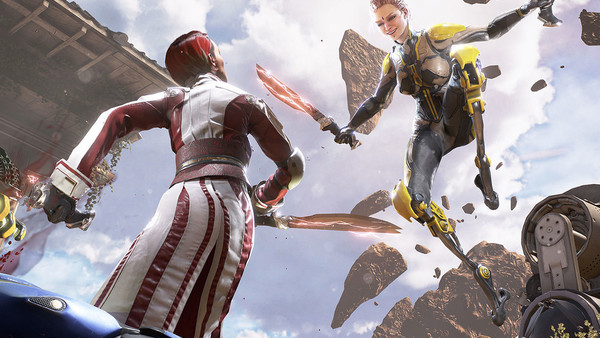
Boss Key Studios was a victim of its own hype. The studio, formed by ex-Epic figurehead Cliff Bleszinski, promised the world with their first game, Lawbreakers. The multiplayer shooter was actually pretty solid, with cool designs, fast, punchy gameplay and compelling heroes to fight with but, as with Battleborn, a little game called Overwatch stole everyone's attention.
Unlike Battleborn, however, Lawbreakers couldn't avoid comparisons to Blizzard's game because it launched prior to it hitting shelves. Instead, Boss Key's shooter shipped one year afterward, meaning that everyone was already entrenched in Overwatch's community to jump ship to a new, unproven title. Consequently, despite the developers explaining that Lawbreakers was different to the competition (and, actually, far better) it sold abysmally and the servers were shut off in 2018.
The studio quickly moved on, this time chasing a trend far more blatantly with Radical Heights, a battle royale title released in "x-treme early access" in order to capitalise on the booming audience. Most players saw it as a cash-grab though, and while it had some great ideas, its extremely unfinished state meant it didn't win over players who already had more robust experiences to dive into.
After these two flops, Boss Key as a whole tragically shut down.
2. Metal Gear Survive

Metal Gear Survive was never going to be successful. Why Konami pushed forward with the franchise, so soon after their public falling out with series creator Hideo Kojima, is baffling, as is transforming the series into a zombie survival game.
It was kind of a case of damned if you do, damned if you don't though: had the developers created a proper sequel, fans would have revolted for doing it without the original team, while a spin-off would avoid this but equally receive ire for being pointless, and losing the franchise's identity.
Either way, only the hardcore of hardcore fans picked up the game out of curiosity, and realised it was essentially just a husk for Konami to shift microtransactions. The game only sold 100,000 copies in its first week on sale, and to this day has an estimated lifetime total of less than 500,000.
Hell, it flopped so hard, Konami didn't even bother mentioning it during the following earnings report.
1. Crackdown 3

Crackdown 3 might be Microsoft's biggest failure of the whole generation. The long-awaited sequel was once intended as a flagship for the Xbox One X, said to make the most of the console's added performance and an example of what cloud technology could do to transform video games. Sadly, that release day came and went, and after a whole bunch of delays, the title was virtually stealth released in February 2019.
Perhaps because they knew the sequel was a disappointment, Microsoft released it with virtually no marketing push, leaving it to die in a window that saw it competing against the likes of Anthem, Metro Exodus, Far Cry: New Dawn, Resident Evil 2 and Kingdom Hearts 3. Consequently, it debuted at a measly number 13 in the UK charts, selling just 10% of what Crackdown 2 did nine years prior.
Of course, the sales data released so far doesn't include digital sales and, most importantly, how the game performed on Microsoft's Games Pass. That latter platform is particularly important, as Microsoft could have been using the exclusive as a way to push subscriptions.
Still, even with that in mind, Crackdown 3's sales have been a total write off.