10 Biggest Xbox Fails Microsoft Wants You To Forget

Cheer up Microsoft. You've done worse things than the Xbox One launch!

You have to spare a sympathetic thought for Microsoft at the moment. Wait! Don't leave an enraged comment just yet and hear me out. Microsoft screwed up in a big way with the Xbox One, running quite possible the worst console marketing campaign in history and showing a brutal disregard for gamers in their pitch. But they've adapted and they've listened, making an unprecedented number of post-launch changes to their existing ethos that suggest they're really trying to make amends; backwards compatibility, streaming between Windows and Xbox, and bolstered support for indie games among other things. Yet unforgiving gamers that we are, we're just having none of it. So in a twisted-logic way of diverting the spotlight away from Microsoft's current console woes, here's a look at all the other calamities and catastrophes that Microsoft has imparted on their console over the years, dating all the way back to the launch of the original Xbox back in 2001. It's worth saying that Microsoft wouldn't be worthy of having its many flaws highlighted if it wasn't a giant of the video game industry. To think that the same guys who were best known for the dry functionality of Windows made one of the most successful series of consoles in the world is pretty spectacular... ... but let's save the kowtowing for another day. Fails are, by their very nature, way more fun than successes (isn't humanity wonderful?), so here are the biggest ones suffered by all outings of the Xbox consoles.

11. Original Xbox Controller

Awww, look at that. For the original Xbox, Microsoft designed the first ever console to accommodate the hands of people suffering from gigantism. Good thing regular-handed gamers will get smaller controllers though, right? Right, Microsoft? Nope, the original Xbox controllers were monstrosities that looked like a pair of stumpy legs with a swollen sagging gut hanging down between them. It looked a bit like the Dreamcast controller, but just... wrong. The only thing that could've redeemed it would've been if that useless oversized Xbox logo in the middle was actually a giant button that you could smash with your fist when it glowed green to launch a nuke on the game world, no matter what you were playing; the slavery and injustices of the Morrowind world getting you down? Just nuke the damn place. Getting destroyed in a game of Halo? Blow it all up. It's not like Microsoft was entirely unaware of how cumbersome their original console controller was, as they released the 'S' controller (similar to the X360 controller) in Japan upon release. Did they carry out some kind of anthropometric study to find that Japanese people had particularly small hands? Not that it mattered anyway, because no one in Japan bought an Xbox, while western gamers had to do rigorous hand Yoga each time they played Halo.

10. External HD-DVD Player For The Xbox 360
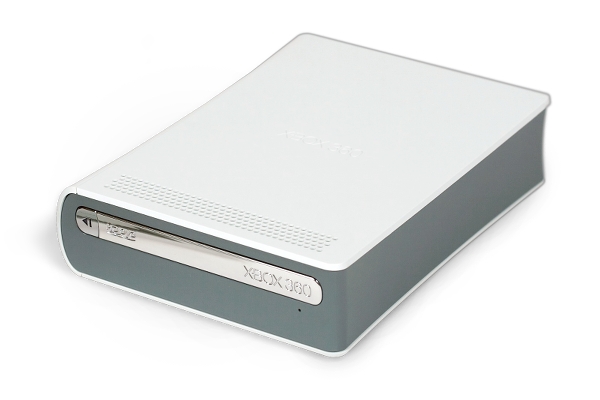
One of the things that gave the Xbox 360 the edge at the start of the last-gen console war was the fact that it came in at a cheaper price than the PS3. This was partly because Microsoft was selling Xbox 360s without Wi-Fi cards, decent hard drives or access to online gaming, but also because they didn't include an in-built video disc player. You had to splash out $200 on an official external HD DVD player instead. You may vaguely remember HD DVD in the same way that you remember Betamax cassettes if you're an old-timer, or UMDs if you're a newer-timer. It was the optical video disc format supported by Toshiba and Microsoft - whose HDi implementation was used for the menus and interactive elements of the discs - and the main rival to Blu-ray, which emerged around the same time. HD DVD was a slightly inferior format to Blu-ray, and its cause wasn't helped by the fact that it wasn't built into the Xbox 360, while the integrated Blu-ray player on the PS3 is essentially what shot the Blu-ray format to fame. HD DVD was all but redundant by 2008, just a couple of years into the X360's eight-year lifespan, while Blu-ray went on to flourish. This was almost certainly one of the reasons that the console war swung in the PS3's favour in the later stages.

9. Xbox One As A TV-streaming device

Never in the history of video games has a PR campaign for a console been so supremely botched as that of the Xbox One. It was tragic, it was comical, it was unbelievable. The whole mess was perhaps best exemplified by Microsoft's fixation on making the Xbox One a device for 'everyone', which entailed presenting it as a TV-streaming device rather than, y'know, a games console. Getting extremely carried away with the fact that games consoles were beginning to double as pretty nifty media centers, Microsoft talked way more about the Xbox One's ambitions in the TV-streaming market than it did about games. They babbled on about how people would be able to 'interact' with their favourite TV shows using the Kinect (because every loves the Kinect, right?), watch shows while talking to people on Skype, or check their fantasy sports team standings while watching a match. In their attempt to make the Xbox One more appealing to 'everyone', Microsoft not only failed to do so but also alienated their core demographic - gamers - in the process. It's telling that Microsoft's in-house TV studio, Xbox Entertainment Studios, shut down shortly after the announcements, with Microsoft desperately hoping that people would soon forget this whole episode ever existed. But this moment should never be forgotten, so future console manufacturers can always look back and see what happens when they ignore the simple needs of the gamer.

8. Microsoft Kinect

Sneaking a look over at the runaway success of the Nintendo Wii, Microsoft can't be blamed for thinking to themselves "We can do that". So while Sony went off and made the light-up dildo that was the Move controller, Microsoft went for something a bit more ambitious - and infuriating - in the form of the Kinect. The idea of a motion controller in which you didn't actually need a controller was kind of neat, until gamers realised that this meant they had to get up off their asses and move their arms around like a low-level mime artist, or flap them manically like a skydiver whose parachute failed to open. It utilised advanced camera sensors, a microphone, and plenty of other pricey tech (to the tune of $150), but it just didn't know what to do with them. Before anyone actually realised they didn't want the Kinect, 8 million of the devices were sold within its first two months of release. So far so good, until it became clear that the only games being released for it were family games and fitness trainers that felt like knock-offs of equivalent, more established games on the Nintendo Wii. None of the major publishers were interested (apart from reluctantly chucking in pointless Kinect gimmicks like the referee in FIFA 15 hearing your swearing and punishing you accordingly), and the Kinectshould'vebeen left to fade into obscurity. But Microsoft foolishly refused to throw in the towel, and carted the Kinect out for a comeback attempt just a few years later...

7. Xbox One Price/Bundled Kinect

When Microsoft announced that it was selling every single Xbox One console with a Kinect included, you could almost laugh it off as a perverse joke. Not only did this raise the price of the Xbox One to $100 more than the PS4, but there was a good chance that you already owned the damn thing and would now have to buy it again. The Kinect was pretty much the bogeyman of the Xbox One, with its all-seeing eye and all-hearing mic looming over the console like some spectre scaring everyone away from buying the console. It could be a bedtime tale told by Sony to people considering buying the Xbox One ; "Don't buy the Xbox One, otherwise the Kinect will rip you off and watch you while you sleep". Thankfully, Microsoft seems to be getting over its severe case of brainfart and has recently unbundled the Kinect from the Xbox One. But is it too little, too late to turn the tide in this console war?

6. Xbox SmartGlass

Come on, rack your brain and try really hard to remember what SmartGlass is. After all, it was only released back in 2012, still technically exists, and continues to be supported by Microsoft. No luck? Understandable. SmartGlass is a companion app for the Xbox 360 and Xbox One, which uses your smartphone or tablet as a second screen for an extremely limited number of games and TV shows. It's not technically the worst idea in the world, but if the Wii U proved anything it's that people like to keep their eyes glued to the main screen when gaming. All the (few) games that implemented SmartGlass did so in a half-assed way, like Halo 4 letting you look at match stats, or the Game of Thrones app which let you look at information about the show while, erm, you're watching the show. Yes, there's a definite flaw in logic there... If they found a way to use SmartGlass in a similar way to the brilliant Pip-Boy app for Fallout 4, that inventory screen in ZombiU, or even in the way that iPad syncs seamlessly with Apple TV, then it could yet serve a purpose. But it's now been over a year since any game has implemented the feature in any way, so it looks set to go the way of the HD-DVDodo.

5. Xbox 360 Without Hard Drives, Wi-Fi Or Online Access
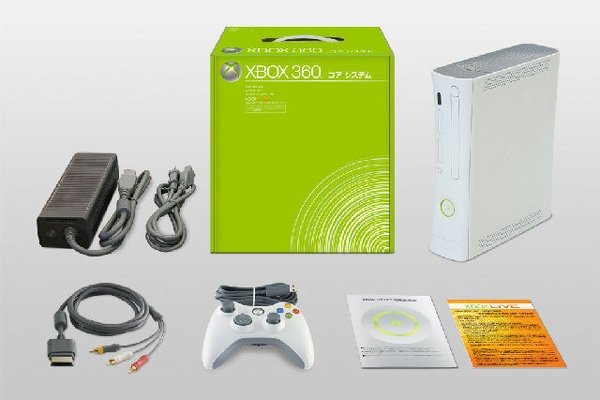
The basic 'Core' models of the Xbox 360 were cheap upon release. Very cheap. At a paltry $300, it felt like a steal to gamers, until they actually looked at what was contained inside. The Core version of the Xbox 360 came without a hard drive (presumably gamers at the time still thought that this wouldn't be an issue, having been used to memory cards until that point), no Wi-Fi, and of course no access to online gaming unless you paid for an Xbox Live subscription. It also came with a wired controller rather than a flashy new wireless one, and no new-gen video disc player (but hey, an external HD-DVD one would only set you back $200!). Paying for these mostly-essential extras would add at least another $150 to the Xbox 360 price, and the majority of gamers didn't realise that their Core consoles to be virtually unusable without things like hard drives and an online subscription. The Xbox 360 Core was the most piecemeal console ever released, requiring connectors and wires for all its little extras, making it a tentacled monstrosity of a console once you got all the bits. Add the HD-DVD player to the mix, and you're looking at the X360 costing around well over $500, with number of wires and cables sticking out of it making it look like it was on a life support machine.

4. Rare's Ruin

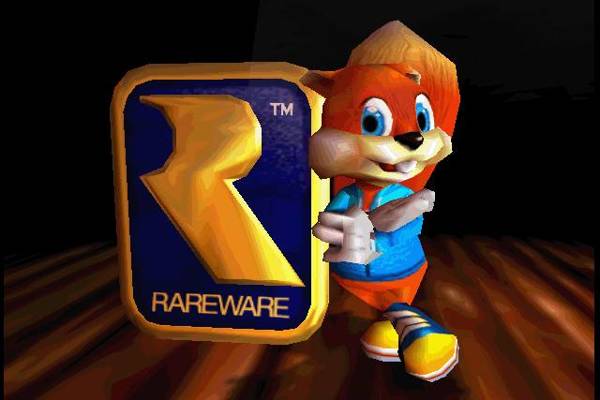
Rare was the golden child of the fifth console generation. Its N64 roster was legendary, and helped propel the console to historical greatness despite its technical defeat to the PS1 in its console war. With a games catalogue including the likes of Goldeneye 64, Banjo-Kazooie, Perfect Dark and the entire Donkey Kong Country series, plenty of N64 fans made the jump to the Xbox 360 after Microsoft announced that it had bought Rare out. Expectations were high that Rare had a bright future on the Xbox 360. But it was not to be. Rather than continuing to support Rare and help them evolve, Microsoft assigned them to HD remasters or remakes of classic games like Conker's Bad Fur Day, Banjo-Tooie and Perfect Dark. While the games were fine, fans were left wondering when they'd see a true new Rare game on Microsoft's console. The best we got out of Rare in their X360 tenure was Banjo-Kazooie: Nuts & Bolts - an OK-ish platformer that wasn't nearly as memorable as its predecessors. Adding insult to injury, Rare was given the uninspiring task of working on vapid Kinect Sports games for the past few years. The recently-released 30-game Rare Replay bundle for the Xbox One is some consolation (albeit no Goldeneye), but it looks decreasingly likely that we'll see Rare recapture their form from the N64 days.

3. Always-On Internet, Mic and Kinect
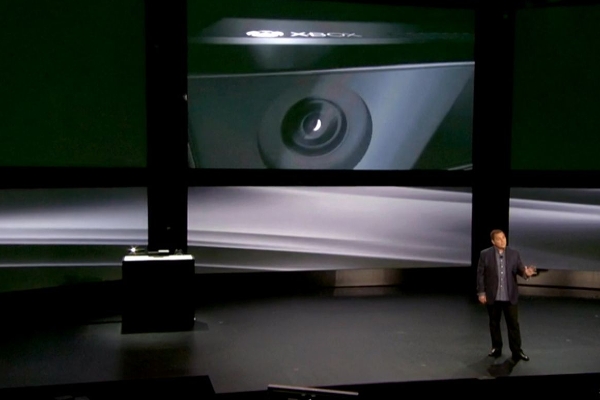
With the Snowden revelations about government surveillance seemingly proving that all those crackpot theories about our governments were correct, it wasn't a great call by Microsoft to announce that the Xbox One was going to require an always-on internet connection, and monitor you with its always-on Kinect camera and mic. The whole idea not only felt creepy and paranoia-inducing, but outright authoritarian. As a clunky means of DRM, if players were offline for longer than 24 hours, then crucial features such as your cloud-dependant saved games would be locked down until you reconnected. If you logged in on your account on someone else's console, then you'd get locked out of any games associated with that account after an hour of being offline (or logged out of your account). It felt very messy, and overbearing. The mic on the Kinect was also intended to constantly listen out for player commands as long as the console was switched on. The camera, meanwhile, wasn't going to be always on, but would switch on when you were in relevant games or apps, and would send certain image data of you to Microsoft's cloud. Unsurprisingly, this triggered a freak-out pandemic in the gaming community, who forced Microsoft into yet-another u-turn on their pre-release Xbox One promises.


2. Xbox 360 As A Disc Shredder

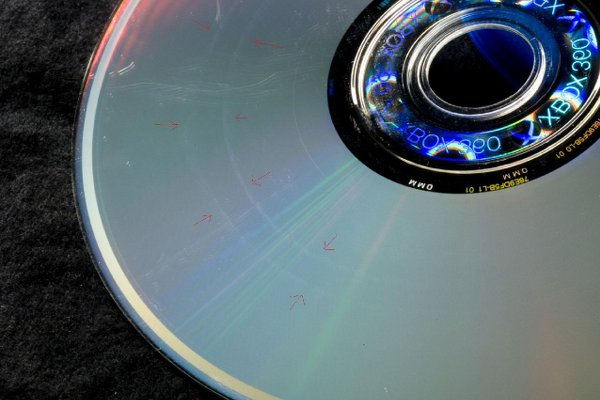
It should be some consolation to the Xbox One that it's not responsible for what's undoubtedly the worst thing Microsoft have ever done. In a bid to outrace Sony and their PlayStation 3 to the market, Microsoft released the Xbox 360 in an unfinished and stable state. Early Xbox 360 models were plagued by fatal problems, among them the disc-scratching fiasco, where it was found that many X360 DVD drives weren't properly designed to keep game discs in place, so if you stood your console in an upright position (as was the rage since the PS2 days), there was a good chance your disc would come out looking like you'd used it as a dog frisbee; on the bright side, once this happened you genuinely could use it as a dog frisbee, so at least there'd be some use for your ruined $60 copy of Gears of War. But there was an even bigger problem plaguing the Xbox 360. Something... worse. Something... redder.

1. The Red Ring Of Death

Microsoft The Red Ring of Death - sounds terrifying, right? In the first production run of Xbox 360 consoles, huge numbers of gamers (between 23% and over 50%, depending on which survey you looked at) reported their X360 seizing up, with the only sign of life from the console coming in the ominous form of the power button flashing red. It's now common knowledge that this dreaded light signifies that your X360 is finished, toasted, fried. But hey, at least that meant you'd get a new model that hopefully didn't double up as a DVD shredder. Also, wasn't it thoughtful of Microsoft to build a light into the console that specifically signalled that your console is dead? It's almost like they knew it was going to happen all along! While it's hard to quantify just how damaging this event was to the Xbox's reputation, you have to suspect that this could've had just as much to do with with the Xbox One's poor sales as its catastrophic PR campaign. Know of any other Xbox disasters that you want to share, or do you believe that Microsoft has learned from its mistakes and that the future looks bright? Leave a comment and let us know. Or why not have a crack at writing for us yourself?

In this post: 
Xbox
 
Posted On: 
Contributor
Contributor

Gamer, Researcher of strange things. I'm a writer-editor hybrid whose writings on video games, technology and movies can be found across the internet. I've even ventured into the realm of current affairs on occasion but, unable to face reality, have retreated into expatiating on things on screens instead.