10 Clear-Cut Examples Of Video Game False Advertising
Whats a few bald faced lies when you've got video games to sell!

False advertising is a pervasive issue in video games; it's almost impossible to explore promotional material in games without coming across something that either won't make it into the final product or is nothing like what you are seeing on screen.
While mostly harmless, video games miselad the public more often than we would like. Sometimes it's so bad that they require lawsuits to sift through all the lies. No matter the level of deception, i think we can all agree that video games get away with misleading their audiences far too often.
So here we are, ready to hold video games accountable and shine a light on their shady practices. Gathered here are the times video games pushed the lines and tried to trick you into buying something that might not even exist. Some are a cheeky bit of misdirection, while others were so bad they made Steam change the rules of its platform.
10. Assassin's Creed Valhalla

Lets start of small, and by small we mean completely pointless. In a truly strange attempt to mislead audiences, Ubisoft took the stage at Microsoft’s inside Xbox event, announcing to an excited crowd that they were about to get a first look into Assassins Creed Vallhalla’s gameplay.
When the trailer began, fans were eager to see the gameplay for the newest title in the Assassin’s Creed Series. This eagerness quickly turned to disappointment as it became quickly apparant that this grand gameplay trailer, didn’t actually have any gameplay in it.
In the scale of false advertising this is a small offense, but it's also an extremely pointless one. Ubisoft didn’t need to claim this trailer was a gameplay trailer; they could have just released it as another cinematic trailer. Either they were looking to stir up controversy or they really think fans are stupid enough to believe it. Either way it's a bit insulting.
9. Final Fantasy 7 Remake

Moving on from pointless lies to a bit of cheeky misdirection. You probably know what we are talking with this one but just in case, there are some major spoilers ahead! Skip this one if you want to remain unspoiled, okay? Lets go! The original Final Fantasy 7 is an immensely popular game, with many people considering it a contender for greatest game of all time. So, when the FF7 remake was announced there was a lot of pressure.
With all of the expectations placed on the game, Square Enix were eager to market the game as a remake. Pushing the narrative that this would be a high definition recreation of the original content, with the gameplay being updated while everything else remained faithful.
Then upon the game's release, audiences were surprised to see changes to the story. At first these were mostly just small additions, exploring existing characters with new side missions and a few new cutscenes. This is the case until the end of the game, when it is revealed that the entire game has been a build up to changing the story of the original and making a new adventure going forward. No matter how you feel about this change, it certainly isn’t a faithful remake.
8. Halo 5: Guardians

Once upon a time the Halo series was the pinnacle of the first-person shooter genre. With its unique combat and a multiplayer that carried the Xbox for years, Halo was truly Microsoft’s golden goose.
Despite this, in recent years the Halo franchise has suffered a fall from grace and nowhere is this more apparent than the mess that was the advertising for Halo 5. The promotional material for the game showed multiple story elements that did not appear in the actual game, while the story that did appear in the games was complicated nonsense that confused newcomers and fans alike.
Aside from the story being largley unintelligable, the trailers for the game built up a series of big dramatic battles between new character Locke and franchise staple Master Chief. While the two do eventually fight, it's a boring fistfight with none of the drama that was promised.
7. Destiny

If you think that the disappointment of Halo 5 could have been avoided if only the game was still made made by Bungie, you might be forgetting the early days of Destiny. Bungie’s Sci Fi epic had a lot of expectations. Audiences were excited to see the next big game from the once great Halo developers, the gameplay looked great and the developer’s history gave them a pedigree in Sci-Fi first person shooters.
When the trailers released, the game was presented as a large story driven adventure in which you play as a guardian exploring the galaxy and battling enemies. This image was consistent across the entire promotion of the game.
When the game actually released it was about as exciting as Peter Dinklage’s vocal performance. The massive story turned into a series of loosely connected, live-service style missions and the aliens became a generic evil entity. Named very originally – wait for It – The Darkness.
6. Star Wars Battlefront 2
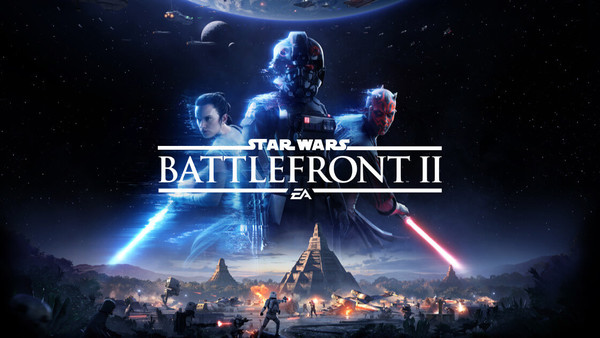
Electronic Arts are infamous for their anti-consumer practices, a trend the publisher unfortunatley brought to their licensed Star Wars games. Especially Star Wars Battlefront 2. The game quickly found itself in controversy due to it's extreme implementation of micro-transactions.
But EA didn’t even wait until the game was out to start misleading audiences. The publisher claimed before release that the game's campaign would focus on the villainous empire, showing the galactic conflict from their perspective and allowing the players to explore the Star Wars universe from a brand new viewpoint.
This was true, for three whole missions. Then the Special Ops squad you play as promptly joins the heroic rebels and player’s dreams of playing as the bad guys were shattered.
5. Alien: Colonial Marines

Hard to believe now, but when it was announced people were very excited about Aliens: Colonial Marines. The trailers were an exciting mixture of both the horror and action that makes the Alien franchise so beloved. The graphics, lighting and AI all looked perfect.
Then the game released, and reviewers and fans quickly discovered that the game from the trailer and the game they got were two very different things. Instead of a tense environment with a clever Alien, players were given a generic first-person shooter where waves of aliens would hurl themselves into gunfire. When they weren’t aggressively glitching instead.
The final product was so different to what was advertised that Sega and Gearbox studios found themselves served with a lawsuit with the plaintiff claiming that the game was such a departure from the trailers that people had been misled into buying it.
4. Anthem

Who remembers Anthem? Before Marvel's Avengers was stinking up the live service scene, EA and Bioware's Anthem was disappointing audiences worldwide. The game had a long and troubled production, spending the majority of its 7 year development changing its concept and bouncing from team to team.
In 2017, EA released their gameplay trailer for Anthem, very little of which actually made it into the final game. The trailer showed a dynamic world with seamless loading times alongside an active world with moving bases and unique background events going between the various species.
Of course when Anthem finally released it contained next to none of these features. The "campaign" was a series of repetitive, loosely connected missions, coupled with a multitude of technical glitches. To make matters worse, what was presented to audiences as a gameplay demo was actually a proof of concept for the game, far from representative of the final product.
3. Killzone 2

This one finds itself so high on the list due to the fact that not only were audiences misled, but the developer of the game themselves didn't know what was coming. As usual in the lead up to the release of a new console Sony made a lot of big promises coupled with flashy trailers. It's just a shame that these were, more often than not, empty.
In the run up to the release of the PlayStation 3, Killzone 2 was announced with a very graphically impressive (for the time) trailer. The trailer was run and the Sony announcer at E3 claimed that what audiences were seeing was running in real time on the PS3.
Of course, this was not the case at all, the footage shown in no way represented the final product and wasn't even a trailer for the game! It was proof of concept footage. To make matters worse, the developer Guerrilla studios was not aware this claim was going to be made. Sony decided to present test footage to audiences as a representation of the final product, both game and console
2. No Man's Sky

At this point No Mans Sky is more closely associated with false advertising than anything else. Across the game's development, a lot of very large promises were made, with the game's developer Sean Murray saying the game was capable of just about everything.
And then the game actually released. And Sean Murray's rich arrray of promises fell flat. The vast universe was definitely there, but it was mostly a large, empty, procedurally generated space with little to engage players. And those were just the promised features that actually made into the game.
The game made so many false promises, that it found itself on the receiving end of a lawsuit for false advertising. Alongside this it became the most negativley reviewed game in Steam history and actually made the platform change their refund policy, specifically for No Man's Sky. The only reason No Man's Sky doesnt find itself at the top of this list is because it eventually fixed the majority of these issues. Unlike our next entry.
1. Fallout 76

You knew this one was coming and my god where to even start. Bethesda’s live-service, multiplayer, fallout game was not well received... by anyone. The game itself, despite being marketed as a large, detailed exploration of the fallout universe, was actually a glitch-filled barren mess that failed to please the few people who actually bought the game.
To make matters worse, Bethesda couldn’t seem to stop lying to it's fans. With the collector’s edition of the game leading to the infamous nylon bag fiasco; an exclusive canvas bag promised to those who bought the $200 collector’s edition of Fallout 76. Who were instead given a cheap tacky nylon bag that looked nothing like the bag that was advertised.
And Bethesda were not done. They released an exclusive Rum with an iconic Nuka-Cola bottle for the low, low price of $79.99. Which of course was a deception, with the Nuka-Cola bottle being a cheap plastic casing for a standard glass that certainly didn't contain $80 dollars worth of rum. And after all this Bethesda compensated victims of its lies with 500 atoms of in game currency. Which for reference isn’t even enough to buy the in-game version of the bag they lied about.