10 Famous Video Games That Started Out As Something Else Entirely

In gaming, change is constant. And we're not talking about quarters...

The development of video games can be a rather curious thing. Usually, when writing a novel, filming a movie, or scripting a comic book, there is generally an idea of what the end goal is in mind. Certainly, changes happen throughout the creative process, but to our recollection, no one has set out to make a Batman movie and changed it to Zorro midway through. Video games, on the other hand, are a bit of a different story. By their very nature, they lend themselves well to on-the-fly alterations both great and small that can lead to drastically different results in the final product. Sometimes a game with no particular iconography in mind will be deemed a good fit for a particular popular franchise, or perhaps the changes made in a sequel are so great that it's determined that spinning it off as something else altogether is the way to go (and, with any luck, leading to two big hit franchises). Maybe a familiar face will be added to another work to boost its visibility in the marketplace, or it could be removed as a matter of failed negotiations. Anything can happen between the time work on a game has begun and when it goes to market, and the results may astound you. Here are ten of the most famous video games which started out as something else entirely.

10. Super Smash Bros.

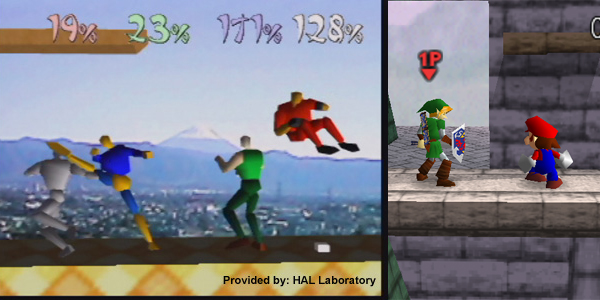
Super Smash Bros. is well known the world over as one of Nintendo's top titles, series, and franchises. And why shouldn't it be? After all, where else are you going to find such a wide variety of stars from other top Nintendo series throw down in a knock-down drag-out fight? Mario vs. Link! Donkey Kong vs. Bowser! Ice Climbers vs. Fox McCloud! Pokemon vs. Pokemon! ...okay, maybe not that last one so much. But it wasn't always this way. In the game's earliest days of development, it went by another title: "Kakuto-Geemu Ryuoh", or "Dragon King: The Fighting Game". If that sounds like a funny name for a Nintendo all-star mix-up (as though "Super Smash Bros." isn't), well, you'd be right. Instead of featuring every big name from throughout Nintendo's considerable history, Dragon King featured... none of them. Satoru Iwata, the then-future president of Nintendo, and Masahiro Sakurai originally worked on it, seeking to create an alternative to the two-dimensional fighting games which were "crowding out the market" at the time. So how did the inclusion of established Nintendo characters come about? Believe it or not, with great reluctance. According to Sakurai in an edition of "Iwata Asks":
I asked to use Nintendo characters since it was so hard to accurately convey to the players the atmosphere of the gaming world where they play a fighting game on home console. You have to have some main characters in a fighting game, and when you line up character 1, character 2, character 3 and so on, the main characters end up blurring together. With a game for the arcade, it€™s okay for character development to take a backseat since players are content with the fighting. With a fighting game for the home console, however, you have to set up the general image or the atmosphere of the gaming world right from the start or else the game suffers. That€™s why I asked to use Nintendo characters.
"Nowadays, we take it for granted, but at the time, people had reservations about mobilizing an all-star cast of characters," Iwata added, noting that even Nintendo fans were at first wary of the prospect. How things have changed. Word has it that the game was originally never planned to leave Japan, and now it is a worldwide hit which features not only a growing roster of Nintendo stars, but third-party characters such as Sonic the Hedgehog, Solid Snake, Mega Man, and Pac-Man as well!

9. Devil May Cry
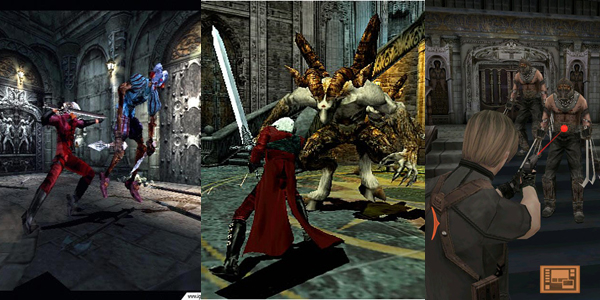
Compared to the overhaul of Super Smash Bros., Devil May Cry went relatively unchanged from its early days to when it was released. In fact, the biggest change of all was arguably to the title, as well as its place in the Capcom multiverse. Originally, producer Shinji Mikami and director Hideki Kamiya actually began working on the game as the fourth installment in Capcom's hit survival horror series, Resident Evil. In contrast to the earlier titles in the series, the goal was to make what was then going to be Resident Evil 4, a "cool" and "stylish" action game. On the way to making it so, the protagonist, Tony, had superhuman abilities granted to him by biotechnology. Kamiya felt that the mission of "cool"/"stylish" was being held back by Resident Evil's fixed camera angles and pre-rendered backgrounds, leading to an overhaul in how those were presented. Ultimately, the style just wasn't working - for Resident Evil's survival horror roots, anyway. As a result, Mikami convinced the staff that the game was better off being its own entity, leading to elements such as Umbrella founder Lord Ozwell E. Spencer and the biotechnology being removed. The rechristened hero Dante would go on to fight in a world full of demons, rather than bio-engineered zombies, in the newly retitled Devil May Cry, whose popularity was such that it became its own franchise. However, that still left Capcom short one Resident Evil sequel. After more tries working around concepts starring Resident Evil 2 protagonist Leon S. Kennedy, with a shift in genre echoing the previous attempt to move away from survival horror and more towards action was repeated. Mikami oversaw its development as well, and took steps to set it apart from the series entries which came before, including a new over-the-shoulder viewpoint and the removal of Umbrella as a central focus. The changes paid off, as Resident Evil 4 sold like hotcakes across numerous platforms, while Devil May Cry gave Capcom two hit franchises instead of one.

8. Final Fight/Street Fighter II

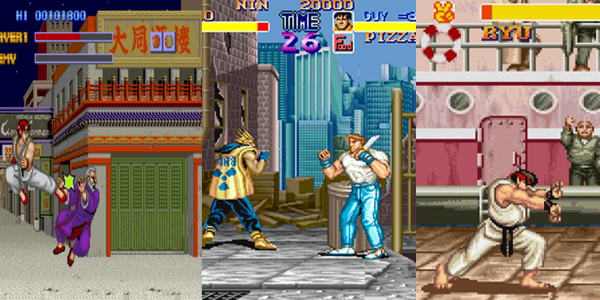
Before Street Fighter II, there was Street Fighter. This stands to reason, but despite the immense popularity of the sequel, many are unfamiliar with the original game. Though not the most popular game in the U.S. at the time, perhaps owing in part to early versions' pressure-sensitive buttons that were prone to breaking, it did well enough in Japan to warrant a sequel. However, the mindset which went into making a video game sequel back in the late 80's was a bit different than it is today, and those games would often be quite different from the first installment to bear the name. Case in point: Zelda II: The Adventure of Link, Castlevania II: Simon's Quest, and Teenage Mutant Ninja Turtles II: The Arcade Game, to name but a few. Street Fighter would be no different... at least, to start. Already in development when the original Street Fighter was released, the "request" from Capcom's sales division for another title in the line led to the Double Dragon II-inspired brawler Yoshiki Okamoto and his team were working on to be dubbed "Street Fighter '89" at trade shows, but the arcade operators were wise to it, calling foul in that the game was nothing like Street Fighter. This resulted in the side-scrolling beat 'em up to be redubbed "Final Fight," which went on to achieve its own success. While that went on, Okamoto's team would go on to create the "true" sequel to Street Fighter, the success of which no one could have imagined. "Before we even began work ," said Okamoto, "I thought Street Fighter II would be a big hit. At first I thought it would be just as successful as Final Fight, but I had no idea it would be this big." The shared lineage of the two games has become ever-more prevalent over the years, with Street Fighter characters appearing in the background of Final Fight sequels, and more significantly, Final Fight characters such as Guy, Cody, Sodom, Hugo, Poison, and more joining the ranks of the World Warriors.

7. The Final Fantasy Adventure/Secret Of Mana
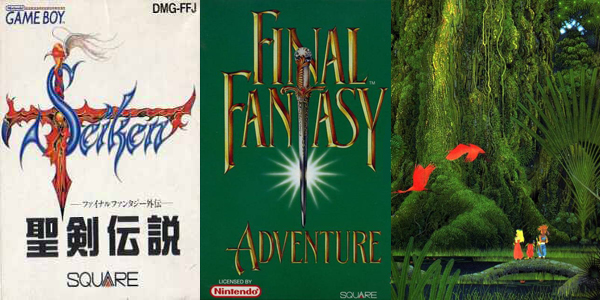
What's in a name? As Final Fight demonstrated, quite a bit. In the case of Final Fantasy Adventure, though, what it used to be is quite a bit more interesting than what it became. Marketed in the west as a Final Fantasy game, the Japanese title was Seiken Densetsu: Final Fantasy Gaiden. What makes this interesting is that while it was indeed a Final Fantasy spin-off, it's the other part of the title that would hold greater significance with time, as it marks the first game in what would come to be known in the west as the Mana series. Thus, when players in the west got their hands on Secret of Mana on the Super NES, few (if any) at the time likely knew that what they were playing was actually a sequel to a Final Fantasy game which had already arrived in the years prior. Since then, the total number of Seiken Densetsu/Mana games has risen to 11, with most making it out of Japan, but only the most well-read fans of the series know where it truly began.

6. Banjo Kazooie

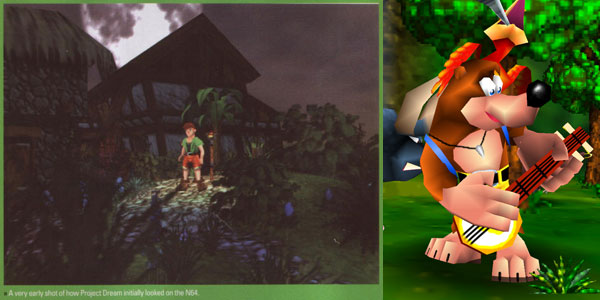
Originally a Super NES role playing game, the title which was at one time known as "Project Dream" saw more than the bit count change as it was moved to the Nintendo 64. The game's protagonist, a boy named Edison who would wield a wooden sword, was given the boot for being "too generic" in favor of a secondary character: A honey bear named Banjo (though not before trying a rabbit first). Various other roles would be switched around as well, with a giant Gruntilda becoming the main antagonist and the original villain, Edison's rival Captain Blackeye, being cast aside until the sequel. Meanwhile, the shift to a more Super Mario 64-inspired action game saw a rise in prominence for the other half of the game's titular duo. Originally a baby bird with a small role who was found by Edison's little sister, Ella, Kazooie would go on to become a constant traveling companion for Banjo. At first the developers had different appendages appear from Banjo's backpack to serve different functions, such as wings to allow for double-jumps and a pair of skinny legs for fast movement. Before long, they decided that these parts could all belong to another character who rode around in the backpack, and so Kazooie was (re)born. We may never know if Edison could have achieved success by fighting pirates, but it's hard to argue with success. Banjo and Kazooie went on to star in an Nintendo 64 sequel, a Game Boy Advance spin-off, and even went racing with Diddy Kong. Even after Microsoft acquired Rare, demand for the duo's return was high into the Xbox 360 era. At that point, though, Rare attempted to reinvent the wheel - literally, resulting in Banjo-Kazooie: Nuts 'n Bolts, which brought about a new look, a vehicle-creation mechanic, and a mixed reception among fans.

5. Star Fox Adventures

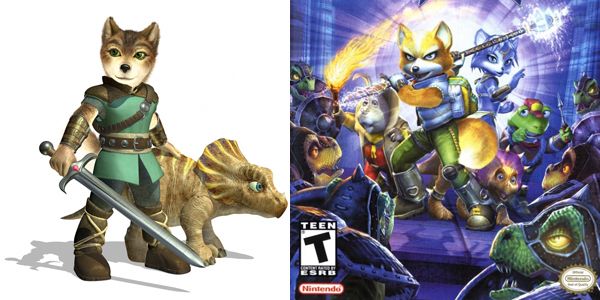
The game known as Star Fox Adventures originally went by another name: Dinosaur Planet, a Nintendo 64 title which had no ties to Nintendo's popular series of 3D space shooters. Instead, players would be able to switch between the sword-wielding Sabre (seen above, with Tricky the dinosaur) and a blue female cat named Krystal. After seeing the game running on the Nintendo 64, Nintendo's Shigeru Miyamoto commented on how nice the game looked, but noted that Sabre bore a strong resemblance to none other than Fox McCloud, and that he wished they would use Star Fox characters so that they could call it "Star Fox Adventures." With that comment and a remark about making a call to the team, it's apparent he did just that. Among the many tweaks and fixes used to make the game fit into the Star Fox universe, one of the most significant would be changing Krystal from a cat to a fox, setting her up as a potential romantic interest for series lead Fox McCloud. This would indeed play out in future games, with some endings in Star Fox Command featuring the two with a family. Overall, there was disappointment among the Rare staff working on the game, though they also saw the potential brought on by the Star Fox license. Along with a switch to the GameCube around the same time, Star Fox Adventures became quite a different game from what the developers originally set out to create.

4. Conker's Bad Fur Day

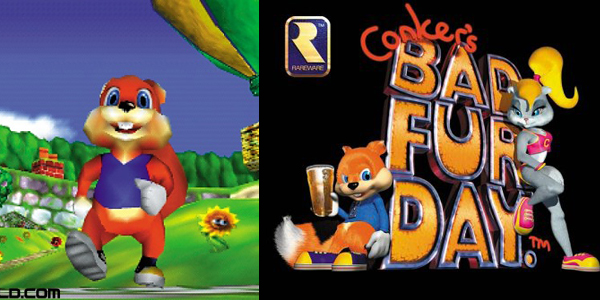
No one who had seen the early images of Conker's Quest (later renamed Twelve Tales: Conker 64) could have imagined that the cutesy squirrel character from the same studio that brought us Donkey Kong Country and Banjo-Kazooie would turn out something like Conker's Bad Fur Day. But it was fear of comparison to such titles as those as "yet another cute platformer" which led the developers to perform a South Park-inspired overhaul. Interestingly enough, Conker already had one previous title to his name under the old aesthetic in Conker's Pocket Tales for the Game Boy Color. Lighthearted and designed to appeal to a general audience, the lackluster reception seemingly validated Rare's worries and justified the dramatic switch to a game so heavily M-rated that Nintendo Power refused to cover it and KB Toys refused to carry it, while advertisements ran in the likes of Playboy magazine instead. Even in its homeland, Nintendo of Europe wouldn't touch the game, leaving it to be published there by THQ instead. Unlike Pocket Tales' tepid reception, Conker's Bad Fur Day was a hit with critics, and is still remembered fondly to this day for some of its crude humor, not the least of which being the musical number by The Great Mighty Poo (warning: NSFW). Plans were underway for a sequel, but then Rare was bought up by Microsoft, and so they went about working on a remake of Bad Fur Day instead. Originally called "Conker: Live & Uncut," what was originally going to be a fully-uncensored version of the title actually wound up being more sanitized than Nintendo's in some ways - and at Microsoft's behest, no less, as it eventually made its way to market as Conker: Live & Reloaded.

3. Pikmin

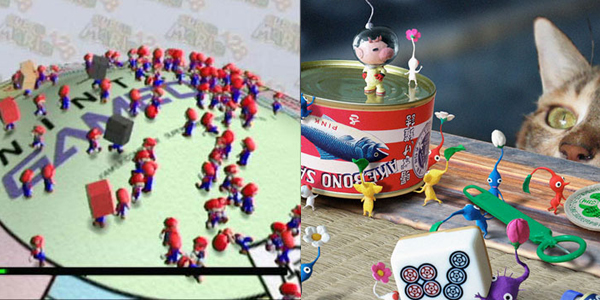
At Spaceworld 2000, Nintendo revealed a tech demo for a project called "Super Mario 128." The demonstration showed off a number of different technological experiments Nintendo was working on in the hopes of incorporating them into future games, with eyes set on a sequel to Super Mario 64. Perhaps the most prominent feature was the presence of 128 different Marios running around at the same time, attributed to the "rapid generation" feature of the technology. Following Spaceworld 2000, people were constantly asking "what ever happened to Super Mario 128?" Finally, at the 2007 Game Developers Conference, Shigeru Miyamoto ended his keynote by answering the question with "most of you have already played it," the screen behind him revealing Pikmin. Pikmin was not the only beneficiary of Super Mario 128's experiments, though. Its "sphere walking" tech and other aspects were put to use in titles such as Super Mario Galaxy, and are rumored to have been incorporated into some aspects of Metroid Prime and The Legend of Zelda: Twilight Princess as well.

2. Super Mario Bros. 2

Dokidokipanic Supermariobros2 Of the items on this list, perhaps no other is more famous - or infamous - than Super Mario Bros. 2. Its transformation is the stuff of legend: As Nintendo set about reviving the video game market in the United States, Mario Mania was sweeping the nation. Super Mario Bros., the title packed in with many a Nintendo Entertainment System, was a monstrous hit. Naturally, Nintendo wanted to keep the momentum going with a sequel, but there was just one problem... The game called "Super Mario Bros. 2" in Japan could also be described as monstrous, but not as a hit. Essentially a super-hard expansion for those who'd mastered the original game (later dubbed "For Super Players" for good reason), Nintendo of America was worried that not only would the game appear outdated next to contemporary releases, but that it would also jeopardize the franchise's future popularity by proving too difficult and inaccessible. Challenge was a good thing, yes, but Japan's Super Mario Bros. 2 took it to an extreme that they were unwilling to subject the company mascot's reputation to, with features that some might generously call "unfair." Throw in that the video game market was still recovering from the crash, and an alternate solution needed to be found. Nintendo of America then looked to another project that Mario creator Shigeru Miyamoto and his team had been working on, one which incorporated Mario-like elements but had also later added a group of Arabian-styled characters from Fuji Television's Yume Kj '87 event called Yume Kj: Doki Doki Panic. Director Kensuke Tanabe and his crew set to work changing and improving the game from its Japan-exclusive Famicom Disk System release to an NES cartridge release for America. The Arabian family was removed in favor of the Mario Bros., Toad, and Princess Peach (nee Toadstool). Among other things, animations were made smoother, music was adjusted and even replaced accordingly, new enemies were added, the ability to run with the B button was incorporated, and of course, the heroes now shrunk when reduced to one heart. The difficulty was also tweaked slightly, with final boss Wart requiring six vegetables to defeat instead of the original four, the ability to switch characters frequently included, and requiring only one playthrough to see the ending. Super Mario Bros. 2 proved to be a smash hit, with parents driving from state to state in an effort to track down a copy of the initially hard-to-find game. It would also prove to be the definitive version of the game, released back to Japan as Super Mario USA and included in Super Mario All-Stars, the Super Mario Advance line (with further tweaks to make it even more Mario-like), and numerous releases on Virtual Console across Nintendo's Wii, Nintendo 3DS, and Wii U platforms. Meanwhile, numerous enemies from the game have stuck around, as did Luigi's taller redesign and flutter-jump and Peach's floating ability, among other things. Though it was originally released as a licensed game, it seems that from early on, this title was always destined to be a Mario game in the end.

1. Donkey Kong/Popeye
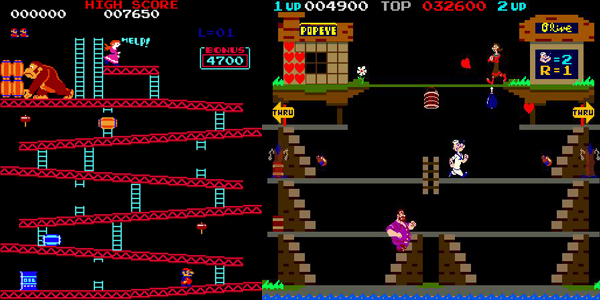
Super Mario Bros. 2 may be the most well-known story on this list, but it must be closely rivaled by what is undoubtedly the most influential. It's no secret that Nintendo of America gambled and lost on an arcade game called Radar Scope, ordering more units of the game than it could ever hope to sell, especially when Space Invaders-like games weren't quite as popular outside of Japan. Nintendo of America head Minoru Arakawa reported back to his father-in-law, Nintendo Co. Ltd. head Hiroshi Yamauchi with the bad news, and he put head engineer Gunpei Yokoi and young industrial designer Shigeru Miyamoto about creating a replacement that could still use the Radar Scope cabinets. They set about creating the new game, and hopes were that Nintendo could secure the rights to Popeye the Sailor Man from King Features for the title. "I sketched out a few ideas for games using Popeye," Miyamoto recalled in an Iwata Asks interview. "But while I can't recall exactly why it was, we were unable to use Popeye in that title. It really felt like the ladder had been pulled out from under us, so to speak." "At the time we were at a loss as to how to proceed. Then we thought: 'Why not come up with our own original character?'" Why not, indeed? So going back to the drawing board, Miyamoto made a monkey - or rather, a gorilla - out of Bluto, while Olive Oyl took on a more Fay Wray style as the damsel Pauline. And instead of Popeye the Sailor as the hero, Miyamoto created a short carpenter (who would later take up plumbing, among many other occupations) named... Mr. Video. At least, before taking on the name Jumpman and ultimately Mario. "If he had been called 'Mr. Video,' he might have disappeared off the face of the earth," Miyamoto said, laughing. Of course, Donkey Kong became a hit, and basically put Nintendo on the map as a major player in the video game business. Without King Features pulling the ladder out from underneath Nintendo and forcing them to create their own wholly-owned franchise characters, who can say where they - or video gaming on the whole - would be today? But that's not the end of the story. Call it luck, call it fate, irony, or happenstance, but eventually Nintendo did in fact get the license to do a Popeye video game. Rather than a reskin of Donkey Kong, though, Shigeru Miyamoto and Genyo Takeda set about creating a whole new experience which involved Popeye catching hearts while dodging the advancing Bluto and the Sea Hag, and it hit arcades in 1982. In the end, Nintendo got to have their spinach and eat it, too. --- So there you have it: Ten of the most famous video games which started out as something else entirely, undergoing changes big and small to become the classics we know and love today. But of course, there are surely more than just this humble assortment, so feel free to slap on your favorite gaming trivia hat and share some we didn't include in the comments below.

Contributor
Contributor

Former Nintendo Power writer, current Nintendo Force writer. Wrote the book on Mega Man (The Robot Master Field Guide). Was once fired by Vince McMahon. Dabbles in video games, comic books, toys, and fast food curiosities. Once had a new species of exotic bird named after him. It died. You can find more of his writings, musings, and other such things on his websites at Nyteworks.net.