10 Hugely Influential Video Games (That Made Everything Worse)
The drawbacks of being popular.

The problem with being an innovator of something new is that everyone immediately wants in on it.
At first, it's flattering. After about... ooh, the ninth imitation of it, the gimmick wears thin.
The examples on this list are not necessarily pioneers of their respective genres. It's just that, at some point in development, some fresh new mechanic or play-style was incorporated into the mix. On release, it blew gamers and critics alike away, breathing life into stale franchises or same-old tropes.
Massive in-game ride-along scenes, revolutionised combat systems, Quick Time Events and, dare I say it, microtransactions.
But of course, when something strikes oil, everyone immediately rushes to that same spot to bleed it dry. What was once an exciting new way to play a game descends into the same formulaic copycats for the next few.
Now, there are some that take the new mechanic and do it better. Which is inherently a good thing. It's just for every massively influential game we get a myriad of knockoffs, exploited gimmicks and ripped-off ideas.
So, with that in mind, let's have a look at the highly influential games that gave us new ways to play... and the subsequent strife these new gimmicks caused.
10. Halo: Combat Evolved - Limited Weapon Carrying

Combat Evolved by name, combat evolved by nature, the first Halo took an age-old concept in first-person shooters and adapted it to be somewhat realistic.
By that, I mean they realised that carrying an entire military arsenal on your back was impractical, thus limiting it to your two favourites instead.
And from a realistic perspective, it does make sense. The idea that you can run out of ammo, grab another gun off the floor on the fly and continue blasting does work in some scenarios.
But when you've got a few shots left in your sniper rifle that you want to keep, yet you know that rocket launcher will be useful in the upcoming, open environment, it creates a tough call.
Bioshock Infinite, Max Payne 3, even Bulletstorm, a game designed for weaponised fun, made you pick and choose at intervals. Where's the harm in just keeping all of your guns at once? I get that it raises stakes in tricky situations, and it worked for Halo, but still...
Thankfully, recent games like Doom and Wolfenstein have brought back the old school methods of "carry as much as you like".
9. Mass Effect 3 - Tacked-On Multiplayer Gimmicks

Mass Effect 3 isn't the first example of shoehorning a multiplayer component into a predominantly single player game. Dead Space 2 did a year before, as did Assassin's Creed: Brotherhood before that.
Heck, even Bioshock 2 got involved... but no-one cared.
The difference is, if it didn't affect the story, people could take or leave it.
Mass Effect 3's did though, with the effort in multiplayer affecting your Galactic Readiness for the final battle in the story. Oh, and it had microtransactions, for some extra salt in the wound.
The problem is... it was actually quite good, as horde-based squad shooters go. Playing with different builds and alien races with friends was a blast.
But because it proved popular, other developers saw to cramming multiplayer modes into games that didn't require it. The Last of Us' one seems somewhat ironic, when you think about it.
I get it, I can see why publishers want to add replay value into their games. But tacking multiplayer on is a concept no one really asked for.
Luckily, it's a dying breed. The novelty has worn off.
Anyone remember God of War: Ascension's failed attempt?
8. Resident Evil 4 - Interactive Escort Missions

Escort missions are just the worst, aren't they?
I have enough trouble looking after myself in a game, let alone being responsible for the safety of others.
So when Resident Evil 4 forced us to engage in when Ashley should move or not, that was just grating. I don't want to micromanage when she should hide in a bin or not: take it as read, if I'm shooting something you should be hidden.
But apparently Capcom didn't get the memo, as their next zombie title, Dead Rising has just the worst escort system going. Honestly, I still hear "Follow me!" in my nightmares.
Any time a game forces escort missions on you, yet gives the characters independence, it reminds me of Natalya in GoldenEye. Ol' bullet-seeking Natalya.
Resident Evil 4 gets all the praise for the right reasons, but it will have a little red cross by it for popularising the interactive escort mechanic again.
Then there was Dead Island, Metal Gear Solid 3, even the Fallout games have their moments.
Please, please stop making me look after other people.
7. Shenmue - Quick-Time Events

Quick Time Events, used sparingly, are a great way to keep players immersed and attentive. Usually during cutscenes, to stop them nipping off to make a cuppa and missing plot.
Shenmue popularised these back in 1999, and they weren't necessarily hated then. Alright, they weren't exactly praised either, but we accepted it as a core mechanic.
Well, until just about every game afterwards starting exploiting QTE's. Now the mere mention has people raising their fists and yelling "Shenmue!" into the night sky.
David Cage is the worst for this. I get that he wants to make "interactive dramas" but... come on, man, I don't need to micro-manage every joint manipulation of my character. Oh, I do? Yay...
When used on odd occasions, they can be fun. To keep you on your toes in an intense scene, preventing Spider-Man from bungling in a burning building, for instance.
Pressing X to Jason though, that was the real nadir of the mechanic.
You know they've outworn their welcome when God of War, a series rife with them, toned it down for its reboot. Take lesson, other developers.
6. Team Fortress 2 - Accidentally Birthing Microtransactions

If there were any example of mislaid intention, then this entry sums it up perfectly.
Microtransactions. Dirty word, isn't it?
There's nothing worse than paying top dollar for a game, only to find out there's insidious in-game purchases littered throughout. You know who's to blame for that though?
Team Fortress 2.
It may not have had them at launch, but in 2011 Valve added a cosmetic microtransaction system. Purely optional and aesthetic, completely harmless. What danger could a new hat bring?
The problem is, greedy publishers then saw the EArning potential in this (heh), and thus the boom of "in-app purchases" and "pay to win" mechanics spread like wildfire.
What started as fun, optional cosmetic dalliance became such a horribly rooted practice across many platforms. It's only in recent years that these have been heavily dialed down, yet they still lurk about.
It wouldn't be fair to blame Valve though. How were to know that a fancy hat for your Medic would spawn something much worse?
Nine years on and we're still reeling from it.
5. Diablo III - Always Online DRM

Diablo III made waves back in 2013, mostly for its poorly implemented always-on Digital Rights Management concept. SimCity 2013 also had a similarly bad time with it, too.
Once ironed out, it's not an inherently evil concept. It's more to maintain that players are playing legitimate copies of games in an aide to crackdown on piracy, after all.
It's when it started being incorporated in games that didn't need it, that's when it got the real grief. Step up, Square Enix, as you are champions of this nonsense.
Hitman's 2016 world and progression system is vast, with unlockables being tied to both story and character level progression. So to log in and play a bit when your internet's down, only to find that your progression is tied to always-on DRM was absolute hogwash.
Ubisoft are guilty too, meaning you can't play any Ghost Recon: Wildlands with spotty internet, lest you be kicked out of your solo adventures repeatedly.
Tying always-on DRM to single player feels like punishment, as if the insistence on multiplayer overrules wanting to play by yourself. The added fear of losing everything if your internet is down isn't fun, either.
4. Street Fighter IV - Paying For New Fighters
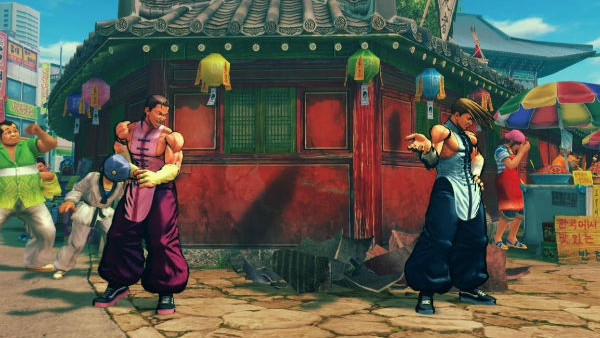
Remember the good old days of unlocking new characters in beat 'em ups? The tests of strength against bosses to have them on your roster, the playground whispers of secret criteria to unlock others.
Well, you can thank Street Fighter IV for diddling that up the way in favour of paying more, real money to get them instead.
Now, to its credit, SFIV was an incredible return to form after its eleven year hiatus. Across its iterations, I've put 300+ hours into it. But even I can see that having to buy newer versions or character packs is sheer corporate greed.
Could Tekken and Mortal, the last bastions from that era hold true to the old logic and remain faithful?
No, of course they couldn't. To experience the full Mortal Kombat 11 story, if you bought on launch, will run you nearer to £100 with the release of Aftermath.
Dragonball FighterZ, Granblue Fantasy: Versus... they're all in on it. Gone are the days of just unlocking fighters, now you're expected to fork out real money. It's even worse when it's older characters making a return.
3. Uncharted - Intrusive Scripted Sequences

Whether you love or hate the Uncharted franchise, you've got to begrudgingly admit they know to put on a good show.
Collapsing trains, tumbling out of planes, intense jeep rides and more, Nathan Drake's adventures are never dull.
The problem is, that bar the occasional low-level input, a lot of the major beats are merely scripted sequences that'd probably be more fun to actually play. Stopping the action to make me climb a small section of ladder doesn't feel right. It should be the other way around. Let me do the cool stuff and you take control of the climbing.
The other problem is that similar games in the genre started doing this too.
Tomb Raider, considering the forebear to Uncharted, even got in on it with its 2013 reboot. Once or twice, at crucial story points, is absolutely fine, but watching Lara go through unnecessary and lengthy pitfalls constantly got boring after the first few. Final Fantasy VII's remake had a smattering of them too: why not let us play out these scenes instead?
I get that developers want to show off in-game engines, especially with the decline of FMV over the years. But taking the control away from the player in a video game is boring, and ultimately insulting too.
2. Batman: Arkham Asylum - Detective Vision
You either die a hero, or you live long enough to see every new game steal your unique selling points.
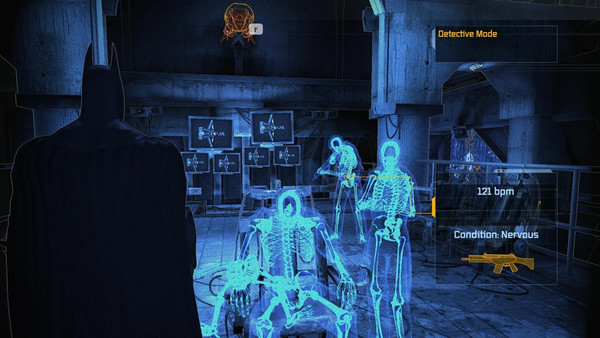
Combining both Bruce's detective and combat skills perfectly, Rocksteady rewrote the script on how these could be done. Batman's Detective Vision spiced up clue hunting and predator planning, whilst the initially easy yet wonderfully balanced combat system made it fresh and exciting.
It made sense for Batman to have a miniaturised x-ray device in his cowl, but it didn't make sense to why Lara Croft could do it. Or that Agent 47 suddenly develops precognitive skills in Hitman: Absolution.
Suddenly, seeing-through-wall-o-vision was the new cool, despite it not making any sense why others would be able to do it.
The combat though, I'm slightly torn on.
On one hand, it took us away from the Assassin's Creed early model of hammering one enemy at a time. On the other, every third person game with a melee game had this new three-button system.
Sleeping Dogs, Shadow of Mordor, and Mad Max, to name a few.
Whilst I personally love it, having a carbon copy wears thin when used over several titles.
1. Gears Of War - Cover-Based Shooting
If I wanted to spend my life looking intently at walls, I would have become a brick layer.
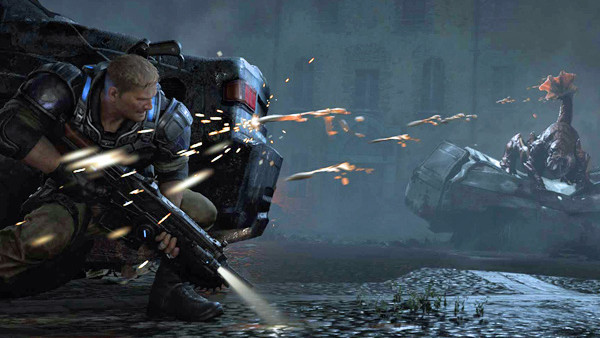
Operation: Winback and Kill.Switch may have coined the mechanic, but Gears of War threw cover-based shooting into the spotlight. It reinvented the third-person shooter genre, throwing out the old "stand there and tank hits" concept with this pseudo-tactical mechanic.
Initially, it was great.
And then, it was everywhere.
Every shooter had to had a cover mechanic. Inversion, a game that let you turn gravity on its head, had one. Hunted: Demon's Forge, a fantasy adventure, had a cover mechanic shoehorned into it.
When done properly, it works. It's perfectly natural to want to hide when sharp things are trying to hurt you. Killzone was the worst offender, as cover in a first-person shooter just had you staring at walls ad nauseum. At least Rainbow Six: Vegas switched perspectives to make it more exciting.
As I say, it's not an inherently terrible concept. It's been doing the rounds before Gears popularised it. It's just that when Epic's shooter hit, everyone wanted a piece of hiding from the action.
Watch Next
The Ultimate Uncharted 2: Among Thieves Quiz
