10 Iconic Video Game Features Needlessly Cut Out Of Sequels
The reason 343's Halo games haven't felt right? Dual-wielding.

Creating a great video game that's a hit with fans and critics alike is nigh-on impossible, but crafting a sequel that lives up to expectations is somehow even more difficult.
While, yeah, the groundwork has already been completed, the push and pull between innovating and addressing problems - while at the same time being aware of not straying too far from what people enjoyed so much in the first place - can lead to sequels either playing it too safe, or tinkering with features that were totally fine in the first place.
In the most extreme cases, developers might not even totally understand why a feature resonated with players in the first place, viewing it as something that "wouldn't be missed" if it ended up on the cutting room floor going forward.
Consequently, whether it's down to a simple, misjudged creative decision on the studio's part, or a mandate which clearly came from a publisher after a focus test in an effort to attract more players, there are some beloved parts of games that were pointlessly discarded between sequels.
10. Arcade Mode - Street Fighter V

Despite releasing seven years after the previous instalment, Street Fighter V shipped with markedly fewer features than its predecessor. Planned as a live service that would allow Capcom to release a slew of content in the years following the sequel's release, it meant the base version felt incredibly light on content, something which critics and fans alike took aim at.
Sure, the core fighting was as solid as ever, but that didn't mean much when there weren't enough modes to keep it engaging. Especially if you weren't a fan of the title's multiplayer (or simply didn't enjoy getting your a** handed to you on a regular basis), there wasn't much for offline players to indulge in, as there wasn't even an Arcade Mode - the conventional, tiered single-player mode that comes as standard in most fighting games - never mind a full-blown story.
It was eventually added just under two years later with the release of Street Fighter V: Arcade Edition, but by then it was too little, too late.
9. Looting And Upgrades - Mass Effect 2

Unlike the slight jump between Mass Effect 2 to Mass Effect 3, the difference between Bioware's original RPG and its seminal sequel was gargantuan. From combat to exploration, pretty much every core feature and mechanic was tweaked in some way to make for a more streamlined experience. For the most part the radical changes paid off, but in a few areas, scaling back and cutting elements impacted the role-playing element.
Customisation options in particular took a huge hit. In the original, you were inundated with items every single time you dropped down to a planet's surface, from different kinds of weapons, armour and ammo that all had subtle variations to their stats and aesthetics. That was embraced by the fans, of course - after all, what's an RPG without a whole load of loot to find and tinker around with? - but the inventory system itself made managing this gear difficult.
However, rather than focus on making this feature better in the second game, Bioware decided to torch the whole thing. You could still customise Commander Shepard to an extent, but the amount of options to choose from were about a single percent of those included in the original release. It might not be a big deal in isolation, but at the time the removal of loot felt indicative of the game's overall move away from its RPG roots.
8. Dual-Wielding - Halo: Reach

Although the original Halo games pioneered the idea of a two-weapon limit, the earlier titles at least made the limitation feel less restrictive thanks to dual wielding. It might not be the most practical, but what's the point in being a badass, super-human space marine if you can't jump around the battlefield with guns in each hand like you're in a John Woo movie?
It made for the kind of ridiculous, over-the-top action that other shooters like Battlefield and Call of Duty were trying to move away from, and it helped make Halo 2 and 3's multiplayer suites so fun.
Sadly, though, when it came for Bungie to develop their swan song title in Halo: Reach, they dropped the mechanic entirely, and 343 wouldn't pick it back up when returning to Master Chief's journey with the fourth and fifth instalments.
The reason was probably due to balancing the weapons more fairly for multiplayer, but that meta excuse didn't do too much to explain why the strongest warrior Earth had to offer suddenly couldn't hold a gun in each hand.
7. The Timer - Dead Rising 4

Dead Rising 4 is the black sheep of Capcom's zombie franchise. Despite a marketing campaign playing on nostalgia fans had for the original game's protagonist, Frank West, the developers totally undermined their own angle by tearing out everything that made it so beloved in the first place - including Frank's original voice actor.
The most controversial change was removing the countdown timer, which had acted as the backbone of every release before it. Though Dead Rising has always been a sandbox experience, it's differentiated itself with the timer it places on players, establishing a unique rhythm in the balance between total zombie freedom and sticking to a schedule of missions. This (along with the specific save game areas), ensured each release had something of a survival-horror edge to it, and a real learning curve that needed to be mastered to achieve the perfect ending.
Without it, Dead Rising 4 became just another open-world game lost in a sea of open world games. The sequel had other problems, for sure, but by taking out the timer, the charm and drive that defined the previous games was lost, and a key part of what made the series so unique went along with it.
6. No Knife Or Hiding Bodies - Splinter Cell: Conviction

While there were a lot of great ideas in Splinter Cell: Conviction, which was intended to be something of a soft-reboot of the classic stealth franchise, in their effort to make the gameplay more streamlined (which is a common design philosophy behind many of the games on this list), Ubisoft ended up reducing the tactical options players had to complete levels.
Sam Fisher's knife was one of these casualties, a close-quarters weapon that aided ammo conservation and taking out guards silently. Conviction didn't really need a weapon like this - here, Sam was more of a predator than a ghost - preferring to headshot guards with silent pistols or bash their heads into toilets to take them out.
This, alongside the inability to hide the bodies of victims so they couldn't accidentally be stumbled upon by other enemies, made it clear that Ubi's new version of Splinter Cell had an entirely different approach to "stealth", and wasn't concerned with giving players a bunch of items and gadgets to get through levels undetected.
5. Car Customisation - Need For Speed: Hot Pursuit

Car customisation has always been a major part of Need for Speed's appeal. Especially back in the Underground era, the series embraced the early-2000s obsession with kitted-out cars that were mostly made out of neon lights than anything else, allowing fans to go nuts and create the craziest, flashiest, most garish vehicles their imaginations could come up with.
After those releases came and went, and car aesthetics became less fashionable than raw horsepower and handling, the franchise began to distance itself from its mad customisation roots, eventually doing away with these options altogether in 2010's Hot Pursuit.
The series had always been a solid racer, but mechanically speaking other franchises like Forza, Burnout and Gran Turismo pretty much covered all bases from a pure driving perspective, and without the extensive visual options for players to tinker with, Need for Speed kind of lost a lot of its charm and reason to exist.
4. Third-Person Perspective - Resident Evil 7

With Resident Evil 7, Capcom tried its best to reinvent its premier franchise. The main driving force was to return Resi to its horror roots, and move away from the action bombast that defined the past two (arguably three) games. Doubling down on the scares, it was decided that a first-person perspective would make the game more immersive, and therefore more terrifying.
That's fine in theory, but the assumption that a third-person view couldn't offer the same level of immersion or tension ignored pretty much all of the series' history. The franchise terrified players for years from both its fixed angles and over-the-shoulder cameras; the perspective wasn't the problem, it was the developers' approach to the gameplay.
And, if that was ever in doubt, the recent Resident Evil 2 proved that a third-person Resi can still be absolutely terrifying. In fact, if rumours are to be believed, the remake's success has even caused Capcom to reconsider how they're going to tackle a true sequel to the seventh game, potentially dropping its style completely.
3. Distinct Ammo Types - Dead Space 3

Dead Space 3 was a radical change from the claustrophobic first and second entries in the survival-horror franchise. In an attempt to chase a more mainstream, action-oriented crowd, the third title introduced co-op, dropped the dimly-lit corridors of space stations for a gleaming, bright snow planet and threw hordes of monsters at you, to the point where whatever fright factor they once held was dissolved in a stream of bullets.
What killed all pretence of Dead Space 3 being a proper survival-horror game, however, was the change to the ammo types. In prior releases you were forced to not only think about which gun was necessary for certain situations, but which guns you even had enough resources to use. Ammo was scarce, and players needed to scour each area so that they had all their weapons at their disposal.
Dead Space 3, in order to accommodate the introduction of a crafting bench where weapons could be extensively customised and even combined, made all ammo universal. Not only did this completely tank weapon variety, as you'd end up creating a super, all-purpose gun that could solve any problem, but it also destroyed the tension that came from resource management, as you always knew any weapon was viable as long as you had some ammo in your inventory.
2. 3v3 Fights (And No X-Men) - Marvel Vs. Capcom: Infinite
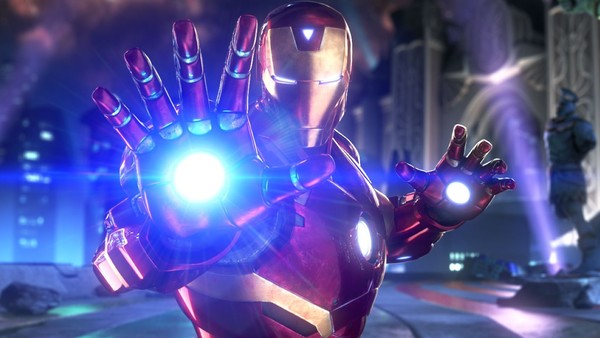
Marvel vs. Capcom has never been the biggest fighting game around, but its weird crossover appeal and solid team-up fights have always made new instalments essential for fans of the genre. Unfortunately, for a while it looked as though the franchise might have been done for good, as the licensing agreement between the two companies came to an end in 2012.
The deal was back on a few years later once Disney gave up publishing though, and a new game, subtitled Infinite, was poised to be something of a reinvention of the series, an attempt to draw in a larger mainstream crowd. That meant a few major changes were made to make the sequel more appealing to newcomers, including the decision to drop the fights down from 3v3 to 2v2.
Rather than the alteration being down to balancing issues or anything like that, the developers admitted that they thought having to choose three different fighters was too much for players to deal with, and they didn't want to put them off with too many decisions before a bout had even begun.
If anything, 2v2 only limited gameplay options in the matches themselves which, alongside the lack of key characters such as the X-Men (no doubt a move on Disney's behalf to promote characters they actually owned totally), only put off the die-hard fans rather than drawing in new ones.
1. Galactic Conquest - Star Wars Battlefront

Ever since it was announced that EA were bringing Star Wars Battlefront back, fans have been asking one question: where the hell is Galactic Conquest? The key mode pretty much defined the first two entries in the series, tasking two teams of players with taking over objectives, until one side completes them all and successfully conquers a planet.
It was this large, multi-tiered multiplayer mode that made the most of Battlefront's scale, and seemed like a perfect fit for a team like DICE when they took the reigns. Unfortunately, while this kind of mode was their bread and butter in the Battlefield games, it failed to make it over to their take on Star Wars.
Absent completely in their first attempt, the biggest mode there was Walker Assault, which mostly kept the action on the ground. Despite fans continuing to petition for its inclusion, the sequel also shipped without it, rolling a lot of its features into the new Galactic Assault game type. While it was similar, it lacked the meta push of the original, and wasn't really a worthy replacement.
It's not the reason Battlefront 1 and 2 failed - but it certainly didn't help win over fans of the older games to EA's new vision.