10 Mind-Blowing "What If?" Video Game Scenarios That Almost Happened
A world where "Play Station" is a Nintendo-funded experiment.

No other industry has had its highs, lows or veritable 'what-ifs' chronicled as famously as the games industry. Development is so high profile, so volatile, that when something does implode - be it software, hardware, or otherwise - people are going to hear about it.
Still, that leaves us in the very fortunate (or unfortunate, depending on how you look at it) position of being able to craft our own alternate history of the medium, one littered with unreleased consoles, projects and collaborations that - in no small way - would've changed its face forever.
It's really quite amazing, and while repeatedly raising the subject of LucasArts' graveyard of failed releases is bound to traumatise even the surliest of gamers, it's a task worth doing, especially since we now have to do without Visceral Games' amazing looking solo Star Wars title.
The fact of the matter is that the games industry has experienced more crossroads, forked dialogue options and climactic set-pieces than a well crafted TellTale title, which, when you think about it, isn’t half bad for a thirty year-old medium.
But what are the most interesting or, certainly for us, tragic timelines to explore? It might not be all doom and gloom, but sometimes the ‘what-if’ sounds infinitely better than the ‘what-did’.
10. Halo Releases, But Not As An Xbox Exclusive (Or As An FPS)
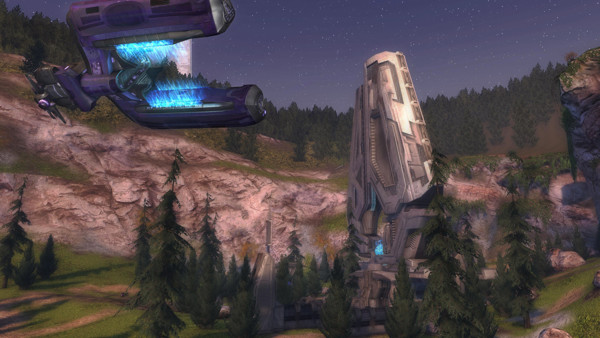
Although it's hard to think of a world without Halo being an Xbox exclusive, there was a time when Bungie's seminal shooter was destined for another platform.
The title, featuring everyone's favourite Master Chief in a starring role, was originally going to be released for both Mac and Windows. So confident of this was Steve Jobs, who formally announced the title to journalists at the now defunct Macworld expo in 1999. The key difference here, however, was that it was also going to be a real-time strategy game, based in part on Bungie's Myth series that, although popular in some respects, was never destined to reach the heights Halo would eventually overcome.
Come 2000, and the game differed drastically from its original template. Now a first-person shooter, Bungie had been acquired by Microsoft and - as we all know - the rest was history.
While a world without Bungie's iconic shooter is a suitably spooky one to contemplate, it is interesting to think of what might've been if the studio had persisted with their original RTS concept and indeed, fobbed-off Microsoft altogether. Terrifying, but interesting nonetheless.
9. LucasArts Release Knights Of The Old Republic III

It really does make for grim reading diving into all the failed projects that came about during LucasArts' twilight, especially since the years between 2006 and 2013 saw very little emerge from the studio.
They were genuine pathfinders in the industry, crafting seminal titles in the Jedi Knight series and publishing dozens more in Battlefront and Republic Commando. Above all others, Bioware's Knights of the Old Republic probably stands the tallest, but again, fans have been left waiting over a decade for the elusive third entry in that very series.
Why wasn't it made?
Well, no one at LucasArts actually seems to know, weirdly enough. The game apparently reached the early stages of pre-development, but nothing came of it bar some brainstorming sessions and a few convincing pieces of concept art.
That's without mentioning the veritable cemetery of failed projects the company failed to get off the ground either. Among the most tragic of these rests Pandemic's third Battlefront title (the studio soon folded after a switch to Middle-earth in Lord of the Rings: Conquest), a sequel to 2005's Republic Commando and, of course, Star Wars: 1313.
This really is the darkest timeline, isn't it?
8. ...And Don't Get Closed Down
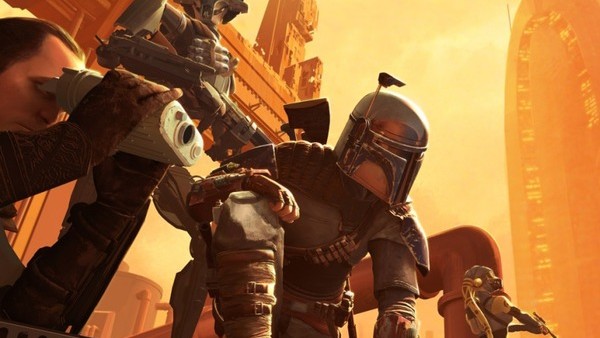
To compound the misery of a LucasArts-less timeline even further, we now also have to contemplate what could have been, had the company survived Disney's acquisition of 2012.
Of course, we all know that EA haven't exactly sat on the license; Star Wars: Battlefront II is fast approaching and a bunch more titles are in development, with the likes of Respawn, Bioware and more all plying their trade on the galaxy far, far away as it now exists.
And while there's still much to be excited about EA's tenure with the license (shocking, we know), that doesn't mean that what we're getting is all that much better than what LucasArts could've achieved, had they been given the necessary resources. Granted, the quantitive difference is sizeable, but what we're getting - at this moment at least - isn't really what fans were hoping for. Certainly not, now that Visceral's game is dead in the water.
What could LucasArts have made by 2018? 1313, for starters. Maybe even a sequel. Point is, whatever they'd have published would've been infinitely more substantial than that first EA Battlefront title - a game whose shadow still looms over its forthcoming sequel.
Again, darkest timeline - we are living it.
7. The Dark Knight Tie-In Game Gets Made Instead Of Rocksteady's Arkham Series

This is a pretty horrifying concept to realise, certainly for Bat-fans, but one that also came dangerously close to happening.
With a movie tie-in to Batman Begins done, dusted and even praised by outlets and audiences alike, Warner Bros. were keen to replicate its success for the then upcoming Christopher Nolan sequel (a film which needs no introduction). Pandemic were the team brought in to do Nolan's world justice and, not for the first time, they found themselves in choppy territory.
The company's Aussie studio took the reigns this time, with Gary Oldman himself having hyped up the effort and detail that the group had put into perfecting Batman's gliding. The game was meant to be an open-world Bat-title in the Spider-Man 2 vein, but its scope ultimately went on to become its undoing.
Pandemic missed the film's release date (both of them), and the title was canned shortly thereafter. This led Warner Bros. to try a different angle with the Caped Crusader, and enlist a then unknown studio, called Rocksteady, to bring it into existence.
We all know what followed: the London devs created Batman: Arkham and proceeded to fundamentally rewrite the book on superhero video games and the action-adventure genre too. Had Pandemic succeeded in their thankless tie-in task however, it never would've been, and fans would've probably had to settle for Batman: Martha! Simulator 2017 come Dawn of Justice's release last year.
6. Valve Actually Release A Third Game

Like, can you even begin to imagine just how bonkers it would be if Valve went ahead and broke their one seemingly unerring rule, and released just one threequel?
At this point, we're not even sure fans would care which game would get that coveted third entry. Half Life, Team Fortress, Portal - all can boast their own fanbase with an equal desire to see their favourite franchise get the current-gen treatment. Though, at this point, Valve could be set to miss this generation altogether, save for a few VR demos that, while technologically impressive, aren't the cake we're all really after.
And again, people would just about accept anything at this point. It's a sad, Valve-less world we live in right now, and while the studio hasn't shouted out for last orders just yet, one does have to wonder how the industry would look if they'd capitalised on their foremost franchises far, far sooner.
Or at all, really.
5. Rockstar Expand On L. A. Noire, Team Bondi, And Agent

Although L. A. Noire stands today as being one of the most divisive Rockstar releases of the past decade, there's no denying that the devs behind it, Team Bondi, made for a very talented team.
The title mixed the best bits of classic cop TV, real life crimes and history into an Confidential-esque journey into postwar California. It had the strongest Rockstar story yet, and while development was fraught with some very public issues before its release, fans were hopeful that Bondi were destined for great things.
It was never meant to be, sadly, and both an L. A. Noire sequel and Bondi's next game, the controversially titled Whore of the Orient, never saw the light of day.
Then there's the matter of Agent, Rockstar's long-gestating third-person title said to boast a Cold War setting. Meant to do to the espionage genre what Red Dead did to Westerns, nothing has been seen of the title since its initial 2009 announcement. The studio has probably moved onto other things at this point (namely the monolithic GTA franchise), and while no one can slight Rockstar for the quality of their titles, we've not seen anything along the lines of Redemption or Noire since.
4. Call Of Duty Doesn't Kill Medal Of Honor

Although Medal of Honor is known as being something of a relic these days, what with it y'know, not existing anymore and all, there was a time when it was the proverbial king of the FPS genre, certainly in respect to World War II.
Allied Assault, Rising Sun, Frontline - all of these games dominated the genre at the dawn of the millennium. EA were in the driving seat, and Activision, the other company trying to make waves on the FPS scene, were none too pleased.
In came Infinity Ward, a development studio founded by former leads on Allied Assault who set about making a title with the sole intention of it being the Medal of Honor 'killer'. We've seen that phrase touted time and time again in regards to other franchises staking a claim to Halo's or, ironically, Call of Duty's crown, but there was real bad blood between EA and Activision in this period, with the first Call of Duty's codename during development actually being dubbed 'Medal of Honor Killer'.
We all know Call of Duty would come out on top in the end, but if it hadn't, Activision would be nowhere near as dominant on the console market as they have been in recent years, and Medal of Honor - having lagged behind its revival for some time - would probably still be with us.
3. Black Isle Release Fallout: Van Buren
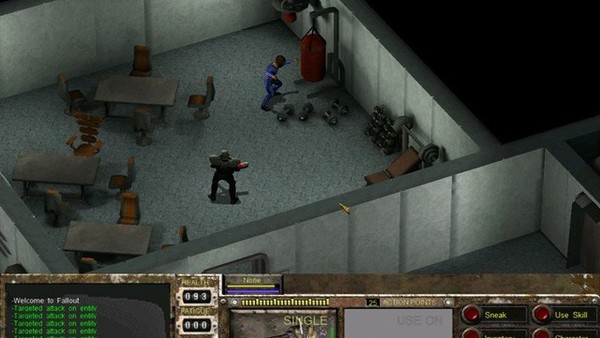
Despite the Fallout of today very much being one of the gaming industry's biggest franchises, it wasn't always the case. Originally, when the series was under the guidance of Black Isle, it garnered something of a cult following, having set up shop solely on PC and not on the burgeoning popularity of the console market.
In 2003, Black Isle was shut down by their parent company, Interplay Entertainment, which effectively put an end to their third Fallout game, codenamed Van Buren. While many of the title's narrative elements made their way into what would eventually become New Vegas, Fallout as it then existed - as an isometric, turn-based RPG - would cease to be.
Bethesda would later acquire the license and revolutionise RPGs as we knew them with Fallout 3, subsequently birthing one of today's biggest gaming IPs and ensuring a constant revenue stream for Zenimax for years to come.
If Interplay managed to keep their finances in order however, and keep Black Isle on the books, then the Fallout 3 we all know and love would've never come into being. It would've continued to be a cult PC franchise and, while Bethesda themselves aren't exactly short on quality IPs, a lack of Fallout would be a sad thing for all concerned.
2. Microsoft Successfully Launch The Xbox One
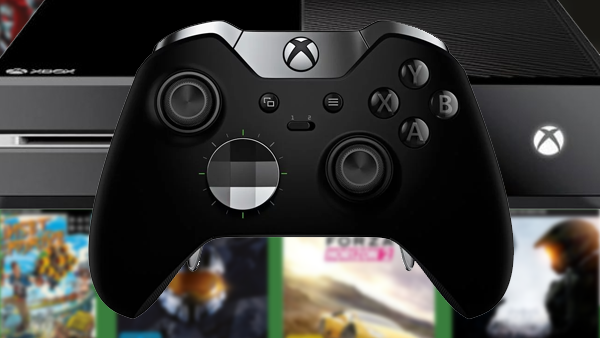
Microsoft's latest stab at the console market may still struggle against its competitors, but it's important to remember that things could've been so much worse.
Cast your mind back to 2013: it's E3, and the last console generation is at an end. Everyone knows that both Sony and Microsoft are going to be showing off their new hardware (on top of a few hotly anticipated next-gen titles), and there's a positive atmosphere all around, for the most part.
Except for the Xbox One, which - as far as announcements go - had about the worst one out there. Everything, from an apparent lack of focus on games themselves, to the console's DRM requirements and restrictions on sharing titles with friends put a damper on any positives that could be gleaned from Microsoft's initial announcement.
A huge fan backlash after further misery at E3 compelled Microsoft to act, meaning that the console that launched in November differed drastically from the company's original vision.
But, in spite of all the backlash, clever jibes from Sony and all the rest, Microsoft could've kept going with their initial game plan. Would it've worked? Probably not, but even then it's impossible to gage if there was a market for Microsoft's console outside of that hardcore bubble of gamers. It could've tanked, and forced a major U-turn for the company that way, or it could've fundamentally ripped apart the playbook that's dominated console politics for the last two decades.
Two forked timelines then, for an equally forked up E3 season.
1. The Sony/Nintendo Play Station Doesn't Implode

Today, the PlayStation stands above all other console makes as the most popular and perhaps most iconic gaming brand of all time. What little there was left to debate was surely answered by the time the PS2 arrived in the winter of 2000.
But there was a time, remarkably, where Sony were unwilling to go it alone. Teaming up with Nintendo, the company drafted plans for something called the Super NES CD-ROM, an unreleased peripheral for the SNES that would've allowed the cartridge-based console to play CDs. Further to this were Sony's plans to release the PlayStation itself as a Sony-Nintendo hybrid, but, after tensions between the two companies, the plans fell through.
Things very obviously weren't meant to be, and Sony soon set about making their own PlayStation console sans Nintendo. It would take a few years for the company to capture the international market but - flash-forward two decades later - and it's clear that the move came at Sony's benefit.
Both companies are obviously in a good place, but even then, one has to wonder what a tyrannical Sony-Nintendo partnership would look like today. Would they be called Sontendo? Nintendy? Who knows. What matters is that, for better or for worse, the world's foremost piece of gaming hardware almost never came into existence.
Any spooky what-ifs out there that keep you up at night? Any that you wish would come true? Let us know in the comments below!