10 Reasons VR Is Just A Passing Fad
Make room in your closet, already.

Pretty much everyone can agree that technology is driven by trends, but that said, not every new tech innovation is here to stay, and that just might be the case with VR gaming, which has been on lips of just about everyone over the past few years.
While VR as a concept may very well live on in architecture, medicine, robotics and countless other fields, VR gaming on the other hand could easily become yet another fad that's either forgotten, laughed about or viewed with utter indifference sometime down the line, as so many prior gaming "revolutions" have been.
Remember the N-Gage? No?
Of course, VR could capture the public's imagination and become a runaway success that changes gaming forever more, and that'd be a wonderful thing if the kinks can get worked out, but the odds aren't exactly in its favour.
Here are 10 reasons VR is just a passing fad...
10. It Happened To Motion Controls

There have been a lot of comparisons between the current VR movement and the huge motion control boom of the mid-2000s, where the Nintendo Wii popularised the technology before Microsoft and Sony released their own less-popular iterations.
It's hard to argue with the Wii's success, sure, but motion control was very much a bubble that burst once the Wii's versatility had been exhausted, and Microsoft's botched attempt to reinvigorate it with the Kinect 2.0 pretty much sealed its fate.
Though VR is being heavily talked-up at present, could it not simply be something we become exhausted with over the next five years or so? We'll see the limitations, the novelty will wear off, and we'll crave the more traditionally gratifying experience of holding a controller and staring at a TV screen. History is not on VR's side in this regard.
In VR's Defense: Motion and VR are of course not necessarily comparable, and previous trends do not always dictate future ones, especially when it comes to something as potentially immersive as VR, whereas motion was more aggressively a gimmick geared towards the non-gamer crowd.
9. It Doesn't Take Immersion Far Enough

VR headsets are undeniably awesome to a point, yet there are still some problems that prevent the tech from being as wholly immersive as it could be. For one, unless you've got the space and money for one of those absurd treadmill-like devices, you need a controller, so you're not really exploring the space using your body and instead need to rely on the traditional movement input commands.
Then there's the fact that, at least for now, VR headsets need to remain tethered to your PC or games console, as charging the headset and transmitting wirelessly isn't feasible due to the required power. Sure, Alienware have developed a backpack to make wires less obtrusive, but again, this is an added flourish that's outside the real of affodability for most.
That's not to say the tech isn't cool, but when you hear the words "VR", you're surely hoping for more than sitting down in one spot and holding a controller, right?
In VR's Defense: Movement is an extremely challenging problem to solve, because allowing extensive VR movement could easily result in the player destroying their home, running into traffic or getting mugged while wearing the headset. Until a more elegant and innovative solution is invented, we'll just have to accept this.
As for the wires? Again, it's a difficult issue to solve quickly and cheaply, and while there's no major solution available at present, it's a totally reasonable problem to have. If the games are good enough, skeptics should be able to overlook these issues. Speaking of which...
8. It Will Be Mostly Casual Gaming

To return to the motion control comparison, it seems likely that the majority of VR gaming titles will end up being extremely casual party games geared towards the widest possible player-base in order to sell the technology.
As such, expect a lot of on-rails shooters with minimal movement options, perhaps between just a few fixed points, especially during the first few years of the Vive, Rift and PSVR being on the market. Finding rich games that are immersive on more than a superficial level will likely be a real challenge.
In VR's Defense: Commercially, it's easy to see why some of the Wii's most popular early motion-based titles were incredibly simple tech demos, because they allowed players to get to grips with the tech easily and have a little simple fun every now and then.
While there's something of a disconnect between that casual-appealing play and an expensive VR headset, right now the desire of hardware creators will be to increase the player-base so the price can drop, and what better way to do that than with games geared towards highlighting the tech's potential in the most simple, easily-digestible ways?
It may suck for those who have been salivating over the tech for years, but this is the only way that VR ultimately stands a chance of succeeding in the long run. Just prepare to be faced with hundreds of thoroughly mediocre casual-bait in the mean time, with the gems emerging only occasionally in-between.
7. Poor Consumer Awareness

Showing a video of VR is never, ever going to be sufficient to convey the feeling of putting on a headset and experiencing it for yourself. As such, arguably the biggest problem facing the tech right now is that the majority of the potential customers can't even try the damn thing themselves for free.
Though demo units of PSVR have emerged in some areas of North America and Canada, most of the world isn't lucky enough to have demo pods set up in their local gaming store yet, which feels like a massive oversight, especailly with the most consumer-friendly platform, PSVR, being so close to release.
After all, only a small percentage of eventual VR adopters are willing to spend hundreds of dollars on technology they've been unable to try themselves, and understandably so.
In VR's Defense: VR is going to be a slow-burn rather than a sprint: there is clearly a hope that it will catch on by way of word-of-mouth and also those early adopters allowing their friends to try it out, plus there's still time for Sony to get VR units sent out to the rest of the world (though they should probably act fast).
6. Motion Sickness

A big issue with VR is motion sickness, a problem that's incredibly hard to stamp out simply because wearing a VR headset affects different people in different ways: some feel ill at the sight of certain motion effects in games, while for others the game moving while the player's head does not creates a deep feeling of unease.
As such, even if people are able to try out a VR system, they may find themselves immediately turned off if their first experience prompts feelings of sickness, and though many developers claim that this has been combatted with more robust hardware, it hasn't stopped people reporting headaches and nausea from using all the major VR kits.
In VR's Defense: One thing that hasn't been made majorly clear to consumers is that you can build up a tolerance to some of VR's ill effects, and typically the more you use it the less you'll be bothered by any symptoms.
That's perhaps not the most ringing endorsement either, but prolonged use will generally lessen a lot of the nausea in particular.
5. The Price

Let's look at the current U.S. prices for the three major VR kits out there: the HTC Vive is $799, the Oculus Rift is $599 and and PSVR is a decidedly more reasonable $399, even if it's hardly a steal either and requires players to also buy a PlayStation camera on top of that price.
These price tags will simply be too cost-prohibitive for many consumers, and that's without even mentioning the games, as it seems likely that developers will attempt to charge full-price retail costs for gimmicky and/or party games that end up lasting only 3 or 4 hours.
In VR's Defense: Firstly, the tech needs to be expensive before it can come down, and the big three are certainly aware that the rollout will be slow, and secondly, with some PSVR launch games already touting heavily reduced prices, hopefully that's a sign that gamers aren't going to be nickel-and-dimed (or at least not too much).
4. The Lack Of Ground-Up AAA Titles

It's safe to say that the majority of the VR titles shown off so far are either lower-budget gimmick titles to show off the technology in an affordable way, or pre-existing games that are being developed as "regular" titles and have subsequently been ported to the VR medium.
But where are the true AAA VR games developed from the ground up? That's where the real promise of VR will emerge, when tens of millions of dollars are poured into one single, mind-meltingly immersive VR experience.
In VR's Defense: These games are most likely coming, but VR as a concept needs to build an actual consumer base first, and so it's probable we won't see games like this for at least another two or three years. Given that VR is a marathon and not a sprint, that could work out for the best.
3. Shady Business Practices Could Sink It
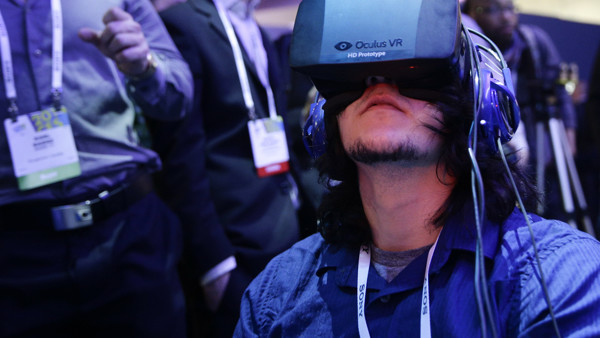
Given that there are potentially billions of dollars to be made in the VR market, it's unsurprising that we've already seen plenty of shady business conducted.
Just recently, for instance, Oculus caught a ton of flak for introducing DRM which prevented HTC Vive users from playing Rift games, and though they backpedaled shortly after due to the massive outcry, it's still emblematic of the "big three" potentially screwing the consumer over in the quest to become #1 in the VR arms race, which would likely backfire massively and could even end up sinking the tech completely.
In VR's Defense: At the end of the day, companies do listen to consumers when they're passionately vocal about something, and it's going to be their wallets that will suffer above all else if they don't.
Oculus' huge PR blow in light of the DRM controversy should make a loud and clear statement that all three platforms need to be as wide open as possible, though don't be surprised if at least one company tries to enforce tighter controls once business has picked up in the coming years.
2. It's Not True Virtual Reality
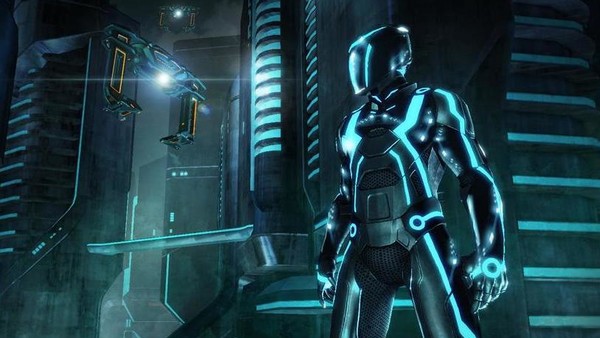
What we call "VR" is actually a misnomer, because it's not what virtual reality has been traditionally defined as. Just as "hoverboards" don't actually hover, VR is simply a sexy, marketable name that gives a decent impression of what the technology is, even if it's too constrained by current limitations to really generate a completely virtual world to lose oneself in.
This could result in disappointment for many consumers who may feel misled by the name, and once they've played it for themselves, with all the wires, without the free movement and other constrictions, its baring on reality may feel decidedly less pronounced.
In VR's Defense: It's more than a little unreasonable to expect this technology to authentically replicate reality in 2016, though it's likely that in the coming years (and decades, if the tech lingers around) it will inch closer and closer to replicating our living, breathing world. Patience is needed.
1. It's Been A Fad Before
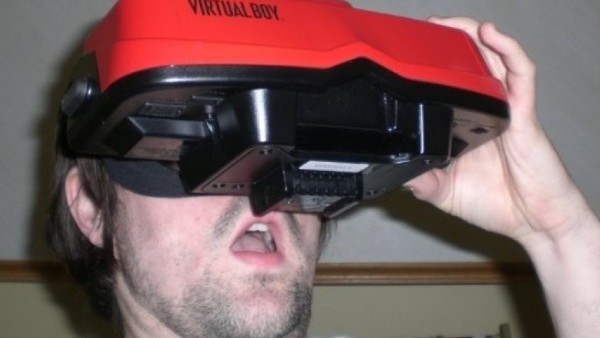
That's right, VR has been a thing before, most infamously with Virtuality's VR arcade machines and Nintendo's doomed Virtual Boy platform in 1995. Both ended up majorly bombing and largely killed interest in VR for some time.
Is it not possible that VR will once again just be a fad that comes and goes with a whimper, rather than sticking around as "the next big thing" in gaming?
In VR's Defense: Comparing the 90s' efforts to today's is admittedly a little unfair: with so many major tech companies investing so much in VR, it has a much greater chance of succeeding this time, regardless of how long it actually sticks around for. It could still fail, but with so much capital behind it now, comparing it to the freaking Virtual Boy doesn't necessarily hold much water.
--
What's your take on the coming VR boom? Shout it out in the comments!