10 RPG Video Game Sequels We Desperately Need (But Won’t Get)
Alpha Protocol, otherwise known as: The most potential-filled game ever.

Role-playing games are a funny business when you get right down to it - you either talk about them forever, or tend to forget they ever happened.
For every titan of the genre like Dragon Quest and Final Fantasy - the latter primed to release its fifteenth instalment since humble beginnings way back in 1987 - there are more average titles like Enchanted Arms and the rushed Dragon Age II, or Arcania: The Complete Tale, titles that, although expansive, just don't stack up well against their contemporaries.
Developers that can create a successful blend of story, setting, characters and combat systems as well as giving the audience a sense of genuine progression can we rewarded with sequel after sequel as loyal fans follow each entry. But for others that never quite become breakout, legitimate successes, dreams of long-running sagas dissipate quicker than the hope felt from finding a treasure chest only for it to be filled with redundant items hastily sold to the nearest shopkeeper.
That being said, there have been a number of notable role playing games released over the last ten years that had unique features and exciting worlds. Many found favour with critics but never achieved enough success to enable them to become a franchise in their own right. So, here's WhatCulture's guide to the Top 10 RPG Sequels We Desperately Need (But Won't Get).
10. Eternal Sonata

What it was: Eternal Sonata was a 2007 RPG released for Xbox 360 and ported to PlayStation 3 in 2008, reaching Europe in 2009. Its colourful world, quirky characters and musical theme were utterly charming, which led the game to review fairly well with critics.
Based on the dying hours of famous composer Frederic Chopin's life, Eternal Sonata weaved a fictional tale about a young girl Polka cursed with magic. Seen as diseased by her townspeople, she sets herself on a quest to investigate a suspicious and potentially damaging mining operation near Mount Rock. Chopin himself appears in the game, as do many historical snippets about his life in the form of video clips shown to the player. The game also used several notable Chopin compositions and many character and place names were musically inspired: from teenage thief Allegretto, meaning to play an instrument moderately fast in tempo, to the town of Andante, meaning to play at a walking pace. Combat was anything but however, and players had to utilize light and heavy attacks alongside use sunlight and shade on the battlefield to attack different enemy types.
Why we need a sequel: A vibrant and colourful action-oriented RPG that's multi-platform and not exclusive to a Nintendo machine? Sign me up! Plus there are hundreds of other composers' lives to plunder, from Bach to Beethoven and Mozart to Schubert.
Why we won't get one: Poor sales figures. Despite previewing and reviewing well, gamers weren't flocking to this in significant enough numbers for it to garner a sequel. The original developers, tri-Crescendo have been busy making Tales of Zestiria in recent years and are presumably supporting Nintendo on getting Super Smash Bros. ready for Nintendo NX.
9. Resonance Of Fate

What it was: Resonance of Fate was a 2010 release for both PlayStation 3 and Xbox 360, courtesy of tri-Ace and SEGA. Contrary to fantasy-medieval style weaponry and sorcery featured in many RPGs in the last generation of consoles, Resonance of Fate had guns. Lots of guns. The setting was also unique: steampunk, post-apocalyptic and had a dominating central tower to ascend, plus a map system that had to be gradually unlocked through the grind. However, the tactical nature of combat and the fact Resonance of Fate was not a typical RPG in terms of progression divided opinions amongst critics and fans. The battle system, whilst innovative, was not easily conquered and did not rely on items, magic and equipment as much as it did weapon upgrades and tactical planning on the fly.
Why we need a sequel: The setting was as unique as the gunplay combat and this was a fairly high profile collaboration at the time. Its features were distinctive and it took time to learn to play it well. The fact two large Japanese companies were aiming for a western audience was sufficient enough to show the RPG market was in rude health. Given the popularity of Dark Souls and Bloodborne, it might not be too far a stretch for Resonance of Fate to reinvent itself as a hardcore steampunk 'n' guns RPG experience if it would be willing to sacrifice some of its heavier RPG elements for a more open world.
Why we won't get one: Tri-Ace have bigger fish to fry. Their flagship series is Star Ocean and a new instalment, named Star Ocean: Integrity and Faithlessness is due on PlayStation 4 for 28th June 2016 in North America and 1st July 2016 in Europe. They have also dabbled in Final Fantasy in the last five years, collaborating with Square Enix on Final Fantasy XIII-2 and Lightning Returns: Final Fantasy XIII. Given the lukewarm reception for Resonance of Fate, it's highly unlikely we'll see another one soon.
8. Blue Dragon

What it was: An Xbox 360 exclusive title that hit Japan in 2006 and had its western release in 2007, Blue Dragon had significant Microsoft marketing money behind it. Trumpeted as one of a series of Xbox-exclusive RPGs that were in the pipeline, Mistwalker Studios, founded by Final Fantasy series creator Hironobu Sakaguchi, was taking aim at Sony's traditionally strong software offerings of traditional Japanese RPGs stemming as far back as the original PlayStation. The studio had additional credibility with Final Fantasy fans as Blue Dragon was scored by the one and only Nobuo Uematsu. Microsoft were hoping to have a second chance at cracking the Japanese market with the Xbox 360 after the failure of the original Xbox in that region and committed to it with software like Blue Dragon.
Why we need a sequel: As with most well-made Japanese RPGs, Blue Dragon had cartoon-like visuals without being childish. Its combat system was solid and the initial idea behind the game was well-received by fans and reviewers. One might say it was an excellent blend of Nintendo visuals alongside Square Enix role-playing of old.
Why we won't get one: Money. As a company, Mistwalker have now put out more Nintendo DS and mobile games than they have on mainstrem games consoles. In fact, the two sequels to the initial entry in the Blue Dragon series came out on the Nintendo DS between 2008-2010! First came the oddly named Blue Dragon Plus (despite still being a sequel not the same game with bonus content) and soon after came Blue Dragon: Awakened Shadow. The fact the Nintendo DS was significantly cheaper system to develop for and had a frankly huge RPG library by the time it bowed out in 2011 with the 3DS, which made it a win-win situation for Mistwalker.
7. The Bard's Tale
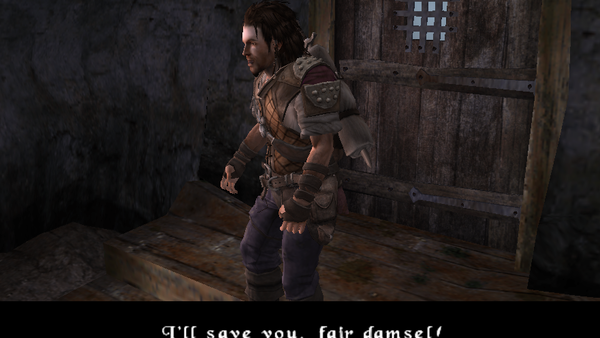
What it was: A 2004 Xbox title that was a top-down RPG-lite in a fantasy setting. The game had monsters and magic but it also featured a sarcastic narrator who mocked much of what the player-character did in-game. It was a breath of fresh air even though it was largely simplistic in comparison to many other combat systems and party characters typical of other entries on this list. But it had its charm and many loved what it did because of what it did differently.
Why we need a sequel: RPGs take themselves so seriously that it's sometimes fun to have light relief. This often comes through snarky side characters or oddballs giving out sidequests but to have a whole game narrated by a genre-questioning lead? It worked in Portal, why not for The Bard's Tale II?
Why we won't get one: Actually for once we will! Thanks to the power of Kickstarter a new sequel called The Bard's Tale IV has raised $1,519,680 and is currently in production. It is being billed as a traditional RPG of old and hearkens back to the 1985 title The Bard's Tale when RPGs weren't big-budget console titles but were instead hard-as-nails CRPGs - or computer RPGs. There is no mention of the snarky narrator of the 2004 The Bard's Tale so fans will have to wait to pass judgement on this new instalment as to whether it is a worthy sequel.
6. Star Wars: Knights Of The Old Republic

What it was: Star Wars: Knights of the Old Republic was a highly respected RPG that came out in 2003 for the original Xbox and PC. Garnering extremely favourable review scores across the critical spectrum - mainly 9/10s - it was praised for bringing a deep yet customisable experience to the Star Wars universe. The sequel, subtitled The Sith Lords, was released in 2005 for Xbox and PC (it actually hit the North American Xbox in December 2004). The first game of the pair made it to tablets and mobile devices, too: the Apple store in 2013 and Android in 2014, a sign of its enduring appeal.
Why we need a sequel: What made KOTOR special was its original story that still fit Star Wars lore: you got to become a Jedi and wield lightsabers whilst still experiencing everything you should from a good RPG. A variety of locations, characters that have depth and personality, quests that you want to complete because you're invested in plot and character alike. The combat system was accessible, using commands queued up not unlike The Sims.
But you could use this to pause and plan out a strategy that your party members would execute in tandem with your own commands. Getting to know your party members was also crucial, as some were likeable and others were brash and annoying - or just whiney like Carth Onasi (you'll see).
Why we won't get one: Development for the first game was by BioWare and the second was made by Obsidian Entertainment. Obsidian went on to produce other RPGs like Alpha Protocol and Fallout: New Vegas, whilst BioWare went on to create the Mass Effect trilogy, free of the particular restrictions of the Star Wars license.
BioWare wanted the sort of creative control held by LucasFilm in a time before Disney owned all the entertainment IP in the known universe. The next stage in Knights of the Old Republic then, became an MMORPG simply titled The Old Republic. Starting in 2011, it is currently on its fifth major expansion and claims revenues in the regions of $140 million per year, adopting a hybrid model of free-to-play and subscription-based users.
Simply put, the dream of a single-player Star Wars RPG died a death with The Old Republic.
5. Fallout 3 (Van Buren)
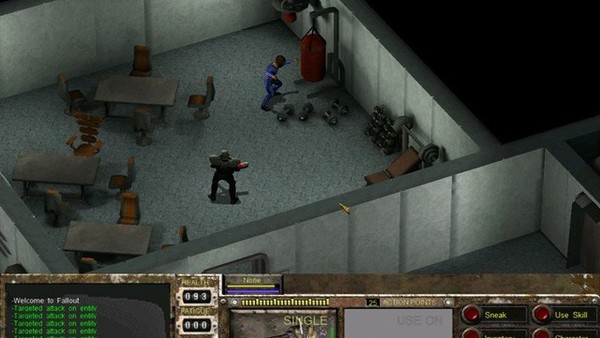
Before Bethesda bought the rights to the Fallout name and turned it into the all-conquering monolith of a franchise that it is today, Fallout and Fallout 2 were isometrically-viewed PC exclusive role-playing games, with tactical combat to boot!
What it was: A continuation of the Fallout series on PC that had hardcore, tactical turn-based combat. In this version of Fallout, VATS wasn't just a pretty slow-motion camera angle and the combat was grid-based with action points determining how many things you could do in a particular turn. Movement, administering first aid, combat and even reloading a gun all cost points per turn. You had to plan movement and reloading carefully, anticipating where your enemies might move to. Fallout 3 (or project Van Buren) was to upgrade the look and feel of the game with a 3D game engine whilst retaining all the features of the previous two titles that were so popular amongst players.
Why we need a sequel: Believe it or not, there are actually some out there that dislike the first-person role-playing monster Fallout became. The VATS system was widely praised as being true to form in many reviews upon the release of Fallout 3 in 2008, but PC gamers just knew it wasn't the same series anymore. Additionally, the last game to use an isometric perspective and retain the name Fallout was the dire Fallout Brotherhood of Steel for both PlayStation 2 and Xbox in 2004.
Why we won't get one: Bethesda. Since buying the franchise rights from Interplay in 2004 they have conquered the console RPG scene with the hugely successful Fallout 3 in 2008 and Fallout 4 in 2015. There is some hope, however, as inXile Entertainment, a development studio founded by ex-Interplay founder Brian Fargo, have trademarked the original code name of Fallout 3: Van Buren.
4. Jade Empire

What it was: A 2005 RPG for the original Xbox, Jade Empire sought to bring the best of epic martial arts cinema and Wuxia fiction into video game form. Another hit for Canadian developers, BioWare, Jade Empire allowed players to master martial arts styles and go on a vengeance-based questline with authentic weapons, characters and settings from ancient Chinese dynasties. It's combat was a real-time, action-oriented system where players had light and heavy attacks, area attacks and a block. Conversation and characters were excellent throughout.
Why we need a sequel: The setting and characters were deftly done but ultimately under-utilised. With a current-generation sequel, BioWare could easily add another blockbuster franchise to their stablemates Mass Effect, Star Wars: The Old Republic and Dragon Age. The chance to refine the combat system and deliver another incredible setting rich with lore is something role-playing gamers would really go for.
Why we won't get one: It's been so long since the last instalment that it's difficult to keep the faith. Plus, BioWare have their hands full with running Star Wars: The Old Republic and are presently developing Mass Effect: Andromeda which is due for release early 2017.
3. The Lord Of The Rings: The Third Age

What it was: A 2004 release for Xbox, Gamecube and PlayStation 2, TTA took Final Fantasy X's basic template with fairly linear areas that looked impressive graphically, but were not fully explorable and had invisible boundaries around the edges. That said, it was distinct enough to have a plot and characters that shadowed the progress of the characters in the Lord of the Rings film trilogy, whilst giving players the chance to set up their own mixed party of elves, dwarves, wizards and rangers. It meant there was a solid connection to the trilogy of films but full knowledge of characters and events was not a pre-requisite for enjoyment. A solid and competent game - not out-of-this-world, but competent.
Why we need a sequel: The Lord of the Rings has never gotten old in terms of its video game appeal. The most recent high-profile release was an action game: 2014's Middle-earth: Shadow of Mordor. Whilst it had light role playing elements and an excellent combat system (albeit real time not turn-based) it was no RPG. The chance to return to Middle-earth and journey through another epic story with a fully customizable character set and turn based combat system would be great.
Why we won't get one: Despite having a new film trilogy in the form of The Hobbit between the years 2012-14, there was no role-playing game to go with it. The success of 2012's LEGO Star Wars and the more recent LEGO The Hobbit has eclipsed the older titles and most players seem happy to chug along with more action/platform oriented games rather than pushing for a role playing game. Warner Bros. currently own the rights to Lord of the Rings after EA's contract finished in 2009; their penchant is for the action genre and LEGO titles.
2. Alpha Protocol

What it was: A unique spy-thriller RPG made by Obsidian Entertainment and published by SEGA in 2010 for Xbox 360 and PlayStation 3. It promised a globe trotting adventure and a blend of hand-to-hand and gun combat - but your success came from the role playing systems as you had to improve your character attributes in order to prevail on a mission.
Safe houses and upgradeable equipment alongside mission briefings and televised news reports about worldwide espionage situations you were involved in made the game immersive and realistic. It also had a Mass Effect style conversation system that was engrossing and praised by reviewers.
Why we need a sequel: Sam Fisher is currently inactive given that the last Splinter Cell game was Blacklist in 2013. The only other recent notable spy game was Counterspy on PlayStation 3/4 and Vita in 2014. There was a good deal of positive reception around Alpha Protocol, even if it was acknowledged as buggy in places and mediocre in others. Whilst waiting for Mass Effect Andromeda and wondering if the Splinter Cell movie due in 2017 will be any good, surely news of Alpha Protocol 2 would brighten our days?
Why we won't get one: The original developer, Obsidian, is currently working on their own IPs and returning to more traditional PC RPGs with isometric perspectives and fantasy settings with titles like Tyranny and Pillars of Eternity. There is allegedly some interest amongst some of the staff in developing a new Alpha Protocol, but only time - perhaps 2017 or 18 - will tell whether this comes to fruition.
1. Lost Odyssey

What it was: Coming on four DVDs, this monolith was an epic in all the right ways: a turn-based combat system, sprawling story, side characters ranging from interesting and slightly mysterious to downright irritating and two notable changes to the formula.
The first was the ring system. Equipped rings granted status effects or abilities in battle and during an attack, two rings would appear on-screen. The player had to time trigger-presses as the rings aligned and would score Perfect, Good or Bad; this made combat more than just one button press and a long wait for an attack animation or turn to begin and end.
The second feature was A Thousand Years of Dreams: short snippets of written prose that were moments of protagonist Kaim's life as an immortal, or events he had witnessed. These popped up on-screen during the game's story and were praised for elevating the narrative of Lost Odyssey to greatness. Some even considered them better than the game's own story overall. They were so highly rated that they were published as a separate novel in Japan in 2007.
Why we need a sequel: Despite the harsher contemporary critics calling Lost Odyssey rather run-of-the-mill, it won its fair share of fans. Graphically impressive and arguably proving the case for greater storage capacity with Blu-Ray that the Xbox 360 neglected, a new Lost Odyssey could refine the setting and concept greatly to become a new saga for the ages. Plus, instead of packing the case full of four DVD discs, this time developers could throw in a novel to bridge the gap between Lost Odyssey and Lost Odyssey II with all that extra case space saved.
Why we won't get one: Mistwalker are increasingly working on iOS and Android projects. What's more, their last big console release was for Wii - 2011's The Last Story. They are currently working on an as-yet-unannounced project alongside Silicon Studio but that developer has also been prone to Nintendo 3DS and mobile releases rather than big-budget console epics.
So, what might a spiritual successor to Lost Odyssey be called? Endless Journey? Infinite Trek? Deserted Expedition? Let us know your thoughts in the comments below and tell us if there are any other RPGs that deserve sequels!