10 Things All Superhero Games Can Learn From Batman: Arkham

Rocksteady's winning formula is one for the ages.

Prior to 2009, comic-book video games tended to invoke a number of emotions in fans of both comics and video games - primarily worry and dread. Despite the odd occasional success (Treyarch€™s Spider-Man games, Raven Software€™s X-Men Legends series), video games adapting source material from the comic medium tended to struggle both critically and commercially, with perhaps the most susceptible to poor quality licensed titles being the Caped Crusader himself, Batman. Thankfully, the developers at UK-based Rocksteady studios saved Bat-fans from another Dark Tomorrow and gifted them with one of the finest games of the past generation in Batman: Arkham Asylum. Utilising tropes from some of the most renowned series€™ in video-games and combining that with talent of some of the best people to have worked in the comic industry, it enabled Rocksteady to create a story and game worth really caring about. However, despite that titan of a title having redefined the comic-book video game, not every developer has been able to replicate their success. Why is this? Characters like Spider-Man, Hellboy and Captain America all have rich stories and exciting gameplay opportunities to exploit, but their most recent forays into the gaming medium have been all but devoid of the vibrancy that makes them so popular. The Arkham titles have raised the bar for all other licenced games to attain, and it is clear that there are lessons to be learned for developers wishing to tackle any men (or women) in tights - lessons Rocksteady can easily provide.


10. Embrace The Mythos

With the Arkham Games it€™s clear that Rocksteady Studios hold a great amount of respect and adoration for The Dark Knight. The open-worlds of Arkham Island and Arkham City are chock-full of nerdy-extras that shine a light on all aspects of Batman€™s 75 year tenure as a pop-culture icon. The level of detail in each of these environments are almost unmatched by other competitors, with the animation style holding a distinctly €˜Arkham-feel€™ €“ no wonder fans have come to dub Rocksteady€™s creation the €˜Arkhamverse€™. The problem with many other licenced-based video-games is that they often take place in environments that are either devoid of character, or worse, restricted to a particular universe. The €˜Arkhamverse€™ itself allows Rocksteady to pool every aspect that has contributed to the Bat-mythos in the past and include it in some way. Obviously there is a distinct lack of Bat-Mite and shark-repellent, but they aren€™t restricted to Christopher Nolan€™s hyper-realistic take on Gotham either. Rocksteady€™s universe enables it to not only craft a world that holds unique interpretations of DC€™s finest, but also to take the characters in new and often exciting directions.

9. Don€™t Be Afraid Of Delaying

One of the most widely contested and controversial topics currently underway regarding gaming is the so-called €˜dev-cycle€™ i.e. the amount of time allotted to a developer before a game goes gold and is ready for release. Many developers are burdened with unrealistic deadlines and release dates to meet in order to satisfy the upper echelons of the publisher they are bound to. 2014 was a particularly notorious year for buggy, unpolished titles, with annual releases being the biggest culprits of terrible releases (Here's looking at you, Assassin€™s Creed). Whilst not an annual release, Beenox€™s latest Spidey-title was an adaptation of the sequel to 2012€™s €˜Amazing Spider-Man€™ reboot, and thus had to work for a release that would coincide with the release of the film. The finished product was in many ways lacklustre, but also had the potential to actually be something quite special. Not to engage solely in hypotheticals, but had Beenox been given the ability to set their own pace and deadline, it is quite possible that they may have been able to craft a title that was both robust and innovative. Since 2009 there have been three released triple-A Arkham games, or one every two years. Arkham Asylum saw delays, as has Arkham Knight, indicative of Rocksteady€™s tried and tested approach to game development. Point being: If you let developers work to their own time-scale, they€™ll be able to construct a good quality title.

8. Consult With The Industry

Something that Batman: Arkham has done particularly well is its creative direction, headed by some of the foremost talents in the comic-book medium. Rocksteady make no-qualms about the fact that they are total geeks when it comes to the mythos, and it shines through in their work. Both plots for Asylum and City were written by comics-scribe and Batman legend, Paul Dini, and whilst he didn€™t return for Arkham Origins (a project headed up by another WB Studio, Montreal) the people behind the project poured as much creative wealth into it as Dini would have. Not only that, but Rocksteady went the extra mile to recruit Batman: The Animated Series voice acting fan-favourites Kevin Conroy and Mark Hamill, who to many are the definitive Batman and Joker respectfully. What this demonstrates is a clear understanding of not just the characters, but the fanbase as well - developers eyeing up other spandex-clad characters would do well to take note of this. Whilst not guaranteeing a flawless release, it does acknowledge a desire to make something that has been given the thumbs-up from some of the most respected figures behind the source material. After all, what better way to craft a good title than to have the most knowledgeable of people working with you every step of the way?

7. €œA Gameplay Focused Studio.€

Whilst there are many ingredients that make up the recipe to a successful superhero transition to gaming, gameplay is the most important one. The guys at Rocksteady have re-iterated constantly that their main aim with the Arkham series is to €˜make the player feel like Batman€™ €“ a goal that then spurs on the gameplay mechanics featured in the series. This formulae is comprised of two parts, namely €˜free-flow combat€™ and €˜invisible predator.€™ Due to their knowledge of Batman and his various iterations, Rocksteady was able to apply gameplay aspects that fitted the character in order to really immerse the player in the cape and cowl. Obviously different heroes hold different characteristics, so this means that stealth and hand-to-hand combat shouldn€™t always be the norm for superhero games to follow. THQ's 2008 take on The Punisher played to that character's strengths, grounding the title as a third-person shooter ala the Max Payne series, and it worked a treat. Spider-Man on the other hand, has receiving a plethora of fantastic gameplay mechanics over the years - but no one developer has yet been able to €˜crack€™ the formulae and deliver a truly phenomenal title on the level of an Arkham release.

6. Make It Stylish

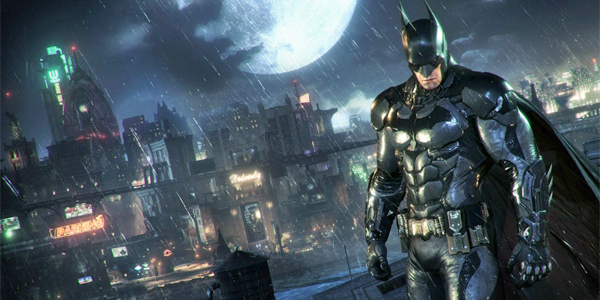
The Arkham games€™ stylistic use of the Unreal engine makes for a look unmistakably 'Batman' in nature. Pale greens cross with dark greys and moody blues to create a colour palette that adds to the overall ambience of the story. Not only does it make the game look gorgeous, but it fits the atmosphere superbly and adds to the feeling of being an inhabitant of Gotham City. These noir-esque tones won€™t suit every character, but it goes to show what having a clear visual style can do to elevate a game. Both Spider-Man and The Incredible Hulk have received highly-stylised titles with a cel-shaded look in €˜Ultimate Spider-Man€™ and €˜The Incredible Hulk: Ultimate Destruction€™ - a great element of two very fondly remembered superhero games. Not only does a unique art-style add visual flare to a title, but it also presents bold opportunities to explore the rich settings that comic-book characters often inhabit. Raven Software€™s X-Men: Legends and Marvel: Ultimate Alliance series are both great examples of titles mining much of the creative wealth that is presented with a comic-book adaption - the latter especially. DC and Marvel€™s universes don€™t just solely take place on earth, but also across plains of parallel dimensions and galaxies, and with the graphical update that current-gen consoles now provide us the potential for visual dynamite has never been greater.

5. Give The Player Excuses To Live In The World

Perhaps one of the most iconic elements of the Arkham Series; Riddler€™s numerous trophies, puzzles and riddles have added plenty of more hours to the Arkham Games€™ lifespan. Whilst the actual act of collecting some of these trophies can be tedious at times, the clever and often inventive riddles that the player must solve more than make up for them. Many may groan at the idea of yet more collectibles entering the gaming sphere, but the Arkham series demonstrates just how to employ them effectively. They not only serve a purpose in relation to the story, but also as unlockables to various maps and upgrades that aid the player in both honing and improving their skills as a costumed crime-fighter. The problem with collectibles in other series is that they often feel tacked-on and disjointed from the game itself, with the grind to collect them all in order to unlock that tasty platinum trophy or that last achievement often being off-putting to players. The Arkham titles remedied this by tying the collectibles to a particular character, replete with specific dialogue and in Arkham City's case, a showdown at the end for all your efforts.

4. Have A Fitting Soundtrack

Whilst music-composition may not be the first thing people think of when it comes to creating a game, its role in telling a story cannot be understated. The Arkham series has been gifted with two brilliant composers in Nick Arundel and Christopher Drake, both veterans of music composition in regards to superheroes. Other titles often don€™t place a great focus on their respective soundtracks, but the opposite is the truth when it comes to Arkham. Navigating the twisting halls of Arkham Asylum is made evermore unnerving when complimented by Arundel€™s orchestral and synth-based compositions, and like other features of the Arkham series, it€™s undeniably Batman in nature. Not many comic-book game titles possess memorable soundtracks akin to their film counterparts, but a good soundtrack can transform a game into being far more cinematic and epic in scale than in absence. It€™s high time that publishers and developers started employing grand scores in their works, or if it works for a character, a soundtrack comprised of different artists.

3. Don€™t Give Sidekicks The Boot

Throughout the years superheroes have enjoyed a plethora of supporting characters, both super and not, and they definitely have their uses when it comes to gaming. Sidekicks and other supporting characters add a number of elements to a title, including new gameplay features and story opportunities alike. Even though Batman€™s iconic sidekick Robin was absent from Arkham Asylum, he encountered a colourful supporting cast including Barbara Gordon and her father, Commissioner Gordon. Whilst comics are inhabited by some of the most intriguing of personalities, it isn€™t always possible for them to carry a title on their own. Characters like Daredevil, Green Arrow, Spider-Man and Hellboy all have varied and captivating sets of supporting characters, who at times are even able to steal the spotlight away given the appropriate script. As briefly noted before, when playable these characters also present unique gameplay opportunities to the player - shaking up the formulae and alleviating potential boredom from repetition. Whilst previously these have been shoehorned into playable €˜re-skins,€™ hopefully developers begin to heed the lessons that Rocksteady provide and start constructing them from the ground up. Utilising new fighting styles, mission structures and weapons, a good supporting cast is invaluable to the enjoyment of a comic book video-game.

2. It€™s Not All About The Action

A staple of the character, Batman isn€™t known as the €˜World€™s Greatest Detective€™ for nothing. Whilst never fully realised until WB Montreal€™s criminally-underrated Arkham Origins, Detective Mode has proven to be one of the defining elements of the Arkham saga. Used in both a combative and crime-solving manner, the success of this mode has spawned countless rip-offs and imitations, but the mystery solving element is still strangely absent from these many copies. Whilst crime-solving isn€™t unique to the pointy-eared sleuth, a €˜Detective Mode€™ wouldn€™t be appropriate for all potential superhero adaptations. However, what detective mode does raise is an emphasis on a break from the action €“ a moment to reflect and move to a more slower-paced style of gameplay. Quite often many triple-A titles tend to whip the player from one gigantic action set-piece to the other, without thought to give a breather in the proceedings. Not only do the Arkham Games demonstrate the ability to wind things down momentarily, but they also happen to have some of the most cinematic cut-scenes to have been featured in a title during the last generation of consoles. It is quite clear that slowing the pace down holds mutual benefits for both gameplay and narrative itself.

1. Always Try To Innovate

For better or for worse, the main innovative highlight for Arkham Knight appears to be the introduction of the Batmobile. Rocksteady have demonstrated their capacity for this in the past, having created the widely praised €˜free-flow€™ fighting system in Arkham Asylum and Batman€™s gliding mechanics in Arkham City, so it€™s safe to say that the team knows how to make a worthwhile sequel. In the gaming industry, it is very easy to simply imitate instead, or even worse create a gimmick. But, as demonstrated by Monolith€™s excellent Middle Earth: Shadow of Mordor, innovation and imitation can go hand in hand. The widely-revered game quite unashamedly bases its combat, stealth, and navigation mechanics on the Arkham series, but it does enough new things with it to make it feel fresh and enjoyable. Not only that, but the fantastic €˜Nemesis system€™ was also introduced - a truly unique and fresh gameplay aspect that really cemented the title as Game of the Year in the eyes of many. Developers shouldn€™t be afraid to €˜borrow€™ certain mechanics from other games, but the desire to improve on them must always be ever-present. Superheroes and their worlds present a wonderful opportunity to developers - to refine and innovate whilst taking advantage of some of the richest source material in history. Is there an element of Arkham you think deserves praise? Or maybe a superhero you feel deserves a game of their own? Sound off in the comments below!

Content Producer/Presenter

WhatCulture's very own resident movie guy, Ewan has been working in the content creation biz for over 10 years now, having started as a freelance contributor to WhatCulture Gaming all the way back in 2015. After graduating with a First-Class Honours in History from Northumbria University in 2017 (where he won a prize for a totally killer dissertation on the Watergate years), Ewan took on the role of Comics Editor at WhatCulture and quickly developed WhatCulture Comics into one of the biggest superhero-focused channels on YouTube. He followed this with a brief hiatus at Screen Rant in 2021, where he worked across the Gaming and Film sections as a writer and editor, before returning to WhatCulture as a Senior Content Producer / Presenter in 2023. He started his own podcast, We Love Dad Movies, in 2022, and has contributed several written pieces to the Eisner-nominated comics website Shelfdust as well. In his current role, Ewan incorporates his love of cinema, comic books, and history into written pieces and video essays for WhatCulture's Film & TV channel, as well as WhatCulture Gaming and WhatCulture Horror, with a particular focus on nineties-era Dad Movies, old school Westerns, and Golden Age Hollywood Noir. John Carpenter is his fave, and he thinks Batman Beyond should never have been cancelled. If that's your vibe, you'll probably like his stuff.