10 Things Nobody Wants To Admit About The Batman: Arkham Series
Can we finally talk about how lame Arkham Asylum's plot was?

Just passing its 10-year anniversary, Warner Bros.'s Batman series - including the main Rocksteady trilogy of Asylum, City and Knight, as well the spin-off prequel Origins - is still considered the yardstick by which all other superhero games are judged. More than just quick cash ins, each title was a loving ode to the Dark Knight, presenting great, high-quality stories while revolutionising the way players think of combat in third-person action games.
But for as much as the series has done to change the way we regard not only superhero games, but the open world genre in general, the Arkham titles are far from perfect. Right from the experimental Asylum all the way to the ambitious Knight, for as many interesting new features and ideas the developers introduced, the releases were mired in just as much controversy, be it terrible PC ports or story decisions that didn't sit right.
There are also many other issues just as big that are never really brought up, though with the franchise complete (for now at least), the time is ripe to cast an eye back and address some of the major talking points fans have been more than happy to sweep under the rug...
10. Arkham Origins Is Just As Good As The Main Trilogy

Arkham Origins had the cards stacked against it from the very beginning. Conceptualised as a stopgap release so Rocksteady could take more time to work on Arkham Knight, WB Montreal were brought in to work on a spin-off that would chronicle a younger Batman still somewhat finding his feet.
Despite not having the same voice cast, reusing assets from previous titles and not introducing any game-changing mechanics, Origins was still a worthy successor to City. Its story of Batman's second year on the scene was pretty damn enjoyable, shining a light on villains in his rogues gallery that are often ignored, as well as covering his first interactions with the Joker, among other iconic lifelong enemies.
Of course, because it was viewed as a disposable release to tide players over for the "proper" sequel, a lot of fans either gave the game a miss entirely or were ready to hate it before giving it a fair chance. It's not the best entry in the franchise, but it's criminal that Origins is so often pushed to the side, and wasn't even included in the most recent next-gen remastered collection.
9. Multiple Playable Characters Were Underused

Although it was teased by having multiple playable characters in the challenge rooms in Arkham City, as well as including Catwoman as a controllable protagonist throughout the story, Batman teaming up with sidekicks to fight crime wasn't properly included until the final game in the series.
Fortunately, while the scant few moments where players were allowed to control two heroes in a fight and perform epic dual-takedowns were suitably satisfying, these scenarios appeared only a couple of times during the campaign, and were often in rather restrictive set-pieces.
You were never allowed to swap between characters in the actual open world (something which was present in City), and after so much hype, the restrictions of these character-switching sections made them less enjoyable than they should have been.
Obviously it was still great to see Batman take on goons toe to toe with the likes of Tim Drake's Robin and Dick Grayson's Nightwing, but after such a long wait, it was disappointing that they weren't a larger part of the story.
8. Character Designs Are Sort Of Lame

For as beautiful as all the games in the series are in terms of graphics and world-design, the character designs of heroes, villains and even civilians have a always been a little one-note - and occasionally, a bit cringey. All of the men are massive meatheads with shoulders broader than the Batwing, while the majority of the female villains are overly-sexualised models.
You could argue that it's in-tune with the OTT designs in the comics, but there's just not enough variety, and it comes across a bit like someone let Rob Liefeld in to do all the character art. Hell, even Commissioner Gordon is presented as an Arnie-esque body-builder type (especially in Asylum). His moustache alone has more muscles than most gym-goers.
It's not a huge deal, but considering just how imaginative the world design is in these games, it was always a shame to see character models limited to essentially two basic types.
7. Stealth Is Pretty Bad (Especially In The Sequels)
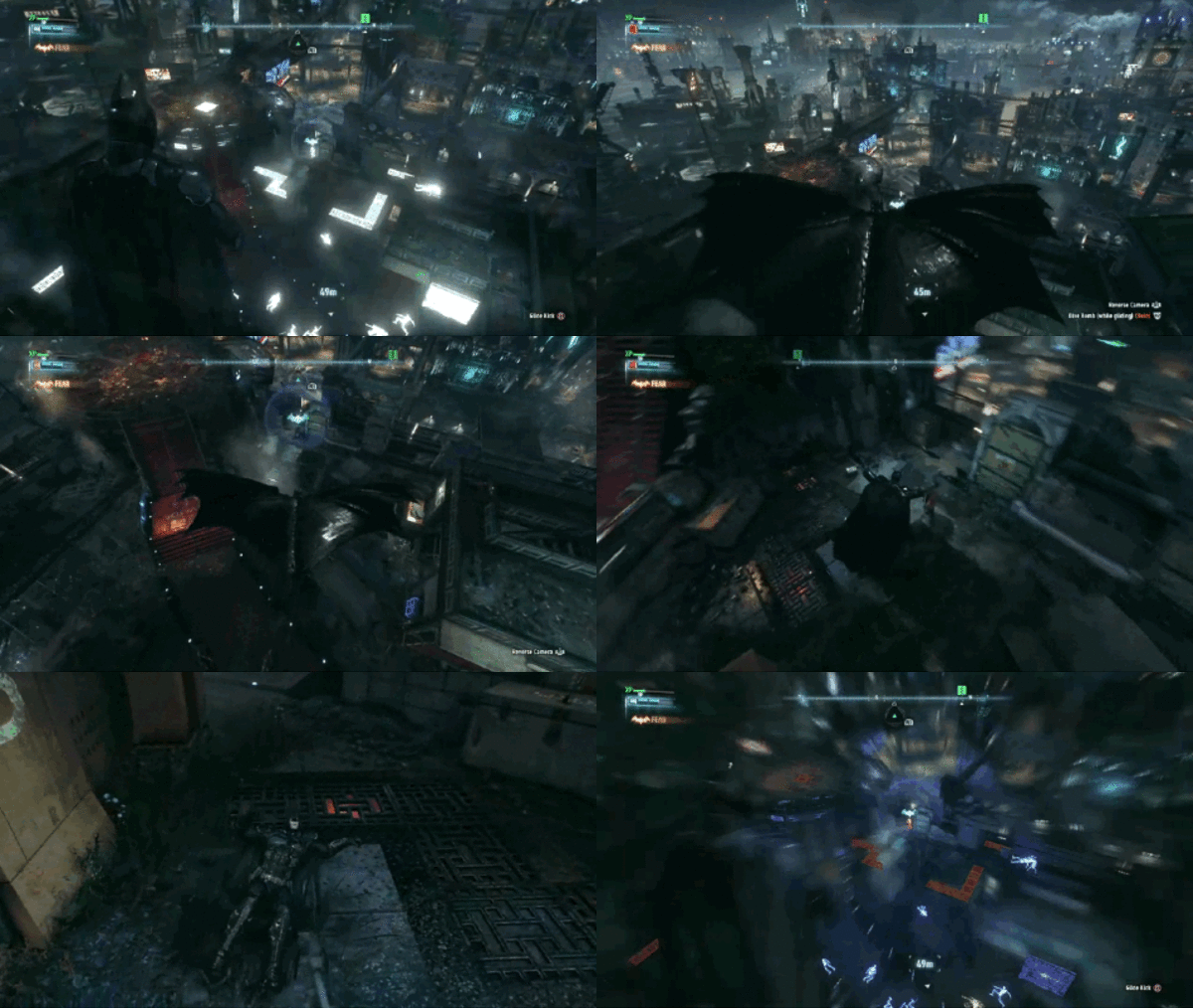
When stealth was introduced in Arkham Asylum, it was revolutionary. The Predator system allowed you to attack from the shadows and use your enemy's fear to your own advantage, and not only could you perform cool takedowns, but you could toy with your prey and send them into a blind panic.
However, while the ideas were great, the actual gameplay was a little rudimentary. Being seen meant you had to flip between gargoyles until the goons somehow forgot your location, while it was often just easier to resort to quick-and-easy silent takedowns to progress through areas, rather than use the variety of tools to your advantage.
While the tailor-made stealth areas in the original game at least provided you with enough encouragement to actually engage with the different ways to take out enemies though - and can excuse its rough stealth on being a first effort - by opening up the battlegrounds in the sequels, the tightness of those original areas was all but lost.
Unlike the always-satisfying brawling, the stealth system barely evolved in later games, and while the devs threw more enemies at you and gave you a larger arsenal, there wasn't the same push to experiment with solutions or play around with the people who's faces you were about to cave in.
6. Riddler Challenges Are More Effort Than They're Worth

At a time where video game collectibles were nothing more than throwaway fluff, Arkham Asylum's Riddler challenges gave you an actual reason to explore every inch of the game's open world. Not only did they reward paying attention to your surroundings, but they added new gameplay possibilities to old areas, while also being seeped in Batman lore that die-hard fans lapped up.
However as the games wore on and this element became more expansive and ambitious, it lost the charm it had in that original title. By the time Arkham Knight came round these Riddler challenges were part of a straight-up side quest with its own plot. Bigger isn't always better though, and between forcing you to do cut-and-paste challenges and non-sensical time trial runs in the Batmobile through Gotham's sewers, the once-satisfying feature began to feel like busywork.
It didn't help either that the villain himself would constantly badger you over the game's comms, making you feel as though you had to do them just so he'd stop bothering you.
5. Side Missions Are More Interesting Than The Main Plot

Perhaps because of the very nature of it being an open-world series, the stories of all the games - even though they have their high points - were often derailed by having to drag out their stories overs tens of hours that could be interrupted with player-driven sandbox crime fighting.
Consequently then, while the narratives were still pretty solid for the most part - especially scenes like The Joker's death and the finale of Knight - it was often the smaller, self-contained stories found in the side quests that were the most enjoyable. Fighting Professor Pyg and following his trail of dead bodies in Knight was genuinely haunting, while joining The Mad Hatter's tea party in City made for some of the best surreal sequences in the entire franchise.
Unfortunately though, these plots, which always threatened to have huge implications in sequels, were never properly followed through on. The Hush tease in City for instance set up a great personal story in Knight - a concept which was all but thrown away when the sequel actually dropped.
4. The Dedicated Levels Are Better Than The Open World

Look, don't get me wrong: the Arkham series is home to some of the best and most detailed open worlds in video game history. Though they aren't the biggest, they have the most personality, and are absolutely crammed with things to do, sights to see, and thugs to beat up.
That said, the actual dedicated levels which made up the majority of the series' main campaign missions were often far more interesting to explore. In these tightly-structured areas the devs were able to indulge in more imaginative visual themes and design, rather than being confined to the regular layout of a city (even one as mythical as Gotham).
Consequently, there have been some incredibly memorable locations from throughout the series, be it the Penguin's lair in City (which had a frickin' shark inside it) or the dreamscapes conjured up by both Ra's Al Ghul and The Scarecrow, which stand out more than the occasionally forgettable landmass of the actual open world.
Obviously it's the blend of both that makes the games so impressive, but the more focused gameplay and stories that are found in the actual levels is better than the free-form exploration of the series' many sandboxes.
3. The Tank Combat Wasn't THAT Bad
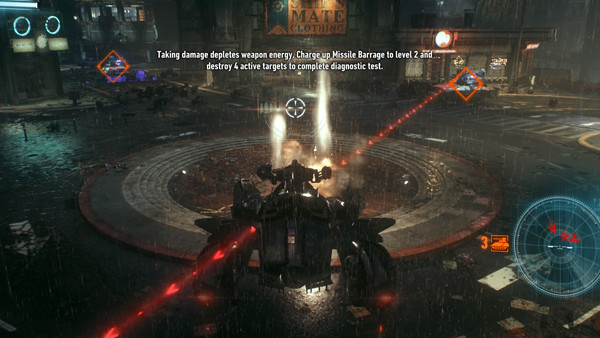
While Arkham Knight drew a lot of ire for many things, by far the most contentious new feature it added was the Batmobile. Included in order to counter the larger open world the devs had created, players were able to explore the city in a vehicle for the very first time - however, the functionality of Batman's iconic Tumbler didn't end there.
Perhaps trying too hard to make the vehicle a thing, Rocksteady forced players to use it over and over again in tank combat sections, chase sequences and even to solve puzzles. None of these elements were outright terrible - and, in small doses, they were actually quite compelling - but the fact that so much focus had been put on the Batmobile rather than the regular systems we were used to didn't sit well.
Although all of the criticisms were valid in their own ways, the amount of ire the feature received wasn't entirely deserved. Blowing around corners in the Batmobile and taking chunks out of Gotham's architecture felt and looked amazing, and it more than justified the amount of times the game confined you to this rocket-powered tank.
2. Trading Gothic Sensibilities For Sci-Fi Was A Terrible Move
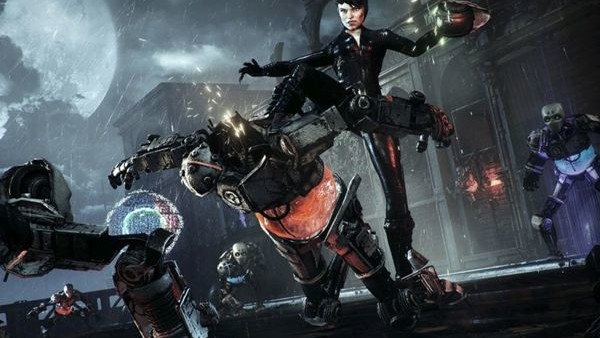
The original Arkham Asylum was steeped in the aesthetics of the early Tim Burton Batman movies, as well as the exceptional Animated Series, but as the franchise wore on, it moved away from this dark, Gothic design.
Although the shift is evident throughout the entire visual design and even in the U.I. from game to game, the changing approach to the world is perhaps summed up best by Batman's costume, which had a classic grey-and-purple tinge in the original, but was essentially an Iron Man suit by the time Knight rolled around.
The move towards sci-fi, with the inclusion of robots and tech-powered villains still made for great games, but it completely robbed the franchise of the mystery and the eerie atmosphere Asylum revelled in. That game indulged far more in the fantastical, mythical side of the superhero, hinting at supernatural powers and unexplainable phenomenon, whereas the later games were far closer to the grounded world of Christopher Nolan's movies.
That's not a bad thing in itself, but it jarred against the creative, imaginative world Asylum originally put forward.
1. The Story For Arkham Asylum Isn't That Great
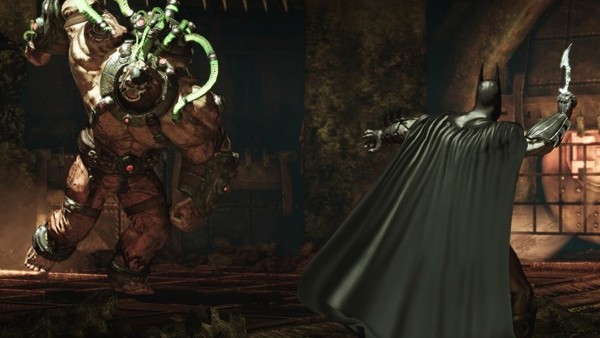
Although Arkham Asylum is still considered by many to be the crowning achievement of the franchise, its story doesn't quite hold up in retrospect. The concept is of course great, and putting The Dark Knight through one night of hell, trapped in the madhouse with his most dangerous foes, makes for a great premise, the actual story itself is disappointing.
Essentially, The Joker is just trying to create an army of monsters to terrorise Gotham with, and... nope, that's about it.
Sure, other villains are present too to act as obstacles for Batman to get through, but Bane, Killer Croc and The Scarecrow don't have an end goal other than "be bad guys". Poison Ivy fares a little better, but even then her plot is rushed, and her goal to destroy Gotham with toxin-powered plants comes out of nowhere.
The best Batman tales with The Joker as the villain focus far more on the anarchy and convoluted plans he's concocted to torment Bats with on a personal level, but here his plot begins and ends at "create an army of monsters". If that wasn't bad enough, then his final act, transforming himself into a hulking beast, feels completely out of character, and reeks of the writers running out of ideas.