10 Video Game DLC Stories Better Than The Main Game
More like Deliciously Luscious Content, am I right?

Video game DLC has long been a controversial topic in the video game industry. There have been many instances where, after paying the full retail price for a new game at launch, a post-game content drop features a bonus mission that is described as the 'true ending' for an additional cost. We have also seen old content re-released with slightly updated graphics, and others that are simply not worth the additional expenditure.
Done well, however, and players get content that breathes new life into video games, allowing avid consumers hours of extra fun immersing themselves in their favourite titles and franchises. Sometimes, we even get content that improves on many aspects of the original game. Maybe it's providing a deeper backstory for your favourite character, maybe it's showing the story from a different aspect that changes your perceptions of events, or maybe it's a what-happened-next that just managed to be more interesting.
When it comes to crafting DLC, developers and writers have the beautiful virtue of hindsight; they can see what the players liked and disliked and can take these opinions and suggestions on board to craft DLC that's exactly what the player wanted.
10. Batman: Arkham Origins - Cold, Cold Heart

Acting as the third instalment of the Batman: Arkham franchise, Arkham Origins is in fact the lowest rated of the entire series by Metacritic and user scores, and with it lacking genuine character exploration and depth, you can see why.
We all already know that the Joker is a psychopath, that police captain James Gordon will come to trust Batman, and that Batman will never kill his foes. In this sense, the game is simply going through the same motions we have seen before.
What the Cold, Cold Heart DLC adds to this title, however, is this much-needed depth. Victor Fries, or Mr. Freeze, is a compelling character that acts not out of hate, but out of love. Yes, many of his deeds are misguided and, to be fair, evil, but it is all as a result of the betrayal he suffered while trying to cure his dying wife. Nora, who suffers from Huntington's Chorea, a degenerative disease, has been placed in cryostasis in order to provide the time needed to curate a medicine.
Batman is forced consider his own conscience and moral compass in order to combat this deadly foe, which is far more compelling than simply swinging his fists at the latest villain that is a villain just because. Consider this the rectifying of Arnie's portrayal in the role.
9. Bioshock 2 - Minerva's Den

Occurring parallel to the events of the core game, the Minerva's Den story DLC of Bioshock 2 sees the player assume control of Sigma, the eighteenth alpha model 'Big Daddy' constructed in Rapture. Sigma is given the task of retrieving the original programming code of a super-computer entitled 'The Thinker' in order to begin synthesising a cure for ADAM; a chemical substance that allows the alteration of one's own body.
Brilliantly balancing quiet exploration with enthralling combat against the genius-turned-madman Reed Wahl, we follow Sigma as he explores Minerva's Den, as well as the history of Wahl's partner, C. M. Porter. Porter, the original creator of The Thinker, sought to make the machine more human, and clashed with Wahl over this. Wahl betrayed Porter as a result, having him arrested and taken away from Rapture. So what happened to Porter?
Well, it turns out that Sigma is Porter.
You have gone from an unthinking Big Daddy fighting a madman to a brilliant scientist, violently warped against your will through splicing, sent to fight the man directly responsible for this horrific transformation.
Intrinsic layering is key to any great narrative, and whilst Bioshock 2 creates a fantastic story surrounding Subject Delta and his Little Sister, Eleanor, the Minerva's Den DLC to this day stands out as one of the most compelling and memorable stories in the entire franchise.
8. Dishonored - The Knife Of Dunwall/The Brigmore Witches

Dishonored's opening is one of the strongest is recent gaming memory. You, playing in the role of Corvo, are the personal bodyguard to Empress Jessamine Kaldwin and her daughter, Emily. Mere minutes into the game, however, you witness Jessamine's murder and Emily's kidnap, and are subsequently arrested and blamed with the crime.
DLC packs The Knife of Dunwall and The Brigmore Witches place the player into the shoes of the master assassin that carried out the murder/kidnapping, Daud, who is sent on a mission to uncover the identity of 'Delilah'.
In a gripping tale of mystery and betrayal, as Delilah reveals herself at the end of the first DLC to be the leader of the Brigmore Witch coven, and the subsequent The Brigmore Witches DLC sees Delilah's master plan revealed: she intends to extract the mind of the young heiress, Emily, and take control of not only her body, but the entire empire.
What these DLC expansions provide that the main Dishonored title arguably does not is a depth to the protagonist. Attempting to redeem yourself through an entire arc in which you are one of the most despised men in the empire is far more compelling than Corvo's journey in the base game.
The real kick in the gut is if you have become attached to the roguish assassin, but you had Corvo kill Daud after their confrontation in the base game, which is how The Brigmore Witches will end.
7. Borderlands 2 - Tiny Tina's Assault On Dragon Keep

A wacky recreation of Dungeons & Dragons in a video game? Sign me up!
Although Tiny Tina is largely a tertiary character in the base game, appearing in only a handful of missions, she is the central character in the DLC expansion Tiny Tina's Assault on Dragon Keep. In this expansion Tina plays the role of the 'bunker master' in a game of 'Bunkers & Badasses', with the players of the game being the remaining original Vault Hunters. I say remaining because Roland's death in Borderlands 2 at the hands of Handsome Jack is canon in this fun little side-story.
A thoroughly interesting take on the popular table-top game, this DLC is laden with wit, action and incredible characterisation. What makes this DLC truly great, though, is the development of Tiny Tina herself. The thirteen-year-old explosive-obsessed headcase that is Tiny Tina became very attached to Roland - this is plain to see through her attempts to shoehorn a likeness of Roland into seemingly random parts of their B&B campaign - and up to this point had refused to accept his death.
Following the death of the Handsome Sorcerer in the campaign, Tiny Tina finally seems ready to accept the death of her friend and move on, making this a truly moving and emotional moment for the Borderlands series.
6. Grand Theft Auto IV - The Ballad Of Gay Tony

Despite being a brilliant game, well-reviewed by critics and consumers alike, Grand Theft Auto IV saw a lot of criticism for its slower, grittier gameplay and the browish-grey colour palette used by the designers at Rockstar. This criticism is fair when considering the bright, vibrant environments of Liberty City Stories and Vice City, and so Rockstar turned to its DLC to appease these unhappy customers. Enter: The Ballad of Gay Tony.
The DLC follows business partners Tony Prince and Luis Fernando Lopez. In a far more glamorous depiction of Liberty City, Luis and Tony become wrapped up in both the celebrity nightclub scene and the vicious gangster underworld. The duo owe a lot of money to dangerous people, which opens a cesspit of lies and deceptions from any and all involved parties.
The Ballad of Gay Tony is a brilliantly immersive piece of story telling filled with drama, humour and betrayal, as well as rectifying some of the issues that the main GTA 4 story and gameplay had.
Should Luis appear in the upcoming sixth instalment, lets just hope that he meets a different fate to his far less fortunate DLC counterpart, Johnny Klebitz, who was last seen on the underside of Trevor's boot.
5. Diablo II - Lord Of Destruction

The Lord of Destruction DLC acts as a direct continuation of the story, picking up straight from where Diablo II leaves off. After two of the three 'Prime Evils', Diablo and Mephisto, are slain in the base game, the DLC follows the hero as he sets out to kill the final member of the trio, Baal, also known as... the Lord of Destruction. Cue the dramatic 'dun-dun-duuuuuuunnnn'.
Baal murders the Diablo II narrator, Marius, and is now in possession of his own Soulstone. Seeking the Worldstone in order to use it to conquer the mortal realm and escalate the war between heaven and hell by attacking heaven directly, Baal leads an invasion of the Northern lands to reach the mountain where the Worldstone resides.
The hero, naturally, must put an end to this invasion, slay Baal and destroy his Soulstone to prevent his return.
In the Lord of Destruction DLC, not only does it build on the lore of the world of Diablo with an additional act, but it is generally seen as the better gameplay experience. This expansion adds new character classes and items as well as entirely revamping the single-player and multiplayer engines in the game. Features from expanded stash to a larger screen resolution to charms and runes all go to make this a must-buy expansion.
4. Outlast - Whistleblower
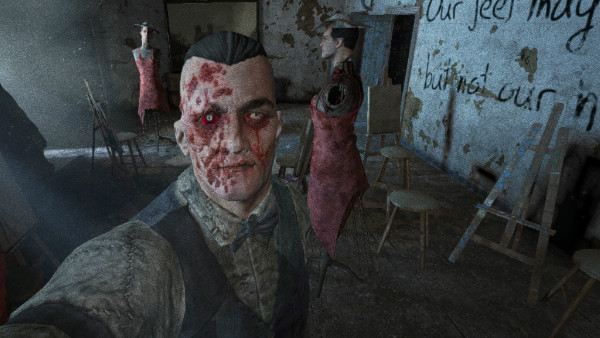
One of the scariest games not only in recent memory but of all time, Outlast generated an overwhelmingly positive response from its player-base for its horrifying blend of jump-scares and methodical skulking.
Acting as a prequel, Whistleblower has players follow software engineer Waylon Park as he attempts to expose the corruption at the asylum (the event that leads to the story of main Outlast game). Waylon is caught by his employer, Jeremy Blaire, and is subsequently admitted to the asylum as a patient. Waylon is a first-hand witness to the riots and murders in the asylum and, similar to Miles, must find a way of escaping with his life and reveal the truth.
In the closing moments of the story, we see Waylon escape in Miles' red jeep, as well as a now-resurrected Miles, controlled by The Walrider, also leave Mount Massive. The story of Whistleblower elaborates on the initial story of Outlast, providing details around the cause of the incident along with a satisfying ending for Waylon, Miles/The Walrider and Mount Massive, making it a must-play for fans of the series.
If you only play these games for the gore, there's also an inmate that mutilates genitals, so go nuts.
3. Destiny - The Taken King

You don't often hear the word 'Destiny' in the gaming community without the preamble of 'vanilla' tagged on to it.
Destiny had a decent premise: you are a resurrected Guardian, brought back to life by the Traveller's Light, who is sent on a mission to defeat The Darkness and save humanity. The Taken King is the final part of a largely standalone storyline that spans three DLC's, separate from the events of the base game.
Whereas with most of the other entries in this list, where I have focused on specific aspects of each DLC, the thing that The Taken King adds to Destiny is an actual proper story. With impactful cutscenes involving many of the key characters finally interacting with one another, discussing how they will approach tasks and clashing over different methods and personalities. The expansion also built on the most beloved and well-written character of the entire franchise, Cayde-6, who adds brilliantly mistimed wit to the generally dour story.
Not only did The Taken King build upon the lore of Destiny, it also introduced a large batch of new content as well as revisions to some of the preexisting issues of the initial release. Interface changes, quest system revisions, PvP maps, updated voice acting and existing plots were adapted to accommodate for all of this brand new content.
2. Left 4 Dead 2 - The Sacrifice/The Passing
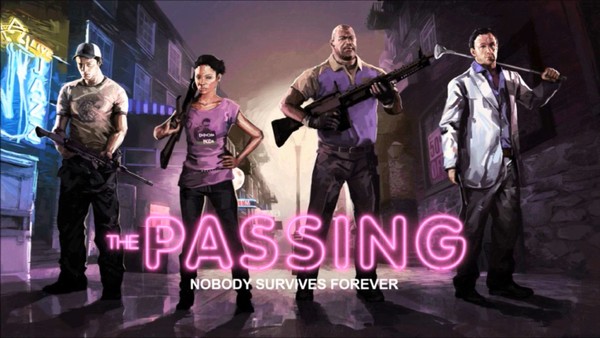
Left 4 Dead 2. Ironic how this critically acclaimed franchise is currently living up to its name, with this decade-old game being the most recent release from Valve.
It is safe to say that very few people play Left 4 Dead 2 for the storylines or character development, mainly because there isn't really any. The characters have quirky interactions and one-liners and there is a loose plot from mission to mission, but that's about it.
The two games feature separate groups of four survivors: Bill, Zoe, Francis and Louis in the first, and Coach, Rochelle, Nick and Ellis in the second.
The Sacrifice DLC follows the original four survivors. They manage to find a boat, but in order to use it as a getaway vehicle, the bridge must be raised. Bill heroically sacrifices himself to save the others, staying behind to operate the generator.
In The Passing DLC, the second group reach the same bridge and meet the other survivors there for the first time. They encounter the same issues with the bridge, which is when they find Bill's corpse.
This small segment of additional content is the closest we ever got to any narrative or character development, and it's a shame that is came with the demise of a beloved character, but this is exactly why fans are craving a third instalment.
In Bill's honour, say it with me one last time: pills here.
1. Duke Nukem Forever - The Doctor Who Cloned Me

Fourteen years. FOURTEEN YEARS. For Duke Nukem Forever. Panned by critics and consumers, the latest of iteration of the Duke found itself pushed onto shop shelves with a style that just didn't belong anymore.
Following another alien invasion on Earth, Duke does what Duke does best: kill the extraterrestrials and save (some) women. In a game where throwing faecal matter, disrespecting far more successful titles and Duke Nukem wanting to become the 69th President of America is the basis of the humour, it was always destined to fail.
Following the nuclear bomb that dropped at the end of the base game, The Doctor Who Cloned Me retcons the presidential campaign, revealing that Duke had been captured and the aliens were impersonating him in order to take over the world. Duke must fight through an army of clones of himself in order to save his planet.
The Doctor Who Cloned Me simply cannot improve or remove many of the aspects that made the initial launch of Duke Nukem Forever flop, but with the better-placed humour and more imaginative story segments, such as driving on the moon, we see more the promising aspects that the game should have followed through on.
The weightless combat and uninteresting AI remain in place though, and for the foreseeable future at least we can comfortably say that Duke Nukem is a dead and buried franchise. What a shame.