10 Video Game Mechanics EVERYONE Should Copy
When "copycatting" should become iteration.

Mechanics might very well be what makes a game, and most of the time it's the selling point. Game companies will argue that their products are packed with improved and tweaked gameplay features, while others suggest they're bringing something entirely new to the table. But at the end of the day, these systems are just the mechanisms that allow players to achieve their in-game goals.
Sometimes, however, a company creates a mechanic that is so innovative that it shifts our outlook on games as a whole. This element, whatever it may be, needs to be adapted to other, related games. But that's not always the case.
When a game is published, they don't want to be labelled a "copycat," they want to stand out. So instead of implementing this wonderful concept, they may prefer to disregard it or build their own version, which typically pales in comparison.
In this article, you'll find ten of the most ambitious and game-changing mechanics ever published in the gaming medium. Although not compulsory, these systems need to be researched by other game companies in order to be able to mimic, if not directly copy, these amazing systems.
As gamers, we love it when a solid system functions perfectly, and these mechanics suit the bill.
10. The Second Chance - Sekiro: Shadows Die Twice

Think about some of the games you've played and the bosses throughout. How many times did you have to struggle through the same process over and over just to get to the next phase and die right away? What about dying to a boss when you've nearly defeated them?
Typically, when you battle a strong opponent and you die, you return to a checkpoint and must fight again. Not in Sekiro.
Instantly, but only once, you can resurrect to proceed. The developers made a brilliant decision as this helps the player to adjust to the boss or destroy what is just one or two hits from death.
It's a framework that really ought to be in a lot more games. Being able to spawn back instantly, even if just once, will almost always give you that edge. It could give you more time to learn how to deal with the bosses' tactics or to kill a boss who was only one hit away from killing.
Although Sekiro has a subsystem attached to the Second Chance to prevent it from being overused, it's still an amazing idea.
Don't underestimate it. Sekiro is extremely difficult, even with this mechanic.
9. Enemy A.I. Adaptability - Metal Gear Solid V: The Phantom Pain

Enemy A.I. has the unique ability of utterly and completely ripping the player out of the game. You could be sneaking around, and poor A.I. results in an enemy seeing you when you were clearly hidden.
Oftentimes, when you're spotted, they will give chase for only a little while, then give up and go back to patrol. Only one game has near perfected it.
Metal Gear Solid V has, bar none, the best enemy A.I. in gaming, and this is because they adapt to the player. For example, they all communicate over radio in-game. If you take someone out and they don't respond to a radio call, the enemies will search the area to investigate what happed, then be in a permanent state of high alert.
As you play through the game's various missions, enemies will learn from you. Get too many headshots and they'll will start wearing helmets, or gas them out and they'll start wearing gas masks.
As games become bigger and more immersive, we simply can't sit on poor A.I. anymore. While a lot of recent games, like The Last of Us Part II, have adapted excellent enemy A.I., no one has truly matched the level of detail that MGSV obtained in 2015.
It honestly puts a smile on your face to see enemy A.I. this good.
8. Dynamic/Adaptive Music - Devil May Cry Series

Music in games, as in movies, sets the mood and atmosphere of what you see. Most games have unique musical arrangements for when you get into battle, or when you're exploring areas, and a lot of the time you're going to hear the same scores over and over again.
That's what makes dynamic soundtracks so exciting, they respond to what's going on in the game.
The dynamic system of the soundtrack is the basis for the Devil May Cry Series. The better you fight, the stronger the music. It gets you fired up and it inspires you to continue performing at your best. Often the musical accompaniment of each level has its own combat theme, as the music is turned into an enticing and heart-pumping arrangement.
It's not all about the combat, either. Dynamic music must take into consideration the environment, enemy types, daytime, weather and all that could alter the style of the played music. In terms of what happens, it can significantly change the player's mood. If you're losing, sprinkle some hope with the music of sorrow. If you clash in the snow, maybe you have some instruments of a holiday kind, such as bells.
Nothing sucks you in more than a truly immersive soundtrack.
7. Physics Puzzles - Portal 2

Gaming puzzles will, more often than not, be handled either simply, terribly, or both. It may just be a simple multiple-choice answer or even an overused "place this block on the switch to open the door." Now, what about games that have their whole playtime focused around puzzle-solving?
Portal 2 is such a game with a basic concept: It's a puzzle game in which the player is given a machine to build linked portals, and use them to traverse zones, which would otherwise not be possible.
The physics-based nature of puzzle resolution stands out, portals aside, and very few games really have adapted this special and superior way of solving environment-related puzzles.
Players want to be immersed in their gaming experiences, so being able to communicate with all facets of the world and experiment within the boundaries of the game allows the brain to work at peak output.
Think of Breath of the Wild - this game gives you the tools you need to experiment within the environment. Instead of fighting some enemies, you could force a boulder down on them, start a fire to confuse them, or even freeze them in place.
Physics-based puzzles aren't just fun, they're incredibly rewarding and engaging.
6. In-Game Time Passes The Same As Our Own - Animal Crossing Series

Day and night cycles in games are sort of strange, aren't they? On average 24 in-game hours are typically equivalent to around 22-30 real-life minutes. That's incredibly short, particularly when you're trying to get caught up in the game world.
Animal Crossing, however, plays in real-time. Whatever time the day is for you in the real world means that it's exactly the same in the game because it's moving in real-time.
This keeps the player on track, having to turn on the game at certain times in order to accomplish specific goals, and most objectives can only be achieved between certain hours, or certain animals are available not only at specific times but also during the different seasons in our calendar year.
This system of real-world timing would be a major game-changer for open-world titles. Imagine if Watch Dogs: Legion had incorporated this mechanic. The big selling point of Legion is that every character is playable, and they all live their own individual lives in-game. Keeping track of those you would like to recruit would be a lot more tactical and satisfying if you only had precise timed windows all day to connect with them.
It might not be for everybody, but it'd certainly be a great step in a totally different direction.
5. A Realistic Political System - Crusader Kings 2

Strategy games are packed to their limits with mechanics, and Crusader Kings 2 is no different. But it really shines through the political system.
You're in charge of a country like most other similar titles. The difference is that you play as a specific person. The world of this game is full of real people. Your person will age and die during the course of the game and you will take over as their heir.
You have ambitions, needs, and relationships, which are simulated by your own personalities and motivations. You can also develop relations with others, who also have their own personalities and motivations.
A system like this would be a game-changer in any open-world game. For example, imagine a city in an RPG with laws that prohibit you from achieving your goal. In a method similar to Crusader Kings 2, you might pull down the city's leaders and maybe put other people in their seats who have their own interests more in line with yours.
It's very ambitious, thinking about how some of our favourite RPGs and open-world games would have played entirely differently if they had this system in place. Future games in these two genres really ought to think about incorporating what Crusader Kings 2 has accomplished.
Politics is generally dull, but this system makes it a lot more interesting.
4. Shoot Dodging - Max Payne

With Max Payne 3 Rockstar Games created one of the best third-person shooters of the Xbox 360/PS3 generation, and part of what made it so great was the gunplay, especially the shoot-dodge mechanic.
Being able to dive through the air in combat to get from cover to cover while shooting makes for fast-paced gunfighting, and it seems puzzling that they would not include this feature in their other franchises.
Both Grand Theft Auto V and Red Dead Redemption II have been released years after Max Payne 3, and both offer similar mechanics when it comes to their gunplay. It's obvious that Max Payne 3 had an effect on their gunplay, but they don't include a shoot-dodge mechanic; all three have a type of bullet-time mechanic though.
There have been a few older games that have adopted this feature. Both Stranglehold and Enter the Matrix have a type of shoot-dodging in their gunplay.
While some of these types of games may not benefit from this mechanic, such as the Gears of War franchise, it is undoubtedly a very useful feature, and more third-person shooters should seriously consider adding this ability.
Plus, it looks cool as all hell.
3. Mark All As Seen - Assassin's Creed Valhalla
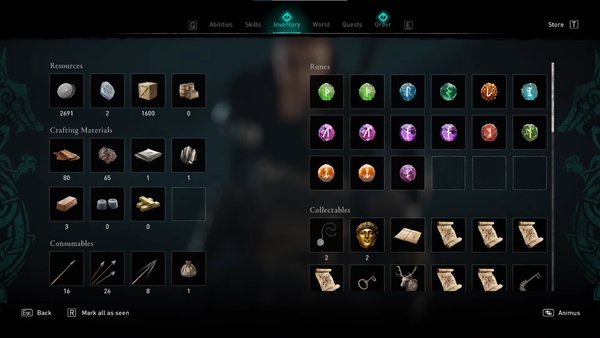
Big open-world RPGs are packed with loot and lore to be discovered, and it's safe to assume that the bigger the world, the more there is to be found.
This is most obvious in the last two entries in the Assassin's Creed series, Origins and Odyssey. As you explore these worlds, your menus were constantly be filled out with notification icons, so you have to scroll down your menu too with your cursor in order to get the icon off.
Valhalla has fixed this issue. At the bottom of almost all menus, you can press a specific button on your controller or keyboard and mark all items as seen. Poof! There are no more annoying notification icons. This saves players so much time to do other things, rather than scroll through the menu.
Other open-world RPGs have similar menus, but do not include such options. With the release of Valhalla, this button prompt needs to become mandatory; and it's hard to believe that this wasn't something that had been adapted in other games beforehand.
Just think of all that extra time!
2. Complex Skill Trees - The Witcher III: Wild Hunt

Too many RPGs have very simplistic skill trees, and it is obvious to the player that one particular direction is the way forward. Skyrim may integrate complex skill trees, but let's be honest; we all end up becoming a sly archer sooner or later.
Not with games like Witcher III. It has a set of complex and deep skill trees that allow the player to explore these in-depth and find a play style that's right for them. Skill trees have become simpler than ever to append, advance, and change to match one's play style, and Witcher III is no different.
If you want to hack-and-slash your way through, you can, or if you want to rely more on magic or gadgets, you can do that as well. This gives the player a gaming experience that is entirely exclusive to them and even opens the gate to play in a different style on repeat playthroughs.
One thing that's good about this entry is that we've seen it adopted in recent games. Borderlands 3, Jedi: Fallen Order, and to a lesser degree, Destiny 2, all have decently complex skill trees that offer players a personalized experience.
Playing through a game once is great, but complex skill trees make for a whole new level of replayability.
1. Nemesis System - Middle Earth: Shadow Of Mordor/War
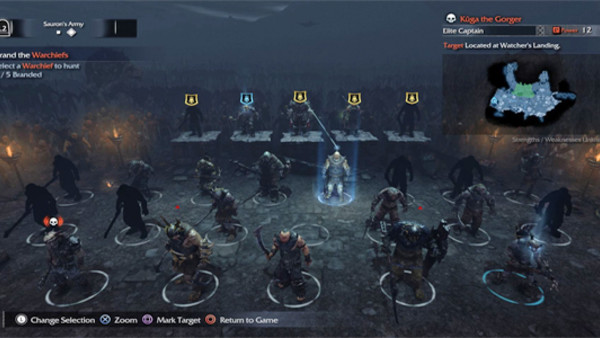
When Middle Earth: Shadow of Mordor was released in 2014, we sort of found out what we were getting from the previews: a semi-open world action RPG with Arkham-style combat. But what really stood out was the Nemesis system, and we weren't prepared for just how groundbreaking it would be, or how the 2017 sequel would enhance it.
In the Nemesis system, these games build living, breathing enemies that have their own lives outside of what the player does. They will have their own enemies and friends, die without the player's input, and if the player pushes themselves into their lives, create lengthy rivalries that will last the whole game.
You're also in a position to warp your enemies and turn them over to your side, creating your own army of evil orcs.
This is the mechanic that everybody should have copied. It creates unforgettable encounters, complicated fights with tough enemies, and most of all, can completely immerse the player in the environment. There's nothing like cutting off the enemy's arm, making them run away in terror, and seeing them turn up some time later, far more powerful and with a blade welded where their arm used to be.
Seeing this mechanic introduced in future games in other series would make for a dream come true.