10 Video Game Mechanics We Can't Believe Were Left To Die
Remember when variety was king?
To paraphrase the words of Van Halen, "When was the last time you played something for the first time?"
I'm not talking about a new game in general or a sequel, but the last time you got hands on with a title and realised you'd never played anything like it before.
That's where things get way harder, as especially this generation, outside the indie space the vast majority of developers have conjured up handfuls of bankable formulas and stuck to them.
For me, the answer was Death Stranding - something that has elements of third-person shooting and environmental traversal, but was ultimately a "hiking sim" where buttons were used for balance, climbing, grabbing packages off the ground or hurling them at enemies.
There was a real surprise behind Death Stranding playing its hand, and it reminded me of just how much previous generations used to prioritise this notion of not knowing what you were in for.
When budgets were more relaxed, a wider set of ideas got greenlit, and chances are the reason you fell in love with gaming overall, was down to not knowing what was next.
If there's one major thing the next generation needs, it's new ideas, as take a look across what we left behind, and you'll be wishing they never went away.
10. Telekinetic Powers (Weapon Or Character-Based)

Seen in: Psi-Ops: The Mindgate Conspiracy, Second Sight, Star Wars: The Force Unleashed
Yes, Control and Jedi Fallen Order brought this back in 2019, but 1. It was the first "telekinesis-based action game" in about a decade, and 2. You couldn't pull off anywhere near as much Insane Business as Psi-Ops: The Mindgate Conspiracy.
See, back in 2004 we had two competing titles that both let you smush soldiers' heads into the pavement, with Psi-Ops joined by Crytek's more narrative-focused, Second Sight.
Immediately it was insanely fun to know entire levels of objects, panes of glass and ledges could factor into combat, and many of us got to work throwing goons through windows, launching them off cliffs, or just into each other.
This natural extension of grappling and throwing enemies was largely carried over to Star Wars: The Force Unleashed, but after that? VERY few - if any - titles have prioritised telekinesis or given you an ability where you can manipulate the environment.
In an age where game engines could render thousands of wood splinters, complete terrain deformation or a damn fine reflection being shattered as you introduce a foe's face to it, why has this not returned?
9. Takedowns, Stunts & Carnage (Arcade Racing)
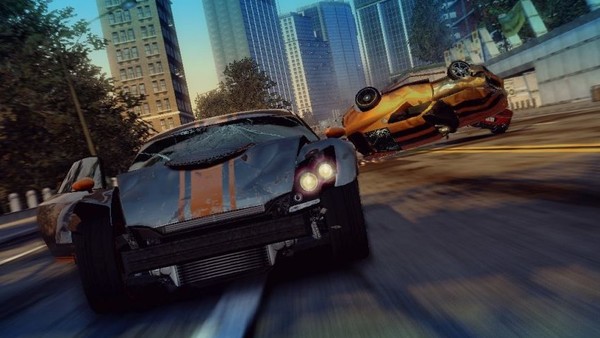
Seen in: Burnout, Split/Second
When it comes to the arcade racing genre, it feels like industry-leader Burnout arrived almost fully-formed, delivered the phenomenal Burnout 3: Takedown, the million-selling Burnout: Paradise... and nothing else.
Criterion's expert blend of slamming rival cars into oblivion was perfectly iterated on with Split/Second - a game that let you weaponise Hollywood action set-pieces to crush the competition with aeroplanes, boulders, explosions and everything in between.
Then... well, Criterion were snapped up by EA to work on increasingly terrible Need for Speed sequels, and Black Rock were disbanded after Disney refused a Split/Second sequel, leaving them to work for a smattering of other studios.
Point being though, that arcade racing was spectacular.
Turn10's Forza Horizon series is the nearest thing we have to a truly overblown head-to-head racer where speed is king and snappy controls back everything up, but there aren't any takedowns, traffic collisions or signature elements that we associate with the genre.
Burnout Paradise's remaster getting back to no.1 in the UK proves there's a huge desire for more of this stuff, and even Dangerous Driving (made by ex-Criterion staff) getting off the ground with its minuscule budget, hopefully indicates arcade racing can return in full.
8. The Portal Gun

Seen in: Portal, Darksiders
A very specific thing, but the "portal gun" here represents that idea of playing around with a 3D space, in some way that isn't just climbing or surmounting it.
Obviously we have the almighty Portal and its immaculate sequel to go off, but out of nowhere, the first Darksiders included a portal gun for War to blast from place to place with - albeit in a far more restrictive way.
Having gone back through both Portals recently, I was reminded how momentum, inverting perspective and thinking of open spaces in non-linear ways is a fascinating and rewarding experience. These games even play with using the weapon in combat too, letting you rig portals to drop items on enemies from above, warp behind them to gain the advantage, or open one on the floor to dodge some bullets.
The likes of The Talos Principle had minor teleportation aspects, and Outer Wilds works wonders with artefacts and ruins only being seen at certain times of day, but the fully-named "Aperture Science Handheld Portal Device" deserves to be iterated on in so many new ways.
7. Complex & Rewarding Controls

Seen in: Skate
Just what the hell happened to the formerly loveable Skate franchise?
After three main instalments and a couple of spin-offs, the reality of the IP dying came from EA redistributing core staff to other projects - thereby splitting up a team of devs who were skaters themselves. However, nothing was done afterwards to mimic custom control schemes - especially for skateboarding itself.
Honestly, when was the last time you had to actively figure out a fresh control idea for a genre or game?
All first-person shooters and cover shooters play the same, the vast majority of third-person action titles share scores of button allocations, and something like using the right analogue stick for your feet in Skate, never saw further innovation or replication.
Why - when Skate was so unique, rewarding and bankable - did this entire method of thinking just go away?
6. Uber Tricks

Seen in: SSX Tricky, NBA Street, Freekstyle
The opposite side of the coin to in-depth controls and working your way up to kickflip'ing onto a grind-able ledge, is the overblown, patently ridiculous and STUPIDLY FUN likes of uber tricks.
Seen across all of EA BIG's games - a studio set up by EA when they used their monetary power for good - these moves were everywhere from SSX Tricky to NBA Street, Freekstyle to the Skills of FIFA Street.
Overall, they represented that notion of showing off. Of starting a game with a bang, or reaching the peak of your skill tree and just having fun with a given set of abilities. In SSX's case you were soaring through the sky with just your disconnected board and the whistling wind for company.
Characters cheered and quipped, fireworks went off all around, the music complimented the visuals by cutting out and slamming back in when you hit the ground - all of these games had such awesome identities, and the EA BIG label is remembered fondly.
The EA of today feel like a coldhearted corporate machine of microtransactions and repeat formulas, but showing off in gaming should amount to more than a freakin' dab.
5. Jumping Between Multiple Playable Characters

Seen in: Conflict: Desert Storm, Battlefield 2: Modern Combat, Brute Force, Mindjack
What's better than playing as a character, or a duo in co-op? Playing as an entire platoon of individuals, all with special attacks, personalities and ways to tackle the task at hand.
Something like Conflict: Desert Storm on PS2, for example, let you hop between four different soldiers, all equipped with different gear, that could be stationed anywhere on the map for the A.I. to take over.
This meant you could leave a sniper atop a hill, covering your infiltration as you chase a target, knowing they'd take care of any problems automatically. You could even continue to check in, seeing the A.I. do its thing up-close, as you worked towards that final goal.
Hardly any games would do anything like this going forward, as the internet meant online multiplayer was the way instead.
Brute Force was another awesome Xbox exclusive with squad mechanics where four heroes were open at once, and Insomniac's EA-riddled Fuse still had their signature approach to fun weapons across the platoon, providing variety in the field. Even Driver: San Francisco applied this approach to driving, letting you set up crashes or ambushes by "jacking" into an oncoming car and cutting off your opponent.
There's just so much more to do with teleportation and solo-based group mechanics in gaming.
4. Stealth, Stealth Kills & Enemy-Watching Completion Methods

Seen in: Splinter Cell, Metal Gear Solid
An entire genre reduced to "hide in the tall grass!", other than Hitman flying the flag for careful, procedural, rewarding stealth infiltration and execution, I can only point to Assassin's Creed as a notable franchise that still cares about implementing it at all.
And that's a massive shame, because both Splinter Cell and Metal Gear Solid were iconic and successful for a reason.
Yes, MGS - and stealth overall - came from the technical limitations of Hideo Kojima not being able to code a firefight on the ancient MSX hardware, but it became a staple part of any 2000s gamer's diet.
Sticking to the shadows, hanging above enemies, watching guard patterns and even having fun picking off the A.I. one by one. The Batman: Arkham series distilled the latter down to gargoyles and surprising people, but the idea of being a silent predator who expertly slinks from A to B was engaging, intense and memorable as hell.
Ironically, the stealth genre seems to have disappeared.
3. Overblown Arcade Versions Of Sports

Seen in: Def Jam, Redcard, WWE All-Stars
Another point that goes alongside uber tricks, showing off and studios like EA BIG being household names, games like Def Jam: Vendetta, Fight for New York and WWE All-Stars proved there was a market for more "cartoonified" approaches to specific sports.
This idea predated Def Jam, too. Nintendo had given us Super Punch-Out and Mario Tennis, and Midway's NBA Jam was legend, predating NBA Street. Things like Facebreaker and Ready 2 Rumble applied this mentality to boxing, and even the older WWE Smackdown! games were suitably ridiculous, letting you drop an elbow from 50 feet onto your opponent.
Across the 2010s though, all this went away.
As mentioned earlier, the nearest you'll get to an arcade racer is Forza Horizon, the Def Jam series died with ICON, boxing titles became minigames in VR compilations, and 2K took wrestling down an unbelievably boring simulation route.
Bring back arcade sports games, and quick.
2. 3D Brawlers With Environmental Interaction

Seen in: Urban Reign, The Bouncer, Jackie Chan's Stuntmaster, Jet Li's Rise To Honor
Whilst River City Girls, Mother Russia Bleeds and upcoming Streets of Rage 4 prove the brawler is going through something of a renaissance thanks to all-things 80s being "in", just what the hell happened to full-on environmental interaction, and 3D takes on the genre?
Maybe an entire generation was put off thanks to Square's The Bouncer being a weirdly slow, meandering mess that had a trailer full of lies on how it would play, but things like Namco's Urban Reign were incredibly fun.
Speaking of Namco, the Tekken Force mode was an early indication that they already had the technology to make more freeform brawling damn fun. Throwing a random soldier into a group of his friends as Heihachi Mishima is still one of my fondest Tekken 3 memories, and I wish the mode would make a comeback in itself.
Overall though - and maybe it's just me - but how much fun was clearing house in 3D brawlers?!
Coupled with splintering environments and the ability to take on a room of goons like your favourite martial arts master of choice, the game version of this would always be easy money.
1. Melee Finishers In Third-Person Shooters
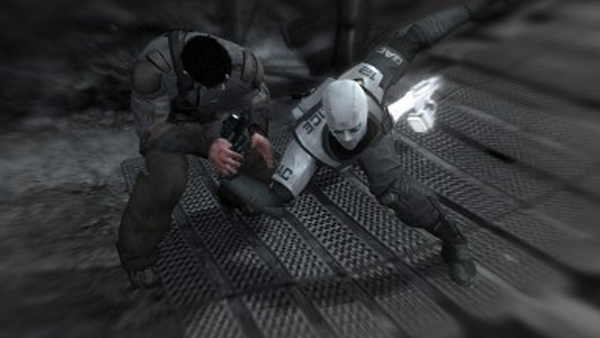
Seen in: Dead To Rights, The Punisher, The Order: 1886
Maybe this is a form of showing off, but I always go right up to the last person in a given arena of enemies and pull off a melee execution - just because it feels damn fun, y'know?
At least, I used to - through the likes of Dead to Rights, The Punisher - even something like the James Bond games let you complete an area in style.
Now, some titles still let you pull this stuff off. Mafia 3 had face-stabbings and fatalities a'plenty, while Gears 5 lets you down enemies for a quick Torque Bow to the throat, but that's about it.
Obviously the medium has advanced and rightfully so. Not every game needs showerings of blood and guts to make it "cool", but what happened to supremely fluid, gratifying finishing animations in third-person shooters?