10 Video Games So Bad They Were Delisted
Video games so terrible they were pulled from sale.

We've all played our fair share of bad video games. No matter how great a game might look pre-release, few developers are above releasing a surprise clunker that falls far short of expectations.
Yet most bad games are quickly vilified by players and press alike and then we all move on with our lives, hopefully seeking out a better game next time.
But there are those rare video games bad enough that an atrocious Metacritic score just isn't enough - they're also so embarrassing for the developer and/or publisher that they end up getting delisted from online marketplaces.
Now there are often complex, thorny legal reasons for games being delisted, but in the case of these 10, it's clear that the publisher was desperate to wash their hands of a dud project as soon as their contractually required support period was over.
As a result, beyond seeking out a second-hand physical copy somewhere, most of these games can only be played by those who already own them.
As awful as all of these games unquestionably are, they do crowbar open an interesting discussion about the need for digital games to be preserved - yes, even the terrible ones...
10. Overkill's The Walking Dead

Overkill's The Walking Dead-themed FPS was finally released for PC in November 2018 after years in development hell, and unsurprisingly received predominantly negative reviews.
Critics dubbed it a generic survival shooter that felt like a glorified re-skin of Overkilll's Payday games, and was further undermined by both a litany of bugs and frustrating scarcity of checkpoints.
Sales were resultingly poor, shifting less than 100,000 copies in its first month.
In February 2019, less than four months after release, Skybound Entertainment, the company that owns the rights to The Walking Dead, announced that they had terminated their business partnership with publisher Starbeeze, and The Walking Dead would be delisted imminently.
Skybound held nothing back in making it clear that this was entirely an issue with the game's quality, saying in a statement to IGN:
"We did our best to work with Starbreeze and resolve many issues that we saw with the game, but ultimately Overkill’s The Walking Dead did not meet our standards nor is it the quality that we were promised. We are exceedingly sorry to our fans and share their disappointment in the game."
As a result, planned console versions of the game were also cancelled. The Walking Dead's failure had a significant financial impact on Starbreeze, which was forced to sell off assets and restructure itself to remain afloat.
9. Tony Hawk's Pro Skater 5

Tony Hawk's Pro Skater 5 is one of the most crushingly disappointing entries into any major video game franchise, releasing to scathing reviews from critics who criticised its dated graphics, poor controls, and jank-filled gameplay, while noting that it played like a game rushed out to retain the rights.
THPS5 was first released on September 2015 and actually clung around until early 2018 when it received its first delisting. Yes, there was more than one.
In the first instance we'll give Activision the benefit of the doubt - it was only delisted for a month, and could potentially have been related to music licensing issues.
But THPS5 was delisted once again, seemingly for good this time, across all platforms in May 2020, suspiciously just a few days after Activision announced their Tony Hawk's Pro Skater 1 + 2 remaster project.
Clearly, the publisher wanted to bury every last trace of the game and instead move forward with their new title, which went on to receive strongly positive reviews and effectively restored the series' tarnished reputation.
As for THPS5's lead developer Robomodo, they went bust less than a year after its release, which says it all really.
8. Afro Samurai 2: Revenge Of Kuma

The 2015 sequel to 2009's modestly received Afro Samurai game - developed by the ironically-monikered Redacted Studios - is by far the worst-reviewed game on this list, landing a brutal 21 Metascore after receiving 1/10 and 2/10 scores from most major review outlets.
Afro Samurai 2: Revenge Of Kuma was panned for its low-rent graphics, bug-filled gameplay, and atrocious controls, enough that some critics even called it flat-out broken.
The overwhelming disdain from critics and players alike caused publisher Versus Evil to remove the game from PSN just six weeks after release, and then from Steam barely a week later. In an unprecedented step they also refunded everyone who bought it.
Versus Evil's General Manager, Steve Escalante, later issued a statement calling the game a "failure," while confirming that two planned sequel projects had been cancelled because they couldn't, "in good conscience," put them into production.
7. Jump Force

Bandai Namco clearly hoped that their manga crossover fighting game Jump Force would be a mammoth commercial hit that flourished on the competitive multiplayer circuit above all else.
Sadly, that didn't happen, as reviews were largely mixed-to-negative, criticising the bland graphics, unrefined combat mechanics, boring campaign, and worst of all its unremarkable multiplayer suite, with the player-base consequently falling off a cliff within weeks of release.
In their defense, Bandai Namco did stick things out for almost three years, announcing this past February that Jump Force was being delisted across all platforms.
The response from most players, beyond the hardcore faithful, was one of absolute apathy, most having long-forgotten the game's existence.
Though some speculated that Bandai Namco pulled the game due to licensing agreements coming to an end, let's face it, if Jump Force had been the hit they were hoping for, they absolutely would've renewed that agreement.
6. The Culling 2

First-person battle royale game The Culling was launched in early access in March 2016, and though it initially fared well with players, its popularity eventually cratered as PlayerUnknown's Battlegrounds and Fortnite Battle Royale rose to prominence.
By December 2017, developers Xaviant Games halted development on the game and began working on a sequel, which was released in July 2018.
Ultimately few critics even bothered to review the game, though IGN famously gave it a brutal 2/10 score, lambasting its terrible gunplay and blatant attempts to cash-in on the success of PUBG and H1Z1, as well as its dead community even on launch.
User reviews were somehow even worse, with the average score currently sitting at an almost impossibly low 1.1/10.
Astoundingly, Xaviant made the decision to pull the plug, delist the game, close all servers, and refund all players just eight days after The Culling 2 was released.
The same day it was delisted, Xaviant's director of operations, Josh Van Veld, issued a statement where he said "The Culling 2 was not a game that you asked for, and it's not the game you expect as the worthy successor to The Culling."
Xaviant then refocused their efforts on supporting the original game, though due to dwindling revenues it too was delisted and shuttered in March 2019.
It exists today only as The Culling: Origins, a revamped iteration that limits players to 10 free games per day, after which they need to pay to continue playing. Unsurprisingly, it didn't go down well with players.
5. Teenage Mutant Ninja Turtles: Mutants In Manhattan
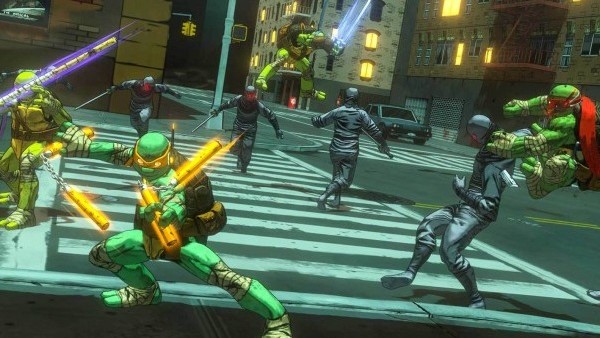
Hack 'n' slash game Teenage Mutant Ninja Turtles: Mutants in Manhattan hit storefronts in May 2016, and was generally pilloried by critics who felt it was a soulless, bland fighting game with a license cynically slapped on it to try and make some easy money.
Despite its name branding, Mutants in Manhattan was delisted from all digital platforms in January 2017, barely seven months after release.
While this delisting was primarily a result of Activision's deal to produce games for Nickelodeon properties expiring in 2017, it's also hilariously, transparently obvious that Activision greenlit this game as a fast-and-loose cash-grab before the rights ran out.
They knew it was something they could produce for a small budget within a short timeframe and squeeze for easy profits for a few months until the licensing agreement ran out, and that's exactly what happened.
Needless to say, had the game inexplicably received rave reviews and sold well, Activision might've considered re-upping their deal.
4. Lucha Fury
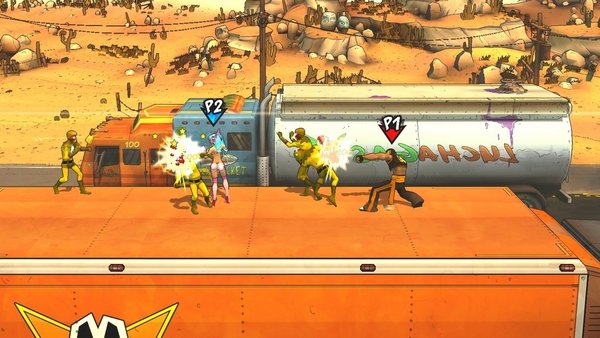
Don't feel bad if you haven't heard of Lucha Fury - this rickety throwback to classic beat 'em up games existed for basically a hot minute, dropping in June 2011 and being immediately panned into the ground by those few who bothered to even review it.
Giant Bomb called it "miserable garbage," while Gamespot lamented that its solid visuals were wasted on an otherwise boring, uninteresting homage to classic brawlers.
By December 2011, barely five months after its release, Lucha Fury was delisted from Xbox Live Arcade, its sole release platform.
The official party line was that the game was pulled due to developer Punchers Impact closing up shop and parent company Mindscape Inc. exiting the games industry.
But it doesn't exactly take much reading between the lines to observe that the game was pulled because it was a) awful and b) failed to turn anything close to a profit.
Ultimately mobile game developer Chillingo bought Lucha Fury in 2012 and repurposed it into an iOS title, Street Wrestler. Though this version received more broadly positive reviews, it too was eventually delisted from the App Store.
3. Cyberpunk 2077

Cyberpunk 2077 had one of the most infamously difficult and dispiriting launches of any recent AAA game, for while it ran well enough on PC, those playing on PS4 and Xbox One were beset by an avalanche of glitches and performance issues, enough that the game could certainly be called broken.
The backlash against developer CD Projekt Red, who concealed footage of the console versions prior to release, was severe, enough that just a week after launch Sony stepped in and delisted the game from PSN, while also offering refunds to affected players.
A platform holder voluntarily removing a huge game from their service was a virtually unprecedented move, and reflects how vitriolic the response was from understandably irate players. Microsoft meanwhile didn't delist the game but offered refunds to anyone who wanted one.
A patched version of Cyberpunk returned to PSN this past June, more than six months after it was first pulled, albeit with a caveat from Sony that performance and stability issues may still persist.
For such a massive, highly anticipated game to be removed from a major video game marketplace for over half-a-year is frankly astonishing, embarrassing, and indicates just how badly CD Projekt Red screwed the pooch here.
2. Fast & Furious Crossroads

Racing-action game Fast & Furious Crossroads was released in August 2020, and while pre-release expectations weren't exactly high, few could've anticipated it landing a savage 35 Metascore on PS4, with an even worse 1.7 user score.
The issues were myriad: the horribly dated graphics, terrible vehicular handling, worse camera, empty multiplayer, and generally feckless attempt to adapt a hit movie franchise into a video game.
Crossroads basically faded into the cultural ether within days of its release, and even flag-waving fans of the franchise likely only remembered its existence when publisher Bandai Namco recently announced it would be delisted along with its DLC and season pass on April 29 of this year.
Given that the game, marketed as a major AAA release, was barely on sale for 18 months before being canned, we can safely assume this isn't a licensing issue but rather that it's a terrible game that's no longer selling enough to justify maintaining it.
1. Paranoia: Happiness Is Mandatory
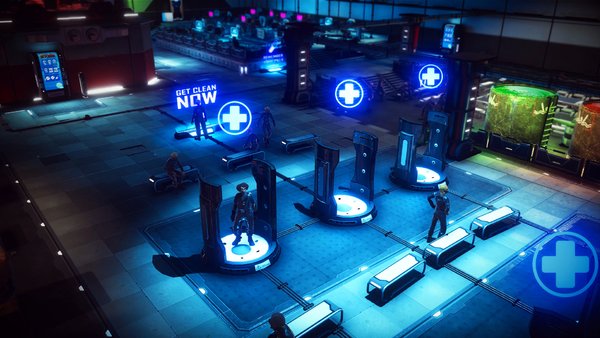
In December 2019 an adaptation of the classic tabletop RPG Paranoia was released on Epic Games Store, though roughly six weeks later the game was suddenly removed from the storefront with no explanation given by either developer Black Shamrock or publisher Nacon.
Early reviews weren't promising, with most critics dismissing Paranoia: Happiness Is Mandatory as a shallow, low-effort attempt to adapt the much-loved tabletop game to a new medium.
Yet recently Gamekult unearthed court documents which revealed that the game was released without publisher Nacon securing permission from the original game's creators, Greg Costikyan and Eric Goldberg.
Costikyan and Goldberg, who had played pre-release versions of the video game, felt that it was too buggy to be ready for release, and when Nacon ignored their requests to remove the game from sale, they contacted Epic directly with a DMCA takedown request.
Epic were obliged to comply with the request, Costikyan and Goldberg being the rights holders and all, yet only in recent days has the reason for its removal been discovered.
At present Paranoia still has a listing page on Steam, though its release date is merely listed as "coming soon." One suspects it isn't.