10 Video Games Stuck In Development The Longest
Making a triple-A blockbuster takes time.

Making a video game is no mean feat; it is perhaps the only industry in the world that combines all facets of entertainment. Developers have to produce jaw-dropping visuals, write engrossing storylines and lines of dialogue, compose an enthralling score and generate a strong enough marketing campaign to get people interested.
With so much more invested in what goes into making a game, there's been much more of an emphasis on quality over quantity for development teams.
Sadly, that has seen delays become increasingly commonplace for fans to endure.
'Development hell' has become the go-to industry term to describe usually overly-ambitious projects that spend a prolonged period of time being worked on. These projects usually involve big deviations in creative direction, changes in the team handling the work and scripts, and developing entirely new software before they finally find themselves hitting the shelves.
Sometimes these delays are the worth the wait, sometimes they're a huge bomb and, for some... we're all still waiting.
10. Scalebound

An action RPG title with a serious emphasis on cooperative gameplay with a dragon best friend and some of the most visually-stunning graphics in the gaming space at the time, it's clear how Scalebound became one of the most eagerly-anticipated titles of its day.
The concept of Scalebound can be traced all the way back to PlatinumGames' founding in 2006, but didn't officially enter development until 2013, following the completion of The Wonderful 101. However, despite director Hideki Kamiya proclaiming the game to be a dream come true, the combination of how ambitious a title Scalebound was, along with the lack of experience in this genre for Platinum, saw the title cancelled in January 2017.
Some were quick to point the finger at Microsoft for Scalebound's shelving, but Platinum have always been quick to shoulder the blame, with studio head Atsushi Inaba conceding the team weren't experienced enough to produce a game with so much emphasis on online features.
Despite this, whilst the game remains a Microsoft intellectual property, Kamiya has reiterated as recently as February 2022 that he remains 'totally serious' about releasing Scalebound one day.
After nearly a decade in development hell, it's safe to say fans have been patient enough with Platinum on this one.
9. Tekken X Street Fighter

Crossovers have become commonplace among the fighting genre, and in 2010 it looked as though players would be getting not one but two titles from two of the very best in the business.
At Comic-Con that year, Street Fighter IV producer Yoshinori Ono and Tekken producer Katsuhiro Harada announced two crossover titles for the games' two universes. But whilst Street Fighter x Tekken was released in March 2012, fans are still waiting for the Tekken alternative.
Unlike the Street Fighter title, the crossover was set to feature a 3D game engine to mirror Capcom's series. However, since the first announcement of the game, development has been a slow and frustrating process. Having to move over to a new eight generation of consoles, Katsuhiro Harada announced that the game was only 30% complete by 2016, when it had been first halted.
Despite this, Harada has never officially given up on someday releasing the game to the public. In June 2021, the director mentioned the game again on his Harada's Bar Radio YouTube show that 'no one really knew' what was going on with the game anymore, but that it hadn't been officially cancelled just yet.
He also claimed that some of the animations he had designed for the game had recently been used on Tekken 7.
8. Diablo III

Diablo II was released in the summer of 2000 and David Brevik and Erich Schaefer's creation remains a defining moment in the history of the Action RPG genre. On the back of its standing as a solid sequel to its predecessor, development for a third Diablo title was always going to be on the cards.
Development for Diablo III began in 2001 quickly after the release of its predecessor but it would take over a decade for it to actually reach the shelves.
The game wasn't even announced by Blizzard until the Blizzard Worldwide Invitational in 2008, but a variety of technical challenges and priorities elsewhere around the company meant that development progress would be slow.
Diablo III would eventually be released for Windows in May 2012.
What's more, in 2012 it was revealed that Diablo III would be making a jump to consoles, with the PS3 and Xbox 360 getting their copy in September 2013, PS4 and Xbox One in August 2014 and Nintendo Switch in November 2018.
7. Star Citizen

One of the most ambitious, albeit controversial, titles that has been stuck in development hell, Star Citizen has been in the works since 2010.
Pre-production on the game began back in 2010, however it was in September 2012 that its reputation began to make a splash in the gaming space. Announced via a successful crowdfunding campaign on Kickstarter that raised $2 million, Cloud Imperium Games' title was set to be one of the most expansive and ambitious video games ever released.
Seamless space-to-ground transitions, PvP modes, a cooperative campaign featuring Mark Hamill, and huge spaceships with explorable interiors have all been teased, but progress on Star Citizen has been slow (to be generous) since being opened up to the public.
Despite the Kickstarter closing in 2014 in line with the initially planned release date, Cloud Imperium have continued to raise funds by selling various in-game items.
To date, estimates have put the total amount raised for the game somewhere in the $500 million mark, raising plenty of concerns over whether or not these players who have invested for over a decade now will ever get their hands on a finished copy of the game.
6. Mother 3

Mother 2 (also known as 'Earthbound' to those outside of Japan) had one of the lengthiest development spells for its day, being worked on for over five years before being released in 1994. The game did well in Japan, but poor sales in North America meant that a sequel for one of the '90's best-hidden gems wasn't necessarily going to be a shoo-in.
Development for a sequel to Mother 2 began soon after the game's release with the majority of the same team working on the title. The game was designed for the 64DD add-on for the Nintendo 64, but the leap from 2D graphics to 3D ended up causing some major headaches in the development department, putting the game on hold over the course of the lifespan of the 64, and the company's next home console, the GameCube.
Developers Brownie Brown and HAL Laboratory persisted with the title, however, eventually releasing a top-down 2D RPG for the Game Boy Advance in 2006, 12 years after the release of Mother 2.
A Japanese-only release, Nintendo reportedly scrapped English localisation due to its emphasis on bereavement as a central tone and the inclusion of animal cruelty and drug abuse.
5. Duke Nukem Forever

Duke Nukem was a series going strong in 1996 following the release of its third major entry, Duke Nukem 3D. The title delivered the brash and unapologetically 'manly-man' approach to the 3D gaming space and, whilst it garnered some hefty criticism from its detractors, helped put the first-person shooter subgenre on the map.
The game's influence and strong sales of around 3.5 million units meant that a sequel was always on the cards, however it would take over fifteen years for Duke Nukem Forever to finally land.
With 3D Realms once again taking the lead for development, though it would take eight years for the first snippet of content to be revealed to the public. The company was then downsized, leading to 2K Games acquiring the rights and Gearbox Software taking over development. Interestingly enough, a version of Forever from 2001 when 3D Realms still had control of the project was leaked in 2022.
Duke Nukem Forever finally released in the summer of 2011, though most agree this probably wasn't worth the wait. The poster child of games that actually managed to get a release, Nukem Forever felt like a game that was still in the '90s with its clunky controls, poor graphics and abundance of crude humour.
4. Metroid Dread

2002's Metroid Fusion was a stellar side-scroller for the GameBoy Advance, winning Handheld Game of the Year at the 2002 Interactive Achievement Awards on the back of slick controls, visuals and music.
With the game making a splash in the handheld market, Yoshio Sakamoto began working on a sequel for the Nintendo DS. Between 2004 and 2008, there were at least two different attempts by Sakamoto to get the game out of development, but hardware restraints meant that the project bounced from delay to delay.
For Sakamoto, the game needed to be jam-packed and full of tension to accompany the plotline of Samus being stuck on an unexplored alien planet; a requirement that he felt the DS and its successor the 3DS couldn't provide.
The legendary status of Fusion and this 'fear-based gameplay' premise certainly kept hype for the game alive however, and fans would eventually get their hands on Metroid Dread a hefty 16 years in the making.
But, Sakamoto's vision would prove to be worth the wait following Metroid Dread's release in October 2021. Selling three million copies to date, it's become the highest-selling Metroid game, and won Nintendo Game of the Year at the 2021 Golden Joystick Awards.
3. Dwarf Fortress

Dwarf Fortress marks a curious moment in how video games are developed and released. An indie construction and roguelike title created by brothers Tarn and Zach Adams, it sees players take control of a group of Dwarves and attempt to build the biggest stronghold possible.
Complex and layered, it was a title that immediately garnered a lot of warm receptions from critics and those who were able to get their hands on it.
Dwarf Fortress first began development in 2002, releasing an alpha version for players three years later. Despite only being a text-based title, the development team at Bay 12 Games have continually brought updates to Dwarf Fortress, with Tarn Adams claiming it won't be fully 'complete' for at least another 20 years.
Full respect for committing to the game's many layers and complexities but, for those fans who have been playing Dwarf Fortress since 2005, there's got to be a sense they're ready to dive into a title that has been classed as 'finished' by now.
2. Star Fox 2
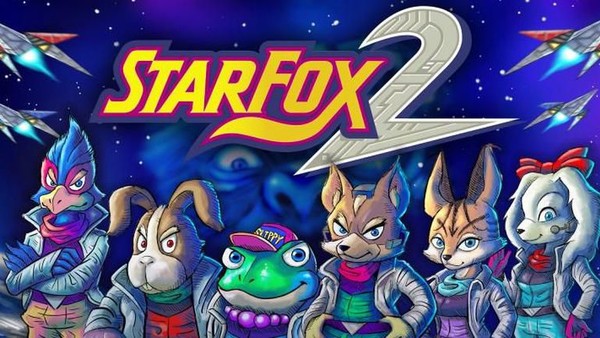
The classic 3D rail shooter series Star Fox began in 1993 with a release on the SNES, and still stands as a landmark moment in the history of the industry for introducing 3D graphics to a 2D-dominated market.
Development for the game's sequel reportedly began soon after the release of the original entry, with Nintendo EAD in Japan and UK-based Argonaut Software taking the lead on the project. And some big developments looked to be in the works, with a playable demo at Winter Consumer Electronics Show in 1995 teasing two-player modes, random encounters and a revamped strategic map system.
Unfortunately, development for the game coincided with a boom in the 3D market and Nintendo deemed that the title wouldn't be able to compete on the shelves with the CD-based competition primarily from Sony's PlayStation.
The Star Fox 2 project was silently killed off by the company, laying dormant in the shadows as other entries in the series came and went over the years.
Thankfully though, for some reason, Nintendo decided to give fans of the series the true sequel to the 1993 classic with Star Fox 2 eventually emerging from the wayside with a release on 2017's SNES Classic and Nintendo Switch Online in December 2019.
1. Beyond Good And Evil 2

2003's Beyond Good and Evil was a stellar title developed by Ubisoft for the sixth generation of consoles, investigative journalist Jade as she fights enemies and solves puzzles to unlock the secrets of a sinister alien conspiracy.
The game was critically acclaimed upon release, earning nominations for Best Sound Design, Original Music, Best Action Game and Best Game of 2003 amongst others.
Despite this, sales weren't much to write home about, which might explain the lack of urgency in getting its long-awaited sequel over the line.
With the first title in the series originally planned to be the first entry in a trilogy, director Michel Ancel has regularly expressed interest in making a sequel to Beyond Good and Evil. In 2008, Ubisoft teased a possible sequel being in the works at Ubidays. A decade's worth of silence would follow, before the company officially announced BG&E2 was definitely in the works.
Further delays would be required as the company turned their attention to Rayman Origins (as good a priority as any), however the continued absence of any target release window or hardware has seen BG&E2 earn the title as the game with the longest development time, beating out Duke Nukem Forever's 15 year run in 2022.