10 Video Games That Almost Had The Perfect Ending (But Ruined It)
A swing and a miss.

Though it typically only accounts for a small portion of a video game, nailing the ending is absolutely paramount.
Get it right and it places a cherry on top of a fantastic gaming experience, but screw it up and it can colour a player's entire time with the game in a new, unfavourable light.
It's clearly enormously challenging to do narrative justice to a medium that invites player choice and often involves an epic, sprawling scope encompassing dozens of hours of play-time, and so it's little surprise how many games miss the mark.
But even more frustrating than an out-and-out bad ending is one which very nearly arrives at the conclusion fans wanted to see, but takes a sharp left-turn towards something else entirely.
Whether a result of budgetary or scheduling constraints, creative bankruptcy, or sheer laziness, these 10 games all had the perfect ending within their sights, only to ditch it for a more cynical, corny, or straight-up disappointing one.
These endings didn't necessarily ruin the game outright, but each nevertheless left fans exasperated at how close they got to greatness...
10. Snake Kills "Big Boss"...But We Don't See It - Metal Gear Solid V: The Phantom Pain

There are many, many reasons to be upset about how Metal Gear Solid V ended, not least that the game was clearly unfinished and an entire final chapter of the game was scrapped deep into production.
But a lot of fans' issues with MGSV could've been forgiven were the game's climactic plot twist executed better. Players who slog it out to unlock the final cutscene will learn that Venom Snake was not in fact Big Boss, but a brainwashed doppelganger installed in his place all along.
The clear implication is that Venom Snake is the legendary Big Boss figure who was killed by Solid Snake way back in Metal Gear 2: Solid Snake, thereby explaining how the real Big Boss was still able to materialise in Metal Gear Solid 4.
And while it's a neat idea, the follow-through isn't quite there. Hideo Kojima typically isn't one to shy away from fan service, so the fact that MGSV didn't end with Metal Gear 2's iconic Outer Heaven boss fight playing out from Venom Snake's perspective is an unforgivably missed opportunity.
It's highly likely Kojima did indeed have bigger plans for MGSV's game-changing twist, but per the strict deadlines imposed upon him by Konami, we ended up with only an underwhelming snippet of the entire picture.
9. DLC Ruins The Happy Ending - Dead Space 3

Dead Space 3 was unquestionably the weakest entry into the trilogy, but at least seemed primed to deliver a satisfying climax, as Isaac and Carver sacrificed themselves to destroy the Marker and finally bring the Necromorph threat to an end.
After three games, seeing the Necromorphs annihilated was mightily satisfying, and even the post-credits suggestion that Isaac was still alive worked well enough.
But the game's seemingly concrete victory was smashed to pieces, then, when the Awakened DLC was released a month later and revealed that the Necromorphs were very far from gone.
Worse still, in a cynical setup for a sequel that's almost definitely never happening, Awakened ended with the Necromorphs laying waste to Earth.
While it's entirely possible a future game could dismiss Awakened as nothing more than one of Isaac's hallucinations, it nevertheless undid Dead Space 3's relatively "happy" ending - one which the story absolutely earned, no less.
8. That Corny Final Minute - Hellblade: Senua's Sacrifice

Hellblade: Senua's Sacrifice concludes in suitably affecting fashion as Senua comes to terms with the fact that her deceased lover Dillion cannot be saved, that grief is a natural part of life, and she above all else begins to accept who she is.
It's a wonderfully emotional and beautifully crafted sequence...and then the final minute of the game happens.
The final scene sees Senua breaking the fourth wall to address the audience, telling players in the most sequel-baiting fashion, "There are most stories to tell," before an ultra-corny, ill-fitting pop song plays out over the credits.
It's as though the very end of the game was written and directed last-minute by a bean-counting studio executive, because in drawing attention to the game's franchisable potential above all else, it undermined the ending's otherwise stunning impact.
7. Lara Croft "Dies"...But Gets Saved In The Sequel - Tomb Raider: The Last Revelation

This might be an unpopular opinion, but the original Tomb Raider series probably should've ended with the fourth game, The Last Revelation.
The game was in fact developed by Core Design to be the last Tomb Raider, as further implied by its marketing and in particular its ending, which ambiguously depicts Lara's possible "death" as she ends up trapped inside a collapsed temple.
It was a shocking and refreshing ending which left fans buzzing about any possible future of the franchise...except for the fact that Eidos rushed a follow-up, Tomb Raider: Chronicles, to market the very next year.
Though Chronicles was mostly a prequel depicting Lara's prior adventures in flashback form, the game did end with the clear suggestion that Lara had survived the cave-in, as was finally confirmed in the terrible Tomb Raider: The Angel of Darkness, which concluded the original series of games on a miserable whimper.
Neither Chronicles nor The Angel of Darkness provided compelling evidence that invalidating The Last Revelation's ending by bringing Lara back from the dead was really worth it at all.
Clearly, The Last Revelation would've never been the last Tomb Raider game, but it would've at least brought the series' first run of titles to a dignified end rather than having them sputter to an embarrassing climax.
6. Chris Redfield Pointlessly Crashes The Party - Resident Evil 7

Resident Evil 7 was exactly the injection of adrenaline that the moldy franchise needed for the most part, reinventing the survival horror IP in a deliciously creepy first-person style while offering up some of the series' greatest characters to date.
Though the game satisfyingly concludes with protagonist Ethan destroying Eveline and escaping the Baker house - along with his wife Mia in the game's happiest ending - Capcom just couldn't resist the opportunity to needlessly staple some franchise fan service onto it.
After defeating Eveline, Ethan is met by Resident Evil icon Chris Redfield, who has teamed up with a seemingly new and improved Umbrella Corporation.
There's something to be said for the elegant simplicity of Ethan and Mia surviving their adventure, but because branding is key, it of course had to also incorporate one of the franchise's most enduring characters.
Furthermore, it raised so many questions about the game's place in the Resident Evil series that many fans were ultimately more confused than excited.
5. It Was All A Simulation...Because Reasons - Prey

Bethesda's 2017 Prey reboot concludes with protagonist Morgan staring down the gigantic Apex Typhon, as the player is given the choice of defeating the Typhon by either destroying the Talos I space station or activating the Typhon-disrupting Nullwave device.
Though the game can end with Morgan living or dying, a post-credits scene ultimately reveals that the events of the game have in fact been a simulation created from Morgan's memories implanted into a captured Typhon, in the hope of teaching the monster human emotions. Oh, and Earth has been invaded by the Typhon now. Yup.
Naturally, many fans were furious that not only had the game's potentially happy ending been totally derailed, but the events of the entire game were wholly re-contextualised in a way that just felt like cheap shock value.
There was absolutely nothing wrong with the game just ending with Morgan battling the Apex Typhon, but Arkane Studios couldn't resist tacking a provocative WTF sequel tag on after the credits for "good" measure.
4. The Prince Loses...Until The DLC Happens - Prince Of Persia (2008)

2008's cel-shaded Prince of Persia reboot was broadly praised by critics, though there was undeniable division among fans over its ballsy ending, in which Princess Elika sacrifices herself to defeat antagonist Ahriman.
What left many fans bemused was that The Prince doesn't simply accept Elika's sacrifice, but instead decides to cut down the Tree of Life and use its light powers to resurrect her.
The game then ends with The Prince carrying a revived Elika across the desert as Ahriman's corruption once again spreads throughout the world, all because The Prince couldn't cope with a single person dying.
It's one of the most fascinatingly twisted endings to any AAA game, really, because as infuriating as The Prince's decision is, it's also easy to imagine many of us making such a selfishly "human" decision at the critical moment.
But amid fan protest, Ubisoft remedied this bummer ending with the game's Epilogue DLC, which consists of Elika complaining about The Prince resurrecting her, and the pair teaming up to defeat Ahriman again before going their separate ways.
How Ubisoft thought this was in any way superior to the daring original downer ending is anyone's guess. The lesson here? Fans shouldn't always get what they want.
3. Joseph Seed's Death Gets Denied - Far Cry 5

Far Cry 5 wasn't the best game in the series, but it certainly set the stage for a compelling final showdown with antagonist Joseph Seed.
At the end of the game, Joseph invites the Deputy protagonist to meet him at his church, at which point it's revealed that the Deputy's resistance friends have all been rounded up, hypnotised, and held hostage by the preacher madman.
Joseph then offers the player two options - walk away in order to save your friend's lives, or resist and try to arrest him.
Either way, both endings are hugely unsatisfying: walking away results in the player succumbing to Jacob's brainwashing, while resisting leads to nuclear bombs inexplicably going off and the Deputy ending up sharing a bunker with Joseph himself. Oof.
It's pretty obvious that most players went to Joseph's compound hoping for an epic action movie shootout, and that's exactly where things seemed to be going.
But bizarrely, Far Cry 5 offers no such option, just a choice of two lame "gotcha!" rug-pull endings that felt like Ubisoft trying to be a little too snide and "clever" for their own good.
All we needed was a gonzo bloodbath finale to end the game on a satisfying note, but alas, even that was apparently too much to ask.
In a small act of contrition, though, Ubisoft did at least allow players to shoot Joseph through the heart in the spin-off game Far Cry New Dawn.
2. It Keeps Going After Andrew Ryan's Death - BioShock

BioShock is a terrific game, no question, and one most fondly remembered for its exceptionally well-executed third-act plot twist.
The big reveal is that protagonist Jack has actually been manipulated throughout the game by the trigger phrase, "Would you kindly?", leading apparent villain Andrew Ryan to use the phrase to force Jack to bash his brains in with a golf club.
It's an incredible moment which completely flips everything the player thought they knew, with Ryan allowing himself to die in order to illustrate Jack's own lack of control, and in turn revealing that the game's real antagonist is Frank "Atlas" Fontaine.
The problem, however, is that Ryan dies roughly two-thirds of the way through the game, forcing the player to slog their way through another four-ish hours that consists of several frustrating levels (including an escort mission) ahead of a wildly deflating final battle against Fontaine.
Clearly, the game should've ended with Ryan's death. Above all else, it would've provided a fantastic lead into BioShock 2, and hopefully given the devs time to figure out something interesting to do with Fontaine.
Instead, the remainder of the game struggled (and failed) to escape the shadow of that ingenious plot twist.
1. The Center Of The Galaxy Is...A Big Fat Nothing - No Man's Sky
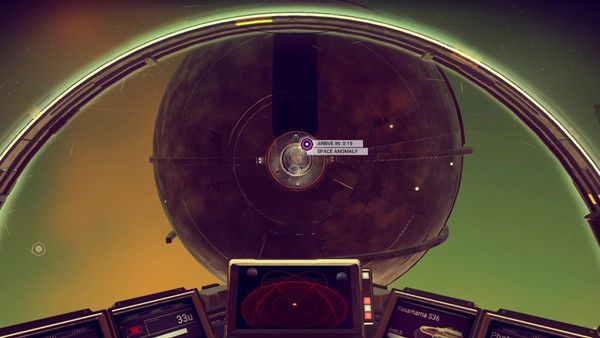
And finally, we have Hello Games' hugely anticipated open-world survival game No Man's Sky.
Released to a stratospheric amount of hype per its virtually endless procedurally generated world, intense discussion also surrounded the secrecy of its "endgame," which required players to reach the center of the galaxy.
Upon spending dozens of hours reaching the center, players were eventually rewarded with...a new galaxy to explore, which basically just amounted to the game being restarted from scratch.
Fans were understandably irate that the climax was essentially a whole lotta nothing, even if No Man's Sky was always touted as being more about the journey than the destination.
Still, it really didn't have to be this way.
Though it's clear that Hello Games brought the game to market without achieving the full scope of their vision, all they had to do was include something worthwhile at the center.
It could've been one of many things: a new player ability to make galactic traversal faster, some sort of multiplayer functionality, or the actual presence of an omnipotent entity at the core.
Instead, it felt like a low-effort slap in the face to players who excitedly travelled to the center. Fans weren't asking for miracles here, just something meaningful to acknowledge their hard work and inspire them to keep playing. That would've been perfect.