10 Video Games That Are Definitely Art

No room for Dead Or Alive Xtreme Beach Volleyball, sadly.

Besides €œA/S/L?€ and €œis it safe to put this up my butt?€, the one question that everyone on the internet is sick of hearing at this point is €œare video games art?€ Does anybody care? Isn't the definition of art slippery, malleable, and open to interpretation? What makes a video game art? Because the people who made it say it is? Because critics say it is? Because barely anyone has played it? Because it's colourful? Because it makes you cry? Veteran film critic Roger Ebert is brought up most often in these arguments, having made clear his point of view was that video games are not and probably never will be art. Angry gamers took a Supreme Court ruling which considered them as such to be sacrosanct, and proof that Ebert was €œwrong€. An exhibition that included the likes of Pac-Man and Pong at the Museum Of Modern Art in New York further cemented their frame of mind. To a degree, the definition of art is totally open to interpretation. That said, there's a definite dividing line between games that are produced solely as a form of commerce €“ your average triple-A title, say €“ which aim to make no big artistic choices, or grand statements, or reflect the world at all. Then there are the ones that do. It's like the difference between a greetings card and a painting. Sure, they may use similar materials and come in similar forms, but the intentions are different. That said, sometimes those big games stumble into being something €œmore€, entirely by accident. From the indie to the mainstream, the profound to the ridiculous, the post-modern to the realist, here are ten video games that are definitely art.

10. Okami

Let's start with the most obvious, superficial definition of art: something that looks pretty. Even better, Okami is a game that took an art form as the principal direction for its art style; the Capcom platforming title's cel-shaded graphics are obviously inspired by the ink wash sumi-e painting that spread throughout East Asia €“ Japan especially €“ during Feudal times. It looks really, really darn pretty, essentially. That was most of what the criticism at the time centred around. Okami is a game which, to this day, prized its aesthetics above all else. And that's fine. That's a type of art, just something that looks nice. But if it exists in a vacuum it means nothing; luckily, Okami had justification. The game also drew upon Japanese folklore, which meant that the sumi-e art style was reminiscent of bring old paintings of those stories to life. Painting was also an integral part of the gameplay, with the €œCelestial Brush€ allowing you to affect the game world by slashing through enemies or draw bridges in ink. Pretty and practical €“ that's art, right?

9. Silent Hill 2

It is, but also, to a degree, it's engineering. Whilst Pac-Man and Asteroids are a part of the Museum Of Modern Art's collection, it's in the design and engineering wing, rather than fine art. To some degree, couching the artistic sensibilities of Okami in the game play almost lessens it as a form of expression. Silent Hill 2 has no such issues, although sometimes to a fault. The Silent Hill games have never been about the mechanics. How could they be? They're clunky, the tank controls and rationed ammunition carried over from its major inspiration, Resident Evil. Instead of dealing out schlocky jump scares like Resi, however, the main thrust of playing the Silent Hill games is to enter a terrifying, oppressive atmosphere. Silent Hill 2 is the best in the series and, admittedly, it works a little like a Ghost Train ride. Ghost Trains probably aren't art. But it's at its best when it comes to the Freudian symbolism and art design inspired by the nightmarish portraiture of Francis Bacon. People like to argue what expressionist paintings are about almost as people argue about what Pyramid Head represents.

8. Dys4ia

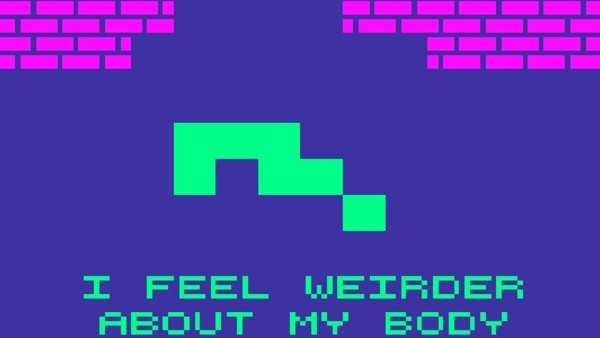
One of the great things about traditional fine art is its the most accessible of creative industries. Films require money and crews, writing relies on somebody willing to publish your work (and your ability to get it to them). To be an artist, meanwhile, all you need is some paper and pencils. It means that, in theory, more diverse voices can be heard than simply the ruling class who can afford it. To the same token, the wealth of cheap-as-free resources for indie game developers has opened the door for all sorts of titles which explore ideas and themes you'd never get in a mainstream title. Many of these come in the form of Twine games, or basic platformers made in the likes of Game Maker. Anna Anthropy has developed titles with both pieces of software. Arguably her most famous work is Dys4ia, an experimental game with graphics not unlike the Atari 2600's Adventure, which explores the dizzying, sometimes terrifying and alienating experience of being a trans woman, gender dysphoria and hormone replacement therapy. It allows players to experience such feelings previously unfamiliar to them.

7. Electroplankton

When most people think of rhythm action or music games, their first thought is either of Dance Dance Revolution's frantic foot-stomping or the equally tense button-shredding of Guitar Hero. Both games make a fair shake at simulating the real life experiences of dancing and playing guitar, respectively; are simulations art? Would that make FIFA art? Or Goat Simulator? Possibly not. Unlike Dys4ia, most people will have at some point danced or tried to play guitar. The more creative side of rhythm action games are the like of Electroplankton, a title released on the Nintendo DS in 2005 where you tap animated creatures with the touch screen to make music. There's not much of an aim to Electroplankton €“ you don't have to tap the €œright€ plankton, or do it under a time limit €“ and it's actually been used as an instrument by outsider musicians like Xiu Xiu. Director Toshio Iwai primarily works in making art installations that are similarly interactive and, like Electroplankton, are beautiful but mostly without practical purpose. Art!

6. Shadow Of The Colossus

Nowadays, the title trotted out most frequently to make the case that video games are art is BioShock Infinite. That's a game, people say, which tackles big subjects in a deliberately provocative way. Still, for all its indictment of violence, it's still a first-person shooter that very much indulges in such violence, and that feels more like a constraint on the part of it being a triple-A title rather than a deliberate bit of cognitive dissonance. Much better was the previous go-to example of video games as art: the work of Fumito Ueda, lead designer and director first of Ico and then Shadow Of The Colossus (there's apparently a third in that loose trilogy forthcoming, but it's been in development for years without much movement). Firstly: all very stylistically daring, beautiful games. In a time when BioShock is about as far from realism as its possible to get, Shadow Of The Colossus is almost impressionistic. The game does have a purpose €“ hunting down and figuring out how to destroy a succession of bosses €“ but most game play time is spent riding your horse through the desert, admiring the landscapes. Like playing a Constable painting.

5. Katamari Damacy

Like Electorplankton, Katamary Damacy and Nobi Nobi Boy mastermind Keita Takahashi made his start outside of video games. Before he began developing surreal explosions of colour and ridiculousness for Namco, Takahashi studied sculpture, and the tactile, object-based exploration of environments is what Katamari Damacy and Nobi Nobi Doy are all about. Katamari is probably the most popular one, though. Katamari Damacy was another of the games included at that 2012 exhibit at the New York Museum Of Modern Art, specifically praising the game for its €œquirky manipulations of scale€ that makes it accessible for all ages. Again, that's viewing it from a purely design sensibility. And like the paintbrush in Okami, being able to interact with the world of Katamari €“ by rolling them all up in a big ball €“ is what stops it from just being aesthetically pretty. But the design is also very important, existing in the same continuum of Takashi Murakami's superflat school, awhich takes the look of manga and anime to an extreme. Katamari's almost a commentary on Japanese design and culture.

4. The Stanley Parable

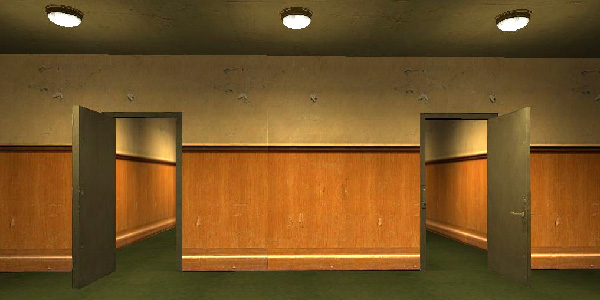
Starting life as a Half-Life 2 mod before becoming a fully-realised, fully-developed PC title of its own, The Stanley Parable belongs to that most disputed of sub-genres in art and critical theory: post-modernism. It's a term people use all the time despite, like the proverbial Wallace Shawn in The Princess Bride, not knowing what it means. Still, most people can agree that post-modernism €“ to some degree €“ involves reflecting, and possibly commenting on, what came before it (ie modernism). In game terms, modernism is the mainstream title we've been playing since the Atari 2600 hit the shelves. If you want a clearer focus, The Stanley Parable critiques first-person-shooters whilst acting like one. The entire game is about the illusion of choice and free will, both in video games and the wider world. The player wanders an abandoned office, accompanied by an omniscient narrator. You can either follow the directions of the narrator €“ he says you go through the left door, so you do €“ or diverge. Making you question your agency in games and, by extension, real life? That's some powerful stuff.

3. Proteus

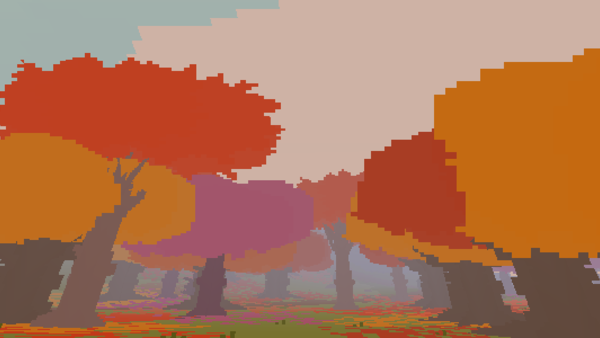
Those who lumber Proteus with the argument that it €œisn't really a game€ are missing out. Ed Key and David Kanaga's rich, colourful world is like a video game designed by Mark Rothko: the landscape you direct your character around in the first person is recognisable as an island, but everything is rendered in vivid blocks of colour, minus any €œrealistic€ details. Whilst most games have an objective, and ways of completing said objective €“ usually by solving puzzles and/or killing everything in sight €“ Proteus...doesn't. There's no narrative, no built-in force driving you to play it. You wash up on randomly generated island, with wildlife and day/night cycles. You walk around. It's more of a meditative experience, which is where the Rothko comparison comes in again. The artist's paintings €“ simply blocks of colour on a canvas €“ are supposed to be surveyed for a long time, discovering patterns in the way the paint has been set down, or simply letting the piece wash over you. Proteus is a game that washes over you, in the best way.

2. Super Mario Bros

It's been written about endlessly, of course, but Super Mario Bros is the perfect video game. Without wishing to lionise Shigeru Miyamato more than he already has been, it cemented essentially all the basic truisms of game design which would be followed for decades since €“ arguably, to this day €“ although never did another title approach its beautiful simplicity. The original NES Super Mario Bros has been hi-jacked into becoming art before, with a modified version of the game cartridge removing all the enemies, characters, or backgrounds besides the blue sky and floating clouds. Cory Arcangel's €œClouds€ was exhibited in galleries across the US. But there's an argument to be made for Super Mario Bros being art unto itself. It definitely has purpose €“ you play it, there are enemies to squash, there's a loose narrative to be completed. Its look, however, has fallen into becoming something aesthetically pleasing in the age of glitch and pixel art made not because of technological limitations, but deliberately.

1. Call Of Duty

One series that will never, ever get mentioned in the €œvideo games as art€ argument is Call Of Duty, and that's sort of a shame. EA's all-conquering FPS series, which have simulated so many different wars that now they're having to make them up, in a lot of ways epitomises the worst excesses and artless tripe of mainstream, triple-A titles. They're the gaming equivalent of stupid popcorn blockbuster movies. But those movies can be picked apart and analysed like any other, and the context in which they're produced is particularly important. Call Of Duty's €œmessage€ is an inherently jingoistic one €“ war must be good (or at least necessary), cos you're playing, and you're the hero, and you're fighting in a war. Has that always been the case with these games, though? The early titles were inspired by Band Of Brothers and Saving Private Ryan, and took interviews with real war vets in order to replicate an experience that was mostly horrifying, traumatic, and ultimately left you feeling powerless. Black Ops III is about as far as its possible to get from that. The entire Call Of Duty franchise can be seen as commentary on how our attitudes to warfare and violence have evolved over the years. But also how history changes our perspective on things, and how video games have evolved too. If they're not art, then at the very least, Call Of Duty's not a bad shout for an example of the Great American Novel...except, it's a video game.

In this post: 
Call of Duty
 
Posted On: 
Contributor
Contributor

Tom Baker is the Comics Editor at WhatCulture! He's heard all the Doctor Who jokes, but not many about Randall and Hopkirk. He also blogs at http://communibearsilostate.wordpress.com/