10 Video Games That Fixed Themselves Too Late
Aliens: Colonial Marines got working AI... five years too late.
The nature of modern gaming means that a bad game doesn't need to be a bad game forever anymore: it's entirely possible for committed devs to work hard to improve a title that just doesn't deliver the goods upon release.
Perhaps the most famous recent example is No Man's Sky, which despite launching embarrassingly feature-poor, has surpassed just about everyone's expectations in the years since, even including a free VR update.
Similarly, Square Enix managed to successfully reboot Final Fantasy XIV after a disastrous launch, even if the games that don't ever fix themselves are sadly far more common (looking at you, Anthem).
But there are also those games that are eventually patched into a superior state, and yet the player-base has largely moved on.
Ultimately updates which take months or even years to deliver what should've been released on launch often feel like a case of "too little, too late," as is surely true of these 10 games.
Though each was drastically improved by patches post-release, for many players they simply lost patience waiting and either moved onto other games or claimed a rightful refund...
10. Batman: Arkham Knight

Though the console versions of Rocksteady's Batman: Arkham Knight were largely praised by critics - apart from those dreadful Batmobile sequences, of course - the PC version was widely pilloried for its numerous technical issues, even rendering the game unplayable for some.
Thousands of players reported framerate dips as low as 10 FPS while gliding or driving the Batmobile, even on high-end systems, causing Warner Bros. to suspend sales of the game on PC just one day after release.
It wasn't until September 2015, more than two months after the game launched, that a substantial patch was released, and despite many players still reporting persistent technical issues, Warner Bros. nevertheless restored Arkham Knight to PC storefronts in late October.
The outcry was significant enough that full refunds were offered throughout 2015, and Warner Bros. promised that they'd continue to release patches to fix the game.
And while Arkham Knight was in playable shape for most players by early 2016, in 2020 there are still unaddressed performance issues, and no guarantee that the game will run entirely smoothly no matter the beefiness of your rig.
The sad fact is that many players simply sought their refund and never looked back, because when a developer releases a blatantly unfinished game and takes their sweet time fixing it, why on Earth would you let them keep your money?
9. The Division
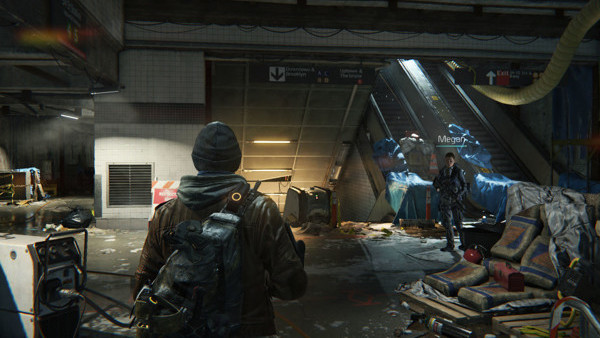
It would be unfair to call The Division a "broken" game on launch, but it was certainly a disappointment, with its huge open world feeling weirdly empty, and Ubisoft offering up little to keep players engaged once the relatively brief campaign was done with.
The lackluster endgame just wasn't what players had been promised, and so within three months of its March 2016 release, the PC player count was down a whopping 93%.
But Ubisoft dug their heels in and refused to take a decisive "L," delivering a glut of DLC both paid and unpaid, culminating in the massive free 1.8 update, released in late 2017.
This update delivered a new area of land, new PvE and PvP modes, smart revisions of the game's divisive Rogue mechanics, and literally dozens of quality-of-life changes.
Two years after it launched, The Division was a very different game, with a greater emphasis on player customisation, a satisfying loot loop, and a wholly more diverse array of content on offer.
But it's also fair to say that almost two years is a long time to wait for a game to go from "OK" to great, and with murmurs by late 2017 that a Division sequel was on the way, many players simply opted to sit it out and wait for the follow-up to release.
To its credit, The Division 2 did clearly learn from many of the original's mistakes, though the first game took its sweet time getting to where it needed to be.
8. Ni No Kuni II: Revenant Kingdom

Though it was largely well-received by critics, Ni no Kuni II: Revenant Kingdom was one of 2018's biggest gaming disappointments.
The most common complaint levelled against the JRPG was the ludicrously low difficulty level, ensuring that even on the highest difficulty at launch, battles were too easy to be much fun.
Given that the previous game was decidedly more challenging, fans were outraged and vocally expressed their feedback, leading developers Level-5 to release a "Difficulty Patch" three months later, which finally added Hard and Expert difficulties to the game.
These new modes significantly reduced the player's attack power while increasing the damage taken by enemies, ensuring that players using these difficulties couldn't just cheese their way through fights and had to actually apply some level of strategic thought to encounters.
The update totally reinvigorated the combat, as the game went from offering no incentive for players to experiment at launch, to revealing the creative depth of its combat options when players were actually given some push-back.
But taking three months to deliver some fairly basic mathematical alterations isn't exactly impressive, and given that many players had either beaten the game already or simply moved on out of boredom, it was the definition of too little, too late.
7. Battlefield 4
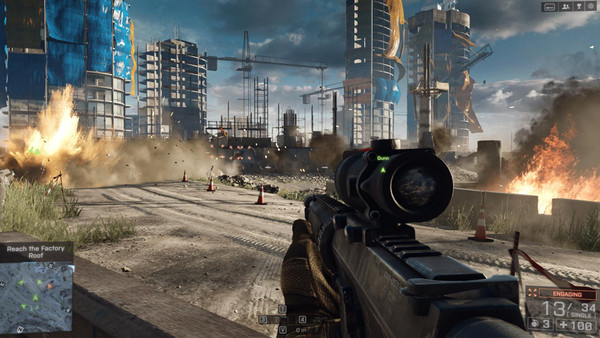
Battlefield 4 had one of the most problematic launches of any FPS game in recent memory, with many players unable to consistently connect to games, and even when they could, the dodgy netcode clearly wasn't delivering the tight experience fans expected.
Many affected players had to suffer through this for more than six months before EA finally released a substantial netcode fix, and EA was heavily criticised for still releasing DLC packs during the fiasco, as well as announcing the follow-up game Battlefield Hardline.
EA eventually deemed Battlefield 4's problems "unacceptable" in an official statement, and acknowledged that they'd damaged their relationship with players as a result.
Though the game was in strong shape by mid-2015, some 18 months after its release, many players simply opted to get a refund and go back to the brilliant Battlefield 3 instead.
While there's an argument to be made that Battlefield 4 is now the most value-rich and purely entertaining game in the series, scores of fans ultimately ended up skipping it.
6. Diablo III
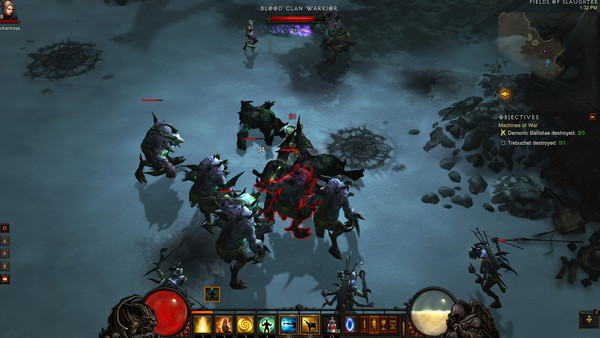
Diablo III's initial May 2012 launch was, to be blunt, a trainwreck.
The massively anticipated RPG was beset by two major issues: Blizzard insisting upon always-online DRM which left many players unable to play due to pervasive server issues, and an Auction House which allowed players to buy loot with real money, in effect undermining the game's much-loved loot grind loop.
Fans held nothing back letting Blizzard know their distaste for these game-breaking features, and though Diablo III sadly never got an official offline mode, the server issues did subside in the weeks after launch.
Meanwhile, the Auction House unfortunately couldn't simply be turned off without further breaking the game's economy, but even so, it wasn't until June 2014, over two years after the game launched, that it was finally shut down.
But Diablo III really came into its own with the release of 2014's Reaper of Souls expansion, launched a few months before the closure of the Auction House, which introduced a new hero, raised the level cap, delivered major loot drop improvements, and basically gave players the game they should've had back in 2012.
Between the absurd amount of time Blizzard took to fix Diablo III and the fact that they still dared to charge money for the expansion, a lot of crestfallen players had simply moved on.
Anxious fans surely have their fingers crossed that Diablo IV won't repeat the same mistakes, and though Blizzard has already confirmed it won't feature an Auction House, they've also stated it won't have an offline mode either. Boo.
5. SimCity

2013's SimCity reboot had one of the roughest launches of any game of the last decade, with many reviewers urging players not to buy the game due to its always-online DRM, which due to persistent server issues would result in lost saves and a simple inability to actually play the game.
The complaints were vociferous enough that Amazon temporarily removed the game from their storefront, while Maxis officially admitted that they didn't prepare enough servers to deal with player demand, requiring them to add more post-launch.
Worse still, EA flatly refused to offer refunds to affected customers, resulting in disgruntled customers filing a petition with the White House regarding refund policies on always-online games.
EA released numerous patches to fix issues, though dismissed the notion of including an offline mode, something which players eventually discovered could be manually achieved by editing a single line of the game's code.
EA finally relented and released an official mode in January 2014, some 10 months after release, by which point many thoroughly pissed off players had jumped ship to one of the many dozens of other games in their backlog. Terrible.
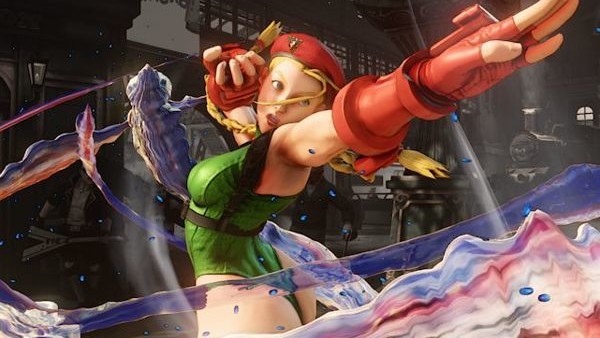
4. Street Fighter V

Street Fighter V was quite rightly ripped apart by fans on launch, because while the core gameplay itself was as solid as ever, the beat 'em up hit stores with an embarrassingly lackluster amount of content.
Between the lack of a proper single-player story mode, an absurdly malnourished roster, and a frustratingly lack of instability, Street Fighter V didn't even deliver the basic goods on release, and fans were furious.
Despite critics lavishing a baffling amount of praise on the game, fans were far less kind, noting that the launch product was blatantly unfinished.
And even accepting the notorious loyalty of the fighting game community, fans actually voted somewhat with their wallets, resulting in the game falling below Capcom's first-year sales target.
Almost two years after its original release, Capcom dropped a free Arcade Edition update, which added a more substantial story mode, Arcade Mode, new moves, and a heap of extra features for genre enthusiasts which clearly should've been ready for launch.
Though Street Fighter V did eventually translate into sales success, two years is a long time to wait for a game to realise its potential, especially with the likes of Tekken 7, The King of Fighters XIV, and Ultimate Marvel vs. Capcom 3 all being released during that time.
3. Driveclub

Driveclub was announced the very same day that Sony unveiled the PS4 for the first time, and after initially being planned as a PS4 launch title, it eventually ended up releasing almost a year later in October 2014.
Despite Evolution Studios talking-up its groundbreaking online connectivity features, Driveclub launched with major online issues from the jump, with players unable to even connect to the game's servers, let alone actually compete against others.
Driveclub quickly became a laughing stock among gamers, and its connectivity issues weren't fully fixed until many months after its launch.
To Evolution's credit, they consequently festooned players with heaps of free updates, adding dynamic weather among other requested features, ultimately supporting the game with patches for over 18 months, even releasing a final patch many months after Sony had actually shuttered the studio.
In the years following its launch, Driveclub had evolved into a genuinely strong racing game, though only the hardcore faithful stuck around to figure this out, while most moved on to one of the many other racing games released in its wake.
Driveclub was ultimately delisted from PSN last summer, and its servers are set to close on March 31 of this year.
2. Aliens: Colonial Marines

Aliens: Colonial Marines is one of the most disappointing games of the last decade, offering up a totally mediocre riff on James Cameron's sci-fi horror classic movie, defined by a mediocre story, terrible voice acting, and most offensively, laughably poor AI and glitches.
The game came under greater scrutiny once it was revealed that developer Gearbox Software outsourced much of the game's development, and the end product was of significantly lower quality than implied by earlier gameplay videos.
Though Gearbox released a 4GB patch to fix some of the issues a month after release, it wasn't until 2017 that many of the problematic AI routines were fixed. By a player. By tweaking a single line of code.
That's right. Over four years after Colonial Marines hit stores, a modder discovered that the game's janky AI was caused by a typo in the code, which with a simple tweak immediately made the Xenomorphs behave like, you know, actual Xenomorphs.
That's not to say that Colonial Marines became a good game with a few taps of a keyboard: the story still plays out like a bad fanfic and the gameplay is utterly uninspired, but the single aspect of the game which made it a true viral joke, a meme even, was nevertheless stamped out by a single person.
That the developers themselves didn't notice this during production, nor manage to fix it in the four years since its release, is nothing short of embarrassing.
And though Colonial Marines is now a good deal better to play than it was in 2013, who among us really wants to prioritise any of their precious gaming time to this?
1. Brink

Brink was one of the most anticipated FPS games of the last decade, arriving on a tidal wave of hype back in 2011, with hope that its emphasis on parkour-inspired movement would truly shake the genre up.
And yet, Brink released to a lukewarm response from critics and fans alike, with much criticism levelled at not only its shallow gameplay but especially its unreliable multiplayer connectivity.
In a desperate attempt to stem player anger, developer Splash Damage quickly introduced a 4v4 multiplayer mode for players experiencing lag during 8v8, but it wasn't until August, three months later, that the much-hyped Agents Of Change DLC finally arrived and truly changed the game.
This DLC smoothed over most all of the online issues, improved NPC AI, re-balanced weapons, added new maps, weapons, and outfits, and also raised the level cap.
But the sad fact is that Brink's player base died off extremely quickly, and despite the post-launch support it received, it could never win back players who moved on to one of the dozens of other games competing in the online FPS space.
Within a year of its release, Brink's concurrent player count was down to less than 100, despite being a much better game by that point. Clearly, players felt too burned to give it a second look.