10 Video Games That Wanted You To Delete Them
It's the only way out.

You would think the one similarity all games share is they want players to, well, play them.
Kill the bad guys, find all the things, and save the world/galaxy/universe/imposter-ridden-spaceship are just a few of the goals we must face, spending hours each year for the sake of achievements, kill-death ratios, and our own entertainment.
Modern developers are constantly inventing incentives to keep gamers engaged with their titles, whether that be through a captivating story, innovative gameplay, or filling the map with 900 golden seeds from hide-and-seek turnips.
Yet some brave developers dare to flip very nature of gaming on its head. What if the game doesn't want you to play it? What if the only way to "beat" these games is not to play them at all? What if a game wants you to delete it?
Such an idea would make many an AAA game company reel its head in horror. Players being encouraged not to play our polished masterpieces? Our coffers doth protest! But for those courageous few who dare to dream, flipping the script on game development can lead to delightful plot developments and compelling game design choices.
Sometimes, if you love something, you have to let it go... so you can get all the achievements or "win".
10. Every Game That Knows You Stole It

I'll go out on a limb and say game developers would probably prefer you don't pirate their games. Unfortunately, there's not much devs can do to stop pirates torrenting their carefully crafted creations.
Or is there?
Developers have come up with a few quirky ways to "encourage" pirates to delete their stolen good. In Game Dev Tycoon, pirates will ironically find that the games they create in the game get pirated, making their own game companies go bust.
The Sims 4 modestly pixelates Sims in the bath and shower. For pirates, those pixels expand to the entire screen, making it look like they're squinting through the frosted plexiglass of a prison cell (where those dirty cheaters belong).
Mirror's Edge will troll pirates by slowing them down on the first jump, blocking off the rest of the game as they fall to their death. The caped crusader in the pirated Arkham Asylum shares a similar fate as his gliding bat-wings will refurl at the most inopportune moments.
The best thing about these pirated games is that these annoyed thieves will take to forums to find fixes for their glitches, only to realise they've outed themselves to the entire internet.
Don't pirate games, kids.
9. SUPERHOT: MIND CONTROL DELETE

SUPERHOT is an innovatively designed game: the world only moves when you move, meaning you can dodge bullets, katana throws, and baseball bat swings as you shatter red guys left and right. It's insanely entertaining.
The original SUPERHOT's plot was a little heavy-handed, exploring themes of control and curiosity. SUPERHOT: MIND CONTROL DELETE takes it a step further, constantly asking the player what the point of their mindless violence is, giving them all the powers they could want, all the levels, all the endless modes... but of course, the addictive gameplay is too much for some players.
The end of SUPERHOT: MCD berates you for your addiction, making you "delete" all your powers one-by-one, including movement, jumping, and looking around, until you are just a small blip on the screen.
Want to get back to the action? Well, you'll have to leave the game open for two-and-a-half hours so it can "redownload" your files, restarting the cycle of senseless killing.
Many gamers were extremely displeased with this cheeky, controversial move from The Superhot Team, which was originally set at eight hours. They should count their lucky stars: the team almost made the wait 24 hours...
8. Doki Doki Literature Club!

Doki Doki Literature Club! presents itself as a run-of-the-mill dating sim. Your character is invited to the club by member Sayori where participants write poems to each other. The strangeness starts when characters start professing their love to the protagonist and are violently killed off as a result.
Going back to the beginning of the game, dead characters are mysteriously absent. As the glitches continue, you realise that club member Monika is a sentient video game character, who has deleted the files of the characters so she can be alone with you, the player.
The only way to stop Monika is to delete her own file from the game directory, effectively ending her reign of terror. But the fun doesn't stop there. In one ending, with Monika out of the picture, Sayori starts behaving abnormally, to which Monika reappears and deletes the game, disbanding the literature club forever.
Most of the time, the player's interference endangers the members' lives. You could try deleting Monika's file before the game's start, but even that has an adverse result. For the sake of the characters, it's best leaving this game untouched.
7. The Beginner's Guide

Many may not know of Davey Wreden's creation The Beginner's Guide, possibly based on the success he received from The Stanley Parable. The game plays more like a collection of showcases than a whole title and is an amazing experience to go into completely blind.
Wreden narrates a story about the game developer Coda he met at a game jam and guides you through Coda's library of surreal game prototypes in an attempt to understand Coda's personality. Many of Coda's creations are nonsensical and illogical, meaning Wreden has to intervene multiple times to help players reach the end of levels.
As you and Wreden explore more of Coda's prototypes, however, the themes become more isolated and darker in tone. Wreden becomes fearful of Coda's mental instability and begins showing more prototypes to players in the hopes that it will encourage Coda to make more games.
While nothing ever tells you to delete the game, advancing through the game feels more like trespassing, leading to a shocking twist ending that makes you realise you never should have delved as far as you did.
6. Heavy Rain & Beyond: Two Souls
We all have a game we wish we could play again for the first time (looking at you, Breath of the Wild). In some developers' cases, they know that first-time magic can't be recreated and discourage replays altogether.
David Cage is known for his story-heavy video-games, most recently releasing Detroit: Become Human. His stories are usually affected by the player's choices and often are accompanied by twist-endings.
Cage has been rather outspoken with the lack of need to play his games after completing them. Heavy Rain's story involves the mystery of a brutal serial killer. Cage wanted players to live with the choices they made. After all, isn't the magic of solving a string of murders a little lost when you know who the murderer is?
In Beyond: Two Souls' case, a game that follows Elliot Page's supernaturally-gifted Jodie, Cage notes that players play "your version of the life of Jodie," and like in real life, you never know what you've missed:
"It's the same approach as for Heavy Rain: Play it once and then don't replay it. You can if you want, but I think the best way to experience the game is really to make choices and then never know what would have happened if you'd made a different choice."
5. INSIDE

INSIDE is Playdead's second title about another boy in another murky world. This time, the player attempts to break into a shady government facility, the nature of which becomes more and more confusing the deeper you explore. The puzzles include playing with water physics, narrowly fleeing vicious enemies, and controlling zombie-like humans to pull objects, lift the boy, and step on pressure plates.
To control these human drones, the boy must put on mind-control helmets scattered throughout the map. While the helmets could be merely viewed as a neat game mechanic, it may actually imply that the player is the true antagonist of the story.
Throughout the game, the player can find hidden orbs in secret bunkers and disconnect their power. After disconnecting them all, the player can access a secret part of one of these bunkers.
There, another mind-control helmet is powered by a large machine. Pulling the socket out of the machine causes the boy to adopt the same stance as the drones, and the game ends moments later.
Could it be possible that you have severed the link between the boy and your own controller? Have you been putting them in dangerous situations for your own progression? If that's the case, then would deleting your game sever the connection between you and the world forever? Mind-bending stuff.
4. The Stanley Parable

Davey Wreden is back at it again with more "hey delete my game" advice in another narrative-driven plot.
The Stanley Parable follows the silent Stanley exploring an empty office building as a disembodied voice narrates his movements. The player can either choose to follow the narrations or completely ignore them, resulting in multiple endings. Many force the player to restart the game and play from the beginning, while others give a proper "ending" for Stanley.
Some endings do outright tell the player that the only way to stop an ending is quitting the game. The Countdown Ending tricks the player into thinking there's a way to stop a nuclear self-destruct sequence, but all the control panels do nothing. The Museum Ending also has a female narrator directly telling the player that Stanley was as good as dead when you hit start, and the only way to save him from a grisly death is to quit the game.
The real reason to delete this game, however, is for the "Go Outside" achievement. This achievement is unlocked after not playing the for five years.
For those collectors out there, deleting the game is the only way to get a 100% completion... unless you cheat and mess around with your computer's clock and calendar.
3. Spec Ops: The Line

In Spec Ops: The Line, Walker and his team must infiltrate the sand-swept streets of dilapidated Dubai on a reconnaissance mission: confirm there are survivors and radio for extraction. Walker, however, takes it upon himself to end the tyrannical rule of a seemingly rogue US Army Division, led by the eccentric Konrad.
Paying close attention to the beginning of the story, Walker and his team actually complete their objective a few minutes in, yet push ahead to try and save US Army soldiers. As Walker and his team meddle in the city's conflicts, more and more atrocities are caused by their actions as Walker gets closer and closer to Konrad's base. It comes to a point where even the game's hints begin challenging the player's actions:
The United States Army does not condone the killing of unarmed combatants. But this isn't real, so why should you care?
Walter Williams, the lead writer of the game, says there is one unofficial ending to the game, one where you stop all the bloodshed: put down the controller and walk away.
Of course, some gamers aren't sold on the whole "don't play the game" spiel. Spec Ops sometimes gives you no choice, like in the infamous white phosphorous scene, which leads to one of the most gruesome and questionable actions Walker commits.
Yet we could have stopped at any moment before that. In the end, we and Walker overstepped the line.
2. Nier & Nier Automata
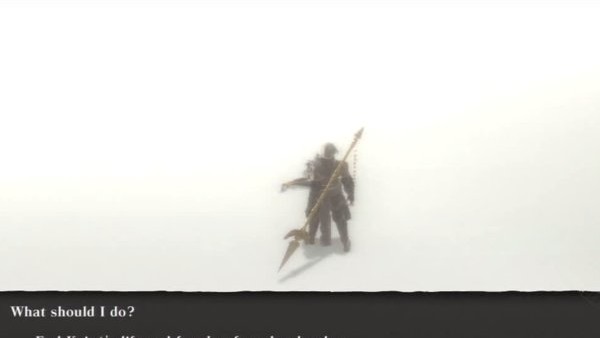
Nier and Nier Automata share some stark similarities: both follow stories about humanity's extinction, coming to grips with autonomy, and also may ask you to delete all your save files at the end of the game.
The original Nier gives the player the choice to save their companion, Kainé, from a slow, horrific death by either mercy-killing them or sacrificing themselves. The catch is that if the player chooses to sacrifice their character, it will also completely wipe the player's save files.
Nier Automata carried on the trend in a story of repetition, as androids and droid fight in an eternal battle that has lost all meaning. To skip over an extremely convoluted plot, the fifth ending of Automata pits the player against the end credits in a bullet-hell style arcade game. It's an extremely tough challenge, and after refusing to give up a number of times, the game offers you a lifeline: accept other people's help who have deleted their files.
Accepting help provides a shield of ships which, when hit, will notify the player that their aide's files have been deleted. After the fight, you're offered the choice of helping other strangers complete the game at the cost of your own save file. It's an extremely selfless act, one which may help another player beat the game.
1. Undertale

Undertale is another game with multiple endings. You can explore more of those endings if you so choose, but must keep in mind that they may be more trouble than they're worth.
Undertale's ending changes depending on how many monsters you've killed. Sans will usually call you when you escape to the surface to update you on the Underground's status, telling you who's in charge and the kingdom's general attitude to your actions. Specific deaths or high kill counts may result in Sans telling you to "go to hell" or to "never come back" again.
If you open the game after a true pacifist ending (killing no-one), Flowey warns that you, the player, are the only threat left, having the power to reset the game and retcon the characters' happy endings. Yes, many of the characters are aware of your resetting and loading, and multiple playthroughs have the possibility to change future playthroughs forever.
For example, trying to unlock a true pacifist ending after a genocide run (killing everyone) leads to some very nasty surprises, and deleting files from your game is the only way to rectify those horrific consequences.