10 Video Games Utterly Ruined By RNG
Random tripping in Smash is the WORST.

In video games, RNG - that is, Random Number Generator - is the means through which various outcomes are delivered to the player.
This is typically by way of an apparently "random" invisible dice roll that dictates whether a player's attack lands, which power-ups they receive, the goodies a defeated enemy drops, and what's waiting for players inside one of those pesky loot boxes.
In an ideal world, RNG is employed to keep games fresh, ensuring that every time you pick up and play a game, you're not simply playing through the same set of boring pre-programmed routines.
And while RNG works perfectly well enough for many games, some developers have ultimately become overly reliant on it, often at the expense of the most skilled and dedicated players.
These 10 games, despite their generally terrific core gameplay, all employed the services of the "RNG Gods" a little too eagerly, in turn undermining player skill and, let's be honest, wasting a whole lot of everyone's time...
10. Counter-Strike: Global Offensive

It's the opinion of many that RNG mechanics have no place in competitive shooters, especially where aiming is concerned, given that it effectively adds a luck element to a core mechanic which, many would argue, should be based on skill alone.
And there's arguably no greater offender on the FPS market than Counter-Strike: Global Offensive, which uses a behind-the-curtain dice roll to decide the exact trajectory of your bullets, ensuring that they rarely end up precisely where you intended.
The RNG is an attempt to both replicate real-life gun recoil and make gameplay feel slightly more dynamic for newer players in particular, who might otherwise get mowed down by a veteran opponent every single time.
Now of course, skill is far and away the most important factor in deciding the winner of a shootout regardless, but RNG can tip the balance just enough to throw a superior player off and allow their opponent to sneak a "cheap" kill on occasion.
Again, it ensures no two gunfights are ever exactly the same by introducing an unpredictable element behind the scenes, but to that end it can also result in capable players being killed somewhat unfairly.
9. Mass Effect 3
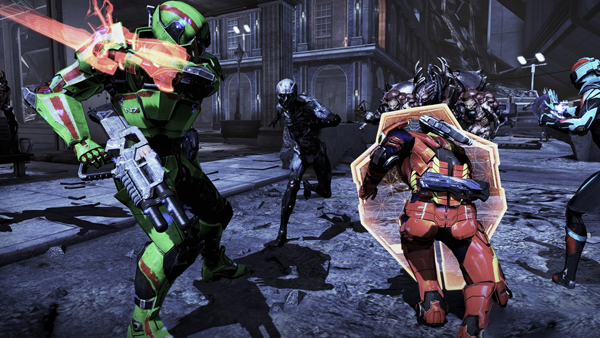
Mass Effect 3 introduced a Horde mode-esque multiplayer offering to the series for the first time, and though fun, the loot unlock system is based on an infuriatingly oblique RNG mechanic.
Basically, playing matches allows you to earn credits which can then be used to buy card packs, which contain characters, items, and so on.
But of course, these packs are randomly generated, in a craven attempt to not only keep players playing the game in pursuit of that rare loot, but more importantly, convince them to shell out real money in order to get it all faster.
There's no beneficial weighting for the player's sake, so it's common to end up with useless duplicates, making it incredibly tempting to shell out real cash - or better yet, just sack off the game and do something else.
8. Dragon Ball Xenoverse

Despite being mostly praised by fans, Dragon Ball Xenoverse received plenty of push-back for how thoroughly RNG mechanics are intertwined with its core gameplay.
Loot drops are completely random, meaning players can spend tens of hours having their clothing and skill-set determined by a mere dice roll, and RNG even dictates whether additional mission objectives will appear for the player or not.
As a result, you can effectively end up with an RNG inside of another RNG: activating a bonus boss fight only for the game to give you diddly squat once you defeat them.
The complaints were vocal enough that Bandai Namco eventually had the game patched to ensure a greater likelihood of the objectives unlocking and quality items dropping, but players had to wait until the sequel for the RNG system to be sufficiently reworked.
7. Star Wars Battlefront II

Though Star Wars Battlefront II underwent many post-launch updates which significantly improved the game, for many it was simply too little, too late, given how brazenly EA demonstrated how little they thought of the average consumer.
Shortly before Battlefront II's release, EA was heavily criticised by various outlets for the game's predatory multiplayer progression system, which was largely driven by random loot box unlocks.
Meanwhile the in-game heroes were estimated to require roughly 40 hours of monotonous grinding to unlock, in an embarrassingly transparent attempt to make players just pay real money instead.
It also emerged that players weren't rewarded with credits commensurate to their in-game performance, prompting many to simply leave the game idling with a rubber band wrapped around their controller to effectively farm credits.
Clearly, EA had done all they could to incentivise a "pay-to-win" playing field, all at the expense of letting players just...play the game and have fun.
Despite EA quickly pulling the plug on the loot box nonsense and massively lowering the credits requirements to unlock heroes, the game's reputation was irreparably damaged, no matter how undeniably superior it is today.
6. Mario Kart Wii

The Mario Kart games are apparently governed by "luck," in that a skilled player can have a flawless run ruined at the last minute by a pesky blue shell, and a newbie can surge to the front of the pack after picking up a Bullet Bill.
But the power-ups made available to the player are actually dictated by a weighted probability mechanic, which adjusts according to the player's own position in the race.
As such, if you thought your pickups were entirely the result of a random dice roll, that's not the case at all, and this proves especially egregious in Mario Kart Wii.
The game's especially harsh probability matrix ensures that winning players almost never end up with a quality item, in turn allowing lesser players to steal a win by receiving an extremely high-powered item.
The ultimate by-product of this is that players who should win get screwed out of victory far too often, while those who have no business coming first steal it away without feeling like they've actually earned it.
Thankfully Nintendo listened to the vocal criticisms of Mario Kart Wii's overly draconian, rigged RNG system, opting for a more balanced and democratic probability set for Mario Kart 8, which neither overtly punished good players nor boosted bad ones.
5. FIFA 20

FIFA fans have long been at war with EA Sports for the perceived increase in RNG mechanics when playing against A.I. opponents over the years, culminating in last year's FIFA 20.
Though in theory the player with the stronger team should have a much better chance of winning, players will routinely find their passes and shots at the mercy of the game's absurdly nonsensical RNG.
As a result, star players can miss hilariously easy shots and passes can be intercepted out of nowhere, ensuring there's very little real pleasure to be derived from actually scoring a goal. You're not so much battling other players as you are the game's insanely unsubtle dice rolls.
At worst, you'll be forced to sit back as the CPU scores a ridiculous goal out of nowhere they had no business scoring, all because the RNG Gods weren't on your side this time. Terrible.
4. Final Fantasy X
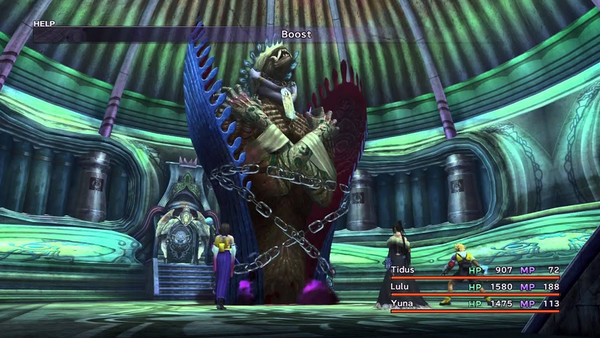
This is a rather unique case of RNG ruining a game, because it wasn't a result of any malicious intent on the part of developer Square Enix, but simply a bug that unfortunately wasn't removed before the game was released.
2015's PS4 remaster of Final Fantasy X shipped with a glitch which invalidated the game's RNG-based combat, ensuring that every fight played out in the exact same way every single time, in the exact same location, and with the exact same loot drops.
Hilariously, this meant that not only would the "random" encounters be not-so-random, but after getting killed by a boss, repeat attempts would see the boss fight the player precisely the same way. Basically, it stripped all the dynamic unpredictability out of the game and made combat incredibly boring.
Embarrassingly, Square Enix took several months to release a patch fixing the bug, which mercifully restored things to normal at least.
3. Borderlands
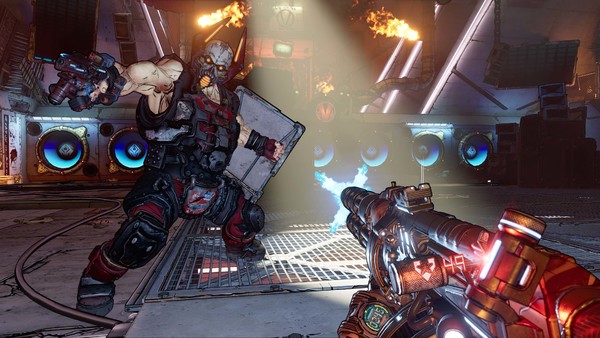
Borderlands is one of the most iconic "looter shooter" franchises of all time, and so the means through which said loot is distributed to the player proves extremely important.
The series as a whole has had an extremely questionable history with RNG loot drops, ensuring players can spend hours and hours grinding the same enemy type hundreds of times and still end up without their desired weapon.
Getting the loot you crave typically requires digging through several layers of RNG nonsense, and as tight as the core gameplay might be, it makes getting what you want an absolute time sink when, let's face it, there are so many other brilliant games to play out there.
2. Super Smash Bros. Brawl

Who doesn't love the Super Smash Bros. franchise? Well, fans were less than impressed when 2008's Brawl introduced a random tripping mechanic.
In order to make game outcomes dictated slightly less by skill, Brawl allowed the minor possibility that any player could trip over themselves mid-match, per the whims of an RNG running in the background.
While on one hand it provided an opening for less-skilled players to gain the upper hand, the competitive scene was furious, especially as Nintendo provided no option for players to turn tripping off.
To the collective relief of just about everyone, though, tripping hasn't appeared in any subsequent Smash game. Yet, anyway.
1. Destiny

Both Destiny games have come under intense scrutiny for their RNG-based loot system, and much like Borderlands, it's largely concerned with padding out the player's time while constantly dangling a carrot on a stick in front of their face.
Destiny has some of the most remarkable gunplay of any FPS on the market today, but the drop rates for Exotic items are absolutely infuriating, and per the game's RNG, you could easily go a month without getting any only to find multiple in the spans of mere days.
Ultimately drops are too aggressively limited, to the point that it's more of an exhausting, demoralising slog than genuinely rewarding to finally get the item you're chasing.
It's nothing more than a soulless attempt to lure players into the endless, repetitious cycle of grinding, and given the game's huge playerbase, it clearly works.