11 Video Game Sequels Not Made For Their Original Audiences
The times they are a changing, but that's not really a good thing for older gamers...
In their attempts to find large audiences over the decades, many gaming franchises have suffered something akin to an identity crisis of sorts. Sequels, reboots and spin-offs have all branched out from the roots they made their initial successes on, but though these titles are good in certain respects, it must be said that no one seems to be catering for the old stalwarts of their respective genres anymore.
Think about it, as these more niche franchises attempt to emulate and cater for a wider market, they automatically lose many of the quirks and features that drew audiences towards them in the first place. In their defence however, gamers can be notoriously picky when it comes to changes to the norm of their favourite series, even if a new iteration retains many of the features that made it develop a following to begin with - case in point the cosmetic alterations to Dante in DMC.
That said, when franchises do change, the quality of the series can go anywhere, irrespective of the inevitable fan backlashes that occur. In their quest to branch out and find these new audiences developers risk alienating their most dedicated fans, but at the same time they do need to cater for a bigger audience in order to ensure a successful release.
It's a tricky dilemma to weigh up, as there's no clear trend to determine whether or not these reboots and sequels have mostly failed. Regardless, we can all be certain of one thing: they weren't made for the people who picked them up in the first place.
11. Dead Space 3

Dead Space was always built upon the foundations laid by Ridley Scott in 1979's Alien, utilising the sci-fi horror tone pioneered by his film and placing it in a new unique lore.
With that in mind, it's not difficult to comprehend just how much of a departure the third game was compared to the first two. Gone was the isolated paranoia of the original Dead Space, shattered by a completely out of place co-op focus and an action genre feel that managed to erase much of the suspense the series had worked so hard to create.
The third game just completely absolved itself of its original fanbase in an attempt to find a wider audience, which is even weirder considering the fact it's the finale to the trilogy. New fans aren't going to want to drop into a series in time for its final act, yet by the developer's logic Dead Space 3 would've provided the perfect jumping on point for fans less accustomed to the horror game's original gameplay.
10. DMC: Devil May Cry

Ninja Theory's reboot to the wildly ostentatious Devil May Cry saga attracted criticism from its fanbase for all the wrong reasons, because the game was actually fantastic.
What incensed fans so much about this wasn't that it would be a reboot. No, what they were so aggrieved with was the change of Dante's hair.
Despite the very real cosmetic changes to the series' environmental aesthetics, DMC was a clear improvement on the old Devil May Cry formula we all know and love. Sure, the story was given a change and Dante was given a new look - most likely to attract more audiences looking to dabble in the hack and slash genre - but to try and insinuate that it wasn't like the games of old is just plain silly.
Either way, DMC 5 looks brilliant, so at least fans will get the best of both worlds this time around.
9. Medal Of Honor (2010)

Disastrously killed thanks to an unprecedented bad sequel to this reboot, the Medal of Honor franchise had always struggled to find its footing after Call of Duty came along. Factors like the oversaturated FPS market obviously played their part, but was it Medal of Honor's modern day paint job that actually sealed its downfall?
This a bit of a difficult case to make, seeing as how the FPS genre was still trying to shake itself silly from the countless World War II shooters that had dominated the decade prior to 2010, but with the hindsight we now have today? It's more than fair to say that the community hadn't gotten tired of historical-themed shooters.
MOH was until 2010 a franchise solely dedicated to focussing on the European and Pacific theatres of WW2, but then proceeded to implode on itself when it decided to change its designs to the controversial 'War on Terror'. The first release packed a heavy narrative punch, but it was by no means made for the fans who had invested in its WW2 shooters prior.
8. Fallout 3

Deviating from the isometric view its predecessors had, Fallout 3 marked Bethesda's return to the genre they have to a lesser extent been defined by in recent years - the third person action RPG.
It marked a huge departure for the series, which under Black Isle had remained a largely top-down RPG. Bethesda's first foray into the franchise caused a lot of division within the fanbase, even if it was a fairly spectacular game.
Fans of Black isle Studios' first two games in the series may now find themselves disinterested in the franchise's current iteration, even if many of the much-loved aspects of them did make it through the transition to consoles.
7. Hitman: Absolution

Although the Hitman series may be back to its best with back-to-back hits in Hitman and Hitman 2 (try saying that three times in a row), there was a time when the series wasn't so adored.
Hitman: Absolution was intended to be a soft-reboot of the series, and though it wasn't panned like some of the other titles previously mentioned, praise wasn't exactly unanimous either.
At the top of fans' concerns was the fact that the quintessential Hitman formula had disappeared. In its place came a more restrictive, linear set-up that didn't encourage freedom nearly as much as the previous instalments in the series did, most notably in 2006's Blood Money, and it's for that reason why the series underwent another soft reboot in 2016.
6. Doom 3

Although Bethesda's 2016 DOOM reboot managed to bring the series back to its relentlessly paced, chaotic self, the previous entry - Doom 3 - signalled a massive change in direction for the franchise.
Gone was the sense of empowerment and the breakneck pace of combat. Instead, Doom 3 rebranded the series as a survival horror, grinding the game to a halt and losing what made the previous two entries in the series so enjoyable to the franchise's veterans.
It just wasn't all that enjoyable, but hey, at least everything worked out in the end. Doom Eternal is going to release sometime in 2019, and we're all very excited.
5. Bionic Commando (2009)

The pseudo-sequel/reboot to one of the eighties best loved action platformers was always going to be a bit of an oddball, not just because the franchise had been dead for at least a decade, but because it was coming back as a third-person shooter.
Platformers have never really been able to muster the same sort of popularity they did when they were pixelated, 8-bit side-scrollers, but if you're going to improve on its premise, at least follow in its original footsteps.
There was actually a critically well-received remake that came out the same year, which shows that fans of the original series were at least interested in seeing a follow up of a similar vein - not what they ended up getting instead.
4. Sleeping Dogs: Triad Wars
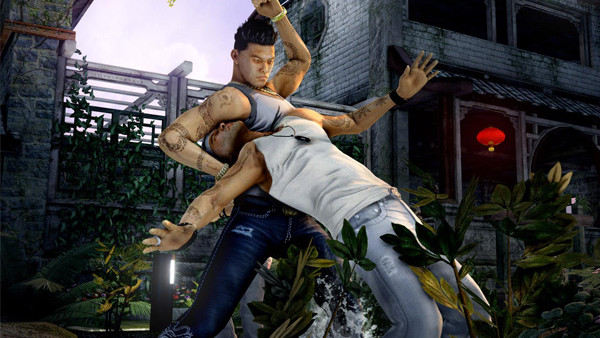
Remember Sleeping Dogs? It was a fantastic open-world game in the style of GTA that paid homage to different pieces of Hong Kong cinema, including Infernal Affairs and Hardboiled. It had some brutal combat, a compelling story, and some fun gameplay, so you'd think that the follow-up would attempt something at least vaguely similar to that single-player experience.
What players were going to get instead was the now cancelled Triad Wars, which was going to be an MMO taking place within the Sleeping Dogs universe. It was also going to be a PC exclusive, which would mean that most of the title's audience would've been unable to play it anyway.
With Triad Wars now taking an indefinite vacation, here's hoping that a sequel to Sleeping Dogs is on the cards, and that it won't aim to depart from its initial features too soon.
3. Bomberman: Act Zero

In terms of a franchise divesting from what made it so entertaining to begin with, Bomberman: Act Zero is a pretty egregious example.
Konami's series had once been a cutesy, maze-based game that had players take on the eponymous character to fend off against various enemies and obstacles. It was immensely popular, but - come 2006 - Konami decided to make a change. Act Zero, as it would be called, had players assume the role of their own Bomberman in a dystopian setting, and it was about as far away from the original as you could've gotten.
Needless to say, the game was almost unanimously panned, and Konami reverted to the original Bomberman aesthetic in the following year's Bomberman Live.
2. Sonic Boom

Oh Sonic, what on earth ever happened to you? It's so sad that such an icon of the gaming medium could be turned into such a key symbol of mediocrity, and though we can't lay the blame for his decline squarely at the feet of Sonic Boom, we really have to ask what exactly was its intention?
I mean, it's a reboot, but also not a reboot, and Sonic has an ascot, and Knuckles now has no legs, and... it's awful. It's obviously trying to appeal to younger fans, but it doesn't hold a candle to the 2D Sonic games of old. In that sense it inhibits the character's ability to resonate with people of all ages, unlike Mario, who's popularity still shows no sign of waning.
Either way, the kids who picked up Sonic for the first time in the nineties, or even discovered it for the first time with the mega collection, aren't going to be too enthused about getting another anytime soon.
1. Resident Evil 6

This one doesn't really warrant further explanation, but the evolution of the Resident Evil franchise certainly does. It's been everything from a fixed-camera survival horror, to a third person shooter with horror aspects, and finally an action spectacle of Michael Bay proportions.
Looking at those three iterations, it really isn't hard to tell which one feels out of place. Sure, Resident Evil 4 messed with the recipe that first garnered the franchise its attention, but it was a revolutionary game in its own right. It brought in some fantastic shooting mechanics, retained the suspense of the originals, and offered some fantastic locales to boot - it was the perfect cross-generational Resident Evil. Which then brings us to Resident Evil 6, which sought to capitalise on every late 2000s action-adventure trend and put it in a franchise they had no place being in.
Zombies carry guns, explosions dominate the scenery, and there are barely any scares to be had with the whole thing - definitely not something fans of the old games would be interested in at all.
Resident Evil's status as an old series has meant that it's gone through many transitional phases, some more successful than others. However, it perfectly encapsulates the success and failure to be had in branching out from an IP's original roots, with its fourth entry gaining huge success, and the sixth failing on pretty much every level imaginable.
Ah well, at least Biohazard and the upcoming Resident Evil 2 remake are great.
Are there any sequels that we missed that did away with their original concept? Post a comment and let us know!