15 Most Overrated Video Games Since 2000
Battle of the Best-Sellers.
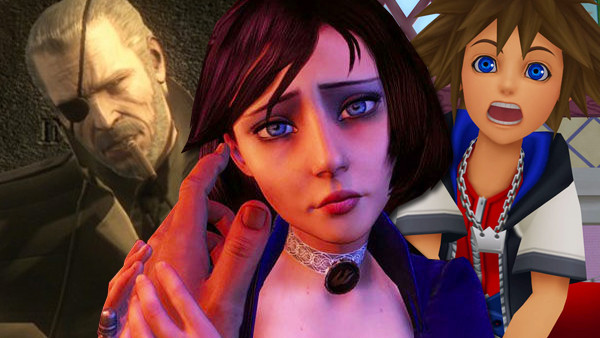
Have you ever tried saying to a group of gamer-loving pals (or just posted on a forum) about a particular game "Not being your thing", or starting a post with "Is it just me, or..."?
There's always this sensation that we're addressing a nebulous critical response, some 'voice' that represents an un-tappable consensus. You feel it whenever you openly state something like GTA V is overrated, like you're bracing for the hit from an unknown assailant.
However, diving headlong into that response, that idea of which games we simply 'cannot' deem less than perfect, is the entire point of this article. There are far too many titles that manage to weaponise their hype-cycles into multi year-long reputations of nothing but praise, and it's only years later, when you reflect back on them, that maybe... just, maybe, we were a little blinded by buzzwords and not-so-original mechanics all along.
So, torch n' pitchforks at the ready?
Let's do this.
-
15. Batman: Arkham City
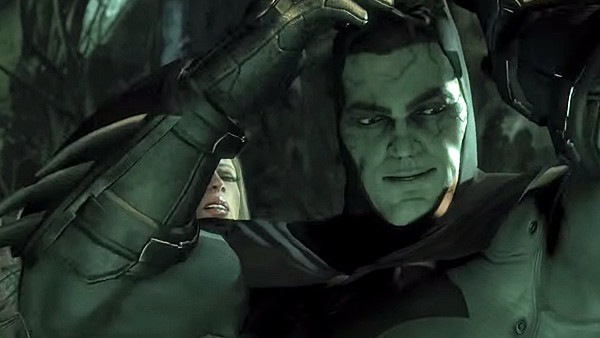
When you think back on Arkham Asylum, it's the immaculate world-design, the pacing, the constant rollout of marquee characters that keeps it hurtling along at breakneck speed, right? For City, Rocksteady elected to go open-world, but not... quite.
Instead of branching things out and introducing mechanics that actually befitted free-form exploration (which they at least attempted to nail with Arkham Knight's Batmobile), City felt like Asylum's still-incredible levels, spread out across an expanse of land, just for the sake of it.
Plot-wise we were supposed to be dealing with the ramifications of Hugo Strange finding out Bruce's real identity, yet in the end he was skewered by Ra's al Ghul before he could utter a sentence. Couple that with some shoehorned-in Joker appearances and a Batman that comes across as a narrow-minded A-hole with Gotham's best interests at the bottom of his priorities list, and its (admittedly stunning) finale just doesn't save Arkham City.
14. Shadow Of The Colossus

One boss battle multiplied sixteen times does not a great game make.
Such were my thoughts going through Shadow of the Colossus, as although yes, it's gorgeous to look at and one hell of a think-piece in terms of how we interact with the world around us, overall the aforementioned structure was cripplingly repetitive.
Venture out, ride your horse across the land, find a beast, kill it, restart. That's IT. Yes, a handful of the battles are spectacular (the flying 13th iteration being one hell of a jaw-dropper), but by the time you've done a few of these in a row, it simply highlights how little there is on offer in terms of basic game mechanics.
SotC gets by on its ponderous question of man versus nature, alongside a monumental twist finale that upends everything you thought you knew. But actually playing it? That was way too much of a slog.
13. L.A. Noire

Man, I hated L.A. Noire. There's something about a game shooting for the stars and messing it up so much, that playing and noticing where they went wrong is simply infuriating.
In L.A. Noire's case, that centred primarily around the broken interrogation system. Supposedly supporting a serious tone, character Cole Phelps would dart between talking nice and calm, relaxed... ahhh, question time... AND THEN RAGE SET IN BECAUSE HE WAS ANGRY AND YOU DID IT YOU KILLED HER YOU SON OF A BITC-oh... and then calm again.
It was all OVER the place. Such a mechanic was supposed to sell the entire game, giving you an excuse to check out Team Bondi's phenomenal face tech, yet in reality, you just couldn't "analyse your suspects" reliably, without Phelps literally freaking.the.F.out.
12. God Of War III

Now we're on the other side of E3 2016 and we can see how Sony have actually - miraculously - managed to save Kratos and God of War overall, it's remarkable to look back on just how one-note the series had become. For me, although GoW 3 looked stunning and is still genuinely one of the best-looking games on the PS3, Kratos' motivations had reached the point of parody.
He was less a man thinly avenging his slain wife and child (something he accidentally did in the first place - yes, really) and more just butchering everything in his path, because video games. Helper characters, friendly Titans, quest-givers, it didn't matter.
However, by the time you'd met up with the imprisoned Hephaestus, got him to make you some weapons, slept with his wife (someone who'd been untrue to him, but the dude was still in love) and then slaughtered him anyway, that was a very ugly way to portray a character we were still supposed to be rooting for. It ended up contributing to a feeling that this third entry was one too many, giving the whole affair a very sour aftertaste.
11. SSX 3

EA, BIG or otherwise, will never top SSX Tricky. Most recently (ish) they tried with the 2012 reboot, only for it to fall face-first down the marketing mountainside, but back in 2003, that was the real first hurdle.
Sadly, in taking the decision to mature the series' overall aesthetic - thereby making its appeal more of a conducive whole, as oppose to just a character showcase - it neutered it a tad in the process.
Tricky's roster was a bevy of vibrant boarders you couldn't wait to test out, each one having a personality that just leapt off the screen. SSX 3 carried many of these forward and attempted to what amounted to be a free-roaming 'open world' as one giant mountainside, but underneath it all, that veritably characterful spark didn't shine through anywhere near as much as it needed to.
10. Half-Life 2
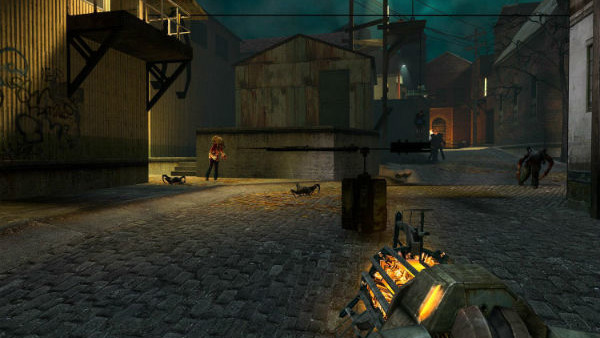
You probably guessed this one was coming, as is its inevitable placement on every 'overrated' video game article. However, personally, honestly.... I tend to agree.
Half-Life 2 is one of those 'place and time' kinda games. It refined a first-person narrative formula that already showed promise in the 1998 original, adding a revolutionary physics engine that really made the critics sing. Therein lies its appeal, as for tens of thousands of us, flinging buzzsaw blades at headcrab-topped enemies was a joy without equal.
In retrospect though, a lot of Half-Life 2 just hasn't aged quite very well. The driving sections feel incredibly cumbersome in their locked first-person state, shooting - although precise - doesn't have any weight or tactile feedback, and the majority of the campaign's colour palette consists of greys and browns.
A landmark shooter? Yes - but something that'll stand the test of time forevermore? I think not.
9. Burnout Paradise

The game that killed Burnout, I'm sad to say.
Looking back, you can pinpoint the good and the bad of Burnout: Paradise, with the overriding sentiment being that yes, it opened up the genre to all sorts of side mission-filled design tropes, yet took the focus away from drop-in, drop-out arcade racing in the process.
For me, Burnout lost almost all of its core appeal when Criterion took it away from being a racing game predicated on picking courses and cars in quick succession.
The appeal was booting into certain tracks you began to know like the back of your hand, challenging yourself to overcome time trials and slam the competition into specific hazards you'd pinpointed last time round. As soon as that idea was branched out and spread across an open world, it introduced a level of improvisation to your driving and actions that I really didn't like.
Bring on a new Burnout at some point, but please, Criterion, make it more like the earlier few.
8. Grand Theft Auto IV

GTA IV remains the anomaly in Rockstar's canon, the one time they attempted to break away from the 'whacky' trilogy of GTA III, Vice City and San Andreas, looking to flex their narrative muscles even more after the runaway success of Bully.
The result is a game that has a fundamentally broken character. Niko Bellic laments the life of crime he's in, whilst also then living a life of crime. Liberty City's re-work from GTA III ended up looking way too muddy and washed out to be inviting, and aside from the RAGE engine giving way to some awesome physics-based mayhem, there was a lack of focus throughout that highlighted what should've been a major turning point for the series.
Sadly, it would be a turning point Rockstar retreated from in GTA V, reverting back to a 'crazier' mentality, leaving GTA IV as even more of a one-off.
7. Kingdom Hearts

My criticism of Kingdom Hearts is one that tends to divide rooms: Is turn-based combat better than real-time?
For an RPG, I'm saying yes. And for an RPG made by the RPG masters themselves, Square, I'm saying "F**k yes!", except the reality was a weird hybrid of menu-scrolling and real-time.
Playing Kingdom Hearts back in 2002, you could tell the industry was in a state of flux. Developers hadn't figured out the sorts of mechanics seen in more modern action RPGs like Dark Souls, The Witcher or Final Fantasy XV, instead trying to layer menu selection over the top of more standard hack n' slash-style button-mashing.
The result just wasn't fun to play, and when you started introducing fast-moving enemies and incredibly hard bosses *cough* Sephiroth *cough*, the whole thing fell apart.
6. Metal Gear Solid 4: Guns Of The Patriots
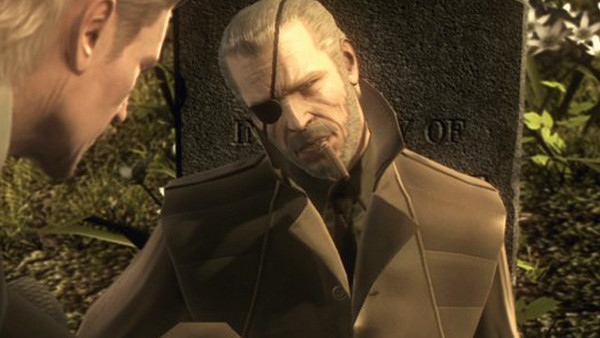
There's something that comes with being a huge Metal Gear Solid fan: perspective. You can love Hideo Kojima's big, ambitious babies as much as your morning caffeine kick, but in doing so and studying them over time, it only highlights how much said fandom initially blinds you (happily so) to their faults.
As such, MGS 4 remains one of the finest examples of pure fan service in history. It's an eight hour cutscene-filled behemoth, seeing Kojima direct four movies in one, wrapping up every last plot thread with a neat little bow. The issue with that, is it doesn't leave a whole lot of room for gameplay.
Literally, there are two semi-open world chunks you can explore, one terrible tailing mission, a motorway chase and another awkward stealth section. Various playable chunks pepper the interim, but it's when you look back over the entire project that it hits you: There's only a few of hours of gameplay here, max.
5. The Elder Scrolls V: Oblivion

Breaking down what we mean by the always trotted out statement, "It just wasn't for me", can be a tricky one, but in Oblivion's case, it came down to being just that little bit too aimless.
The primitive animation, combat options available to you, the idea of journeying into other worlds every few moments to shut down the titular towers - none of it felt cohesive, more like you were making it up as you went along.
Bethesda have always been master world-builders, but from the glazed look in every NPCs face, to the quest designs that amounted to a ton of dialogue and fetch-quest combos, well... it just wasn't for me.
4. Alien Isolation

Having to go to-to-claw with an actual Alien was a great selling point, you have to give Creative Assembly that. And they actually nailed the very idea of being stuck in a space station with one of the most vicious creatures of all time, too.
Sadly though, that was all Alien Isolation had. You'd be forced to wander the halls, knowing the randomly-generated Xenomorph could (and would) be right behind you every now and then, resulting in a huge amount of tension and "RUN FOR YOUR LIFE!"-esque moments, but at the cost of decent checkpoint placement.
It was a bold decision to mean that spotting the Xeno spelt instant death (until you finally get a weapon to make it run away), but in terms of how it feels to play - and the harsh reality of having a good 20 minutes of game-time wiped away because of a swift kill - Alien Isolation was far more annoying than it should have been.
3. Quantum Break

I'm still blown away by quite how well Quantum Break did in its reviews, as save for Giant Bomb's Jeff Gerstmann and myself (who went with two and three stars respectively) the vast majority were positive, earning it a comfy 77 on Metacritic.
Thing is... it's pretty bad, like surprisingly so, for the guys that brought you Max Payne and Alan Wake.
Combat is as tight as you'd expect, but everything around it; the character of Shawn Ashmore having zero backstory, the line deliveries being so 'off', the plot being all over the place and the tie-in TV show ultimately being pointless, irrevocably tarnish the final product.
2. Bioshock: Infinite

It's hard to push past the gorgeous art aesthetic and phenomenal voice acting of Bioshock to find something darker within, but it's that bottom layer, the fact that nothing really holds up, that I couldn't get away from.
Take combat. It's a very basic, dual-trigger affair, with hardly any options when dealing with the infuriating Handymen. They'll constantly sprint after you, sapping your health in seconds, with no recourse other than attempting to gain distance by using the various sky-hooks, only to then rinse and repeat.
Plot falls apart when your interaction with Comstock is resigned to a cutscene auto-kill, there's a ludicrously pretentious moment where Booker and Elizabeth sing a song out of nowhere about their own predicaments, the combat itself had zero progression, and come game's end, you'll be talking more about the Rapture cameo than anything you've just seen.
All these things are indicative of the development hell the game went through, and for all its achievements conceptually, I've always thought the execution was way wide of the mark.
1. Fallout 4

Bethesda are ambitious, yes. They're incredibly innovative, absolutely. They make good games... yes, but with a huge caveat - you're guaranteed to see tons of bugs popping off at any given time.
"It wouldn't be Fallout without the bugs" fans say, "It would lose something if it was scaled back", they counter.
Well, yes and no. Point being, Fallout 4 indicated to the populace that Bethesda aren't always going to be all that bankable. Think of the major step up from Morrowind to Oblivion, and then Oblivion to Skyrim - every single component was revamped and tweaked. And better yet, Skyrim ran very well, especially considering when it was released and what hardware it was on.
But Fallout 4... man. I always come back to the fact that there's nothing you could sell it on, that Fallout 3 didn't already nail. Because the hook certainly isn't the settlement-building, which granted, people have built impressive structures out of, but it forever feels incredibly unwieldy and counterintuitive.
The shooting was better, the pacing was way worse. The graphics were better, but the world didn't feel all that inviting. Settlements and crafting were in... but you NEVER needed to use it.
Swings and roundabouts, peaks and troughs, Fallout 3 and Fallout 4. I'm still a Fallout 3 guy.
--
Let me know in the comments what your pick for the most overrated game since 2000 is!