7 Video Game Plot Twists That Were Disappointing

Cheap narrative tricks don't always work...

As video games grow more and more cinematic (with some even being interactive movies), game writers have likewise tried to adopt ways of making their stories stand out as awe-inspiring, with plot twists being a frequent tactic. There havedefinitely been some widely successful surprises implemented by game designers, but unfortunately for every good twist there is a bad one - or more fairly a significant number of them. Sometimes the twists are just outright terrible (and sadly memorable for that reason,) but more often than not the twists garner a more disappointed reaction from gamers because it was either out of the blue, cliched, or painfully obvious. They might not inspire outright hatred per se, but these uninspiring twists do still make gamers sad, and it is those examples that are in focus here....

7. God Of War II - Zeus Is Kratos's Father

In God Of War II, Kratos is betrayed and killed by Zeus for some unknown reason and spends the rest of the game trying to turn back time so that he can take revenge on his killer. Ultimately, at the end of the game, Kratos beats Zeus and almost kills him before Athena intervenes and tells him that, wait for it, Zeus is his father. The revelation was disappointing because it added nothing to the game aside from a half-baked motive for Zeus to do what he did (which was retconned in God of War III anyway). Not only that, but turning Kratos into a demigod made his character look weak in the first game where he's about to die to mere mortals. Lazy writing at its finest. People who were disappointed in the Pandora's Box element in the third God Of War fail to realize what the purpose of the games was; to tell why the world we live in doesn't have Greek deities/monsters anymore. Even though I dislike the series a lot, I can understand things from that perspective. In our modern world, all the horrors present in Pandora's Box do exist, but at the very same time we do have hope. Turning it into anything else would've degraded the goal of the franchise.

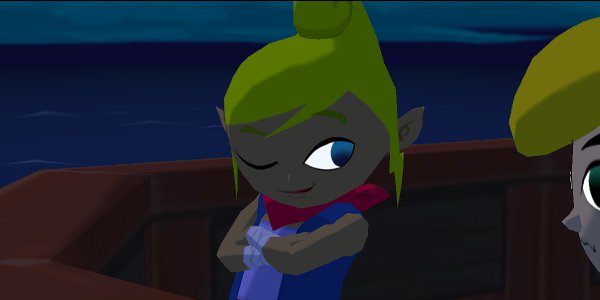
6. The Legend Of Zelda: The Wind Waker €“ Tetra Is Zelda

After the success of Ocarina of Time and Majora's Mask, Shigeru Myamoto's Legend of Zelda series had established itself as a leading title in the action-adventure genre. With the Nintendo 64's successor, the GameCube, on the market, it was inevitable till fans got a new console Zelda game. And we did with The Wind Waker, except that the art style looked a little too cartoonish. In retrospect, it was actually a unique take that worked well with the game's setting and story, but that didn't stop critics back then from trying to skewer it before release. Nevertheless, everyone quit whining as soon as they got into the game, which was a more story-packed Zelda game that masterfully placed Link in the pirate setting as he attempted to save his sister. It was all very original up until Nintendo tried to emulate the matchlessness of Ocarina Of Time by showcasing a plot twist that we all saw coming; that Link's companion Tetra was none other than Zelda. It was disappointing because this same thing had been done in Ocarina Of Time with Sheik instead of Tetra. In a game that was full of new female characters (Link's grandma, Aryll), Tetra could have stood out as a revolutionary woman in Nintendo's distinct cast, but apparently the developers decided that it was better to play things safe by keeping her as a reincarnation of the Princess.

5. Indigo Prophecy/Fahrenheit - The Internet Is Sentient
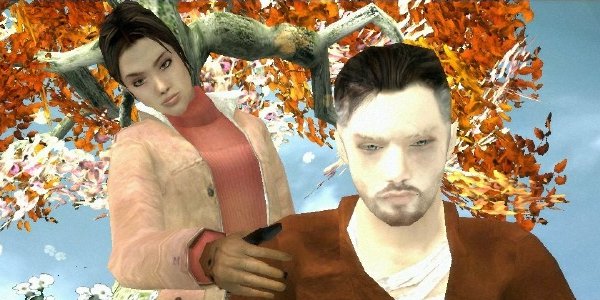
Interactive movies (or interactive dramas as they prefer to be called nowadays) have come a long way from the days of screaming live action girls at a slumber party to the motion capture scenes of today. Though many games have come out under the genre, many recognize the works of Quantic Dream as the standard, with the famed Heavy Rain and recently released Beyond: Two Souls the most notable. However, few gamers remember the company's first major interactive movie release called Fahrenheit or Indigo Prophecy as it was known in the United States. The game was a near masterpiece, with just the right amount of psychological and thriller aspects to it. Indigo Prophecy followed the story of a man called Lucas, who attempts to solve the mystery of why he stabbed a stranger to death in a restaurant diner. As you uncovered more and more clues, the puzzle pieces began to come together in a very interesting picture until the plot twist came. It turns out a group of sentient internet beings known as the Purple Clan had been the one's responsible in an attempt to get Lucas to help them find the Indigo Child, a little girl with the knowledge to change the world forever. It was disappointing because the whole thing had come out of nowhere. Yes, the plot had been borrowing slightly from the science fantasy genre, but to go full on supernatural was very much at odds with what the game had been building up to this whole time.

4. Pokemon Red/Blue/Green- Pokemon Can Die
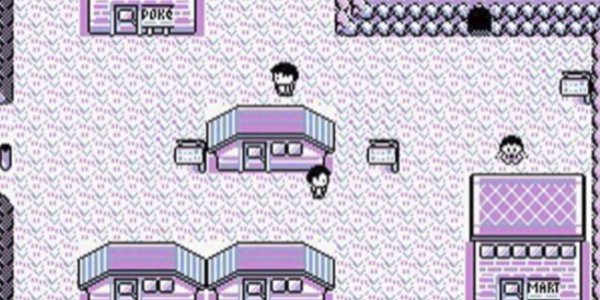
Okay, so it wasn't technically a plot twist in the most literal definition, but Pokemon isn't a series that can exactly be said to have a strong plot. You play as a kid who wants to become a Pokemon Master and you go about doing just that, with later games adding onto the story with various side plots. Still, the heart of the game was meant to be a kid-sized adventure that would last forever, so you can imagine the surprise many of us felt when we arrived in Lavender Town and found NPCs mourning over the death of their best friends. The main point of games, especially Pokemon, is to be escapist outlets for people wanting to leave their world for another. Thus, being thrown back into reality made us all very disappointed. It can even be said that the shock felt by this revelation was the cause for all the scary Lavender Town myths you hear about now. Let that be a warning for inducing childhood grief.

3. Amnesia: The Dark Descent - Why Daniel Erased His Own Memory
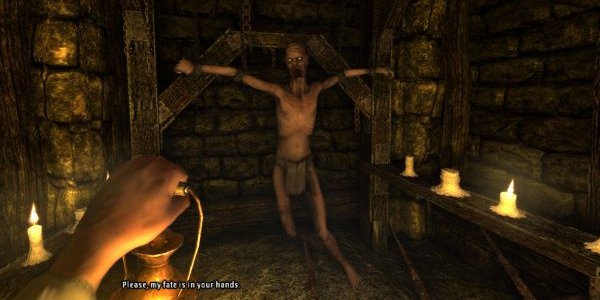
Amnesia: The Dark Descent is one of the greatest survival horror games of all time, and unlike many others, which have to rely on excess amounts of gore or bloodcurdling screams, it focused entirely on atmosphere and xenophobia to create an experience that was unlike anything (except maybe Slender: The Eight Pages). The story is about Daniel, a young man who wakes up in a mansion with no memory of why he's there. He immediately finds a note written by himself telling that he has deliberately erased his own memory and needs to kill the Baron of the mansion whilst avoiding the stalking of an entity known as the Shadow. It was brilliant because it put Daniel exactly into the player's shoes of not knowing what was going on here, creating an empathetic link between the two only further enhanced by the addition of a sanity meter similar to the one in Eternal Darkness. Of course, out of all the mysteries plaguing the player (who was this Baron, why is there a Shadow following me, what are all these monsters roaming the manor?), the biggest one was why Daniel had chosen to induce self-amnesia. While theories were subconsciously produced from the beginning, various notes found via exploration ended up divulging the disappointing truth. To not completely spoil the game for those who still want to experience it, Daniel had helped the Baron torture several prisoners as he was told that would help in getting rid of the Shadow. When the Baron revealed that this was all a ruse to help go back to his world (as he was really an alien), he betrayed Daniel and left him to die. Daniel drank an amnesia potion in order to get rid of the emotional baggage created by the suffering he'd inflicted on the captives. It was disappointing because it didn't make sense. So Daniel thought that rather than channel the rage over being tricked into doing these horrible acts to exact revenge on the Baron, he decided that it would be better to make himself try and kill the Baron with no knowledge of the mansion's schematics or the Baron's power? Yes, the trauma was painful, but to think that it would easier to fight a battle without knowing anything about the fight was idiotic in an otherwise perfect game.

2. L.A. Noire - The Black Dahlia Murderer

L.A. Noire was particularly divisive: while fans of Rockstar expected an open world-type detective game on par with Grand Theft Auto or Red Dead Redemption, instead what we got was a neo-noir crime thriller that used state of the art mo-cap technology to really make players feel like a detective in this world. The game follows Cole Phelps, a former marine who is rising through the ranks of the Los Angeles Police Department during an era where corruption reigns supreme. Your main task is to solve a variety of cleverly written mysteries involving plenty of action and drama. Though some could be hit or miss, the majority was fascinating and made you feel like a real cop. During the game, several women are murdered and left stripped bare in the world. These grisly killings, dubbed the Black Dahlia case (inspired by the real life crime of the same name), form a small story arc as you gather enough evidence to apprehend each suspect. The motivations are made very clear and it just felt like you were doing some real good work for the city. That is until the big plot twist where it turns out that you were catching the wrong men. In reality, there was only one murderer, and he gets off scot free because he has ties to a high-ranking politician. Not only was it disappointing for that reason, but it made all these previous cases you had "solved" useless and a waste of time. The effort put into deducing every murder was just thrown out for some mild commentary on the politics of justice. It was frustrating to say the least.

1. Assassin's Creed III - Washington Killed Connor's Mom

Assassin's Creed III was a game that was hyped up as heck yet ended up being a big letdown. While the gameplay and open world were both great, it was the story that got gypped with both the modern and historical aspects being poorly written. In the historical story, Desmond relives the memories of first his ancestor Haytham Kenway, and then Haytham's son Connor/Ratonhnhaké:ton. A surplus of time skips was utilized to compensate for lazy writing, resulting in a narrative that felt broken up and full of filler. Alongside this, the writers decided to add a layer of morality to the Assassins and Templars. While previous games had established a, more or less, black and white take on the conflict between the two groups, ACIII tried to be greyer with the idea by questioning the actions of both. While it was interesting in theory, the execution was flawed, leaving many gamers to dislike the protagonist. Still, even while you were killing these Templar Masters left and right as they revealed their relative innocence, one thought remained clear in every player's head; Charles Lee was to pay for the burning of Connor's village (and subsequently his mother's murder). Maybe it was because we loved the whole revenge motivation Ezio had in the second Assassin's Creed, but this was something that convinced us the ends justified the means. That is until the game showcased its second biggest plot twist of the game; it wasn't Lee that had done the horrible act but General George Washington, whom you had been serving at the time. Not only was this twist disappointing, but it basically hammered in the thought that this was a pro-Templar game and that Connor was an idiot for wanting to stay with the Patriots and continue his assassination of Charles Lee. It made the rest of the game a chore to complete and the poor finale to Desmond's quest didn't help ease the displeasure.

Contributor

Red Stewart is big fan of the entertainment industry, with insights into film, television, and video games for starters. Despite growing up in the 21st century's era of modernization, he prefers many retro era ideas over the current trends found in many of today's media. Personally he's an introvert who loves reading as much as gaming.