7 Vital Things Esports Need To Improve On
Millions of fans around the world - why isn't eSports MUCH bigger?
ESports has blown up massively in the past few years, and is growing exponentially every day. From Starcraft 2, to League of Legends, Rocket League, to CS:GO, all of these games have had monumental competitive success. There have been players earning prizes in the range of over 1 million dollars in a variety of tournaments, and organisations supplying salaries comparable to professional footballers.
Even universities have eSports teams, and huge tournaments such as the League of Legends World Championships can be viewed in cinemas, so it's no wonder there are more and more titles trying to grab the eSports stage, making history within the gaming community and - sometimes - pop culture at large. Still, despite the ongoing discussion of accepting a plethora of titles into the olympics, eSports right now is far from perfect.
The success of one incredible game tends to produce controversy and friction within the competitive scene, and although eSports as an entity tends to improve across every new title and each new event, there is a lot of room for improvement.
7. Toxicity

Within these competitive games, toxicity is a massive issue. It’s unfortunate the anonymous style of online gaming comes with the internet being able to say literally whatever they want. However, in eSports, it’s an entirely different issue. Pro players do on the occasion let out some steam now and then, which is absolutely fine, but they need to act like role models for both younger players, and the overall community.
Compilations can be found of Call of Duty pro players yelling at each other in between rounds, and it is a disgrace to see the state of how the community is like. Dealing with this issue is improving a tiny bit, as with series like the regional League of Legends Championship Series, players and organisations are actually getting fined for toxic behaviour.
Outside of these games, you have an entirely different issue. Events being streamed to Twitch or Youtube have the unfortunate state of live chats, which is a very big deal.
Anything is said within these chats, and any tiny flaws players have are amplified and exaggerated to a ridiculous degree.
6. Hard To Follow As An Outsider
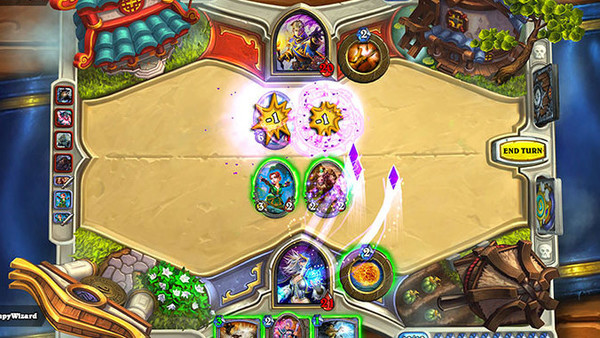
To us as gamers, watching a game is easy to follow because you know from experience what would be going on in any given match.
However, if you were to show a game of Hearthstone to someone like your parents, they’d have as much knowledge about the game as a child would about running a business. On the other hand, games such as FIFA, CS:GO and Rocket League can be very easy to follow.
If you were to show gameplay of the latter, anyone would be able to understand what the game is about - who’s winning/losing, and the fact the opposite team need to score an amount of goals to win.
However, games like DOTA 2, League of Legends and Starcraft 2 all have issues such as confusing gameplay and tactics, to multiple champions each having loads of spells and buffs.
Keeping track of this, alongside any other minor details is very hard and confusing to a non-gamer, and can turn anyone them away from ever watching these games again in the future.
5. Bugs & Patches

Due to the unfortunate nature of video games, bugs will happen. It is sometimes hilarious to see them during big competitive events, however if they’re absolutely game-breaking, they can affect the outcome of rounds and games in general. Now, there are rules in place to prevent players from exploiting bugs to gain an advantage, but when someone does, the damage is done.
If you’re on the receiving end of these bugs, they're instantly frustrating, can waste loads of time, and will ruin your focus.
Preventing bugs is an absolute clusterf*ck for developers to sort out, and in turn can bring out a whole load of new bugs. Even when bringing out new patches, that’s another story entirely. If your favourite gun, champion or gameplay mechanic was changed or balanced, there’s a good chance of ruining the countless hours you’ve spent on these, and can affect your chances of future games.
There have been ways of preventing these patches in eSports. As an example, the League of Legends Championship Series delay these patches before a tournament, to prevent teams from exploiting new mechanics, tactics or champions, before anyone can understand how to deal with them. It is a good step towards making everyone happy, but is far from a perfect solution.
4. RNG (And Hearthstone)

Almost every game has RNG, from PUBG's "circle and loot" luck, to critical strikes in DOTA2 and League of Legends. The times when you’ve got an unsuccessful roll on the dice can be infuriating, especially when there’s literally nothing you can do about it. Still, nothing abuses this element as much as Hearthstone.
Nearly everything in the game is affected by RNG, from card draws itself to the randomness of a cards' effects, such as Ragnaros or Yogg-Saron. There is an element of skill and knowledge to the game, but to let a game be decided due to a card being drawn last that is crucial to your deck, is kind of an unfortunate mechanic to have in eSports.
Back to the olympic sport comparison/goal, and none of them elements of RNG like video games.
3. Being Accepted By The General Public

To date, there have been notable examples of countries supplying athlete visas to players in places like the USA, the Philippines and Turkey, and including the fact that pro players are given salaries like a sports player, why isn’t eSports accepted on the same level as sports?
On the one hand, you can argue that they’re not as physically demanding as physically athletic competition, but on the other, there are sports that are less physically demanding, such as archery, shooting and darts. Heck, even painting and sculpting was an olympic sport back in 1948.
It can easily be argued that competitive gaming is just as mentally demanding as something like an Olympic sport, and there are discussions to include eSports in the 2020 and 2024 Summer Olympic Games.
This should all go a long way to getting eSports "accepted" as a spectator sport, in the eyes of the public.
2. The Battle Royale Genre

PUBG and Fortnite are intense and immersive to play, and have been exploding in popularity the past couple of years. However, when you introduce this genre of games to a spectator eSport, everything goes out of the window.
Before you even start to watch the game, you have around 50-100 people taking up a massive amount of space just to even get everyone on the same literal playing field. Not to mention, if one person has technical issues, then the entire game is on pause until that issue is fixed. Technically and logistically, setting up these events would be an absolute nightmare to sort out.
When you get into the game, it is impossible to keep track of every kill and what everyone’s carrying. However, it has to be said that the game gets very interesting and is easier to track for the final few minutes.
1. Item Gambling
With any form of competition comes the expense of gambling, and combined with tradeable micro-transactions within games, this makes for a very bad combination. CS:GO has been the one of the worst victims of gambling and there have been countless controversies including influential personalities such as “TmarTn” and “ProSyndicate”.
With an estimated amount of $5 Billion gambled in 2016 alone, the nature of this issue can easily be translated into gambling problems within the younger audiences. That’s not to say developers aren’t curbing this massive issue. Skin gambling restrictions, have been put in place by governments from many countries, forcing Valve to start cracking down on skin gambling websites such as csgolounge, and have been enforcing trade limits and safeguards to the marketplace.
On the plus side of these micro-transactions, they’ve provided professional players with extra bonuses, such as stickers on CS:GO, and Battle Passes for the main prize pool in the DOTA 2 International, so thankfully, every cloud has a silver lining.