7 Ways Metal Gear Solid: Ground Zeroes Is Better Than Phantom Pain

A better narrative structure, no cut content and no sign of THAT plot twist.

Metal Gear Solid V: The Phantom Pain did a great deal in terms of moving the mechanics of the series forward; third-person control was less like moving a chess piece and more naturally human, the options to take cover and restrain enemies were far easier to initiate with helpful on-screen prompts, and the general world map changed dramatically: vast, open, mountainous regions provided play-spaces larger than that of MGS 4. There was more variety, more strategy and the stealth felt better than ever. That said, for anyone less receptive to this 'evolution' of Metal Gear, Phantom Pain felt like the mechanics of Far Cry 3 had been bolted on, and its many changes diluted (somewhat) the open-world promised. Afghanistan and Angola-Zaire were large environments split into many mission-sized portions, making the heralded €˜Metal Gear Goes Open World!€™ from the trailers feel like a hollow promise, especially as some missions only took place across self-contained areas, rather than miles of open terrain seen in other open-world titles. There€™s no denying both games that make up the fifth instalment of this twenty-nine year old gaming giant changed Metal Gear for good; but did the content, story and setting from Ground Zeroes really lead to a better, more faithful game than what became The Phantom Pain?


7. It's A Single Continuous Mission, Not Fifty Bite-Sized Ones

Granted, almost all critics pointed to the ridiculously short length of Metal Gear Solid V: Ground Zeroes, versus its retail price. One of the few bonuses of being so condensed, however, is that it's just one mission, one map. There€™s a single menu to get the game going and that€™s it. You€™re put straight on the island's edge, given a direction to head in, have an oversight of the entire military base you€™re about to infiltrate - and become extremely familiar with - and you're playing a brief tutorial whereby you're engaging enemies within minutes of the game beginning. The feeling of anticipation as you listen to the first briefing and plot your moves towards the first guard tower - before learning how to throw an unwary soldier to the ground some ten feet above - are marvellous. You know it's you against the entire base, and you're excited for what's to come. With The Phantom Pain, you're booted into a Prologue that takes over an hour to wade through in a knock-off, survival horror "I have no weapons!"-type situation, then you're playing Red Dead Redemption for ten minutes as you slowly relearn the controls and take part in a little stealth action. At its core, Ground Zeroes started quickly and immediately, whereas The Phantom Pain most definitely did not.

6. You're Never Far From Danger With Enemies Everywhere

Given that you€™re on a self-contained island, there€™s no real chance of a quick escape. With Ground Zeroes it€™s not just a case of getting off one particular screen and crossing through a loading zone to escape anymore. You are likely to die in firefights if you aren€™t extremely careful about where you€™re going, who€™s patrolling there and whether or not you€™re bothering to hide the bodies you€™ve been tranquillising or stacking up post-headshot. This strange oxymoronic feeling of open claustrophobia means that when your thinking is clouded with adrenaline, you know there€™s no definite escape, no definite place to hide. At some point you€™ll have to confront your pursuers and risk death in the process. Yes, the tranquilliser gun makes it easier to sneak around and enjoy the silence, and yes, the time-slowing focus/reaction attack Boss has allows for an easy get-out, but when the poop hits the fan, soldiers surround you and take you down rapidly €“ especially on harder difficulty settings. Where The Phantom Pain didn€™t do so well here was in having open levels with bases punctuating the landscape. The wide valleys and plains allowed you simply to run off into a convenient sandstorm or dart up a mountainside on horseback to hide behind a rather large outcropping of rocks and wait it out.

5. It's Just You And A Radio Companion In A Confined Map
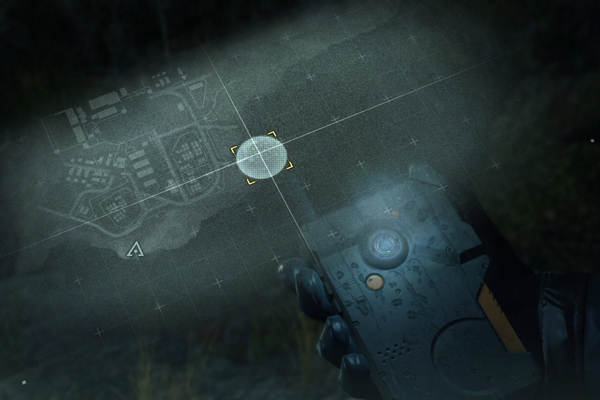
D-Horse, D-Dog and Quiet were worthy allies to take onto the battlefield, but the very philosophy of Metal Gear has always been a solo operative against the odds, forced to play hide-and-seek; gathering weapons via OSP and relying on little else but your wits. How easy did it become for a companion to remove one too many enemies in The Phantom Pain before you'd even decided which fence you're going to hop over to lodge a knife between chin and chest of a soldier? With Ground Zeroes, the map layout promoted difficult choices and with no companions to assist, it was all on your shoulders. Might you be seen if you hide under that AA gun emplacement? Just when will that guard stop smoking and turn his back? And the tented area, it was tense and exciting as you crept in and out of enemy sight lines and spotlights. The gradual crawl towards the courtyard by the main base gates left you feeling exposed after a good twenty minutes of careful exploration and guarded movements. Contrastingly, the open world of The Phantom Pain made some escape situations and combat encounters too easy. Sadly, removing the borders also removed some of that challenge.

4. It Is Instantly Recognisable As A Metal Gear Game

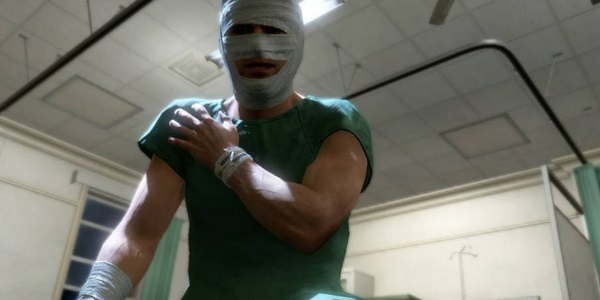
Starting up Ground Zeroes you had warm feelings of familiarity alongside the stark new features. A lone operative on a solo sneaking mission to infiltrate an enemy base? Check. Tutorial and mission briefing given via radio whilst approaching the first enemy engagement? Check. Some graphical feature or location that wows the player in some way - in this case the aforementioned search light towers in the FOX engine? Check. A significant reason Metal Gear succeeded in the west was because, despite the paranormal elements, the game began under the pretence of a straightforward militaristic action game that always pushed graphics and narrative. But with The Phantom Pain we're put into an awkward survival horror tutorial and made to wait a good hour or more to reach the actual "Metal Gear" part of what was meant to be there from the get-go. It was not as engaging as its predecessor because it just didn't feel 'Metal Gear' enough, as weird as that sounds. I was actually confused with the "Create-a-Face" tool in the hospital, mistakenly believing I was making an online soldier for later, and how wrong we all were about that.

3. Phantom Pain Was Marred By Awful Business Practices Pre-Release
Kojima versus Konami - pick a side and fight it out! Throughout the spring of 2015 we seemed to be reading greater numbers of news stories that focused on the on/off relationship between Konami and Kojima. Did they not give thanks for Kojima and his team's efforts? Were they not proud of his name? We saw that Kojima was to be removed from the upcoming release of Metal Gear Solid V: The Phantom Pain, and that was only the tip of the iceberg. Internet commenters seemed unsure what was really going on, and questioned if Kojima was up to his publicity-chasing ploys again, a la MGS 2 and the Raiden switch. Come September 2015 the packaging was revealed to be scrubbed clean of Kojima's name altogether, begging the question; why keep it for Ground Zeroes but remove it for The Phantom Pain? This is a side-note in the annals of gaming industry history, really, but it felt like each preview or news story didn't cover game features for the audience to get excited about, instead casting doubt on Kojima's ability to finish the game itself. It didn't tarnish the final product too much, but it certainly cast a strange shadow over it - what was more important to fans: the name, or the game?

2. Less Is More

There are many, many, many criticisms that can be fairly levelled at Ground Zeroes; it certainly wasn't long enough, it was definitely overpriced, it was a snatched moment of a gameplay from a fuller, more epic finale fans had been waiting some two years for. The content was repetitive and the main base wasn't big enough, ending in a yard, a storage unit and a basement full of plumbing. Yet, the most effective way to describe the difference between both games that make up MGS V is with the famous showbiz catchphrase, "Always leave 'em wanting more!" Ground Zeroes whetted appetites, but when Phantom Pain was served, some found they hadn't the stomach for its quantity, preferring quality that seemed assured with Ground Zeroes. Phantom Pain should have had a story that wrapped itself up, a mission structure unspoiled by menus and repetition, and should have had genuinely open-world gameplay. It shouldn't have been riddled with online issues (including Mother Base insurance), list-based mission selections and countless credit sequences. The Phantom Pain just didn't sit well within the legacy it had given itself. It could have used another year of adding genuine endgame content, a more connected open-world and the chance for Kojima to be celebrated by not just fans, journalists and peers, but by his employer, too.

1. You Get To Play As Big Boss

Ground Zeroes was powerful enough in its concept and setting that The Guardian gave it 5 stars out of a possible 5. It was seen as multifaceted: a chance for Snake to reinvent himself by way of Kiefer Sutherland's voice, and for Kojima to take aim at the contemporary military-industrial complex as he had done so masterfully against nuclear arms in 1998's breakthrough original. It also allowed players to see an icon of gaming, Snake, enter the next generation of consoles. But with The Phantom Pain, all of this was thrown aside. You were duped into assuming you were playing as Snake A.K.A. Big Boss, only for the opposite to be true. It turned out you played more than 90% of the missions as a doppelganger who had been brainwashed ever since the ending of Ground Zeroes, and there were almost no clues regarding precisely who you were or why you were motivated to do what you were doing. The ending and twist revelations led to a variety of reactions from critics and fans, including those who felt disappointed to those who argued that it being unfinished was the very point of it. However you see it, it was unexpected and certainly didn't tie Ground Zeroes to The Phantom Pain in any meaningful way. So, what was your reaction to The Phantom Pain? Did you find it less enjoyable than Ground Zeroes? Let us know in the comments below!

Contributor

Bryan Langley’s first console was the Super Nintendo and he hasn’t stopped using his opposable thumbs since. He is based in Bristol, UK and is still searchin' for them glory days he never had.