8 "Simple" Video Game Features That Took YEARS To Perfect
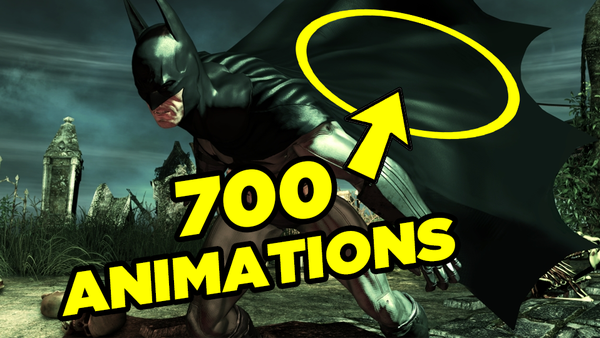
One man spent two years working on Batman's cape. Worth it?
As gamers, we take so much for granted.
After playing for so long, basic actions like running, jumping and fighting have been experienced in so many different ways that anything other than perfect-feeling gameplay is seen as a major misstep on a game's behalf, while small, so called 'easy' features become completely decried if the developers mess them up even slightly.
After all, surely it must be easy to nail the swinging in Spider-Man (Just make him go faster! Make the webs connect to buildings!) or the sense of speed and weight in a racing game having so many examples to draw from, right? Well, not quite, and often in the world of video games, it's the small details that are the biggest pains for the creatives to actually nail.
These are features that seem so simple on the surface, and in the finished result might not even appear all that impressive, but which took the developers years of trial-and-error to get right - and it's time we appreciated the effort.
8. Web Swinging - Spider-Man

Spider-Man games are nothing without a good central swinging mechanic that ties everything together, but after decades of attempts, a lot of which absolutely nailed it, you'd think it wouldn't be all that hard. Just don't say that around Insomniac employees, who took three years to please fans with their take on it in their latest Spidey outing.
In fact, the team knew exactly how important swinging would be to players, and it was the very first thing they started work on - and hit plenty of speed bumps along the way. First up was making it satisfying to get around corners without losing momentum, as the physics-based system they initially implemented resulted in testers hitting buildings and losing the fluidity of the web head's movement.
That was scrapped, and a new system was devised that ended up making it into the final product, which prioritised movement, momentum and chaining moves together while still being weighty and tactile. However, when this debuted, fans complained it looked too slow, which led to the team further tweaking the system again to be faster without losing the fluidity they'd previously accomplished.
Finally, after three years, the team were finally happy, and just in time for release.
7. That Axe Throw - God Of War
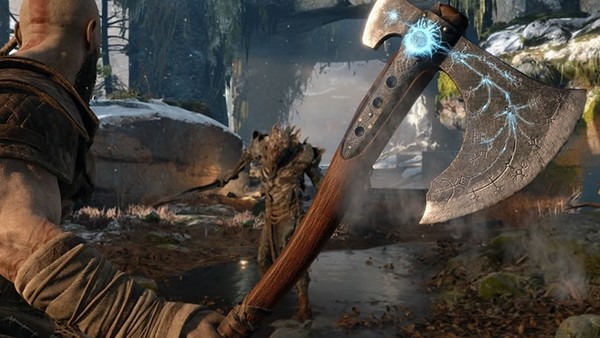
For four games, the Blades of Chaos had become the default death bringers for God of War's Kratos, but with a new era and setting, the character needed a new tool. Fortunately, from the very first gameplay demo, it was made clear that the Leviathan Axe was going to be a worthy successor.
Everything about it was satisfying, but it was the ability for Kratos to fling the axe, and then recall it Thor style, that made it so much fun to use. The ballet of syncing axe slashes to a ranged throw to personal hand-to-hand punches and then having the weapon fly back ever got old, and looked spectacular.
While it seems easy enough to pull off, after all it's just a throw and then a return like a boomerang, there were so many tweaks the devs had to implement to make it as satisfying as possible in game, and most of them you probably didn't even notice.
For instance, when recalling the axe, not matter its trajectory, it will hit an enemy for added oomph. Even a tiny thing, like the weight of the axe causing Kratos' arm to move back a little due to the force, was constantly tweaked to make sure the weapon didn't seem too heavy for him, or too limp. There were a bunch of other elements, like having the axe wiggle, having it arc a little, and three different rumbles taken into consideration as well.
Over five years, the devs constantly tweaked the axe, which was documented by one of the game designers here.
6. Climbing - Breath Of The Wild

The Legend of Zelda: Breath of The Wild's entire mantra is focused around player choice. Right from the opening, the game puts the final level right in front of you, perfectly attainable should you want to prioritise it, while letting you roam in any direction and explore until your heart's content. What made it so liberating though is one tiny mechanic: the ability to climb any part of the environment.
Whether it's the highest mountains or smallest buildings, you can attempt to climb anything in BOTW, and the only things stopping you from reaching the top will be how much stamina you have, and whether or not it's raining.
Of course, while that's a great concept, allowing the player to climb anything and everything has the ability to completely break your open world. If you can reach anywhere, the sense of wonder of getting there is suddenly gone, and the developers at Nintendo had a lot of tinkering to do to make sure the freedom still felt satisfying and rewarding.
The previously-mentioned stamina system was the biggest way the team achieved this. This capped how far players could climb, but even this took a lot to balance. During production the devs had half-steps in place, such as a mechanic where you could drive a sword into the side of the rock and rest to regain some stamina before continuing, but eventually scrapped them.
In the end, they settled on the regular stamina system, as well as a set of climbing gear to help you out.
5. Flying - Anthem

Flying is Anthem's biggest success, but it took years of Bioware including and then ripping out the system before they managed to make it feel right. As per Jason Schreier's excellent deep dive into the title's development, the idea of traversal was something the team got caught up on for pretty much the entirety of the game's production, with flight always being an option, but one which worried many of the developers.
For one, there was the worry that flight would lead to players simply speeding through the environment and not paying attention to all of the detail the artists had packed into it. Likewise, the ability to cover so much ground would require the level designers to shift their work to accommodate a larger, more vertical world, which would have been exponentially more demanding.
Consequently, while the prototypes of flying mechanics were cool in concept, the team allegedly struggled to make them feel good to play with. As a result, the first demo the team showed EA didn't feature this traversal system, and was negatively received. Across the next few months the team plugged the flying back in, which wowed the higher-ups, and encouraged them to really put the time and effort required into perfecting it.
4. Ellie - The Last Of Us
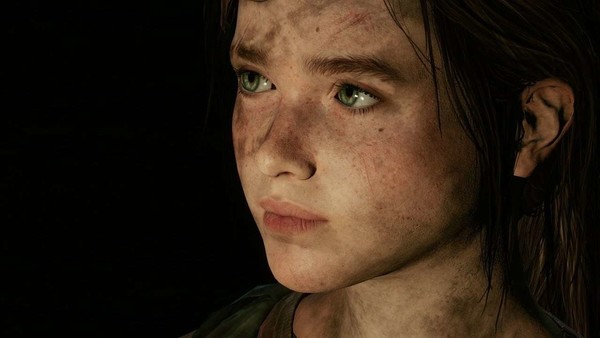
Although we've come to take them for granted now, companion characters used to the most frustrating parts of video games. Back in the days when Dead Rising reigned supreme, the idea of having to escort an NPC through an entire campaign would be enough to send chills up the spines of every player in the world.
Thankfully, the likes of Bioshock: Infinite and The Last of Us proved that not only could it be enjoyable to have a companion, but it could actually enhance both the story and gameplay in unique ways.
The latter title really needed to nail an NPC companion that didn't frustrate the player or become a chore to look after, as the relationship between the playable Joel and companion Ellie drove the heart of the entire plot.
The first step was to keep her in view at all times, as teleporting around the environment wouldn't have made her feel like part of the world, but keeping her too tied to the player and passive would have made the entire game feel like an escort mission.
It was a difficult balance to get right, and Naughty Dog spent years tweaking her A.I. behaviour, and how much agency she had in combat, before finishing on the finished version.
3. Over-The-Shoulder Perspective - Resident Evil 4

Resident Evil 4 was famously a tough sequel to get right. In their attempt to reinvent the franchise as a whole, Capcom tried a whole host of different ideas and concepts, even getting far along in development on some - to the point where they were unveiled officially to the public - before scrapping them entirely and going back to the drawing board.
While there were plenty of changes made between the different versions of the title, one aspect the developers constantly struggled with was the perspective of the camera. The previous titles had all used the static camera system, flicking between different, uncontrollable angles depending on where the player was in the level.
The first iteration of Resi 4 offered something of a half-step evolution on that idea, switching between an over-the-shoulder mode for shooting and action, but maintaining static camera angles while walking and exploring.
That system was scrapped by the time the final version of the sequel appeared, featuring a fully-controllable camera from the now iconic over-the-shoulder perspective. At the time this was revolutionary, even though it seems like such a simple switch.
2. Gloo Cannon - Prey

The developers at Arkane always knew that, while their sci-fi sim Prey would indeed feature plenty of guns, the game wouldn't be a shooter. To make sure players knew this, they came up with a bunch of unique weapons that had other purposes than simply pumping bullets into enemies, with the most diverse of all being the gloo cannon.
Doing exactly what it says on the tin, the weapon fired out a stream of glue, that would harden on impact, allowing you to freeze enemies in place and shatter their bodies into a million pieces with a follow-up shotgun blast. Its real use comes when players get imaginative though, as it pretty much allows you to get anywhere in the game's map - even places the devs didn't intend.
By shooting walls or connecting gloo across gaps, you can fashion some impressive walkways to different parts of the environment. However, while this is a dream for the player, it was a headache for the dev team. Allowing the player to get anywhere put a strain on the artists, because if the player could see everything, no corners or assets could be cut, while the level designers needed to make sure each space accommodated this freedom in a way that didn't impact pacing and progression.
Likewise, the team went back and forth on the gun's core attributes; its name, its look, the way it fired, which materials the gloo would bounce off. The cannon was around from the pre-production stages, but it wasn't finalised until production was well underway.
1. The Cape - Arkham Asylum

Arkham Asylum famously made you be the Batman, but nothing quite epitomised just how well the developers nailed the character quite like looking at his silhouette against the oversized moon as his caped billowed in the wind. It's a simple but effective image, and one which apparently caused one unlucky developer two years worth of hard work to achieve.
Because, in their pursuit of making this the most detailed, dynamic version of the character ever seen in a video game, Rocksteady needed to make it appear as if the cape was its own entity, and not just rigidly stuck on the back of the costume. Though it's the kind of effect that's common place now, cloth physics interacting with the world was rare back in 2009, especially on this level.
Before release, the president of publisher Eidos specifically singled out the cape as an example of how much care had been poured into the game, saying:
"There was one person working on nothing but the cape for two years, so there are over 700 animations and sound clips attached to the cape alone. That's why it looks so beautifully realistic."
I think we can all agree that the end result was worth it.