8 Disastrous Console Upgrades The PS4.5 Must Learn From
Sony aren't the first to try and fail at this, you know.

Although the incremental PS4.5, PS4K (or whatever you want to call it) is definitely happening, Sony have so far said nothing - probably because such a move is like a relic from the games industry of the 90s.
They'd usually arrive at a late point in a system's life cycle, improving its power and technical capabilities to try and squeeze a bit more life out the console before it inevitably dies.
Historically, these ventures have been a disaster, not so much reasserting their given console as establishing that it's well and truly dead - sort of like opening up a grave and zapping a body with a defibrillator just in the hope that it wakes up and shouts "I'M BAAAAACK!"
Sadly, it's just not gonna end well.
The PS4.5 fits into the 'mid-cycle upgrade' category because it seems that it'll be the same console internally, except for that much-touted capacity for 4K resolutions, but Sony need to be diligent, otherwise it'll end up like this list of console upgrade disasters...
8. Sega CD

Sega's decision to start tinkering with its much-loved Genesis was arguably the beginning of a long and excruciatingly drawn-out end for the company's console ventures.
In a bid to gain some ground on the runaway Super Nintendo, Sega made a CD expansion for the Genesis, offering greater storage capacities, and added power that would allow for a 'Genesis 2.0' generation of games to come out. It also doubled as a CD player - a feature that played a big part in the PlayStation's success just a few years later.
So what went wrong?
At $300, the Mega-CD was alarmingly pricey, though western markets warmed to it thanks to a small but high-quality games collection, made up mostly of graphically-enhanced re-releases of Genesis games.
With that said, it still couldn't compete with the SNES, and despite over two million sales, Sega began closing development on the Mega-CD barely a year after its US and European launch.
What the PS4.5 can learn:
Don't make customers spend huge amounts of money on an incremental add-on.
7. Sega 32X

32 bits of raw, unadulterated power! That was a pretty big deal in the 90s, though you may associate 32-bit consoles more with the Sega Saturn and particularly the Sony PlayStation rather than this anomalous Genesis add-on.
The 32X was strangely released barely a year before the Saturn, which seemed like a bit of a conflict of interests for Sega. Customers were confused about what exactly it was and whether to buy it, and that wasn't helped by the fact that qualitative differences between games on it and the vanilla Genesis were barely visible.
Its 60-game library mostly featured mildly crispier versions of games that had already come before, though we should tip our hits to the array of comically awful FMV shlockfests that required both the Sega-CD and 32X - Corpse Killer, Night Trap, Fahrenheit, we'll never forget you, much though we wish we could...
What the PS4.5 can learn:
Don't release a console upgrade if your full console is right around the corner.
6. Nintendo 64DD

The 64DD sounded like a brilliant idea when it was first unveiled back in 1995 (yes, that's before the N64 itself was even released). The 'Dynamic Drive' was to use magnetic-stripped zip-type disks that had a much higher capacity and reading speed than cartridges, and even experimented with various online features such as web browsing and online gaming.
Seeing as the 64DD was meant to be released by the end of 1996, it kind of makes you wonder why Nintendo didn't just include it in the N64 from the start. In the end, the 64DD was released in December 1999, which is basically the year 2000 - three months before the launch of the PlayStation 2.
And that last point pretty much sums it up. The 64DD would've been an excellent - even revolutionary - add-on, had it come out four years sooner, but endless delays meant that it was obscure by the time it got its limited release in Japan.
What the PS4.5 can learn:
If you must bring out a mid-cycle console upgrade, do it quickly, and don't spend four years faffing around.
5. SNES-CD

The beautiful collaboration that never was, the SNES-CD or Nintendo 'Play Station' was going to be a Super Nintendo upgraded with a Sony-made CD drive. The strange licensing agreement for the upgraded console was going to effectively cede control of game licensing for the CD drive to Sony. Nintendo seemingly agreed to this, but then got cold feet as they jilted Sony to partner up with Philips instead.
What resulted on Nintendo's part was the awkward Philips CD-I console, which hosted some of the worst bastardisations of Nintendo characters such as Hotel Mario and Zelda: The Wand of Gamelon (suffice to say none of these became canon).
Sony, meanwhile, went on to make a little something something called a PlayStation.
What the PS4.5 can learn:
Don't collaborate with Nintendo, because they might just stab you in the back! Not that Sony really need reminding of this...
4. PSX

Say what you will about this PS2/video-recorder hybrid thing, but it looked kind of awesome. The slick, sharp-angled white box was very much a PS2.5 (though looked a little bit 'Wii'), featuring the same internals as the PS2, albeit with a digital video recorder built in, as well as the XMB menu system that would later feature on the PS3.
The PSX was an early foray by Sony into its dream of convergence - creating a console that would act as an all-in-one media centre. It had an in-built hard drive and online connectivity too, foreshadowing the PS3 that would appear a few years later.
But hardly anyone noticed the PSX at the time, and it seemed that people just weren't ready yet for a games console that tried doing anything more than it said on the tin. It was a bit of a sacrificial lamb, allowing Sony to get a feel for what gamers wanted in preparation for the PS3.
Poor old PSX...
What the PS4.5 can learn:
It's ok to release a mid-cycle console as a way of feeling out the market in preparation for a next-gen console. With that in mind, is the PS4.5 just a feeler console, with Sony already having one eye set on a PS5?
3. Famicom Disk System

You can easily forgive Nintendo for this painfully unsexy floppy drive add-on for the Famicom/NES. There was no blueprint for the company to follow. In the NES, it had created a console that revived the games industry and outshone everything that came before. How were they to know that console upgrades were a terrible idea?
The idea was that the 'Disk Cards' for the system were to replace standard cartridges, offering high storage capacity, the ability to save games, and the ability to host great games like Metroid, The Legend of Zelda and Castlevania. In Japan, you could even take blank disk cards to 'Disk System Kiosks', and pay to get games written onto them, which you could later overwrite with other games!
It was kind of revolutionary and started off well, but in the end many of its perks - such as saving and increased capacity - arrived on standard Nintendo cartridges, which were also more durable that Disk Cards. The Disk System went out of fashion and never made it outside of Japan, with Nintendo returning to good old-fashioned, 'blow in the slit' cartridges, and the best Disk System games coming to the standard NES.
What the PS4.5 can learn:
Make sure there are enough long-term perks to the console so that it's actually better value than its predecessor. Is a 4K resolution really enough to make the jump worth it? Will the extra power in the console make it capable of running games at 1080p at better frame-rates?
2. NEO-GEO CD

SNK's Neo Geo was best known for its arcade cabinets that played host to classic games like Metal Slug and King of Fighters, but their entry into the home console market in 1990 also showed some promise. The Neo Geo AES was easily the most powerful games console at the time of its released, but that wasn't enough to overcome its outrageous $650 price tag and games that could cost upwards of $200.
The Neo Geo CD was to be the solution. Released in 1994, it was exactly the same console on the inside as the AES, but used the CD format to keep down the cost of games.
It wasn't too well thought out however, with games suffering from horrendous loading times and the console being well on the dated side by the time it launched, which was around the same time as the vastly superior PlayStation.
What the PS4.5 can learn:
Make the console considerably more powerful than its predecessor, otherwise it's prone to looking outdated very, very quickly.
1. Atari 7800
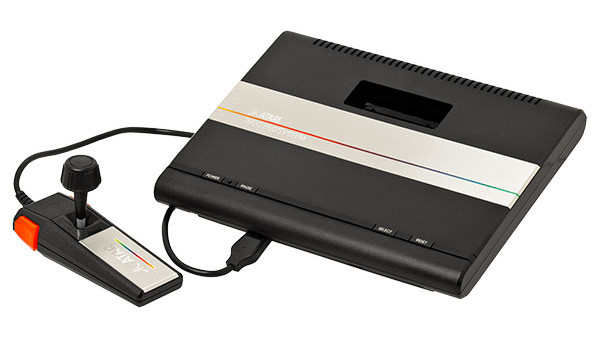
Before the NES was released, the games industry was a free-for-all, with so many incremental upgrades being released for tens of consoles that it was hard to tell what was actually worth buying.
Atari was the market leader at the time, and it wanted to solidify itself and break away from the competition with the Atari 7800, a replacement for the Atari 5200 that was fully backwards-compatible with old Atari 2600 games. It was technically the greatest of the pre-NES consoles. But the problem was that it wasn't actually a pre-NES console, despite its outdated games library making it feel like one.
While the 7800 was competitive with the NES in terms of hardware, its exclusive games were far inferior, seemingly stuck in the past while games for Nintendo's maiden console were a revolution in gameplay and video game storytelling (i.e. games like Zelda actually told a story rather than just making you complete levels for no reason, or fly a plane for no reason, or whatever other context-free silliness old Atari games made you do).
What the PS4.5 can learn:
Use the new console to offer new experiences to gamers, and really show that there has been progress since the last one. Just releasing the same old games with a 4K lick of paint won't be enough.
Do you see any way for Sony to succeed with the PS4.5? Let us know in the comments!