8 Gaming Heroes You Didn't Realise Actually Killed Innocents

Sometimes, games sweep an accidental genocide under the rug.
Unlike avatars, as seen in RPGs like the Elder Scrolls and Mass Effect, we can't fully control the actions/emotions of our playable characters, and as such, we often hope that the path our hero takes is done under a morally-acceptable light. In other words, we hope that they don't do things associated with vigilantes, antiheroes, or villains, like killing innocents or causing unnecessary destruction. Sometimes, however, this simply isn't possible and the hero ends up acting immorally, either because they are forced to (Altair) or accidentally do so (Spec Ops: The Line's Captain Walker). Unlike the aforementioned cases, though, this isn't made obvious to you, as it only occurs that your character has done something wrong when you put down the controller and begin thinking about it outside the magic circle. While it may seem strange that you didn't notice it the first time, this really speaks to the power of immersion present in video games. With that in mind, here are 8 notable example of gaming heroes who killed innocents.

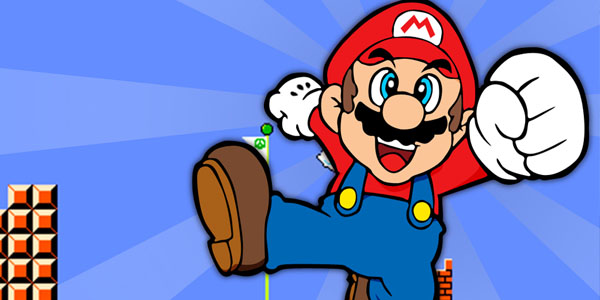
8. Mario - Super Mario Bros.

From the glory days of the NES to the struggling period the Wii U currently faces, Mario has established himself as a cultural icon that virtually any gamer can recognize instantly, whether the tell is his hat, moustache, or Italian accent (courtesy of Charles Martinet). Though he first appeared in the arcade game Donkey Kong (1981), Mario found mainstream success with the launch title of the Nintendo Entertainment System, Super Mario Bros. His popularity only increased when he successfully transitioned to 3D gaming with Super Mario 64 in 1996, and has since stretched his influence into a variety of genres including educational (Mario Teaches Typing), racing (Mario Kart), fighting (Super Smash Bros. Brawl), RPG (Paper Mario), and so forth. However, one notable trait that has changed since his NES debut has been his enemies. You will notice that in games like Super Mario World and Super Mario Galaxy, enemies seem intent on killing you, insofar as they actually start moving towards you and trying to attack. This raises a question with the original game where, with the exception of boos, the hammer bros., and bosses, Mario is the one who instigates attacks against wandering foes like the Goombas. In fact, the official game description doesn't even say that the Goombas are a threat, as follows:
"You'll have to think fast and move even faster to complete this quest! The Mushroom Princess is being held captive by the evil Koopa tribe of turtles. It's up to you to rescue her from the clutches of the Koopa King before time runs out. But it won't be easy. To get to the Princess, you'll have to climb mountains, cross seas, avoid bottomless pits, fight off turtle soldiers and a host of black magic traps that only a Koopa King can devise. It's another non-stop adventure from the SUPER MARIO BROS.!"
Unless Goombas are a part of these "black magic traps", it's probably safe to say that Mario's first adventure may have involved an accidental genocide.

7. Gary - Pokemon Red/Blue

Red and Blue were the first releases of what would become a highly successful franchise, both in gaming and television. It's truly astounding how a game based on bug-catching grew into this phenomenon that's affected millions of kids and adults worldwide. All big things end up developing a mythology though, and Pokemon's no exception. From the first game forwards, rumours began to spread about varying factors present in the infrastructure. Some of these were completely harmless, like being able to capture Mew, while others were dangerous, such as the whole area that was Lavender Town. As was hypothesised in a previous article, the presence of a mass Pokemon graveyard may have been the reason why many of these gruesome myths grew popular in mainstream culture. Out of all of them, though, the one that stands out with the most evidence behind it is that of Gary/Blue/Rival killing his own Raticate. During your initial battles with him, Gary uses a Rattata that soon evolves into a Raticate. When you're exploring the Ghost Tower in Lavender Town, you once again fight Gary; however this time, the only Pokemon in his roster that's changed is the Raticate into a Gyarados. It doesn't really help that the background setting to the entire battle is a plethora of gravestones marking the deaths of beloved comrades.

6. Wander - Shadow Of The Colossus

Shadow Of The Colossus came in 2006 as a spiritual successor to the game Ico, both created of course by Team Ico. Often cited as proof that video games are a high art, the game's storyline follows a warrior named Wander, who brings his deceased friend to a forbidden temple in an unknown area in the hopes of resurrecting her. There, the governing god called Dormin agrees to bring her back in exchange for the deaths of sixteen colossi roaming the surrounding environment. While it may sound straightforward, the game presents a unique look at this simple goal by making the colossi the only enemies of the world you're in. As such, while the game was marketed as this epic odyssey where you have to slay these gargantuan monstrosities, the truth of the matter is you spend most of the game subconsciously thinking about your actions as you defeat each colossi. Notably, you realize the fact that these beings aren't actually doing anything wrong - they're literally just minding their own business till you come along. Yes, they do start to attack you when you come too close, but that aside it's not like they're terrorising a village or guarding a castle with a princess in it. Those who completed the game ultimately found out the horrible secret that all but confirmed their fears, therefore making it safe to say Wander murdered sixteen innocents.

5. Link - The Legend Of Zelda: Skyward Sword
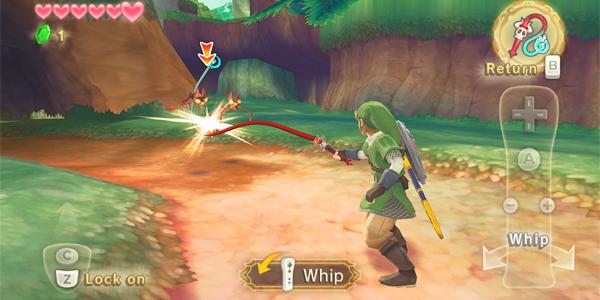
The Legend Of Zelda series has always been considered one of the strongest (and few) IPs produced by Nintendo, and that's no surprise given its mesh of RPG, action/adventure, and coming-of-age elements into one beautiful package. Despite the acclaim the franchise has received, there's always been one small problem present in the games and that's the timeline, with a chronological order never being presented for the series until the release of Hyrule Historia in 2011/2012. Regardless, Nintendo promised none of that would matter with Skyward Sword, a swan song for the Wii that would act as a prequel to the entire Legend Of Zelda series. While fans will always remain divided, critics loved the game's heartfelt story and near-perfect use of the motion controls for swordfighting and other actions. At the very end of the narrative, Link has to confront the Demon God Demise, who's been the primary instigator of the game's events and now holds Zelda's soul captive. In one of the easier boss fights, he is defeated and the world is saved! Or so you would think. Before giving in to his fate, Demise lays a curse on Link that his descendants will forever be tormented by a reincarnation of his evilness; aka Ganondorf. Let's remember that this is the same guy who kills the Great Deku Tree in Ocarina Of Time and causes a massive flood that consumes Hyrule prior to Wind Waker. While Link certainly did save a lot of innocent people in the short run, in longer terms, it's safe to say that the defeat of Demise actually killed a lot more innocents than one would think in the form of the Ganondorf curse.

4. Captain Price - Call Of Duty: Modern Warfare 2

Back when Call Of Duty used to be as critically successful as it is financially, Modern Warfare 2 marked the second entry in Infinity Ward's sub-series that began with the fourth Call of Duty. The game takes place about five years after the first, where a war between the United States and Russia breaks out after an undercover American operative is found at the scene of a terrorist-induced massacre of a Russian airport. As the war grows bloody, a secret group known as the Task Force 141 is deployed to find evidence proving that the real perpetrator of the massacre is Vladimir Makarov, a former associate of Modern Warfare 1's antagonist Imran Zakhaev. To help find Makarov, the team breaks into an old Russian prison to rescue Captain Price, a major character from the prequel. Despite needing to subdue the terrorist, Price insists that the war in America be dealt with first, and leads the team to a nuclear submarine where he launches and detonates a ballistic missile in the atmosphere, causing an EMP. Fans of the game may be thinking that the innocents in this entry refers to the astronauts you temporarily play as before the missile's shockwave destroys the International Space Station, but on the contrary, what we're referring to are the soldiers that die from the falling aircraft caused by Price's EMP. In fact, in the mission that follows, you spend the early parts finding cover from all the planes and helicopters crashing about you. Yes, Price's actions did technically save more lives, but it still doesn't discount the fact that the large amount of the Russian's airpower rained upon (and killed) the Americans defending Washington DC.

3. Jack - Bioshock

Like Shadow Of The Colossus, BioShock is cited as an influential title in the video games-as-art movement, but even discounting its visuals and thought-provoking story, BioShock is an extremely fun game that puts players in the shoes of Jack, an apparently normal adult who's forced to go into Rapture, an underwater dystopia that's recovering from a recent class war. Obviously the breakout characters of the game were the Big Daddies, men grafted into large scuba suits and conditioned to protect the Little Sisters. As players may recall, the game all but requires you to kill the Big Daddies in order to harvest the ADAM from the Little Sisters to become powerful enough to take on the tougher foes. Remember, Jack here is an intruder into Rapture, not the other way around: The Big Daddies are simply just protecting their Little Sisters from harm; they won't even attack you unless you wander too close/initiate the assault. It wouldn't be until BioShock 2 that gamers got to experience the emotional connection a Big Daddy has with the Little Sister, but for now it's safe to say that these hardened monstrosities were actually innocent in the way of Jack's assault.

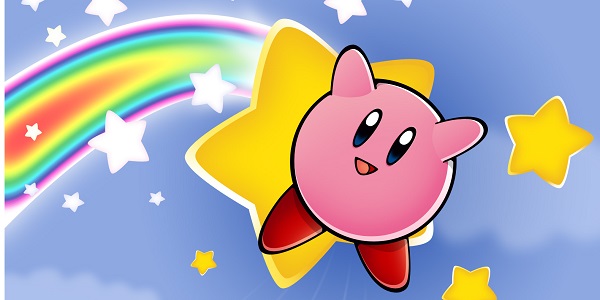
2. Kirby - Kirby's Dream Land

In the vain of Nintendo's colourful cast of characters, Kirby certainly stands out as one of the strangest yet most lovable. Being essentially a pink ball with a huge mouth, Kirby became instantly popular with the release of Kirby's Dream Land in 1992. Developed by Masahiro Sakurai with uncredited aid by Masashi Kishimoto, the game followed the little guy as he goes after King DeDeDe for stealing all the food from the citizens of Dream Land. Kirby's main appeal comes from his ability to acquire the core abilities of most enemies he swallows via transformations, but this raises the question of whether or not every creature Kirby comes into contact with is evil and in need of being defeated. Similar to Mario, not every being Kirby encounters is stated to be associated with DeDeDe's schemes. Not only that, but a fair amount of enemies aren't even directly hostile to Kirby. For example, while Twizzies and Shotzos have clear intentions to harm Kirby, enemies like Waddle Dees and Scarfies have no such ideas unless Kirby bumps into them; in the case of the latter, they actually become hostile only after Kirby tries to absorb them. While the wide range of powers and cute sound effects Kirby purports certainly make him likeable, it doesn't excuse the fact that he he does kill innocents in his games.

1. Ezio Auditore - Assassin's Creed: Revelations

While Altair was the one who set up the Assassin's Creed franchise, Ezio was the one who became its heart. Assassin's Creed II blew everyone, even fans of the first game, away with its improved gameplay, stronger story, and romanticized setting. However, none of this would have mattered if we weren't given a strong, likeable protagonist, and luckily that happened with Ezio. What made him different from Altair was that we actually grew up with him, seeing him transition from a playboy to the leader of the Assassin Order while still retaining that undeniable charm. We stayed with him through the sequel, Assassin's Creed: Brotherhood, and while it was great it revealed some strains present in yearly release format the series had adopted. Those strains grew in the next game, Assassin's Creed: Revelations, which saw an older Ezio try and solve the mysteries left behind by Altair centuries ago. During the storyline, Ezio's accidental assassination of a wrong man may have spurred some fans wrong, but surprisingly another major incident the Mentor deliberately causes went above a lot of people's heads. In one of the later sequences, Ezio finds himself in a hidden city called Derinkuyu built within a mountain where, to drive the Templars out into the open, he ignites the city's large supply of gunpowder, causing a massive amount of smoke to flood the cave. As players will note, it's not possible to escape the place without using some insta-heal medicine. Not only that, but you have to use your Eagle Sense to find your way out, or risk getting stuck elsewhere. Since the majority of the citizens lacked both resources, it's safe to say that Ezio caused a lot of innocent civilians to die during that mission. Do any other characters deserve to be named and shamed on this list? Share your own picks below in the comments thread.

Contributor

Red Stewart is big fan of the entertainment industry, with insights into film, television, and video games for starters. Despite growing up in the 21st century's era of modernization, he prefers many retro era ideas over the current trends found in many of today's media. Personally he's an introvert who loves reading as much as gaming.