8 Next-Level Video Game Plot Twists That Changed EVERYTHING
Plot reveals and unique game mechanics nobody saw coming.

Of all the mediums to try their hand at an almighty rug-pull, gaming's twists - plot or otherwise - tend to be divisive at best.
Think about it: When was the last time a seismic shift in gaming actually made the experience better? When a set of game mechanics completely changed, a character was removed or an unforeseen element was now here to stay?
When do any of those things actually go down well?
Most of the time we come away confused, annoyed or a mix of both.
It's truly hard to play all your narrative or game progress cards in the right order, then throw in an element that up-ends everything - usually at the last second - and still stick the landing.
Truly, unless a creative has planned for that from day one; making the twist an integral part of a game's message or structure, it almost always falls flat.
Regardless, often sheer memorability is all we need, and if you throw enough of a curveball, it'll be talked about by all who saw forevermore.
8. Discovering The Tent - Firewatch
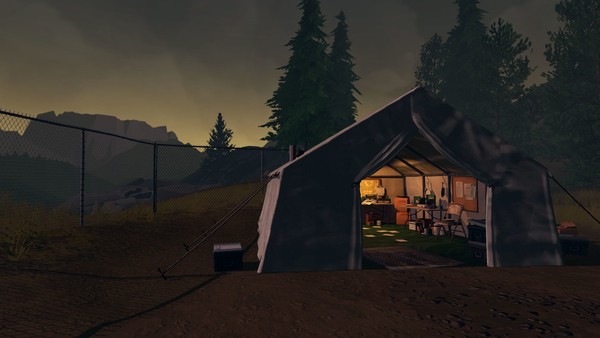
An immaculate, gut-punchingly resonant game that to this day, I feel never got its due, Campo Santo's Firewatch is a masterclass in exploring the very human need to get away from horrible things.
Following an intro that puts you through the wringer, main-man Henry sets up shop literally watching for forest fires, trying with varying success to distance himself from what happened with his wife.
It's here where the game plays a masterful hand; walking a line between the expectations of what goes bump in the night in most first-person horror games, and the reality of the situation itself. When you're suddenly knocked out from behind and stumble upon a tent containing surveillance and personal info on Henry and friend Delilah, the whole game gets blown wide open.
Suddenly the game is an all-out thriller, though Firewatch's reputation largely hangs on not being able to capitalise on this reveal. However, the point of the game is how much we're willing to be distracted and procrastinate, rather than face reality and adequately deal with what's right in front of us.
Henry getting lost down a conspiratorial rabbit hole is reflected in every character around him, especially fellow hiker Ned, who also distanced himself from society in a shocking final reveal.
7. Now It's A Metroidvania - The Messenger

Not all memorable twists are narrative-based. Sometimes a developer comes out of nowhere with an idea so badass, you wish way more teams would implement it.
Essentially a playable version of Halo: Anniversary Edition's one-button toggle between original graphics and newer renders, The Messenger's mid-point shift brings in a whole other graphics style.
Representing the titular Messenger going back and forth through time, everything from world detail to the soundtrack changes on queue, shifting from 8-Bit to 16-Bit graphics and back again as various puzzles frame themselves around the mechanic.
Even better, the game's entire genre switches. What was once a left-to-right platformer is now an open-world Metroidvania. You're suddenly revisiting older levels with newer perspectives and abilities, gathering up a slew of items for a final battle.
As a game mechanic though - literally making time travel a meta-textual element that connects with so many of us who grew up with games - it's pretty incredible.
6. Akuma Was Hired By Heihachi's Wife - Tekken 7

Before Tekken 7, Akuma's inclusion raised a ton of eyebrows. This was one of gaming's most iconic characters of all time, guest-starring in a mainline Tekken game, with Namco doing a Mortal Kombat-style story mode and saying the character would play an important role.
Could he be the source of the Devil Gene this whole time? The reason Kazuya and Jin occasionally sprout wings and fire lasers from their eyes?
Well, the reality was a little weaker as Akuma had less than 10 minutes of cutscene time, but we did find out 1. Heihachi was married to a woman named Kazumi, somewhat giving Kazuya's name more meaning, and 2. Kazumi once saved Akuma, leading to the latter being hired to kill Heihachi and Kazuya.
Fleshing out Akuma into something more than a one-dimensional killing machine, Namco and Capcom joining forces to write one of their various crossovers into a main instalment's canon and each game's now-shared fictional history, was one for the ages.
Now, how long until Mortal Kombat's Scorpion can go up against Akuma??
5. EVERYTHING About The Ending - Final Fantasy VII Remake
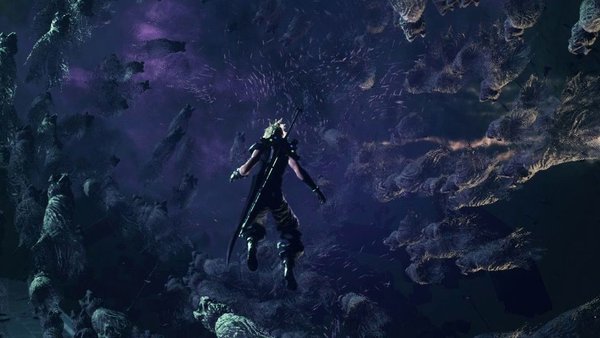
Only from the mind of Tetsuya Nomura could we get a Final Fantasy VII Remake that's actually secretly more like a Kingdom Hearts add-on.
Case in point: The Whispers.
Seen throughout the game as hooded ghostly figures, the close of the story reveals these things to be the actual manifestation of all expectation surrounding what a Final Fantasy VII remake "should" be. It's literally Square Enix writing fan assumptions and collective will into the game, and once the party start getting flashes of a potential future, they must fight the very idea of a remake; of time repeating, to forge something new.
To some it's genius and to others the same level of Kingdom Hearts insanity that drove them away from that IP as well. Going forward one thing is for certain: NOBODY knows what happens next.
4. Flowey Force-Quits Your Game Back To Desktop - Undertale

2015's Undertale hit the ground sprinting, the perfect mix of characterful writing, an incredibly memorable score, and the X-factor of designer Toby Gard crafting an RPG that occasionally talked directly to you as a player.
Come the point where the genuinely pretty horrifying Flowey is taking you to task over how you've played to this point - whether you were nice to enemies and calmed them down, or just cut right through - he'll abruptly take direct control of the entire game, and shut it down.
Rebooting only makes things worse, and amongst fighting this hulking mutated version of the character, he'll just continue shutting the game down, and claiming that you can't even revert to an old save, because he's deleted that too.
In an industry where a game rarely genuinely surprises you - in a way where you're supposed to keep poking and prodding until something happens - Undertale's final boss stands out as a risk that paid off.
3. You Need To Wait 8 Hours To Play Again - SUPERHOT: Mind, Control, Delete

There's absolutely a way to read Superhot Team as a developer that hates their fans, and hates that they've "been forced" to make another Superhot game, through sheer popularity.
Because Superhot: Mind, Control, Delete is designed to tire you out and wear you down; designed to see just how much of a game's formulae you can stand, until you genuinely don't want to keep playing.
At the core is a comment on how addictive video game violence can be, and by the end you'll be taken into a fake version of the game's code, and forced to initiate a "reboot" to play more.
It's here where the developers asked fans to sit and wait 8 real-world hours, for the game to "recover" itself. There was an understandable backlash, to which they reduced the number to 2 hours, but unless you uncover some hidden minigames (which I didn't), you're better off putting a movie on and waiting it out for actual completion.
2. It WAS The End Of The World - Far Cry 5

The jury's out on whether Far Cry 6 will make meaningful changes to the increasingly tired formula of "crazy cult leader talks to you in first-person before you take them down after 50 hours of climbing towers", but Far Cry 5 at least tried... something with its narrative.
I say "something" because before launch it was this lightning rod of potential commentary on the underbelly of American extremism. Cut to when we all played though, and Joseph Seed was yet another monologuing villain with a zombie-like following, the only thing elevating him being that he was adamant the world was ending.
Hours of bullets and bodies later, as you try and take him into custody... he was right.
A rogue nuclear explosion goes off behind him as Seed stares your character in the face, the environment goes from American mid-west to all-out apocalypse with falling debris and burning trees in seconds.
Providing you didn't choose the "leave" ending beforehand, Far Cry 5 closes out with you and Seed trapped in an underground bunker, awaiting the end of days.
1. You're The Baby And Mads Mikkelsen Is Your Dad - Death Stranding
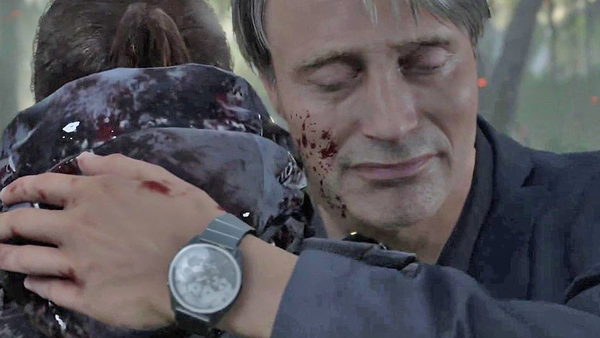
The more distance we get from Death Stranding, the more the whole thing felt like one big fever dream.
A large-scale hiking simulator filled with everybody from Conan O'Brian to Geoff Keighley, where in between throwing poop and blood grenades at ghosts you could take showers and rock a baby to sleep with your controller.
Oh, and it's also a human species-wide commentary on the inevitability of extinction wiping us off the face of the planet, so you best get to embracing the person next to you, because who knows what's going to happen tomorrow.
Yes, Hideo Kojima's first post-Konami solo project felt every bit like an experimental jazz album his main outfit would never allow, and it closes out with the time-bending reveal that you ARE the baby you've been carrying around.
The explanation is complete insanity, involving baby Norman Reedus being shot in the past, the Amelie character reviving his spirit, some time and space shenanigans then lining things back up in the present, but also the baby was always Mads Mikkelsen's son, and the reason he's called Cliff, is because old Norman going back in time "saved him from going over a metaphorical cliff".
I for one, both love and hate Death Stranding for the exact same reasons.