8 Seemingly Forgotten Video Games That Need To Be Revived

Move over Call of Duty, we want to play online Destruction Derby!

Gaming series live and die. They are no different to franchises in any other entertainment medium in this regard, as new properties are constantly developed to compete with and replace existing ones that end as a result of poor sales, poor reception, creative decisions and all sorts of other reasons. Death is not always the end, however, as although they haven't been as prevalent within the gaming industry as they have been in Hollywood, revivals and reboots of classic series' are seemingly always on the horizon. Such things can be something of a double-edged sword for fans, who are typically excited for new releases but wary of the fact that they can be unscrupulous cash-ins, disappointments or full-blown atrocities that butcher memories of the original greats (here's looking at you, Tony Hawk). Despite this, however, there are a number of classic franchises that many would love to see revived, as the originality and unique enjoyment that they once offered has not been replicated in a commercial environment now dominated by identikit sports games and first-person shooters. Eight of these are profiled over the course of the coming pages, none of which have seen a release in at least a decade (excluding remakes).

8. Dino Crisis

Last Release - Dino Crisis 3 (2003) Dinosaurs became all the rage again last year as a result of the runaway success of Jurassic World. They've always been surprisingly underrepresented in the gaming world, however, with few titles utilising them to great effect. One series that did was Capcom's Dino Crisis. Developed by the same team responsible for Resident Evil, the first title followed in the footsteps of the company's crown jewel, swapping zombies for dinosaurs in a survival horror experience that kept players on edge at all times, despite being repetitive in places. The focus of the series was changed for the two sequels that followed, as the suspenseful horror element was dropped in favour of creating more action-orientated affairs. Though the first was solid enough, the second, which switched exclusivity from the Playstation to the Xbox, moved the setting to space and felt rather ridiculous as a result, prompting the cancellation of the franchise. Director Shinji Mikami once stated that he wanted the original game to feature better AI, making the dinosaurs more unique and fearful opponents. Though the restrictive technical limitations in 1999 may have prevented him from completely achieving his vision then, 2016's technology would easily allow it to be brought to fruition.

7. Klonoa

Last Release - Klonoa Heroes: Densetsu No Star Medal (2002) The late nineties and early noughties were a golden age for platform games - Nintendo pioneered the switch to three dimensions with Super Mario 64, whilst Sony were the benefactor of Naughty Dog and Insomniac's respective creations, Crash Bandicoot and Spyro The Dragon, to which they subsequently followed with Jak and Daxter and Ratchet and Clank on the Playstation 2. There were numerous other gems including Klonoa: Door To Phantomile, a 1997 release that was beautifully crafted, containing a number of colourful and immersive worlds and characters. For a game principally aimed at children, its story was also surprisingly deep from an emotional standpoint, with a bittersweet ending that tugged on the heartstrings. With all that said though, it struggled to sell in Western markets despite being successful in Japan. A sequel, Klonoa 2: Lunatea's Veil, followed with more of the same on the Playstation 2, earning universal acclaim (it holds a 91 rating on Metacritic) but once again struggling to turn this into sales as the platforming genre became more about action than traditional jump-based exploration. This in turn was followed by a Japan-only RPG spin-off in 2002. Apart from a Wii remake of the original, the series hasn't been touched since 2002, when it was ended just five years after its inception. Such a short lifespan doesn't do justice to how appealing the franchise's two core titles were, and although rebooting a franchise that didn't set the world on fire the first time around would be a highly risky move, it might be worth Namco's time, given the recent success of indie platformers such as Thomas Was Alone.

6. Streets Of Rage

Last Release - Streets Of Rage 3 (1994) The side-scrolling beat 'em up was once one of gaming's most popular genres, as the likes of Final Fight and Double Dragon captured the attention of audiences worldwide. Sega's Streets Of Rage was a fairly late addition to the party, not debuting until 1991 on the Mega Drive, but it is often considered to be the best of the bunch, with 1993's Streets Of Rage 2 standing out in particular for its fast-paced action. Ultimately, however, the genre gave away ground to one-on-one fighting games such as Street Fighter, Mortal Kombat and Tekken as the nineties went on, to the extent where the side-scroller became an all-but-extinct relic by the time the Millennium rolled around. In 2010, a throwback game in the vein of the classics (complete with old school graphics) themed around the graphic novel series Scott Pilgrim (and its film adaptation) reminded us all just how fun the genre could be, as players were tasked with tackling increasingly difficult waves of enemies once again. Fast forward to five years later and two of three entries in the Streets Of Rage trilogy made their way to the Nintendo 3DS, enabling them to be enjoyed by a new generation. The handheld is a more than viable medium for any future revival for Axel and company, given that it remains largely untapped by the one-on-one fighting games that prefer to call consoles their home.

5. Zone Of The Enders

Last Release - Zone Of The Enders: The Second Runner (2003) When you think of Hideo Kojima, you naturally think of the Metal Gear series, which he first worked on in the 1980s and eventually developed into one of the most successful game series of all time from both a commercial and a critical standpoint. He does have a number of other creations under his belt, however, including Policenauts and the Zone Of The Enders series. The latter debuted as a launch title on the Playstation 2, offering a fairly unique concept in the form of combat between 'mechas', weaponised suits with flight capabilities. This combat was frantic, set against a backdrop of beautiful visuals to create a much more immersive experience than your typical hack-and-slash fare. A sequel built upon the strengths of its predecessor, but was never followed up further, with the series only re-emerging in 2012 in the form of a HD remake. Ahead of this, Kojima did announce the development of a new title, but nothing eventually came to fruition in the three years that followed before he endured his less than acrimonious split from Konami last year. Now that Konami have decided to withdraw from the console gaming market in favour of exclusively developing mobile titles, the fate of the franchise seems sealed. Should Kojima be able to acquire the rights, however, he does need something to do now that he has set up his own independent company, particularly now that he's finished with Metal Gear for good.

4. Road Rash

Last Release - Road Rash: Jailbreak (2000) Through history, there have been few motorcycle racing games, as bikes have always been eclipsed by their four-wheeled counterparts in terms of popularity from a gaming standpoint. There have been few groundbreaking titles on two wheels, but Road Rash is certainly one of them. Taking its name from the rather gruesome injury that occurs through abrasion with road surfaces, the original Road Rash appeared on the Sega Mega Drive and was followed in quick succession by two sequels, all of which were considerably enjoyable. Though the objective of the games was ostensibly to race, more appeal came from their brawling mechanics. Each biker was equipped with a weapon, which could be used to attack competitors and cause them to dismount. The police would also get involved in proceedings and engage in some brutality of their own, making each race a multifaceted challenge that speed alone could not win. The final two titles in the series, one for the Nintendo 64 and one for the Playstation, were downright terrible and distinctly average, respectively, which led to its unfortunate demise. Interest in bringing it back has been frequently expressed, however, with Criterion pitching a Burnout vs. Road Rash idea at one point. Nothing has ever properly come to fruition though, barring a recent Kickstarter to create a 'spiritual successor' (which can be found on Steam as Road Redemption).

3. Chrono

Last Release - Chrono Cross (1998) Square (Square Enix following the merger of the two companies) have always been most renowned for their Final Fantasy series of RPGs, which have been a console staple for almost thirty years. There are a number of other excellent titles in their back catalogue, however, perhaps none of which are as beloved as 1993's Chrono Trigger. Put together by a 'dream team' of Japanese designers, writers, producers and artists, the game was similar to Final Fantasy in tone, but was different enough to make it stand out on its own. Its story was a typically deep Square affair, sending six heroes across time in pursuit of a parasitic alien being. Each time period was unique in its own way, with its own cast of colourful characters and well-written subplots to keep players consistently engaged. A Playstation successor, Chrono Cross, wasn't directly linked to its predecessor and has never been released in Europe (Trigger wasn't either until a DS port in 2009). Despite being lesser known, it is a great game in its own right, swapping time travel for the exploration of parallel dimensions. The fanbase for both games remains huge, as evidenced by the creation of an unofficial direct sequel to Trigger, Crimson Echoes, which was developed over the course of five years between 2004 and 2009 and was 95% complete before Square Enix cruelly took legal action to shut it down. Many believe they should've instead brought the team on board and released the game officially, but it seems as if we'll always be restricted to wondering about what could have been.

2. Destruction Derby

Last Release - Destruction Derby: Arenas (2005) Racing games have been around almost as long as consoles themselves. Realistic or ridiculous, they have always appealed to a broad spectrum of players with their simplicity. Naturally, there have been many twists on the 'race around a track' formula throughout the years, with many developers adding a combat element to proceedings (or focusing on it entirely with no racing at all in Twisted Metal's case). Destruction Derby and its sequel, Destruction Derby 2, blended racing and combat together almost perfectly in the mid-nineties, offering both 'stock car' and 'wrecking' racing modes. The former simply awarded victory to the first car to cross the line, whilst the latter offered additional points to drivers who sought to eliminate their competitors. These were complemented by the titular 'destruction derby', which did away with circuits altogether and instead pitted players against nineteen other drivers in an arena, challenging them to destroy each other (either through repeated collisions or deathtraps) to be the last man standing. Since 2005's Destruction Derby: Arenas, few titles have come close to replicating its illustrious predecessors in terms of style, with the well-renowned Burnout series (itself now effectively dead given the lack of releases since 2008) and its focus on crashing perhaps coming the closest.

1. Timesplitters

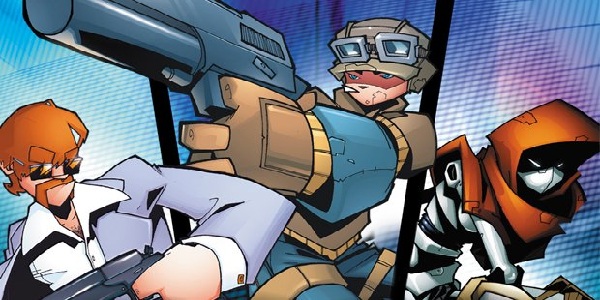
Last Release - Timesplitters: Future Perfect (2005) First-person shooters are frequently guilty of being far too similar to each other, containing very little in the way of unique content to distinguish them from their competitors. Uniqueness was the main selling point of Free Radical's Timesplitters series, however, which had an extensive focus on humour. With a cast of hundreds, including favourites such as a gingerbread man, an Elvis impersonator and a fez-wearing bear alongside send-ups of clichéd stock characters, the games blended lightheartedness with excellent gameplay, becoming a worthy successor to the titles that Free Radical's employees developed for the Nintendo 64, the legendary Goldeneye and Perfect Dark. Boredom was never a possibility with the amount of modes on offer, which from Timesplitters 2 onwards included a fairly comprehensive story mode to complement its multiplayer offerings. These ranged from straight-up deathmatches to the well-regarded Virus mode, which has surprisingly never been copied by other developers. With all weapons and power-ups turned off, Virus became an addictive game of survival, as one player attempted to infect his counterparts through physical contact until just one remained. Though Timesplitters: Future Perfect offered online play, the uptake was small given how few Playstation 2 machines were set up for it. If released today, however, its potential community would be huge, as the various multiplayer modes could be offered alongside co-operative takes on the game's challenge modes, which included a game where players had to fight increasingly difficult hordes of zombies each round (sound familiar?). Which old-school games do you want to see brought back? Let us know in the comments!

Contributor
Contributor

Alex was about to write a short biography, but he got distracted by something shiny instead.