8 Ugly Problems About Gender Representation The Gaming Industry Won't Admit

Though progress has been made, gaming still has a long way to go.

The gaming industry has come a long way since it first started off in arcade cabinets. In the past decade alone, titles have become increasingly cinematic, offering realistic portrayals of characters placed in often extraordinary situations. Though this should be the norm of an art form increasingly struggling to be recognised as such, damaging perceptions of sexuality, race and gender continue to worm their way into the stories told by developers, which have in turn rather sadly influenced the gaming community as a whole. Reacting with the basest hostility to even the slightest hint of progression or diversity, you won't be hard pressed to find those who are less than willing to react to criticism of gaming's portrayals of underrepresented peoples. This creates a terribly toxic atmosphere unwilling to accept those who wish to access the medium, the irony being that the longer these portrayals are seen as the norm, the longer the toxic atmosphere persists - implicitly aided by an industry failing to act on the matter. Ideas of gender and the way they have been represented in gaming have been a point of contention for many years. That's no surprise however, seeing as how the industry's male flagship characters have made their name rescuing damsels, whilst female protagonists have been over-sexualised beyond parody. Poor representation works both ways however, as men also stand to lose from the industry's insistence on masculine archetypes dominating narratives. Of course there is much to be said about games forming a part of a fantasy, but at what point do we draw the line?

8. Men Are Often Portrayed As Emotional Introverts

This is an issue that has plagued the industry for many years now, with only a small minority of titles defying convention and introducing male characters free from being unable to convey emotional vulnerability. One of the greatest games of the last generation, 'The Last of Us' gifted audiences with Joel, a grief-stricken father trying to survive in a world he doesn't wish to be a part of. The title's nature in itself was morally ambiguous, but Joel's paternal attitudes were portrayed very honestly. Though it may come as a surprise to many, Gears of War can actually be looked at as being a satire of typical fictional depictions of soldiers, as buffness and uncompromising manliness come to be the two predominant character traits of Marcus and his squad. It's very self-aware, though I sometimes get the feeling that intention is lost on a great deal of the audience. Again, with games like Call of Duty and Battlefield we rarely get to see the psychological after-effects of warfare. Spec Ops The Line's Heart of Darkness inspired take on warfare was a welcome refreshment, but gaming still seems to instil the idea that warfare is without emotional consequence. Even when it does attempt to illustrate the psychological toll, it's either brushed over entirely or written unconvincingly. The problem with most titles is that male portrayals confine themselves to the societal norms of a typically 'masculine' character. As this continues, the art form only has the effect of perpetuating these damaging norms.

7. Women Are Damselled At An Alarming Rate

This really isn't a surprise considering poor Princess Peach still has to wait for Mario to rescue her, but surely more dramatic titles should be doing away with this formula? Though I hate to harp on about Arkham Knight again, it was certainly a big offender when it came to taking typically strong female characters and placing them in a role amounting to little more than being the player's motivation for advancing the story. Incidentally, even Catwoman makes a self-aware quip regarding her role as acting as the player's motivation to take down Riddler - showing that even Rocksteady's writers are aware of her downgrade from Arkham City. Let's not try to pretend that there's a shortage of badass women in gaming - there isn't. But there's certainly a big problem with the industry when it comes to placing female characters in perilous situations solely to motivate the player. Fair enough that men also occupy a certain amount of screen time as the hostage, but developers are certainly no strangers to playing up femininity in the name of instilling a sense of vulnerability to the proceedings.

6. ...If They Even Have A Role At All
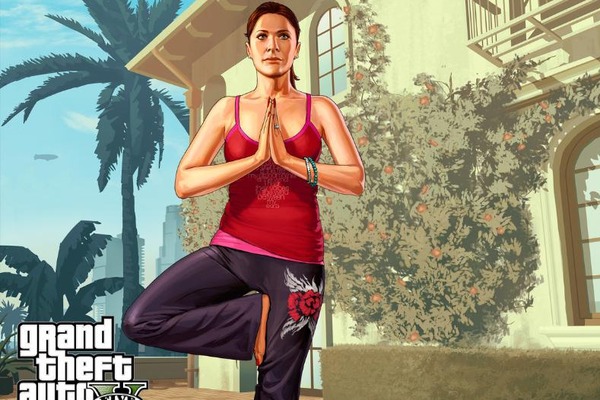
This is a criticism that's been levelled at Rockstar countless times before, but it's no less justified. In every single consecutive GTA women have been sidelined, marginalised, and have failed to benefit from the often at times contradictory satire that has emerged from the very successful franchise. Put it this way, in the series' fifth main instalment the only speaking roles given to women were used to highlight the artificialness of the California lifestyle, which would've been fine had they actually had any significant contribution to the story being told, but Michael's wife, Amanda, and his daughter Tracy only really show significant elements of character when placed in objectified situations. Whilst there's a very clear element of social commentary in relation to Tracy's character and her obsession with becoming famous, it's no coincidence that herself and her mother are largely looked at with derision from the fanbase. Bar their inclusion, other spoken female roles go towards taking knocks at pseudo-feminism, fitness gurus, strippers and prostitutes. It's very disappointing for a series that has what many would consider to have fun storylines and gameplay, but it really isn't that difficult to write something that's believable and witty at the same time, as Rockstar have shown in their efforts outside their slice of fictionalised America.

5. Diverse Body Types Are Hard To Come By

This point I'd say is fairly equally weighted against both genders, and it's about time we got to see a change in the usual bodies we've come to expect to see when we pop our discs in our console of choice. Before I progress I'd like to clarify that Bulimia.com's article whilst well intentioned, missed the point of the debate completely. It went viral earlier this year for photoshopping various female gaming icons into a more 'believable' mould, and though it's undeniable that developers have often relied on flawless athletic bodies to market their titles (often in an overtly sexualised manner), it is damaging to suggest that one body type is more 'accurate' than the rest. Everyone should be able to feel comfortable in their own skin, irrespective of their size or shape. It is also true that in most titles, playable protagonists find themselves in physically challenging environments. Lara Croft for example has trained herself to her physical peak to embark on her adventures - it makes sense for her to be slim and toned (just look past the initial perverse origin of her large bust). In physically demanding adventures, logic would dictate that athletes take centre stage. Men aren't exempt of this problem either, as typically 'skinny' or overweight body types are often looked past altogether in the cream of the crop of gaming's most successful releases. This is where gaming treads a fine line between fantasy and reflection, and what the medium's intentions should be when portraying the human experience comes into question. Stories are told almost as an escape, but occupying the same reality of following yet another physically fit male around as he does battle with enemies means that the medium is lagging behind other more respected industries, which more often than not have been at their greatest when portraying a varied cast of characters. There's a large place for the fantasy, but it's time reality took a precedent in places too. I vehemently believe that video games are comparable to film and literature in the way they tell a story, but they need to do better to convince others of that belief as well.

4. ...Unrealistic Sexualised Fantasies Aren't

Oh Metal Gear, for all your wonderful zany stories and amazing gameplay, just what is it with you and creepy sexualisation? It's almost intrinsic to the series at this point, though only for eye-roll worthy purposes. Of course Quiet kicked up a fuss (and rightly so) for being a military sniper equipped with nothing but a bikini, tights, and some boots, (a fuss amplified by Kojima's subsequent reaction to the criticism) but this isn't the first offender in the series' history. Fans of Snake Eater will recall EVA's rather hilarious 'boob reveal' where she unzipped her jumpsuit for no reason at all but to act as fan service, degrading what was until that point a revolutionary narrative experience. Quiet took this to a whole other level entirely, as Kojima and co. really struggled to find a believable excuse for her attire - or rather lack thereof. Worse still, once you get your buddy rating high enough the silent sniper will begin to pose for you in your helicopter, and specific mother base cutscenes with her present focus on nothing but her body glistening in the rain. Quite honestly I found this incredibly embarrassing. There's no other word to really describe moments like these in titles because they're so inherently tacky and obnoxious. Why do developers focus so diligently on making over the top chest physics to appease their fans, when they could be investing their time in appropriately clothed characters in combat?

3. Playable Protagonists Are Still Predominantly Male
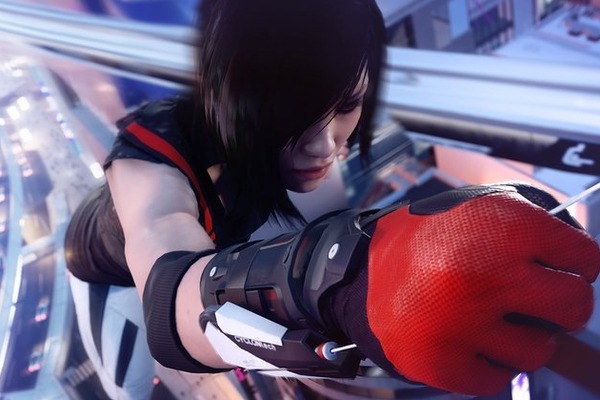
Some of the industry's biggest icons have been women - everyone from Samus to Lara Croft to Joanna Dark and Faith have all come to form a part of some of the most recognisable imagery so far. That doesn't excuse the fact that they're still in the minority, however. Out of 2015's biggest releases this year the number of titles featuring a leading woman are very infrequent, with most making their numbers back through RPGs allowing a player created character. Next year fairs slightly better in this department, though the strength of writing included remains to be seen. As well as underrepresenting women in many regards, to date the industry has barely tackled transgender and/or none-binary characters when telling a story, instead often electing to go with the 'safe choice' in following a white, cisgendered heterosexual male as the main protagonist. Diversity is a great thing to include in a story, but so far a lot of titles have been lagging behind in that area. There's no doubt that as years move forward, so too will the gaming industry's variety in its characters. Indeed, titles such as Dragon Age and Mass Effect are already excelling in portraying a diverse set of peoples in the fantasy and Sci-Fi genres respectively. Here's hoping their lead will be followed by more developers in the future.

2. Token Romances Are All Too Common

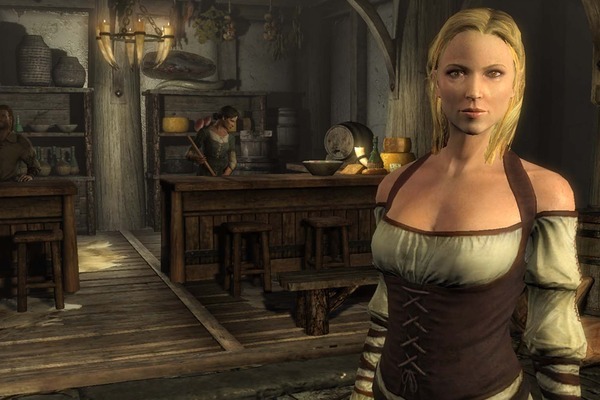
This issue is less severe in none-RPG titles, but where it is present it proves to be just a little bit irritating. I'm going to highlight a personal favourite game of mine - Skyrim - and talk about its use of romance and love interests. On the offender scale its fairly small, and even offers an in-lore explanation as to why the marriage mechanic is what it is, but having your own personal servant in your home of choice for the remainder of your journey isn't exactly the most intelligent way of presenting the concept to an audience. Other RPG titles like Fable suffer from this issue as well (along with a distinct heteronormative approach to story telling, but I digress) where a marriage is superfluous to the main events of the game. These romances hold no impact on the story and are just an addition to a player's questing, so why don't we make them more fulfilling? It's hard to recall instances outside of the RPG sphere where a romance has felt particularly forced or 'bolted on' to the main experience, which in many respects places gaming above some of film and TV's most successful programming. Indeed, there have been some truly memorable and worthwhile romances in the medium throughout its history, but a more diverse and perhaps accurate depiction would be very much welcomed as games continue to push genre boundaries.

1. Strength Is Presented In Clichéd Ways

Again, I feel as though this is an ailment that afflicts not just the gaming industry but other entertainment mediums as well, so gaming is far from being the only guilty party in this matter. The way strength is often measured in games has always been through a very masculine filter. The rare occasion where a male protagonist will open up about his experience is all too often offset by his ability to contain his emotion away from secondary characters - a cliché that has been repeated time and time again by developers whose first point of reference has been through a cultural lens of action movie icons and strongman archetypes. Most often when women are presented in a context involving conflict or violence (a context most games subscribe to), they are only seen as strong when taking on certain masculine traits - rejecting a great deal of femininity in the process. My argument doesn't simply boil down towards the belief that developers deem masculinity to be strength and femininity to be weakness, but it's hard to argue that these ideas aren't conveyed in a great deal of gaming's most popular franchises. Subtle though it may be, it's a convention that the industry should endeavour to break away from in the coming years, as it will only enrich the storytelling potential found across the medium. As far as gaming goes it's fair to say that it's become quite the cultural phenomenon. Millions of people across the globe turn towards their console or PC as a source of entertainment, and whilst it's all great to provide that sense of escape and fantasy, there's plenty of space to mature and broaden our collective horizons. In respect to portrayals of gender at least, I hope that writers and designers rise to the challenge of creating more believable characters, tackle instances of ingrained sexism, and make the medium more accessible to people who have been ostracised by its past mistakes. Are you convinced that the industry is doing more to mature representations of gender? Or do you think gaming is fine as it is? Let us know in the comments below!

Content Producer/Presenter

WhatCulture's very own resident movie guy, Ewan has been working in the content creation biz for over 10 years now, having started as a freelance contributor to WhatCulture Gaming all the way back in 2015. After graduating with a First-Class Honours in History from Northumbria University in 2017 (where he won a prize for a totally killer dissertation on the Watergate years), Ewan took on the role of Comics Editor at WhatCulture and quickly developed WhatCulture Comics into one of the biggest superhero-focused channels on YouTube. He followed this with a brief hiatus at Screen Rant in 2021, where he worked across the Gaming and Film sections as a writer and editor, before returning to WhatCulture as a Senior Content Producer / Presenter in 2023. He started his own podcast, We Love Dad Movies, in 2022, and has contributed several written pieces to the Eisner-nominated comics website Shelfdust as well. In his current role, Ewan incorporates his love of cinema, comic books, and history into written pieces and video essays for WhatCulture's Film & TV channel, as well as WhatCulture Gaming and WhatCulture Horror, with a particular focus on nineties-era Dad Movies, old school Westerns, and Golden Age Hollywood Noir. John Carpenter is his fave, and he thinks Batman Beyond should never have been cancelled. If that's your vibe, you'll probably like his stuff.