8 Video Games That Were Only Worth Your Money AFTER Launch
Pay now, play later! Wait... what?!

Day-one patches are a necessary evil. You'll often hear gamers long for the days when they could "just put in a disc and play", but now you have to put in the disc, install the game, then wait through a hefty patch or installation process.
There are two reasons why patches are a good thing, though: First, it means you get the game sooner at retail, and secondly, it ensures the game works.
At least, that's the idea.
You see, when a game is pretty much playable from start to finish with relatively few bugs, the developer will send it off for certification. This process is usually started three months before the game's release date and takes significant time to go through.
Following certification, the game is sent off for packaging and delivery to stores across the world (assuming we're talking physical release). All of that means the developer has around three months to work and make the title significantly more polished at launch, or add a photo mode, new game plus, etc.
However, sometimes a game will launch, day-one patch and all, and is just not very good. More often than not that means the game will get poor reviews and fade into obscurity.
Living in a world of constant updates though, means that doesn't have to be the case...
8. Destiny

While the current talk around Destiny 2 is all about the lacklustre content, it's easy to forget that the original Destiny started life out the same way, and improved steadily to become a huge hit.
What a whirlwind Destiny has been. We first heard of Bungie's sprawling space shooter as an Easter egg in Halo 3: ODST, way back in 2009. When Bungie made the announcement that its next game would be a multi-platform, always-online multiplayer shooter that put players on multiple planets conducting raids, strikes, and uncovering secrets of the lore, it's fair to say expectations were high.
When Destiny finally launched in 2014 it received good reviews, primarily for its silky-smooth gunplay and beautiful worlds. It received fair criticism however, for it's utter lack of depth, both in regards to story and game modes. Bungie took the criticism on-board and, over the course of two years, released four expansions that filled the game with new content: maps, story, missions, gear, raids, and enemy types.
Destiny became a robust online multiplayer that kept players entertained for hundreds of hours and built a healthy community.
Here's hoping Destiny 2 eventually follows suit.
7. Diablo III

Ironically, the console launch (and subsequent DLC expansion) of Diablo III improved upon the original in every way. For an iconic PC franchise, that's a pretty blasphemous statement.
Diablo III was one of the most highly-anticipated games of all-time when it launched in 2012. The 11-year wait had fans salivating at the mouth for what evil Blizzard had cooked up. For many of those gamers though, the first few days after launch were a mess in which they could barely even sign-in.
Add in a meandering loot system, lacklustre end-game content, and a final difficulty mode that was almost impossible due to poor gear drops, and you had a game that didn't live to expectations, or even come close.
The team that worked on Diablo III changed some key people, knuckled down, and set-out to create an expansion that transformed the game in the same way that the Lord of Destruction update changed Diablo II. Shortly after launching Diablo III on console, the studio released Reaper of Souls.
The giant expansion made the game exactly what fans and Blizzard had always envisioned, establishing it as the series best.
6. Final Fantasy XIV

Final Fantasy XIV went from a complete disaster at launch, to a supremely popular MMO over several years. That's no small accomplishment and it would have been impossible without consistent updates.
Final Fantasy XIV launched 8 years after the series first MMO (FFXI), despite concerns from the community and development team over the state of the game. Unsurprisingly, the game was a mess when it released; a horribly designed UI, confusing world & map, baffling levelling-up system, time-coordinated content, no post-game content, and incessant lag. These problems truly just scratch the surface of FFXIV's faults and it led the series worst-ever Metacritic score of 49.
It's difficult to stress how bad the situation was but suffice to say, Final Fantasy XIV was very nearly just that: the final fantasy. Amazingly the team at Square Enix decided to completely remake the game while the original was still available and being updated.
Final Fantasy XIV: A Realm Reborn was the complete reboot of the game that released in 2013 and it mercifully killed the 1.0 version. Since then, there have been sixteen updates, including two massive expansions, and XIV is now considered a great game with a Metacritic score of 86.
True redemption.
5. Street Fighter V

What a bizarre story Street Fighter V is. After the game was leaked a day early in 2014, it was officially announced at PlayStation Experience the next day as a PlayStation 4 exclusive! Sony bagging the rights to the world's most iconic and beloved fighting game seemed like a big boost for the PS4 at the time.
It was surprising then, when the game launched in February 2016 and was raked across the coals by fans. It lacked a story-mode, arcade mode, alternate costumes, and the servers crashed for fun. In a nutshell: Street Fighter V was an incomplete game.
Critics, on the other hand, were a lot more lenient; IGN gave Street Fighter V an 8.0, Gamespot gave it a 7.0, and various other outlets praised the focus on unparalleled fight mechanics and the balance it struck between old and new.
Capcom admitted that Street Fighter V was a rushed launch and vowed to support the game with updates. As such, Street Fighter V: Arcade Edition launched a year and a half after the original, packed with all DLC characters, arcade mode, improved graphics, an opening cutscene, and more.
Arcade Edition was all-round vastly improved experience; the way it should have launched.
4. Fortnite

Fortnite launched last year and nobody cared. After an update that introduced a new mode, Fortnite became the biggest game in the world. Not a bad turn-around. When all is said and done, Fornite could be the biggest testament to game updates and patches, but it's too soon to see the forest.
Epic Games released Fortnite into early access in 2017 and it produced the excitement equivalent of a wet fart. It seemed like just another games-as-a-service multiplayer with its original Save The World mode.
Witnessing the record-breaking success of PlayerUnknown's Battlegrounds however, the team at Epic decided to implement a battle-royale mode into its base game, retaining the building mechanics that made it unique.
Amazingly, Epic's Battle Royale mode was developed in roughly two months! Thus, Fortnite Battle Royale was released as a Free-To-Play game in September 2017 on PS4, PC, Xbox One, and later Nintendo Switch. Within two weeks, 10 million people had played Fortnite, a stark contrast to the 1 million the game had amassed prior.
As of June 2018, following the Switch release, Fornite has over 125 million players. It is the biggest game in the world, and that wouldn't have been possible without a substantial update.
3. Warframe
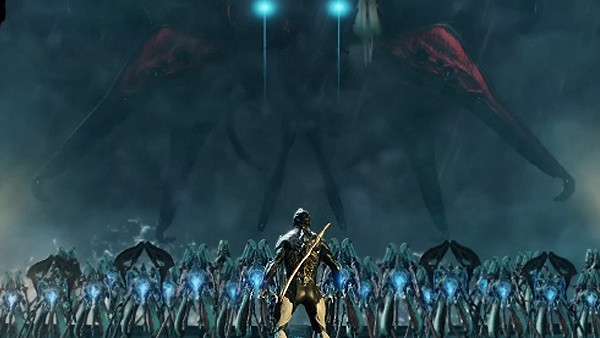
Warframe launched alongside the PS4 and quietly became one of the most popular free-to-play games on the market.
Warframe is one of those titles that, if you aren't an active player or part of the incredible community, you may have forgotten it exists. It has found incredible success and retains a dedicated player base through community feedback and consistent updates that make the game better.
You may be surprised to learn that Warframe is actually a spiritual successor to Dark Sector. What Warframe ended-up being, was essentially the original vision for Dark Sector. Following the latter's release and subsequent mediocre reviews, the team went back to the free-to-play MMO concept.
Ironically, developer Digital Extreme's had a tough time getting press coverage for the game because back in 2012 games media ignored free-to-play titles - unaware they would soon become the norm. After a slow start, Warframe has amassed over 38 million players and has won awards for Best Ongoing Game.
2. Rainbow Six Siege

Rainbow Six Siege looked fun as heck when it was revealed back in 2015. It even previewed extremely well. Then it launched and fans quickly got bored due to a lack of content and the repetitive nature of the game. In the years since, Ubisoft has supported the game with consistent updates and made it a eSport phenomenon.
Siege is actually the 19th instalment in the Rainbow Six franchise and the first to be multiplayer-only with no story. Like many of the games on this list, Siege was released to great reviews, focusing on its core gameplay and intense online experience. And, just like the other games here, it rather quickly lost its player base thanks to a lack of content.
Ubisoft addressed the lack of content with an aggressive road-map of DLC. The company aimed to provide four updates a year, title Seasons, which have included modes, map packs, gameplay tuning, new operatives, and more.
Ubisoft has successfully supported the game for three years at this point, turning it into a hell of a great multiplayer game and a really fun eSport.
1. No Man's Sky

Has there ever been a bigger turn-around in gaming? No Man's Sky was decimated by fans and critics when it launched, rendering it pretty much dead on arrival. Since then, Developer Hello Games have updated it three times and completely changed the experience.
Without detailing the entire journey of No Man's Sky, let's just say that the games massive over-hype was the fault of both Hello Games and Sony, both of whom marketed the game as something well beyond the capability of the team. Players felt lied-to and the already-hostile internet went nuclear on Hello Games and, in particular, studio head Sean Murray.
The team made an odd choice following the poor reception; rather than apologise hat-in-hand and ask for forgiveness, Hello Games went completely silent and focused on making the game better.
Since then, No Man's Sky has received four major updates: Foundation, Pathfinder, Atlas Rises, and NEXT. With those updates came more story, base-building, multiplayer, freighters, a third-person camera, terrain vehicles, character customisation, improved visuals, and more.
The game has been radically overhauled and improved, Hello Games has redeemed itself, and No Man's Sky was PS4's top-selling digital game in June... 2018! A massive redemptive arc that isn't finished yet.