9 Major Video Game Plot Holes You Probably Missed
You alright there, John, old buddy?

There's something about a video game that means WAY more things can go wrong with the experience than your average film, book etc.
Where the latter's edited scenes will still form some semblance of plot; convey some notion of what the creatives were going for, if a game engine starts to falter; plot points get erased or characters are reworked, the whole experience falls apart.
It's all part and parcel of gaming's evolution over the years. Consumers and creators didn't especially care about story beats and narrative payoff in the 80s and early 90s, but once things like Ocarina of Time and Metal Gear Solid showcased 3D visualisations of fairytales or Hollywood blockbusters respectively, it was off to the races.
Now the majority of big-selling titles are "expected" to have a story, but that often clashes with the realities of game development.
Take something like Anthem. Bioware's latest went through hell deciding whether or not to even include flight mechanics, then having the knock-on effect of the game's world being redesigned to accommodate verticality or ground-based combat.
It's just one example of how hard video game development can be, and although the following are nitpicky as hell, they prove scores of our favourite titles aren't as airtight as we'd like to believe.
9. Kratos Could've Saved His Family - God Of War II
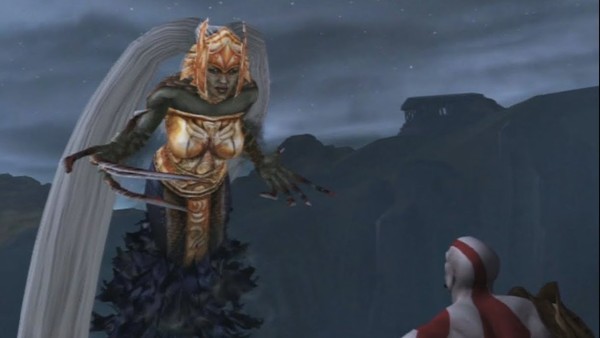
Gaming's former resident psychopath Kratos went through one hell of a transformation in 2018's glorious God of War soft-reboot, but he was the talk of the town across the 2000s for slaughtering everything in his wake. Civilians, soldiers, gods, deities - all fell to the mighty Blades of Chaos, with Kratos powered by the fact he accidentally killed his own family, after Ares imbued him with power and triggered some blood lust.
Not the best motivation for a protagonist, but not to worry - it could've all been avoided if not for Ares, and as Kratos can't undo the mistakes of his past, the only thing left to do was rip and tear, until it was done.
Right? Wrong.
See, in God of War 2, Kratos comes across the Sisters of Fate - a trio of powered-up ladies in possession of the Loom of Fate. This device weaves time together, and after Kratos gets control of it, he uses the Loom to travel back to when Zeus betrayed him at the beginning of the game, so he can keep killing.
HOWEVER, why the hell didn't Kratos just return to his family? Kratos could easily have gone even further back in time, back to when he wasn't a superpowered Titan-killing mess, to hang with his wife and child.
Even if it never worked out and he still realised he's a monster, at least he'd get to see them again.
8. Sam Messes With Her Sister For No Reason - Gone Home

-- Spoilers for Gone Home --
The Fullbright Company's medium-expanding masterpiece Gone Home is just that: A game with no combat or overt mechanics other than exploration and item-based interaction, telling the story of gap year student Kaitlin Greenbriar returning home.
She arrives to find a note on the door from her sister Sam, apologising she can't be there, but saying not to "go digging around" finding her, and that they'll "see each other again some day."
What follows is an immaculate mystery, drip-fed one clue at a time, aided by the mindset we have as gamers to assume there's a monster around every corner. It culminates in realising Sam left the house to be with her new girlfriend Lonnie, and the whole thing was an inversion of expectations, because everything is going to be fine.
So... why the cryptic note? Why the misleading message on the answering machine? Why hide two keys around the house that lead to the attic, where Sam actively "hid" the solution to her sister's current worry?
Once you know the final twist, everything in the lead-up - and the setup in particular - no longer makes any sense.
7. Necron Appears From Nowhere, And Is Never Mentioned Again - Final Fantasy IX

Speaking of things no longer making sense, sometimes developers just want you to have a whopping great boss fight at the end of their game. Looking at you, Mass Effect 2.
That was also the case in Final Fantasy IX, where after a whole game of chasing after the nefarious Kuja, a dragon-riding pretty boy with a penchant for Eidolons and world domination, you're instead met with Necron.
Yes, there is a fight against Kuja - and an epic one at that - but then the game has a random conversation with an invisible force and resumes as you're face-to-face with Necron, a hulking floating blue guy with monster arms and a halo.
Because Video Games, you might be thinking, and you'd be right to, as there's no explanation for Necron other than that he was forever present as a celestial being, "testing" the party's will to live.
Post-fight we don't get anything other than Necron realising the "will to fight" was strong, and that's that.
Understandably, Necron's existence became a rather large talking point across Final Fantasy history - leading to the Final Fantasy 20th Anniversary Ultimania book, to finally state that Necron was "awakened by Kuja's fear, despair, and hatred, which called out to it as he learned of his mortality, just as his ambitions were within reach".
Suuuure, Square Enix. That was the plan all along.
6. Going On Vacation In A Ghost Town - Silent Hill 2

Easily a masterful horror that's still recommendable to this day, Silent Hill 2's mysteries actually took on a life of their own once fans started picking apart James Sutherland's murderous ways, and the timeline of what went down.
The game spells out that Sunderland actually killed wife Mary before the events on-screen, and worse still, her body was in the trunk of his car as it plummeted into a lake, hiding the evidence.
One thing that came from such a deep combing of all available data though, was analysis of Silent Hill 2's timeline: Mainly, how it doesn't make sense.
So, in the game, James and Mary are said to have taken various holidays at the titular town, and that it's their favourite spot to do so.
However, Silent Hill as a town is completely abandoned after its heyday of the 70s, and Silent Hill 2 is set in 1993. Even if the pair went when they were children, it would either be abandoned or full of cultists. Hardly the opportune spot for a vacation, let alone repeat visits.
Not to mention, Mary has been ill for 3 years, triggering James to return to the spot where they used to hang out. This puts their vacation time somewhere closer to the late 80s or slap-bang in 1990, when Silent Hill was definitely a ghost town.
5. Halo Is Identified Before Anyone Knows What It Is - Halo: Combat Evolved
Hands-down the finest sci-fi shooter of all time, Halo's initial trilogy left an indelible mark on an entire generation of gamers, and all it takes is the operatic opening vocals of that theme to make us go all warm and nostalgic again.
However, for as much as we worship old-school Bungie for delivering the franchise in such immaculate form, clearly one member of the team jumped the gun on identifying the "mysterious object" we're approaching at the beginning of Combat Evolved.
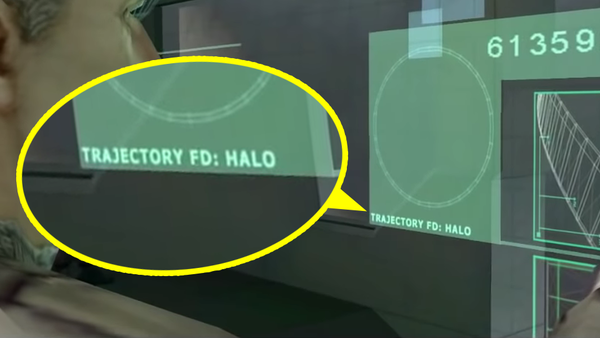
Right at the start of the game, just after Chief comes out of stasis and visits Captain Keyes, look closely at the screen behind him and you'll notice the location you're speeding towards is correctly labelled as "Halo".
At this stage in the game not even Master Chief knows what lies ahead, and as "Halos" are what the Covenant refer to these artefacts as, how could one of the team accurately label it so?
4. Ethan Never Calls The Cops - Resident Evil 7

A super, super simple problem that sticks out because it's just so achingly obvious:
Why didn't RE7's Ethan call the police?
Yes, he first drives out to find wife Mia of his own volition - assumedly not wanting to bother anyone if it's a simple case of a dead phone or other easy explanation - but once things start going monumentally sideways, no effort is made to reach the outside world.
We do get one ray of hope through police officer Anderson turning up, but he gets killed by Jack Baker, leaving Ethan once again on the back foot. Anderson has a walkie-talkie, and there are various telephones located across the property, as you get to use one when Zoe Baker starts contacting you, so why not try to ring out?
Maybe this is explainable as the Bakers wiring their house to only allow an internal circuit of communication, but a simple scene of Ethan at least trying to establish a line to the outside would've gone a long way to making it make sense.
3. You Could've Saved Mars In The Beginning - Red Faction: Armageddon

A clusterf*ck of game logic, this.
As if the shift from considered, story-driven first-person fare to third-person Gears of War clone wasn't jarring enough, Red Faction Armageddon just gave up trying to write a cohesive plot.
So, at the beginning, playing as son of Alec Mason, Darius, you're trying in vein to stop a ginormous Terraformer from essentially resetting the ecology and environment of Mars itself. You're sadly too late though, and in events that kick off the campaign of the whole game, the cultists win, leaving you to fight your way back to a broken Terraformer to put everything right.
Only... Darius is in possession of the "Repair" ability from the beginning of the game. You acquire it in that opening mission, before the Terraformer is about to wreck everything, and in the final fight? Mason just remembers to use the repair function all over again.
Mars could've been saved and all that damage averted, if Darius Mason wasn't such a moron.
2. John Marston Remembers His Own Life Wrong - Red Dead Redemption 1 & 2
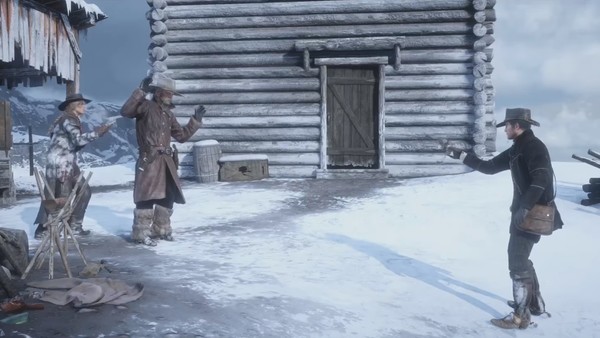
This was so easy to avoid, I can't believe Rockstar still went ahead and created a continuity error for no reason.
So, in Red Dead Redemption 1, we're playing as John Marston, hunting down Dutch's gang one by one, at the command of Edgar Ross, because he's promised John's freedom after the deed is done.
We eventually track down Bill Williamson and Javier Escuela, but there's a great scene where John meets back up with Dutch himself, leading to the pair having a trade-off of words. After a back and forth, John states that he's his own master now, and has been "since you left me to die", eyeballing Dutch.
The problem?
This isn't how Dutch left John whatsoever. In Red Dead Redemption 2 - set before the events of the first game - Dutch actually comes to the rescue, wounding the devious Micah who was in a stand-off with John, and allowing Marston to finish him off.
If anything, Dutch walking off afterwards allowed John to have the life on the ranch he was building towards anyway. It literally just doesn't add up, and in no way could this be seen as "leaving John to die".
1. Big Boss' Non-Existent Coma - Metal Gear Solid 1 & 3

Metal Gear Solid and plot holes?? Who coulda thunk it.
Yes, Hideo Kojima's 'makes-it-up-as-he-goes' action extravaganza has gotten so convoluted with ageing characters and canon changes over time, that he straight up admitted the whole thing doesn't make sense while promoting MGS V.
However, many of us had cottoned onto a handful of qualms with the series' timeline before that, and I'm not just talking about Grey Fox's backstory as Null.
No, a more prominent issue comes from the "coma" Big Boss was supposedly in, when the Les Enfants Terribles project kicked off in 1972. This is said by Liquid Snake who confirms Boss' cells were taken when he was in a coma, but later games directly contradict this.
How?
Because the real Big Boss was active during the events of Peace Walker and Ground Zeroes, going under in 1975 after Mother Base is attacked.
It's here where Kojima's catch-all plot hole sponge of Venom Snake being a clone of Big Boss was created, but that can't explain how Boss was in a coma donating cells, whilst simultaneously walking around.
As an explanation, it's worth noting that the Japanese version of Metal Gear Solid never included the detail of Boss being in a coma. For western releases, Konami went with a now-infamous one-person translation "team" of Jeremy Blaustein, who possibly added the detail as he thought it made sense to the flow of Liquid's speech.
Either way, despite everything, in the 1970s, Big Boss is in two places at once.