9 Major Worries We Have About 2019's Biggest Video Games
There's something off with Mortal Kombat 11.

As we enter the sixth year of the current generation, it's safe to say the industry has fully recovered from the awkward as hell launch period that gave us the likes of Assassin's Creed Unity's face glitches, Watch Dogs' disappointing everything, and a broken Master Chief Collection.
Yes, it seems that with the advent of Nintendo's Switch reminding Sony and Microsoft to pull their fingers out, we've had nothing but pure power on the PlayStation side, whereas Xbox's Phil Spencer enacted a plan to bring together multiple generations of Xbox games, alongside securing a future of better first-party studios.
Still, the industry's relationship with hype, expectation and pre-order culture hasn't changed, but we are seeing increasingly worthwhile pushback against the most egregious monetisation practices big publishers like to employ.
More than ever before, the PS4, Xbox One and Nintendo Switch are raking in the dough, but with full awareness that through the power of social media and a very vocal consumer base, things can go wrong at a moment's notice.
It's a delicate balancing act and the gaming industry is the most lucrative in all of entertainment, but that only means you have to pay more attention to the biggest titles coming your way.
9. Activision Publishing Sekiro: Shadows Die Twice

Yes, though it might've slipped through the news cracks, none other than Activision i.e. one of the most money-hungry companies on the planet, are on publisher duties for Sekiro.
Why is this a problem? Well in reality hopefully it won't be, but Sekiro marks the first time industry darlings FromSoftware have broken away from Bandai Namco as partners for a multi-platform release across three games. Bloodborne was actively helped through development by Sony themselves, and until we see a Bloodborne II, could actually be a one-off.
For Sekiro, it's the launch of another new IP; one where a wider, more accessible action focus will surely bring in a far larger audience. Yes, the FromSoftware heart should be there in spades, but considering Activision's monetary business practices across Call of Duty and Destiny - and the disastrous firing of hundreds of staff over unsatisfactory quarterly earnings - it's cause for concern until launch.
8. How Much "EA" Is In Star Wars Jedi: Fallen Order?

Another publisher woe from everyone's favourite corporate entity, as everything about Star Wars: Jedi Fallen Order has been shrouded in secrecy.
Even the game's title reveal was done from the audience as Respawn's Vincent Zampella attempted to maintain hype without even standing up. No gameplay, no screenshots, nothing. And it makes me wonder: Is this because of EA's business practices recently coming under fire with Battlefront 2, that large chunks of Fallen Order had to be rethought or reworked?
Following Battlefront 2's loot box controversy, that game has been egregiously altered, remixing the core progression and adding a cosmetic store to appease the sheer vitriol that was happening at the time. For Jedi: Fallen Order we can assume that EA initially planned to continue heavily leaching off Star Wars fans and the brand itself, and I'd be amazed if the project was always a story-driven game with no monetisable elements.
Taking an additional step back, EA had their tendrils in the development of Visceral's Project Yuma AND story-based Project Ragtag, plus an open-world pirate-themed title we never got to see - all because they were determined to wring as much money out of every title as possible.
Jedi: Fallen Order is being developed by Respawn Entertainment, and though Titanfall 2 was an immaculate FPS with consumer-friendly practices, I wouldn't trust this until we see every aspect of it.
7. Will Shenmue III Be A Catastrophic Waste Of Money?

How do you even make another Shenmue? Worse still, how do you turn around one of the most highly-anticipated sequels of all time, in just three years, when development was still in the crowd-funding stage back in 2015?
Director Yu Suzuki has assured fans that working with Unreal 4 means various prototypes and ideas can be implemented incredibly fast, but then we saw the fruits of YS Net's labours and... there wasn't anything to be impressed by.
Possibly to maintain the notion of this being a sequel to something literally 20 years old, main-man Ryo Hazuki barely has any facial animation, instead appearing like his first two incarnations, replete with stoic wide-eyed stare.
As another issue, the core appeal of Shenmue is routed in the past; in a gaming industry yet to experience fully interactive open worlds. Snatching up leaflets only to realise the phone numbers could be dialled, finding a cat and taking care of it, playing a games console at Ryo's house - weirdly, it was all these tiny details that made for a grand picture. A core notion the likes of Rockstar, CD Projekt RED and Bethesda have redefined multiple times since Shenmue 2.
6. Has Control Already Missed The Mark For Remedy?

The first two Max Payne games were immaculate because of their self-aware indulgence in film noir tropes, perfectly twinned with balletic, slow-motion gunplay and a main character that was endlessly quotable.
This led to Alan Wake, a still-kinda-fun-to-play shooter with a horror edge that made a satisfying enough debut, only for Xbox-exclusive Quantum Break to fall flat on its face when the Xbox One's TV functionality was rejected by the mainstream, leaving half that game's framework to be ultimately discarded.
Now we've got Control, the next game from Remedy with a different publisher, but it retains the developer's reticence to play to their strengths. A far cry from the filmic noir trappings of Max Payne or the stylish atmosphere of Alan Wake, Control is a telekinetic object-flinger like Psi-Ops: The Mindgate Conspiracy or Star Wars: The Force Unleashed.
This of course sounds phenomenal in theory, but so did Quantum Break. As Remedy seem to write their best work when they have a solid sense of juxtaposition to the madness therein, having a whole game be focused on time-warps and MC Escher level designs could miss the mark yet again.
5. Is Cyberpunk 2077 A PS5/Xbox Scarlett Launch Game?

The evidence is certainly mounting up, as scouring the internet for general release windows for Cyberpunk 2077 and Death Stranding points to some confounding release windows.
Exhibit A: Cyberpunk 2077 has been described as being built with "future generations of technology in mind", with its incredibly impressive 50 minute gameplay demo actually running on a high-end PC. Now, not to doubt CD Projekt RED's intentions (I firmly believe a PS4/Xbox One version is coming), but the devs seem reticent to confirm a 2019 release date, and that pushes things far more into 2020 territory, when the PS5/Xbox Scarlett will be on shelves.
'Future tech in mind' plus 'release only coming when the team are comfortable' (i.e. 'not any time soon'?)
That's a next gen game if ever there was one.
4. Will Marvel Ultimate Alliance 3 Be A Glorified Marvel Heroes?

Okay, so... we've waited years upon years for the next Ultimate Alliance, and though UA3 looks fine, I can't shake the fact that graphics have taken a notable side-grade from Ultimate Alliance 2, and that gameplay looks pretty stripped back.
Then there's the fact it's a Switch exclusive? Why would Marvel - if Ultimate Alliance 3 is thought to have the same amount of weight as the last two entries - make it a platform exclusive?
Either 1. Nintendo shelled out a LOT of coin to secure the deal, or 2. Gameplay is far more in line with something like the PC-only Marvel Heroes; a loot-grindy action title that almost feels adjacent to Ultimate Alliance, without the cinematic bluster.
The latter makes a ton more sense given the Switch's capabilities hardware-wise, and even in February's Nintendo Direct we saw a complete focus on combat over anything on the narrative side. The Switch is home to far, FAR more mobile ports and repetitive action titles than things that have feature any blockbuster parity to the likes of the PS4 and Xbox One, and I can't help but join the dots.
What if the reason Ultimate Alliance is only on Switch, is because it's a glorified rework of something the "bigger consoles" wouldn't even want?
3. Death Stranding Can't Scratch The Metal Gear Solid Itch

MGS V: The Phantom Pain is one of the best action titles you can ever play. Firing off rocket-propelled fists into enemy camps, electrocuting groups of goons with random telephone wires - and listening to A-Ha while you do it.
There's something about that peak level of Kojima quirk that perfectly connected to every second of gameplay, and the only thing missing was enough dev time to wrap the story up in a more cohesive fashion.
We all know the fallout between Kojima and Konami was seismic, but after Sony saved Hideo and his company, gave them a sky-high budget and allowed them to make Death Stranding, it feels as though this "new IP" is in another genre altogether.
Now, there's no problem with changing tones (Kojima and Guillermo Del Toro's Silent Hills teaser was phenomenal), but is Death Stranding going to be far more occult horror and bizarre visuals with a batsh*t plot, vs. anything resembling the franchise that made Kojima a household name in the first place?
2. Was Anthem Designed For A World Where Destiny Was A Success?
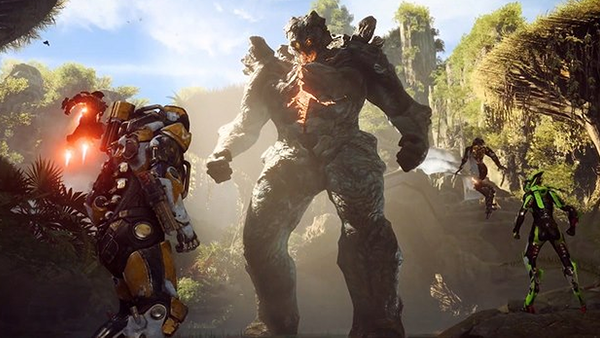
"Yes", is the short answer to this, as when Anthem was commissioned, it was right around the time Destiny was gearing up to release. Loot grinds and dynamic multiplayer interactions in an open world could've been the future of the genre but... well, we know how that went.
Now one sequel in, Bungie have split from Activision to try and restore the series' narrative backbone, but Anthem looks to be trying to satiate the action-loving crowd for EA. Understandably that's been met with near-universal derision, and as Bungie insist one of their trademark stories is still at the core of what drives the experience, it makes me ponder on marketing having to ostensibly sensationalise smaller story elements to consumers, as gameplay clearly isn't enough.
Had Destiny been welcomed with open arms - and things like rolling gear stats or re-running missions became the norm - maybe Anthem wouldn't be facing such an uphill battle, but we may end up questioning the reality of the final product vs how its been advertised across the last half-decade.
1. How Much Corporate Bullsh*t Is In Mortal Kombat 11?

A strange thing to highlight perhaps, but NetherRealm - being they're owned by money-hungry publisher Warner Bros - are getting increasingly more "corporate" in their rollout of additional characters and unlockables in general.
MK 10 was the first major step in this direction, launching with $50 of microtransactions comprising additional skins and paid-for Fatalities. Even the beloved Krypt - first introduced in Deadly Alliance - now had an "unlock everything" option if you couldn't be bothered to play the game yourself.
Seriously, I get the fall-back of publishers saying "Well, if you don't want to pay, just play the game", but the idea of paying to "get through" the thing you just paid for seems utterly asinine.
For Mortal Kombat 11, NetherRealm have struck a good balance so far, though the game's reveal did come with constant reminders that you can "Pre-order to unlock Shao Kahn!" It's reminiscent of Goro being a paid-for unlock in MK X, and with 11's detailed customisation system, you can bet there'll be options to purchase random loot chests of gear and equipment.