9 Video Game Sequels That Tore Fanbases In Half
Pick a side.

Unlike the worlds of film and TV, in gaming if you're going to continue something, a direct sequel SHOULD be pretty easy.
Development teams have noticed all sorts of things they wish had gone different thanks to copious amounts of coverage. Bugs and glitches that had to be left in because they ran out of time can be smoothed over, and as a team of creatives, you now have a ton more feedback from the consumer as to which plot threads or game mechanics might need expanding.
And yet, because of all these things that would spell out the "ease" of a sequel, it can often encourage the total opposite.
After all, art shouldn't be "easy". Some of the worst games of all time came from "phoning it in", and if you're in any creative endeavour for the right reasons, you don't want to be remembered for copying, pasting and counting the cash that comes in afterwards.
Factor on top of this foundational ethos for a sequel all sorts of expectations based on franchises, characters, longform storytelling etc., and it's very easy for followups to splinter their audiences, rather than keep them together.
9. DOOM 3

The 2000s were a fascinating time for cinematic gaming. Post-Metal Gear Solid, everybody and their granny was trying to frame cutscenes as mini movies, and as Uncharted revolutionised motion-capture and digitised performances, even iD Software attempted to provide a more "cinematic" DOOM.
DOOM 3 certainly has its fans today, but this was despised at launch by the majority.
And unluckily for iD, that majority were hardcore DOOM fans.
DOOM's branding comes with certain expectations - ones that would later be quadrupled down on in 2016's soft reboot and the immaculate DOOM Eternal. For DOOM, 3, coming after two instalments of hyper-kinetic movement, overblown weapons and chunky monsters to blast apart, going down the survival horror route was one hell of a swerve.
Most notably, you couldn't fire with a flashlight equipped - a design decision built to instil tension as you explored the Mars space station you were trapped on. It wasn't until 2012's BFG Edition that you could light up monsters AND take their heads off, but DOOM 3 has remained a divisive instalment for slower pacing and its many other changes since.
Pick it up today, cast aside any connection to the originals and you've got a damn fine first-person space horror, with graphics that were jaw-dropping at the time.
8. The Legend Of Zelda: The Wind Waker
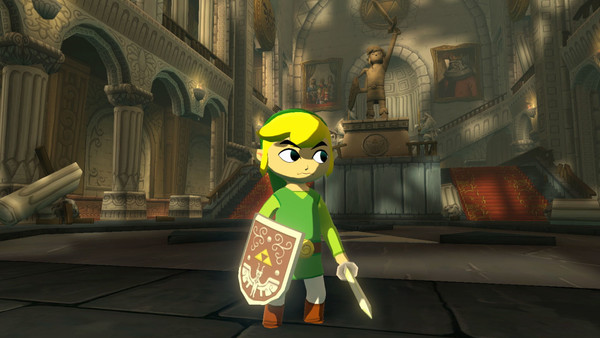
If you played Ocarina of Time as a kid or teenager in the 90s, you probably thought it was the most epic, mature and weighty adventure in all of entertainment. Link accidentally dooming the world thanks to messing up some time travel, beaming into his adult self to put things right is one for the ages, and the stakes are supremely high as you try and slot the pieces back together.
What the Legend of Zelda series is not however, is a 'gritty, hyper-mature' tale. The nearest we had was the kooky surrealist experiment of Majora's Mask, but these are fairytales told around a campfire. Each retelling gets a few details different, but it's the main beats of the narrative that elevate the mythos.
All of this is to say, that when Nintendo made a Zelda game with an aesthetic that matched its whimsy, a portion of the fanbase lost their minds.
Wind Waker was cute, it was adorable. Link and sister Aryll played on a small island with their grandmother, before a talking dragon boat whisked them off on an adventure filled with primary colours.
It was NOT, by ANY means, the mind's eye version of Zelda that had been encapsulated in those who grew up with Ocarina of Time or the obtuse originals.
For those who could go with it though, Wind Waker is one of the absolute best.
7. Fallout 3

Considering how much Fallout 3 appeared to rupture the fabric of space and time to garner another runaway success for Bethesda, that "3" in the title was very telling.
See, Bethesda had acquired the Fallout IP from Interplay. Black Isle Studios - Interplay's RPG division and originators of the series in a top-down fashion with turn-based combat - were working on their Fallout 3 when this happened.
As you can imagine with any stat-focused game that comes with a hyper-detailed lore on PC, Fallout fans were fiercely loyal, and they were NOT happy about the series they adored becoming "Elder Scrolls with guns".
To this day there's a militant portion of Fallout fans that won't touch Bethesda's efforts, instead citing the Wasteland series as what Interplay would go on to make. Wasteland retains the top-down setup of old-school Fallout alongside some incredibly detailed RPG systems.
With Bethesda royally pooping the bed for most of their post-Fallout acquisition efforts, who can blame them for sticking with the real creative geniuses?
6. The Last Of Us Part II

After a six year development period that saw one of the most hyper-detailed games of all time finally release, The Last of Us 2 had arguably the most passionate and divisive response to a game this generation.
On one side you've got the haters; those who couldn't get on board with how the story pushes former main character Joel into the background. Newcomer Abby getting just as much screentime as Ellie is still seen as a contentious issue even by those who think positively of the game overall, and post-credits, you are left with something that's very much "a game of two halves".
On the positive side, it's understanding all those emotions were intentional. You're supposed to be dismayed and longing for Joel; supposed to be uncomfortable as you're forced into someone else's shoes.
Therein lies the biggest risk in Naughty Dog's career so far, and you'll only know where you truly stand once you've seen everything for yourself.
5. Grand Theft Auto IV

Another one for the "impact of the 2000s" pile, as Rockstar finally moved away from the overblown, "cartoonish" fair of the PS2 GTAs, and into more serious fare instead.
The problem? They just couldn't make both ends meet, and the two opposing sides to GTA IV would come to represent both sides of the fandom, too.
On the one hand, you've got a mature, realistic tale of Serbian soldier Niko Bellic. Fed the American Dream as a lie by his brother, this brings him to Liberty City, where his past catches up and - in cutscenes at least - we see a man forced to embrace his worst past tendencies to survive and overcome.
On the other... is everything left over from the jetpacks and comedy sketch-fuelled days of GTA old.
Those who loved how much San Andreas went over the top; loved the aliens, casino robberies or backflipping airliner stunt missions, couldn't get on board with Niko's grounded exploits.
Likewise, those who welcomed a more refined Rockstar saw the potential for anarchy in gameplay to break everything.
The idea of playing a character differently to how they're presented elsewhere invented the term "ludonarrative dissonance", exemplifying both sides of GTA clashing in its fourth instalment.
4. Red Faction Guerrilla

At the time, Red Faction felt like the future of not only first-person shooters, but interactions with video game worlds overall.
Why? Because of Volition's patented "Geo-Mod Technology".
This mind-bending tech let you punch holes directly into the environment, tunnelling through to connect between buildings in multiplayer, or taking out enemies by destroying the walls that led to them in the campaign.
Red Faction was a truly great piece of dystopian fiction; its story of rebel miners turning the tables on their oppressors only bolstered by the possibilities of Geo-Mod. You were literally weaponising the equipment and planet around you to succeed.
Come time for Red Faction Guerrilla, the popularity of the series saw Volition double down on the destruction side of things. Rather than have it be a key pillar of the appeal alongside tone, character writing or great mission design, this shifted things to third-person and it played like a big ol' smash fest.
As such, while Guerrilla certainly has its fans, to some who were there at the beginning, there's just no beating the original two.
3. Metal Gear Solid V: The Phantom Pain

Where to even begin.
At least we can all agree this is the best-playing entry in the Metal Gear series; masterfully applying the franchise's gameplay to an open world, and it looks technically outstanding the whole way through.
Everything else, though? Well, topics include the following:
1. Ditching the legendary and iconic David Hayter for a near-mute Keifer Sutherland, who barely says anything.
2. The game's marketing being a lie, and the "downfall of Big Boss" not being in the game.
3. A complete tonal change into all-out surrealism. Ghosts and demonic forces are treated as believable, with the game's story barely knitting together.
4. The final twist that after everything, you weren't even Big Boss, meaning all the events that happened to "Venom Snake" don't matter to the wider fiction.
5. Even doing another Metal Gear after the painfully elaborate finale that was MGS 4.
There are many, many more. In retrospect, Phantom Pain feels every bit as troubled as its development was revealed to be, and you'll never get two Metal Gear fans discuss it the same way.
2. Final Fantasy XIII

Something of an anomaly amidst such a legendary franchise, FF XIII attempted to right the wrongs of the automated Final Fantasy XII, but didn't go far enough.
Where the debate rages on as to the likability of turn-based combat in triple-A titles, FF XII brought about a "Gambit system", where you'd program a series of "If X, then Y" algorithms to fight for you.
Being raised on the immaculate golden age run of Final Fantasy VI through IX, though, Square couldn't please everyone. Some MMO-minded players liked this "auto-combat" approach, where others longed to punch each animation in themselves.
Final Fantasy XIII then, kept some of the automation but let you select it from a menu each time. For far too long you're locked in a sense of the game playing itself, and only after 12-15 hours do things open up.
Ironically though, whilst that eventual payoff netted a portion of the main fanbase, XIII totally worked for a whole new generation, as their "first Final Fantasy".
The flying ships, oversized weapons, charmingly OTT characters and especially another sweeping, majestic score - there are ardent defenders of Final Fantasy XIII every time it's mentioned.
1. Jak II: Renegade

Easily one of my favourite games of all time, but something that was nakedly Naughty Dog chasing the GTA 3 trend, Jak 2 is a hilarious pivot into mid-2000s 'tude, that feels hilarious in retrospect.
At the time though, this was just cool. Jak could suddenly talk, would insult the guards trying to arrest him, could channel his inner skater punk by hopping on a hoverboard and would declare death to the evil Baron Praxis in the opening cutscene.
For so, so many - and again, backed by GTA being the coolest thing on the planet back in 2003 - Jak II clicked like nothing else. Its mix of open-world car chases and hidden secrets, mixed with platforming gauntlets and hoverboard stunts was a match made in heaven.
To everyone else though, they wondered what the hell happened to every last drop of the former title's charm, environments and overall appeal.
This was the overnight teenage goth makeover in video game form (and I loved it).
Watch Next
PlayStation 25th Anniversary Quiz - How Well Do You Remember Sony's First Console?
