Assassin's Creed: Syndicate - 8 Reasons Why The Modern Day Story Has To Go

"Desmond? Who is Desmond?"

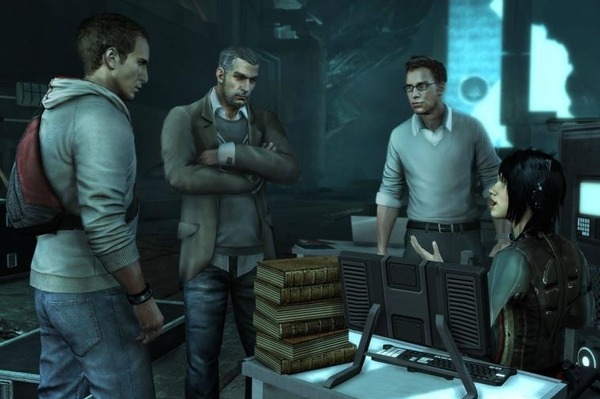
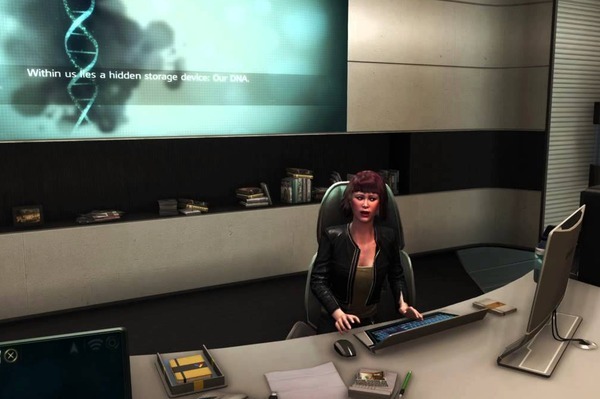
Far from having retained the shock value from its initial unveiling during the first Assassin's Creed, the modern day storyline has become a staple of the series - sadly hindering its full potential in the process. After the dismal conclusion to Desmond's arc fans were given at the end of the third AC entry, many were quite rightly left frustrated. Annoyingly, Ubisoft have failed to alleviate this frustration time and time again, and have persistently reused the modern day irrespective of its significance to the overall narrative of the series. Ask any AC fan and they will tell you that they play Assassin's Creed not for the unnecessarily convoluted modern narrative, but for the immersive historical environments that are included. These are undoubtedly the strengths of the series, and sucking players out of the events of these incredible locales - only to then thrust them into a dreary office space - isn't exactly the best way to portray an Assassin's story, especially when it breaks the pace of the plot so frequently. Indeed, the modern day has become somewhat of a burden for the folks at Ubisoft. Unable to deliver a satisfying ending that fans have been clamouring for, the developers have been stuck with including characters no one remembers nor cares about either. It's rather clear that Assassin's Creed is best when it focusses on the historical factor, and with Syndicate's release fast approaching, now would be the perfect time to retire the modern day element once and for all.


8. It's The Weakest Storyline

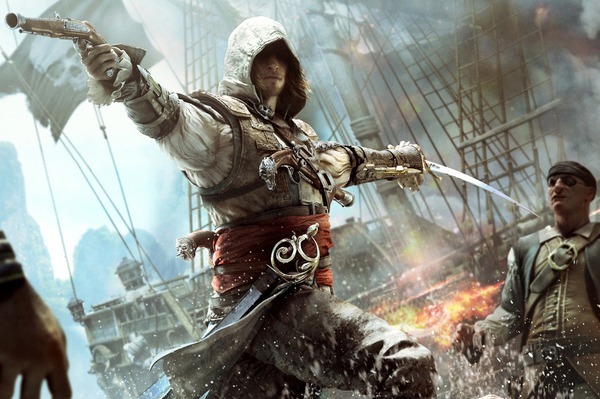
Part of why many came to love the Assassin's Creed universe was because of its unique twist on History. Having players engage in a murky war between two secretive and shady organisations was a master stroke, especially when they have the ability to influence some of the most famous historical moments in the process. The historic war between the Assassins and Templars isn't a simple matter of 'good versus evil' either - as was made apparent by the oft overlooked AC: Rogue, which offered a brilliant new insight into the Assassin-Templar conflict that no other game has managed to emulate since. Sadly, Rogue also suffered massively from an atrocious continuation of Black Flag's modern day segments - having players trudge about to open doors and talk to irritating caricatures that they'd forgotten about by the time the credits rolled. The game could've functioned perfectly well without the modern story, and all it did was distract players from Shay's endeavours during the Seven Years War. Rogue isn't an anomaly however - in fact, each and every AC game has suffered from the modern day. It's totally irrelevant to the historical elements of the series, especially since an equally captivating tale could be told without the use of the animus nor the people who implore the player to use it.

7. No One Cares About The Characters

Though this may have held less truth in the days of Desmond and his ragtag band of Assassins, the sentiment is more than appropriate when looking at the current state of AC's modern day affairs. Said segments have struggled to find a footing outside of the Miles family's adventures, and it certainly shows on the overall product. In many ways placing the player as the direct protagonist of the modern day is interesting, but silent heroes are becoming increasingly dated in a market dominated by intense character-driven narratives - as is highlighted by games like The Witcher and of course TellTale's exemplary point and click titles. One might say that silent protagonists allow players to more easily identity with the events around them, projecting their own emotions onto a blank slate if you will, but this highlights a distinct problem with the AC series - namely that the modern day hero has nothing to do. Quite hilariously, the much heckled Unity had players literally take on the persona of someone sitting in a dark room playing a video game, as if that somehow added immersion to the experience of travelling back in time to play as a hooded warrior who chases alien artefacts. If Ubisoft are adamant about including the animus and other elements of the modern day in future releases they really need to invest in some strong character development - not cheap clichés that everyone got bored with in 2012.

6. It Distracts From The Historical Elements

Though Ubisoft should be commended for their efforts to educate the masses by providing interesting little fact files on key events, artefacts and locales, the animus itself is detrimental to the history that the predominant bulk of the series finds itself in. Having your modern day companions blare over a speaker telling you what to do is just far too distracting in a franchise that prides itself upon immersing the player in a realistic environment. However, despite the harmful effects the modern day has had on AC's history there have been occasions where the animus has been deployed in effective and inventive ways. Unity's 'time hop' missions (moronically spoiled before the game's release) illustrated a great way to use the animus to broaden the series' horizons - taking players everywhere from medieval France to occupied Paris during the Second World War. It'd become fairly gimmicky to repeat this process in Syndicate and other releases under the AC banner, but it's very clear that the modern day has to reinvigorate itself if it wishes to survive another outing.

5. It Doesn't Add To The Immersion

Not even the animus could excuse AC Unity's distorted and nightmarish models, nor could it justify the overall buggy release the game had either. As many an Assassin will know, Ubisoft have utilised the animus to explain the quirks of the series - namely those dodgy accents and the 'occasional' glitches players will encounter in their time travelling adventures. This is done in the name of immersion, but its effect is quite the reverse. Players don't want to play as a gamer playing as an assassin - they just want to be the Assassin. By taking out the middleman that the Animus presents, Ubisoft could quite easily do away with a lot of these immersion-breaking features and give players a truly authentic historical action adventure. It would also call for a change in the menu design as well. Instead of uploading facts to the animus database, gamers could just discover scrolls, engravings, and other factual indicators to further enhance their knowledge of the period. Indeed, Assassin's Creed could exist quite happily outside of the shackles the modern day brings with it.

4. Gameplay Is Weak

This pretty much goes without saying, but walking around opening doors with a tablet isn't fun - in fact, it's rather dull. These are of course the sections we were gifted with upon the AC franchise's first foray into the world of next-gen consoles. Having players investigate some cooky corporate conspiracy at a videogame studio felt rather odd and out of place in a title that had players swashbuckling on the high seas with the likes of Blackbeard and Charles Vane, and definitely isn't one of Black Flag's many merits it can actually boast. Despite a rather strong showing in the latter half of AC III's story, the modern day has all but been devoid of the vibrancy that makes the other areas of the series so special. It would be better to axe it now than to force players to endure some more poorly scripted corporate espionage in the near future.

3. The Past Is Always Better

The past is the best element of the franchise - that is absolutely indisputable. There's a real reason why the modern day barely factors into Ubisoft's marketing onslaught prior to an AC release, and that's because it pales in comparison to the bulk of what makes the saga so special - history. No other series can offer what Assassin's Creed does, and that is giving players an authentic historical experience across a multitude of eras. In terms of just sheer immersion, very few rivals can boast the levels the AC series strives for and often succeeds in achieving. Annoyingly, the focus of these amazing set-pieces are often distracted by modern day interruptions - something barely any players are invested in at all. If demos and trailers were enough to gage a developer's interest in a particular gameplay element, it'd be fair to say that Ubisoft are just as disinterested in the modern day as the majority of players are as well.

2. It Breaks The Pace

By far the modern day's biggest crime against the series, interrupting the natural flow of the story is an irritation that has cropped up in each and every AC game. Just as the plot is about to ramp up the player is sucked out of the animus to accomplish some mundane tasks that hold no comparison with the main events of the story - it's extremely tedious, and takes away enjoyment from the overall product along with it. Needless to say, returning from an epic mission to assassinate a Templar in the notre dame is not easily piqued by some contrived dialogue occasionally mentioning how Abstergo are trying to 'catch' you, and does much to sully the enjoyment once derived from the main proceedings of the story as well. It's quite clear that as soon as players are forced out of the animus, they will do anything they can to get back into it as soon as possible, meaning all the little extras placed in the modern day segments are completely ignored. It would be far more appropriate for the developers at Ubisoft to instead focus their efforts on what makes Assassin's Creed so good in the first place - actual assassinations.

1. It Wastes Resources

As Assassin's Creed's yearly development cycle comes under greater scrutiny, it's becoming increasingly apparent that Ubisoft won't be able to sustain a consistent level of quality in the series - as was demonstrated by the infamously buggy AC: Unity. If the company wishes to continue to pursue an annual development cycle cuts will have to be made, and the modern day should be the first to fall victim to the cutting room floor. In doing so, Ubisoft would enable developers to focus on creating a high quality product that is fully embedded in history - the main event that keeps players returning to the series each and every autumn. Whatever the fate that lies in store for the animus and the modern day, it's obvious that AC: Syndicate will have to go to great lengths to reclaim the trust that was once placed in the franchise until very recently. If Assassin's Creed doesn't change soon, there's a fair chance that even the most loyal of fans will cease to continue with their own annual leaps of faith. Do you think that the modern day is no longer relevant to the series? Or do you want some more modern assassins to make an appearance? Sound off below and don't forget to 'like' the Facebook page for more!

Content Producer/Presenter

WhatCulture's very own resident movie guy, Ewan has been working in the content creation biz for over 10 years now, having started as a freelance contributor to WhatCulture Gaming all the way back in 2015. After graduating with a First-Class Honours in History from Northumbria University in 2017 (where he won a prize for a totally killer dissertation on the Watergate years), Ewan took on the role of Comics Editor at WhatCulture and quickly developed WhatCulture Comics into one of the biggest superhero-focused channels on YouTube. He followed this with a brief hiatus at Screen Rant in 2021, where he worked across the Gaming and Film sections as a writer and editor, before returning to WhatCulture as a Senior Content Producer / Presenter in 2023. He started his own podcast, We Love Dad Movies, in 2022, and has contributed several written pieces to the Eisner-nominated comics website Shelfdust as well. In his current role, Ewan incorporates his love of cinema, comic books, and history into written pieces and video essays for WhatCulture's Film & TV channel, as well as WhatCulture Gaming and WhatCulture Horror, with a particular focus on nineties-era Dad Movies, old school Westerns, and Golden Age Hollywood Noir. John Carpenter is his fave, and he thinks Batman Beyond should never have been cancelled. If that's your vibe, you'll probably like his stuff.