Batman: Arkham City - 10 Coolest Easter Eggs, Secrets And References Explained
Scarecrow's boat was just the beginning...
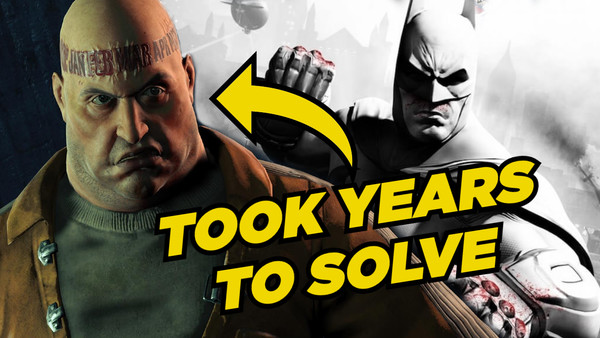
Released two years after their first Batman game, Arkham Asylum, Rocksteady Studios returned to Gotham City in 2011 with Batman: Arkham City, a title many would consider to be one of the finest video game sequels of the 2010s, and one of the greatest comic book video games of all time full-stop.
Following on from the events of Asylum, Arkham City ripped up Gotham's dedicated supervillain penitentiary and took it to the city's mainland, with Hugo Strange pulling the strings from behind the scenes. The end result was a No Man's Land-esque story that pitted Batman against his rogues and his rogues against each other, all while trying to solve the mystery behind Arkham City's creation, as well as the looming implementation of Protocol 10.
Like all great sequels, Arkham City made a point of being bigger than its predecessor - but not without meaning. The open world was twice as big as Arkham Island's, and with a greater playground came more room to cram in all sorts of easter eggs, secrets and references.
Of all the Arkham games, City is arguably the one most jam-packed with references. They're etched into the fabric of the open world itself, in dialogue and the environment, and - in one instance - even a secret cutscene.
Here are the coolest ones of all.
10. You Can Spot Black Mask Right At The Beginning
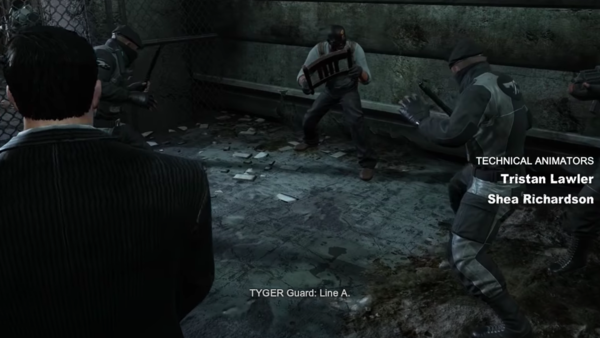
Black Mask would have to wait another two years before making his full bow in a Batman video game, but he still has a small role to play in Arkham City.
Apart from being the main focus of Robin's challenge map pack, Roman Sionis also features in 'Arkham City Stories' - small anecdotes that fill in the gaps between Asylum and its sequel. They reveal how Sionis lost control of the Steel Mill to Joker, and they also detail his failed escape attempt. (Scan the sealed off tunnel on the upper north east side of the mill, and you'll be able to read what happened.)
Given Black Mask appears in DLC and is only referenced in the main events of the game, it might be easy to miss how he actually has a cameo during its opening. As Bruce Wayne is processed by the TYGER guards, you can see Black Mask fending off a couple with a chair, only for him to be overpowered and subdued. (Skip to the 5:50 mark in the above video and see for yourself!)
Canonically, the next time players see Black Mask in the Arkham series, he's being tossed out a window by Red Hood.
9. Scarecrow's Secret Messages

Despite not physically appearing in Arkham City, Rocksteady made sure not to leave Scarecrow off the guest list. The last players saw Doctor Crane he'd been mangled to pieces by Killer Croc, but a possible ending for Asylum showed that he'd survived, and had latched onto Doctor Young's Titan formula.
Although Rocksteady elected not to factor Titan into Scarecrow's schemes, he does have a sneaky part to play in Arkham City. The Dark Knight's creepiest adversary leaves behind all sorts of cryptic and threatening messages for the player to uncover whilst surfing the airwaves on the cryptographic sequencer, and you can even find his mask on the top of the bridge connecting the Industrial District to Amusement Mile.
By far the biggest Scarecrow easter egg in Arkham City however is his secret hideout. Travel to a boat just outside the Industrial District and input a specific code on the cryptographic sequencer, and you'll be able to open up a hatch. Venture into the boat, and you'll find one of Joker's henchmen - Roach - tied to a chair, surrounded by bugs illuminated by UV light. Walk closer, and he'll spring to life before dying.
This easter egg was especially cool, even if it didn't take long to discover after the game released. It shows how Crane was testing his new fear toxin, and - when taken with Azrael's various apocalyptic prophecies - acts as a terrible omen of what was to come.
8. The Calendar Man Easter Egg That Took YEARS To Find

Calendar Man is one of the more underrated Batman villains. Those who've read The Long Halloween will attest to just how creepy the villain can be, given the proper treatment, and thankfully he doesn't go to waste in Arkham City.
Once the player has taken down Two-Face and rescued Catwoman in the Solomon Wayne Courthouse, they can venture downstairs and find Calendar Man locked in a cell. Scanning him solves one of Edward Nygma's many riddles, but Julian Day isn't really one for conversation. That is, unless, you visit him on the right day.
Visiting Calendar Man on specific events and holidays will unlock unique conversations. You can do this either by waiting it out in real life and visiting on certain holidays, or by setting the clock on your console or PC and doing it that way.
In these conversations, Calendar Man reminisces about his old crimes to Batman in his typical creepy style. However, despite players triggering several of these dates and unlocking more and more conversations in the wake of City's release, it took three whole years to find the remaining one - and even then, it looks as though Rocksteady may have had something to do with it.
By setting the date on consoles to December 13, 2004 - the same year Rocksteady was founded - players are treated to one final exchange with Calendar Man that acts both as a metaphor for Rocksteady's development as a studio, and as some heavy foreshadowing for the events of Arkham Knight.
Unrelated but equally spooky, once players complete the Calendar Man achievement/trophy, they'll discover that he's escaped his cell, leaving behind a dead member of Two-Face's crew for Batman to converse with instead.
7. There's A Killer Croc Cameo You Can MISS If You're Not Careful

Killer Croc was a major highlight of Arkham Asylum, which meant it was a bit of a shame to see him sit out Arkham City and later Arkham Knight. Sure, Croc does appear in the Season of Infamy DLC, but nothing really comes close to that encounter in Asylum.
Anyway, despite Croc's diminishing presence in the Arkham series, he does actually nab a brief cameo in City that players can actually miss if they're not careful.
He's only around for one bit of the story, specifically after Bats retrieves a sample from Ra's al Ghul's blood. If the player ventures back the way they came instead of taking the new route out of Wonder City, they'll be able to throw a batarang at a panel in the sewers. Croc will then actually burst through the wall, at which point a small cutscene will play out.
Croc decides not to fight Batman as he can tell he's dying from Joker's blood anyway, but that still doesn't stop him from vowing to eat his corpse. Nice Croc. Nice.
6. You Can See Scarecrow's 'Thugs' During Protocol 10
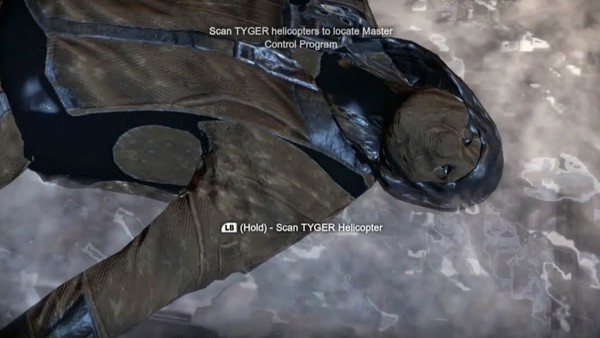
Although some have speculated this could just be a glitch or other texture issue, if players head over to a building in the Amusement Mile during Protocol 10, they'll be able to find some dead thugs who look NOTHING like any of the other henchmen present in Arkham City.
Given the various Scarecrow easter eggs already present in the game, players quickly concluded that these dead thugs may have been aligned with Doctor Crane, and were observing the destruction of Arkham City before getting caught in the crossfire.
There's no way to say definitively whether or not they are actually Scarecrow's henchmen, but the visuals match up - even if they do differ massively to how Crane's goons look like in Arkham Knight.
5. You Can Find Hush Before Starting The Identity Thief Mission
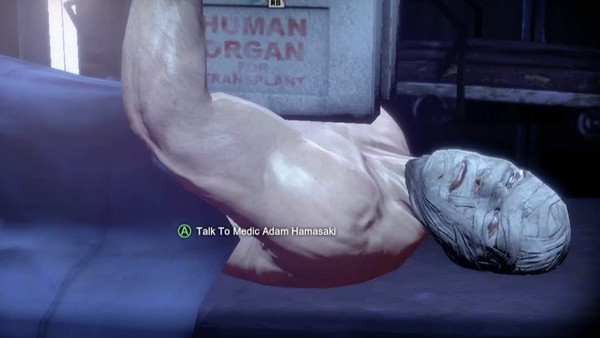
This is admittedly my favourite easter egg in Arkham City, and you can find it relatively early in the game.
Once you've traced the bullet Joker fired towards the Court House and escape the exploding church, Batman will have to enter said church to rescue some medics captured by Harley Quinn. It serves as a simple reintroduction to the series' invisible predator segments, but in the rush to move onto the next part of the story, players may end up missing one of the coolest easter eggs in the entire game.
Once all the hostages have been rescued and the members of Joker's gang have been dealt with, move towards the upper left-hand-side of the building. Bats will be able to talk to the medics he's just rescued, but there is one particular hostage victim who looks worse for wear, wrapped in bandages, and clutching onto an organ transport box.
The rest of the medics aren't quite sure what happened, but fans will know this bandaged man to be Thomas Elliot, aka Hush. Hush was previously stationed at Arkham Asylum, but his presence at the beginning of Arkham City serves as a subtle introduction to the Identity Thief storyline, with that box most likely containing the faces he uses to remodel his own into Bruce Wayne's. He even grows distressed when Bruce's name comes on the radio!
4. The Wider DC Universe
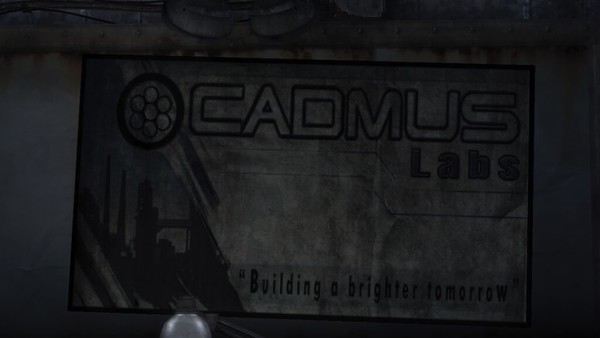
If fans had gotten excited about references to the Injustice Gang in Arkham Asylum, then they went absolutely crazy for the references to the wider DC Universe in Arkham City.
Hidden within the world of Arkham City are dozens of references to the wider DCU outside of Gotham. The Black Canary Club - a reference to singer-turned-vigilante Black Canary - can be found to the east of the central church, which by proxy confirmed that Green Arrow existed too; Hugo Strange also makes explicit reference to the cities of Keystone and Metropolis. The former is synonymous with the Flash, while the latter is of course home to Superman. Dialogue between various henchmen also confirms the presence of Blüdhaven, home to Nightwing, who later appeared in Arkham City's DLC and as a supporting character in Batman: Arkham Knight.
Following that, in the Harley Quinn's Revenge DLC, signs for Cadmus can be found all over the Steel Mill. Fans of the early noughties Justice League cartoon may recognise the organisation as an opposing force to the Justice League, but they tend to have a greater emphasis on cloning in the comics.
Although Rocksteady are yet to deliver on their multitude of references to the wider DCU, the studio is heavily rumoured to be working on a Justice League game for next-gen systems. Here's hoping that's the case, because if they've managed to work wonders with Batman, just THINK what they could do with DC's entire roster.
3. Harley Quinn's Pregnancy Tests

Arkham City dangled a lot of potential plot-threads for the sequel, but only one was followed up on in a major way - Scarecrow's return. Hush - who had the potential to be a major villain in the third game - was relegated to minor side role in Arkham Knight, and it seems as though Rocksteady nipped another potential plot thread in the bud before it could become a major thing in their next game.
Approach Joker's Steel Mill office in Arkham City, and you'll actually spot a crib in the middle of a room. There's a Scarface puppet repainted to look like a little Mister J, and some positive pregnancy tests next to them - the implication being, of course, that Harley Quinn was pregnant.
Now, the idea of Joker having a child isn't anything new. In fact, both Arkham City and Arkham Knight pay homage to one of the stories where they "adopt" a new child - Batman Beyond: Return of the Joker. Harley sings Hush, Little Baby in Arkham City's credits, just as she does in WB's animated classic, and Arkham Knight's Jason Todd arc takes the idea of Joker torturing a Robin to breaking point from the same film.
In the end, though, Rocksteady opted not to move ahead with Harley's pregnancy, revealing in Harley Quinn's Revenge that further tests read negative. Arkham Knight did find a different way to continue Joker's legacy though, having him manifest in Batman's inner mind, as well as in the creation of three new proto-Jokers in Johnny Charisma, Henry Adams, Christina Bell and Albert King.
2. Writers, Films, And Other Related Batman Media
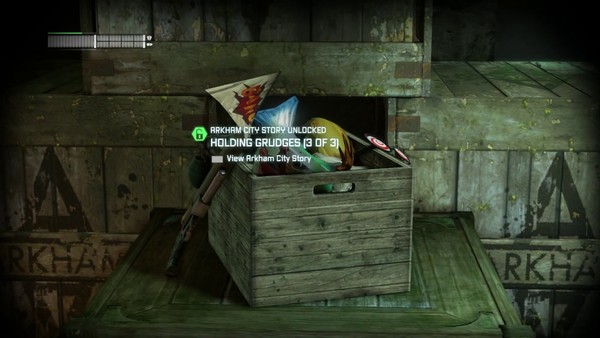
On top of the wider references to the DC Universe and the subtle foreshadowing of potential plot-threads, Arkham City also included a troff of nods to wider Batman media, encompassing film, television and (obviously) comics too.
Like a lot of the game's easter eggs, some of these are woven directly into the environment. Dini Towers, named after Batman scribe Paul Dini - who also wrote the story for Arkham Asylum and City - is one such location, while two nods to Tim Burton's Batman Returns can also be found in the Steel Mill and Park Row. Upon completing the Hot and Cold side-mission, players can see a giant duck resembling the one Penguin used in the 1992 feature, while the same Cheshire cat that adorned the roof of Max Shreck's department store can be seen a billboard opposite the Solomon Wayne courthouse.
More location-based references to related Bat-media include the Stacked Deck, a bar frequented by mobsters in Batman: The Animated Series; Salvatore Maroni's Italian restaurant can also be found with a note saying it was closed February 14th, the same day the Holiday killer struck in Jeph Loeb and Tim Sale's seminal Batman: The Long Halloween comic book.
All these are great, but there is one riddle that may just take the cake. Venture deep into the Steel Mill, and you'll be able to find Joker's box of toys, including his fake "bang" gun, the goggles he used in Arkham Asylum's challenge maps, and even a laughing fish from the the story arc of the same name.
1. All Those References To Batman's Rogues Gallery
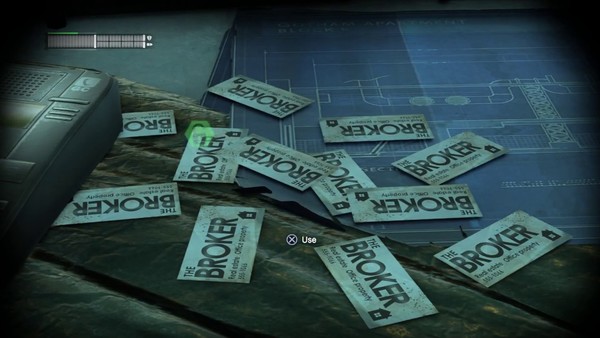
While it's fair to say that Rocksteady left an indelible mark on comic book video games and Batman specifically, there were still loads of villains they never got to introduce in the franchise.
Like Asylum before it, City included so many references to Batman's frankly ridiculous rogues gallery, but I'm going to focus on the more obscure nods here for those who may not know a lot about them.
First off, the Broker. The character was co-created by Paul Dini and Guillem March and played a key role in Dini's Streets of Gotham series, which he co-authored alongside Dustin Nguyen and Derek Fridolfs. He's essentially an estate agent for supervillains, hooking them up with secret hideouts and facilities. It's a super cool idea, and it's confirmed in Arkham City that the Broker helped Riddler set up many of his puzzle rooms throughout the super-prison.
Arkham City also includes references to Crazy Quilt (a Silver Age villain with a penchant for thievery), Gentleman Ghost (who's as good as he sounds), and even the Royal Flush Gang (an aristocratic group of thieves who've been doing thief stuff for generations). Although more a Superman villain than anything else, the Toyman also gets a nod in Harley Quinn's Revenge.
In any case, who knows... maybe some of these rogues will make it into a Batman game eventually? It's only a matter of time until we find out what WB Montreal are working on, so here's hoping the Broker is on their shortlist of villains.
Watch Next
How Well Do You Remember Batman: Arkham City?
