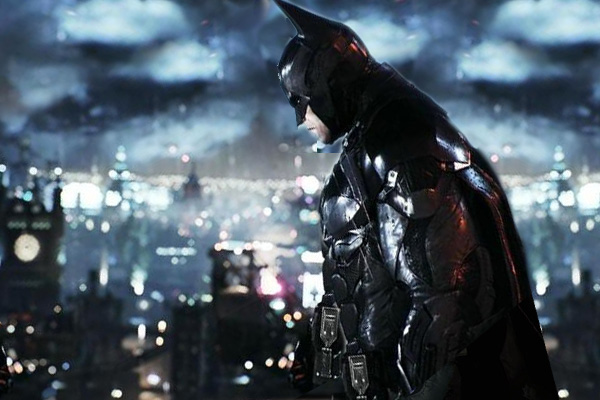
Batman: Arkham Knight - 10 Ways The Season Of Infamy Is A Mixed Bag

Does the final piece of Knight's season pass validate its cost?
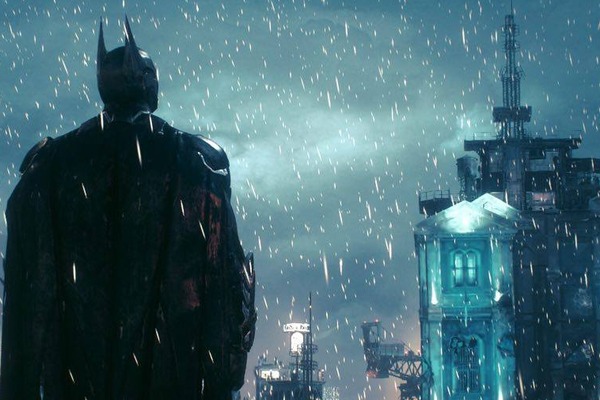
So this is it, this is the way Rocksteady departs the Arkham Saga. Or is it? This cryptic message was left at the end of the company's last Arkham Insider video last week, but irrespective of this, the studio has had a rather arduous year to deal with, at least in respect to all things Batman. Having captained the success of two Batman games and managing to surpass critical expectations on both of them as well, capping off their own Arkham Trilogy was never going to be a journey devoid of its own problems. As we have seen previously, Arkham Knight has both managed to impress and falter in the face of insurmountable fan expectation, and though Rocksteady have endeavoured to make their finale to the Arkham saga as good as it can be, Knight will ultimately go down as a release marred by its divisive nature. Indeed, the title's Season Pass (itself a target of community frustration) comprised a part of what led to Knight's support wavering, and as the Season of Infamy draws it to a disappointing if not admirable close, one can only question what legacy the game will leave behind on the franchise as a whole. The DLC still suffers from awkward narrative decisions, an obnoxious insistence on fetch quests and needless backtracking, yet benefits from a renewed focus on the relationship between Mr Freeze and his comatose wife, Nora, and an impressive if not underutilised premise building upon unanswered questions from Arkham City's climax regarding the League of Assassins. This does not alleviate the sense of irritation surrounding Arkham Knight, however. Nor does it rectify the mistakes that caused fans to become so disillusioned with the saga as a whole following its release either. What it does do is quite neatly encapsulate both the merits and negatives of Rocksteady's tenure as the harbingers of Batman's resurgence in the video game medium, and shows that while their writers may not have found a voice for The Caped Crusader, they certainly possess an understanding of his rogues. Inevitably, spoilers follow.

10. Mr Freeze's Narrative Conclusion Was Superb
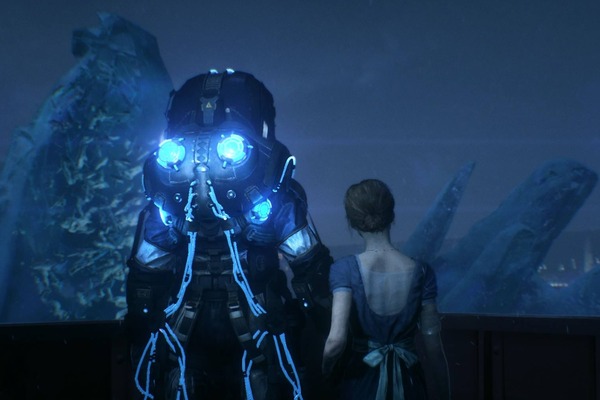
Whilst this ending didn't necessarily make me eat my own words regarding my initial cynicism towards this final piece of story content, it certainly went some way in reminding me that Rocksteady can be competent in their story-telling ability. Freeze was teased as being an adversary to the Dark Knight in the marketing for the Season of Infamy, but I was absolutely relieved to see that rather than offer Victor a regressive character-arc, Rocksteady's writers built upon his narrative conclusion in Arkham City and elaborated on it in a manner that showed further character development as well as a remarkable emotional climax. Freeze's side-mission was fairly unremarkable gameplay-wise, but seeing Victor and Nora come to terms with her terminal illness was both gut-wrenching and innovative, and helped greatly in differentiating this particular batch of content from the lacklustre 'Arkham Episodes' that had come before it. Even if its subtlety had to be somewhat offset by a token Batmobile drone encounter, Freeze's narrative closure will forever remain as one of the brightest and most compelling moments of the Arkham trilogy yet.

9. Mad Hatter's Final Sequence Innovated
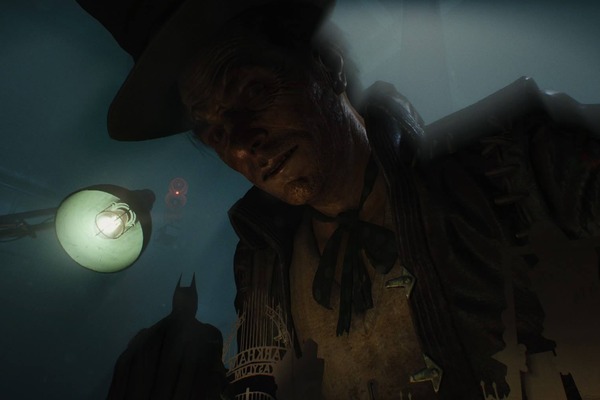
Ignoring the abysmal set-up and monotonous missions that led to this moment, Mad Hatter's finale was actually used to convey Arkham's legacy in an inventive manner. Transporting Batman to a miniature pop-up book, Bruce is charged with having to fight his way through Rocksteady's trilogy and rescue the officers trapped there as well. As far as freeflow encounters go it wasn't anything particularly special, but seeing old Joker thugs from Arkham Asylum appear on screen as well as the Tyger Guards from Arkham City served as a great way of rekindling nostalgia for the series' roots. Whilst the final fight didn't vindicate the Hatter's presence on the DLC (I'd have much rather seen another rogue get the spotlight for a change), it did display Rocksteady's visual flare quite immaculately - it's just a shame the side-mission as a whole was so dull.

8. 'Shadow War' Had A Fantastic Premise
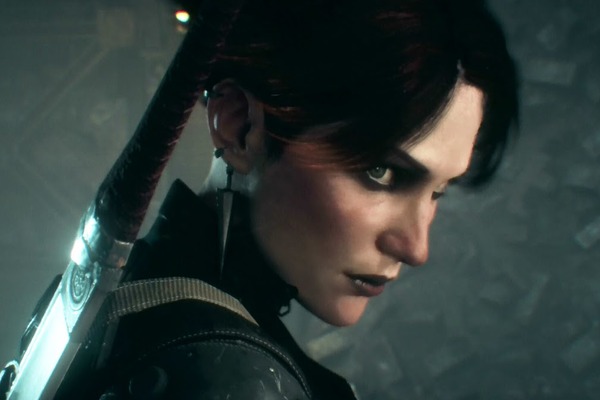
This was a side-mission that could've formed an entire game if need be. Indeed, it probably should have, but the little of what we did see certainly formed the best premise for an Arkham game since Paul Dini's Die Hard inspired tale of Arkham Asylum. The side quest starts with the revelation that there's an internal feud consuming the nefarious League of Assassins, with one faction led by Nyssa (Talia's sister) trying to end R'as Al Ghul's reign as the Head of the Demon, and the other trying to preserve it. The twist here is that R'as is both physically and mentally incapacitated, surviving on a drip of Lazarus to stay alive. With this in mind it's up to the player to decide which way they proceed - save R'as in the hope of honouring Talia (yep, they're still pushing that on us), or destroy his life support and allow Nyssa to ascend to the head of the organisation on the promise of leaving Gotham forever. Woven into all of this is a rather rudimentary metaphor to stoke debate surrounding Batman's morality and repetitive backtracking too, but luckily we also see new enemy-types that spice up gameplay and a compelling narrative that was sorely lacking from Knight's main game. It's a case of a fantastic premise being tainted by poor execution, but it's still the best part of the Season of Infamy.

7. The Environments Harkened Back To Arkham Asylum
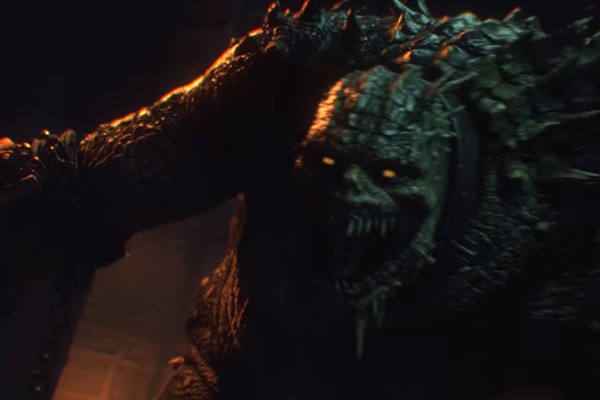
One of the most brilliant things about Knight's final slice of content is that there are actually some interior locations to move around in, locations which were very much lacking from the core game. The lack of interior locales featured in the title was a key gripe from many staunch followers of the series, so to have Rocksteady act on this complaint by introducing three new areas to roam around in was a great thing to see, even if the time spent in them wasn't as long as others would have hoped. Iron Heights (now literally a flying prisoner transport in the sky) boasts environments extremely reminiscent of Arkham Asylum's Intensive Treatment area, and the Elliott Memorial Hospital harkened back to the same island's medical facility. Moody colours dominate the area and lighting is given a distinct reduction from Arkham City and Knight's more boastful colour pallets. It works if not only for a short while, as other factors sadly inhibit the well-thought intention of returning claustrophobia to the norm of Arkham. Part of what made Rocksteady's entry to the Batman franchise so unique and gratifying was that it made Batman feel vulnerable, left alone on an island inhabited by the most dangerous people he'd ever incarcerated with nothing but his wits, his utility belt, and some assistance from Oracle. This tense atmosphere was smashed in the Season of Infamy's attempts to emulate it, as Bruce's descent into Croc's lair this time around is joined by Nightwing, who, whilst an adored favourite of Batman's supporting characters, seems to represent the very antithesis of the desire to return to the days of Arkham Asylum.

6. Villainous Dialogue Felt (Mostly) Natural
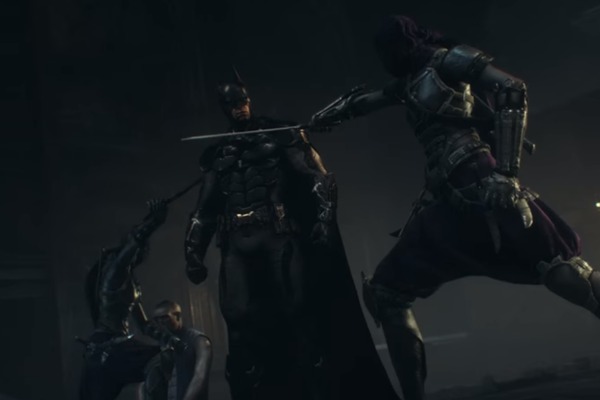
Whilst Batman is still victim to a stiff script that fails to delve into the inner workings of his character, all of the rogues and anti-heroes on display in Infamy's four side missions are given appropriate dialogue and great performances, which appears to be a recurring theme in Knight's story components. Mad Hatter rhymes a little too much on occasion (almost bordering on his lazy 'nursery rhyme' persona in Jeph Loeb's writings), but Peter MacNicol brings so much charisma and derangement to the role that this bears little in the way of hindering such a performance. Nyssa too is also suitably sympathetic and frustrated, with her determination for turning the League of Assassins away from her father's legacy noticeably emanating from the few minutes of screen time she receives. Again, it's rather lamentable that we haven't had an entire title to focus on the relationships that dominate the Al Ghul family, but the little we see here is just enough to entice and leave players wanting more. Mr Freeze is of course the standout performance though, as the new material provided by Rocksteady really delves deep into Victor's emotional vulnerability once masked by his frozen demeanour. Killer Croc's monstrous appearance is grounded by his debilitating condition as well, and the fact that it was forced upon him only increases the sympathy in which players feel for the rogue - even if Rocksteady feel the need to lay down their message in a garishly obvious manner.

5. Batman Still Sounds Disinterested

If you're purchasing the Season of Infamy with the hope that Batman would be getting fantastic lines and dialogue with villains, well, you'll be rather disappointed. For the entire three hour running time of the DLC Batman is reduced to a lone actor devoid of emotion, commenting with apathy as events unfurl around him with a distinct monotone expression. My sympathies also lie with Kevin Conroy, as these awful lines hurt delivery to the point where it is notably boorish and disinterested. This speaks more for the bum-lines Conroy is being forced to work with, but it's a disappointing end for a series where Bruce once offered thoughtful commentary and retort as past stories advanced. Here? He merely serves as an in-game narrator. We don't see the internal conflict visible in Arkham Origins and Bruce rarely gets the chance to interact with his supporting cast. It's a huge shame, as part of the joy of seeing Batman is exploring his interactions with those around him. Take that element away and you're left with a dull caricature indiscernible from other heroes in the genre, and when you remember that Rocksteady is adapting someone so unique and iconic as The Dark Knight himself, you know that's an issue.

4. Most Of Its Length Comes From Travelling
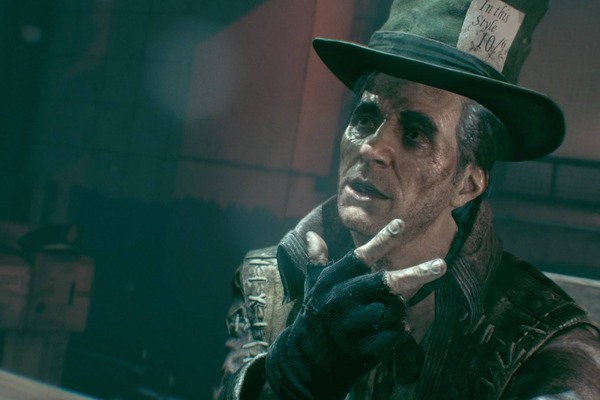
Backtracking, bomb disposal, fetch-quests - each of them crop up in the Season of Infamy and all wear out their welcome all too quickly. In fact, the majority of Hatter's mission - about three quarters to be exact - revolves around finding police cars and disarming their explosives. Without nit-picking over just how the scrawny rogue was able to lift cars onto collapsed lighthouses or unoccupied islands, the repetitive nature of these tasks only cements them as being among the worst to feature in an Arkham game - they're just that bad. 'Shadow War' too has players backtrack needlessly and forces them to follow a DNA trail for almost five minutes - starting at the peak of Miagani Island and ending just before Founders' Island begins - It breaks the pace awkwardly and clearly only exists to artificially extend the playtime of the DLC. Croc's mission also succumbs to said backtracking, as the player is forced to find key cards conveniently held by the only two guards to jettison from the airship prior to its crash. Again, a poor way of extending the DLC's playtime needlessly and worthlessly. It's always cool to give the player opportunities to explore the wonderful environments present in Arkham Knight, but doing it in detective mode is completely and utterly headache-inducing.

3. Dissecting Batman's Morality Lacked Nuance
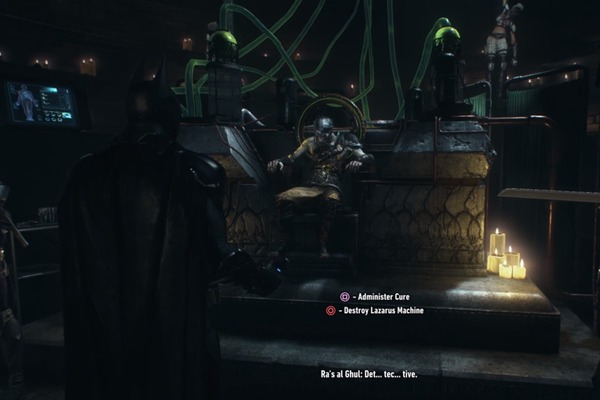
The culmination of the 'Shadow War' side-mission ends with Bruce having to make a choice: either cure a clearly physically and mentally ruined R'as, or destroy the life support he's dependent upon to survive. Why is this such a problem? Well, let me explain. The question is posed as a test of Batman's morality in that it asks to stretch his 'no killing' prerogative, but the ramifications of the question ultimately boil down to technical definitions of murder and whether or not you (the player) feel that destroying the machine presents a direct causal link between the act itself and Al Ghul's eventual death. Of course it doesn't, but I digress. What makes this so ineffective as an analysis of Batman's morals is that the logical argument is presented to the player quite immaculately by Alfred. R'as is the literal embodiment of the undead, and has been dying ever since he first bathed in the Lazarus pit. Each time he has returned he has done so more deranged, determined, and violent - a cycle perpetuated by Bruce's moral fallacies. R'as cannot be killed for he is already dead - this argument would have applied in Arkham City as well. The problem is exacerbated by the fact it is presented to us here - where R'as is clearly mentally and physically incapable of thought or action - and not in any prior engagement. This thus brings with it connotations of assisted dying and the moral debate surrounding that, but without getting too political the choice is plain and clear to be made. I've seen counterarguments from others urging players to save R'as under the belief that destroying the machine corrupts Batman's morals, but Rocksteady would never offer the choice of carrying out an action antithetical to the concept of the character itself, as this would be immersion-breaking and defy the point of the Arkham games altogether. Whilst it's an interesting premise to explore, it should've been given the appropriate time to do so.

2. Killer Croc's Side Mission Failed To Deliver
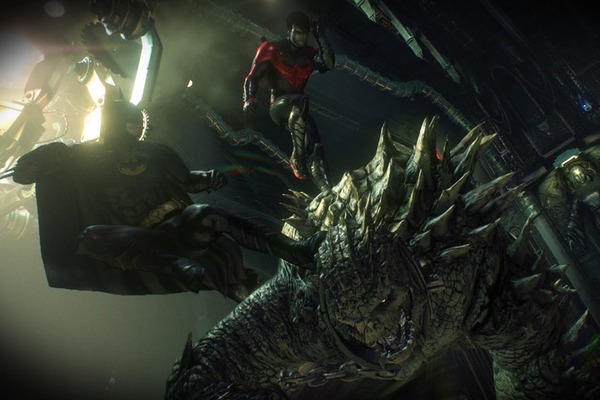
Killer Croc's presence in Arkham Asylum was simply incredible, with the character proving to be the main source of fear and dread for the player and not Scarecrow himself. His confrontation involved elements of stealth and reaction, and was hands down the stand out moment of Arkham Asylum's story - a moment unable to strike twice, it would seem. The Season of Infamy presented us with an even more monstrous Croc and the perfect setup for another frightful encounter, yet squandered it on rehashing the Albert King boss fight from the main game. After so thoughtfully crafting such an eerie and decrepit environment, all the player gets are two freeflow encounters and one jump scare - that's it. Croc's new character model is wasted and the entire mission couldn't have lasted longer than fifteen minutes. Indeed, Waylon Jones' return to the Arkham series is undoubtedly one of the most disappointing things to have come from the franchise since it started.

1. Retrofitting These Missions Still Feels Tacky

Rather than build upon the events of Knight's ending the entirety of the Season of Infamy takes place during the core game's main story, added in retrospect to a plot already oversaturated with underdeveloped antagonists and rushed story-arcs. It's a return to the 'all in one night' trope we've seen the series swear by since Asylum, except here it almost borders on the comical. Arkham Knight now sees Bruce face off against over 11 primary and secondary antagonists over the course of one nightly adventure, and the Season of Infamy provides four of these without the burden of having to deal with the fallout of the title's ending, nor the events that predated the night 'The Batman died.' They are merely four self-contained episodes that bear little in the overarching narrative of the trilogy, which is of course okay, but the fact they've been retrofitted to the events of the main game makes them feel obtusely bolted-on. Despite this we did get to see two character-arcs wrapped up nicely, even if it was at the expense of some dull and repetitive gameplay. 'The Season of Infamy' may not be the DLC everyone was hoping for, and its steps to rectify some of the more notable errors of the Arkham Knight package don't always land consistently, but it does provide closure for some of the series' most likeable and intriguing character arcs and in the case of Mr Freeze, attains new narrative heights in the process. Oh, and the Arkham Asylum Batmobile is really, really cool too. Was the Season of Infamy a let down? Or were you impressed by Rocksteady's departure to the Arkham series? Be sure to let us know in the comments!

Content Producer/Presenter

WhatCulture's very own resident movie guy, Ewan has been working in the content creation biz for over 10 years now, having started as a freelance contributor to WhatCulture Gaming all the way back in 2015. After graduating with a First-Class Honours in History from Northumbria University in 2017 (where he won a prize for a totally killer dissertation on the Watergate years), Ewan took on the role of Comics Editor at WhatCulture and quickly developed WhatCulture Comics into one of the biggest superhero-focused channels on YouTube. He followed this with a brief hiatus at Screen Rant in 2021, where he worked across the Gaming and Film sections as a writer and editor, before returning to WhatCulture as a Senior Content Producer / Presenter in 2023. He started his own podcast, We Love Dad Movies, in 2022, and has contributed several written pieces to the Eisner-nominated comics website Shelfdust as well. In his current role, Ewan incorporates his love of cinema, comic books, and history into written pieces and video essays for WhatCulture's Film & TV channel, as well as WhatCulture Gaming and WhatCulture Horror, with a particular focus on nineties-era Dad Movies, old school Westerns, and Golden Age Hollywood Noir. John Carpenter is his fave, and he thinks Batman Beyond should never have been cancelled. If that's your vibe, you'll probably like his stuff.