Call Of Duty: Ranking Every Game Mode From Worst To Best
Is Search and Destroy the best thing COD's had in 15 years?

Love it or hate it, Call of Duty has been the dominant player in the FPS market for over a decade now. Its first few entries didn't set the world on fire, but 2007's Modern Warfare redefined the genre, and arguably hasn't been topped in quality by any iterations that have followed since.
This prompted COD to go full circle in 2016 and remaster it, proving to be a solid lead-in to last year's return to World War II. This has piqued widespread interest in the series all over again, after several years of declining returns.
No two games in the franchise have ever shipped with an identical offering of multiplayer game types, as additions, tweaks and removals always occur from release to release. Some modes are eternally popular and always present, some never achieve much in the way of popularity, falling by the wayside, and some are exclusive specialties of one of the three developers (Treyarch, Infinity Ward and Sledgehammer Games) as they take it in turns to make an entry every three years.
Every mode from fifteen years' worth of games will subsequently be ranked, with some grouped together, given that the differences between them are extremely minimal in cases.
31. Behind Enemy Lines

As Call Of Duty didn't truly take off until the release of Modern Warfare, it is easy to forget that there were six games (three main titles, two console re-releases of games that were originally PC exclusive and a random release on the PSP) that preceded it.
These each offered between four and seven different online modes, some of which have gone on to be series staples and others that have long been cast aside.
Behind Enemy Lines falls firmly into the latter category, appearing only in the original Call Of Duty and its expansion pack, United Offensive. Players spawn as either Axis or Allied soldiers (heavily skewed towards the former) and have to kill opponents, an action that results in both the killer and victim switching sides.
Points are only gained for continued survival as an Ally. With there being no logical reason to seek out kills and switch back to being an Axis soldier, the game descends into virtual cross-country running, which is about as enjoyable as its real-life counterpart.
Behind Enemy Lines didn't even survive the original game's transition from PC to console, let alone into any subsequent games. Given such arduous mechanics, it's certainly best left as a relic of history.
30. Safeguard

'Escort mission' is a term that many gamers hate to hear, as guiding a helpless NPC from one point to another is usually an exasperating experience. Black Ops III's Safeguard fits the definition to a tee, tasking one team with moving a non-hostile robot into the opposition's spawn.
The robot only moves when players are in its immediate vicinity. More annoyingly it follows a preset path and unique strategies cannot be applied to get it to its destination. As a result, games are almost always skewed in the defender's favour, as they can litter the route with proximity-based explosives and guard each chokepoint.
The source of many rage quits, attacking can be very simple if the defenders are ambushed from behind, but the fact that their spawn is next to the robot's final destination means that they are back in the fray before much can be made in the way of progress. It's not surprising, therefore, that the mode has yet to make another appearance.
29. Infected

Go back a decade or so and one of the most addictive multiplayer shooters was Timesplitters. A highlight was the Virus mode, which infected a random player at the start of each game.
The infection was passed on through physical contact with others, with the last one standing being the winner. Tweaking the settings by turning off guns (lest players just sit in a corner and shoot the carriers) and power ups could turn it into a more tense and well-rounded experience still.
Infected, which debuted in Modern Warfare 3, seemed like an attempt to replicate the mode on paper, but there was far too much emphasis on killing. The randomly selected host is given a knife with which kills have to be achieved to pass on their infection and the survivors are given random guns (aside from variants that give specific loadouts) and tasked with defending themselves.
Heavily skewed in favour of those with guns despite the presence of 'death zones' where camping is forbidden, the mode loses its appeal after just a few plays. It has somehow reappeared in two subsequent titles since its debut, but neither made any tweaks to try and make it better replicate Virus' infinite appeal.
28. Sticks And Stones

The first of four 'wager/party' games that debuted in the original Black Ops was Sticks And Stones. In a nutshell, it serves as a Free For All variant seemingly designed as a showcase for three non-gun (but non-melee) weapons that the game brought to the table - the crossbow, the ballistic knife and the tomahawk combat axe. Given that none of these three are 'sticks' or fire 'stones', the name is somewhat nonsensical, though its premise was a simple one.
Points are earned from kills, which come thick and fast given that one successful shot from any of the three weapons (or a death by explosion if one of the crossbow's explosive tips is aimed at a combustible piece of scenery such as a car) results in the target's death. The major twist is that kills with the combat axe 'bankrupt' their victims and reset their scores to zero.
This mechanic can frequently result in the outcome of games changing at the last minute, as the three leading players (considered the winners by the game) could be set back to nothingness in an instant. The provision of just one axe per player limits the threat somewhat, but there's always somebody who can seemingly pull a cross-map kill out of the bag at random...
27. Sharpshooter

Another of the 'wager/party' game modes that made their first appearance in Black Ops was Sharpshooter. Just as random and frequently as luck dependent as its counterparts, it cycles the weapons given to each competitor every forty five seconds, offering advantages in the form of perks for getting up to four consecutive kills without dying.
In theory, this should offer an advantage to the killers over their victims and create one-sided scenarios, but every Call of Duty player has their own weapon preferences and a gun that one player thrives with can easily be one that another despises. This can lead to considerable jubilation when a trusty favourite comes into play or shameless cowardice to stay alive when a useless gun shows up instead.
Any weapon can make an appearance, though the odds for each are not identical. Each also comes with randomly selected attachments, resulting in some unorthodox combinations and all-out carnage.
The randomness of the mode is ultimately its downfall, as performing consistently is difficult without the ability to rely on tried and tested loadouts. As a result, many players likely gave it only a few tries for laughs before reverting to their old favourites and there has been no dissent about its quiet removal post Black Ops II.
26. Cranked/Frontline/Mayhem/Hunted/Team Survival
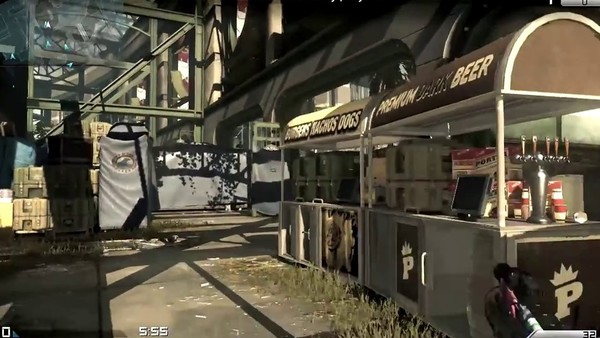
Team Deathmatch is the one constant in practically every modern FPS. There is no need for it to evolve given the volume of players happy to commit to it, but that doesn't stop developers attempting twists on the formula.
Cranked (Ghosts and Infinite Warfare) is perhaps the most original, bestowing perks on players with each kill but burdening them with getting another (or an assist) within thirty seconds before they explode and have to start the process anew, enabling manic games.
Frontline (Infinite Warfare) spawns teams in one of two fixed positions, one advantageous and one disadvantageous. The despised tactic of spawn trapping is prevalent as the lesser team tries to usurp the better spawn.
Mayhem (Infinite Warfare) ostensibly levels the playing field for lesser skilled players by allowing scorestreak progression to continue through death, though this merely results in the better players getting even more of the top-tier offerings.
Hunted (Ghosts) grants each player only a pistol, with random weapons dropped across the map. Only available in private lobbies, it quickly becomes heavily weighted towards whoever has gotten lucky location-wise.
Team Survival (World At War) meanwhile removes perks and killstreaks and gives each player just one life, creating a unique barebones elimination experience.
There have been other slight variations (such as those that allow only specific weapons or increase health), but none ever seem to stick.
25. One In The Chamber
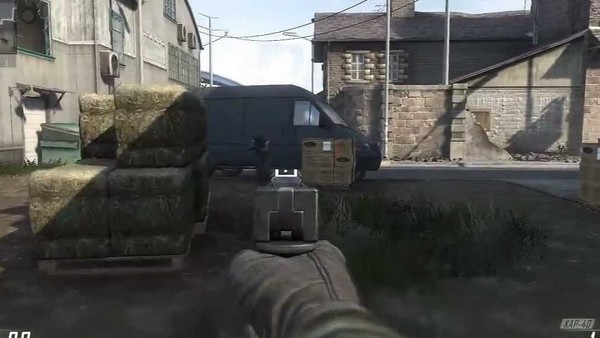
Yet another of the four 'wager/party' game modes introduced in the original Black Ops, One In The Chamber does exactly what it says on the tin and gives each player a pistol with one bullet, rewarding them with one additional bullet for each kill that they make. All hits are one-shot kills given that getting a kill with a singular pistol shot would usually be nigh-on impossible unless it hit the target directly between the eyes.
Despite this, most games quickly devolve into melee fests, particularly given that the original iteration gifted each participant with quicker running speeds and unlimited sprint capability.
With each player given just three lives apiece, only a maximum of twenty three kills are ever needed to end the game. Despite this, many become tactical affairs after the first few have been eliminated, as rushing and relying on reflexes becomes less dependable than waiting for others to make the first move and ambushing them, particularly when player positions are not revealed on the radar until just two are left standing.
Despite being less randomised and more skill-based than its counterparts, the mode was ultimately just as forgettable as Sharpshooter and Sticks And Stones, despite appearing in three games total as opposed to their two.
24. All Or Nothing
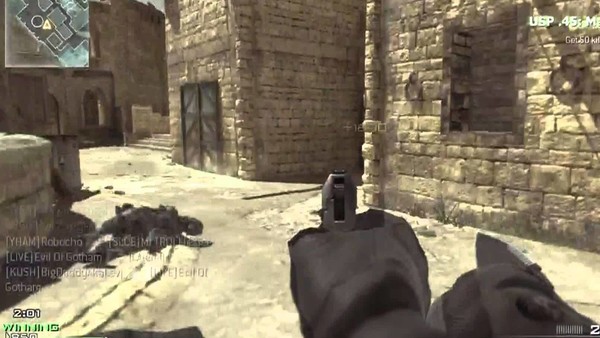
Through its Community Playlists feature, Modern Warfare 3 unleashed more new game modes on its player base throughout its active online lifespan than any other game in the series.
In retrospect, the majority of these reeked of throwing every idea at the wall and seeing what stuck. Most were only slight variants on existing modes and haven't even been given individual entries here given how close they stuck to the original (such as Money In The Denk for Sabotage).
In a nutshell, it functions as something of a hybrid between Cranked and One In The Chamber, giving players a pistol (albeit with no bullets) and rewarding them with perks for each successive kill (beginning with Scavenger, which enables ammo for said pistol to be collected).
Without One In The Chamber's three lives element, matches are longer and more engaging given that deaths don't lead to elimination and simply hiding isn't a valid strategy as a result. This is barely enough to make it more memorable than its counterpart, though All Or Nothing did become popular enough to become a selectable option in its own right (having originally been in rotation with One In The Chamber and Gun Game) and subsequently crop up in Infinite Warfare as well.
23. Hardpoint/Dropzone
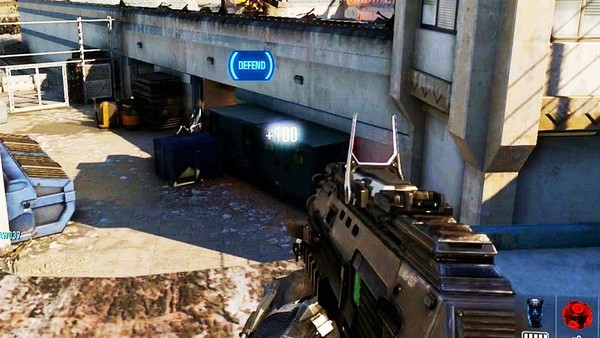
What's the quickest way to rack up kills in a Call of Duty game? If you answered setting up shop in Hardpoint and mowing down wave after wave of enemy players that aimlessly charge at the target, you've probably got the right answer.
Because the aim of the game is to score points by being the only team in the designated zone (the titular Hardpoint), sometimes such aimless charging and hoping for the best can be the only strategy, as a calculated approach designed to pick off defenders will frequently see the point change before it has any effect.
Luck can therefore play a huge factor, as the team with the most players in the vicinity of the zone when it is designated will be the one that end up racking the majority of the points more often than not.
Modern Warfare 3 introduced a variant, Dropzone, that rewarded holding the Hardpoint with care packages, a welcome addition given that many players frequently ignore it because of the danger and lack of reward (bar actually winning the game).
Hardpoint remains perpetually popular, so it is obvious that large swathes of the player base are clearly enjoying it year after year. It seems to have a penchant for descending into one-sided suicide way more often than its counterparts, however.
22. Survival/Extinction
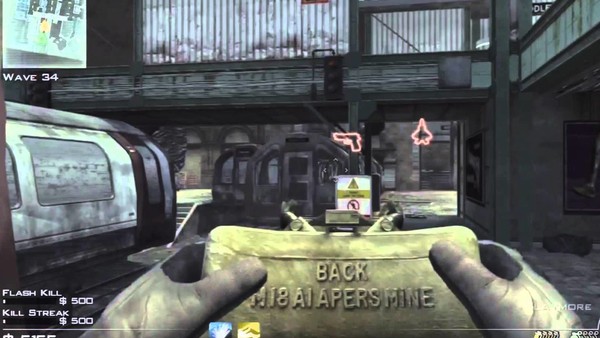
Zombies, which made its first appearance in Treyarch's World At War, was a sleeper hit for the series. Modern Warfare 2 subsequently came along and offered perhaps the best online experience in the franchise, but something was missing after the 69 stars on offer in Special Ops mode had been collected.
Infinity Ward therefore introduced their take on the survival genre in Modern Warfare 3, tasking players with facing increasingly more difficult waves of enemies on the game's assorted multiplayer maps, allowing them to buy weapons, perks and other advantages with the cash they garnered from kills.
Despite offering incredible depth, Survival just didn't click with players as much as its undead-slaying counterpart. Infinity Ward tried again in Ghosts with Extinction, swapping out humans for ancient creatures called cryptids, before Sledgehammer offered Exo Survival in their debut outing, which started out Survival-esque and morphed into Zombies-lite after all three of its tiers had been completed.
Both developers subsequently adopted the mantra of 'if you can't beat them, join them' by incorporating Zombies into their next releases, cementing its status as 'the' survival-focused game type. Whether one of them will grow weary of imitation and attempt a new formula in the future is anyone's guess.