Death Stranding EXPLAINED: All Ending Questions Answered
Confused by those final cutscenes? Don't worry, it all makes sense. Kinda.
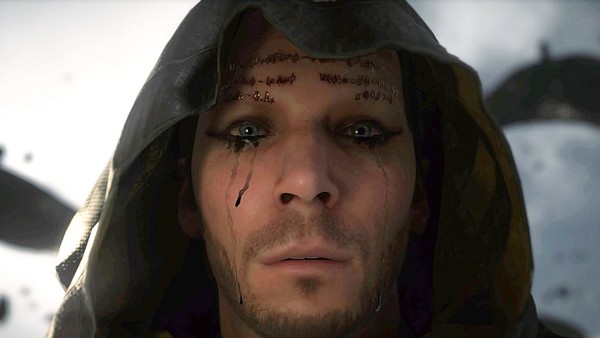
Believe it or not but in between the Royal Mail simulation gameplay and taking tumbles off cliff edges after accidentally unequipping the power skeleton, Death Stranding actually has a pretty massive, robust story.
Its tale of BTs, Strands and 'making America whole again' is initially unknowable and defined by mystery, but director and writer Hideo Kojima somehow manages to bring all of those grand plot strands together (put absolutely intended) for a satisfying finale full of twists, turns, and one of the most emotional fake outs this side of Glenn diving under the dumpster in The Walking Dead.
Considering the final act is over five hours long though, and the ending itself a two-hour cutscene, Death Stranding's plot reveals can feel like an overwhelming assault. However, all the information is there, and it just needs the pieces putting together.
8. The Last Stranding

The major twist at the heart of Death Stranding is that the player has been unwittingly working for the bad guys the whole time. Spurred on by his 'sister' Amelie to reconnect America, the entire game sees Sam going from place to place to establish the Chiral network, something which should bring communities closer together from one end of the country to the next.
That still happens, but it turns out the Chiral network serves another purpose: to bring about The Last Stranding. The idea is that the Death Stranding that happens before the start of the story is one of five that have occurred throughout history, all extinction events that offered something of a reset button for species on Earth.
One of these took out the dinosaurs, for instance, and have been recurring all throughout history, but humanity has always endured. Now though, by connecting the Chiral network (and linking everyone's Beaches to Amelie's) you've enabled The Last Stranding, which will end the cycle by eliminating all life forever.
The Big Bang is referenced throughout the game, and The Last Stranding is intended to be an event on this scale: only instead of bringing life to the cosmos, it will take it all away.
7. Who Is Amelie?
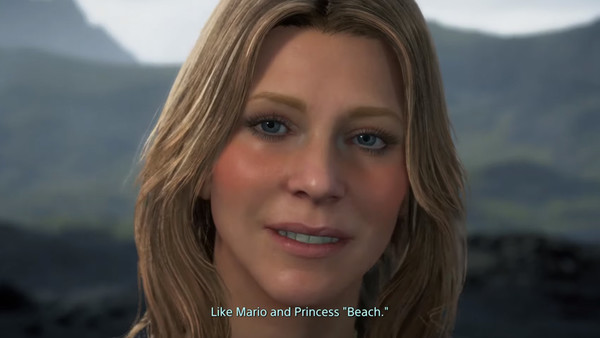
The Last Stranding is Amelie's grand plan, and her allegiances are also a recurring thread throughout the game. The entire story kicks off because Sam wants to save his sister from apparently being held captive. He couldn't give two s**ts about America, but this personal connection is enough to get him on the journey. This motivation is strengthened even more because it comes just after the death of Sam and Amelie's 'mother', Bridget.
After freeing her, it's revealed the whole set up was manipulation on Amelie's part to get Sam where he needed to be, and put into action The Last Stranding. She reveals that Amelie and Bridget are essentially one in the same. 'Bridget' is the being's 'Ha' (essentially the human body, a vessel that lives, breathes and ages on Earth), while Amelie is the 'Ka' (the soul, which exists only on her Beach).
This explains why nobody has actually seen Amelie, why she only communicates via hologram, and why she never ages (which is brought up right at the beginning and everyone just goes with it).
Why does she want to bring life to an end, though? Well...
6. Why Amelie Wants To Bring Life To An End
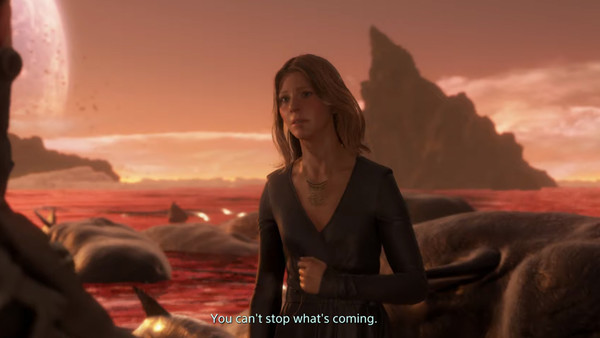
Amelie's sudden heel turn at the end is shocking, but she's a way more complex villain than the whole 'end of the world' thing may suggest. That's because she is an Extinction Entity (EE), a being born to usher in the Death Stranding and complete another extinction event.
It's revealed that as a young child, Bridget was plagued by apocalyptic nightmares of the end of the world, visions of a future that might come true, and that meant she spent a lot of time in hospital. Eventually she realised those dreams were a real future she was born to usher in which, understandably, didn't sit well with her.
Instead of embracing her destiny as the bringer of death, she rebelled against it, and spent her life trying to find a way to stop another extinction. When those attempts failed though, she decided the only course of action was to bring the cycle to an end through one final extinction.
This conclusion is come to primarily because she hypothesises that life as we know it is a fluke anyway. The Big Bang's chances of happening and bringing forth life were so minute that she sees the previous Death Strandings as a way for nature to make up for this mistake. However, each one has never succeeded, as humanity has always adapted and rebuilt.
Consequently, she decides to solve this 'problem' by connecting everyone's Beaches through the Chiral network, this time extinguishing humanity to stop the cycle.
5. Amelie's Destiny And The Birth Of The Bridge Babies

As mentioned, in order to avoid fulfilling her role as the Extinction Entity, Bridget used her power as President to investigate the Beaches and their origin, in the hopes of finding a way to break the extinction cycle. Back then her Ka and Ha were still split and there wasn't an open connection between the two, which led her to pioneering the Bridge Baby programme to forge a connection to the other side.
This top-secret experiment was established by the President when unique properties were discovered in the child of Clifford Unger. This child was the very first BB, and Bridget protected it with lethal force, making sure only a handful of people knew of its existence.
In her eyes, if this experiment failed it couldn't be replicated, and she'd lose the one chance she had at avoiding her destiny. That's partly because Bridget had been stricken with cancer in her 20s, which she surmises is a punishment for trying to avoid her EE duties.
Of course, things didn't go to plan. Cliff didn't take all that well to having his child taken away from him to live as a tool, and with the help of Die-Hardman (who actually served under him in his military outfit), had the chance to escape the compound with BB...
4. Sam's Real Family And His Connection To Bridget

This first Bridge Baby experiment is the context to the flashbacks Sam occasionally sees every time he plugs into Lou. The finale pieces all of these together, showing how Cliff tried to escape, but was ultimately cornered and shot. Making it back to the room with his wife, he slumps to the ground, manages to take the Bridge Baby out of its container, and cradles it in his arms.
Under Bridget's orders and with her own hand guiding him, Die-Hardman shoots Cliff dead, but in the process actually hits the baby as well, killing it.
This baby ends up on the shores of Amelie's beach and, distraught over what her other half's desperate actions have led to, she picks the child up and stops its passage to the afterlife. In her grief she revives the baby and sends it away from the Beach and into the waves towards the living.
However, it turns out this baby is actually Sam. The moment Amelie sent the baby back is the same memory Sam has throughout the story of his 'sister' meeting him on the beach, telling him it's time to go back home. Likewise, the scar on Sam's stomach that's featured prominently before then is from the bullet wound he received when he was a child, which Amelie patched back up.
Cliff was his real father and he was the original BB (which is why he had the flashbacks when he plugged into the other side), and when he came back Bridget raised him as her own, with his 'sister' Amelie visiting him in his dreams. The reason he has the unique ability to come back from the dead is down to Amelie giving him that power when she revived him, transforming him to a repatriate.
3. The Death Stranding And Origin Of DOOMs
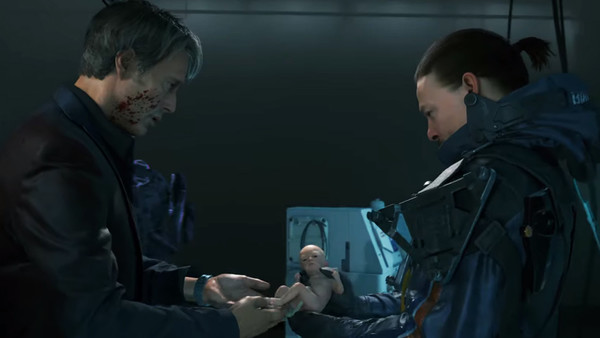
Now, all of this sounds quite cosy, and a nice way for the EE to atone for its sins, but in bringing Sam back Amelie tampered with the natural order, and opened a gateway for Beached Things to follow the child back into the land of the living, causing the Death Stranding.
By trying to avoid her destiny, she ended up fulfilling it, with her act of grief-stricken kindness resulting in so many deaths down the line.
This act also resulted in DOOMs-afflicted people as well, as part of Amelie's Beach became meshed with the real world due to the Stranding. Now, the visions that haunted her of apocalyptic futures were burdened with other people, including Sam, and while those people couldn't control BTs like she could, they could sense and feel them.
With the extinction now underway, and Bridget's time running out, The Last Stranding idea is crafted as a means to stop the cycle, and take out humanity in a single instance, rather than slow suffering.
2. Amelie's Change Of Heart
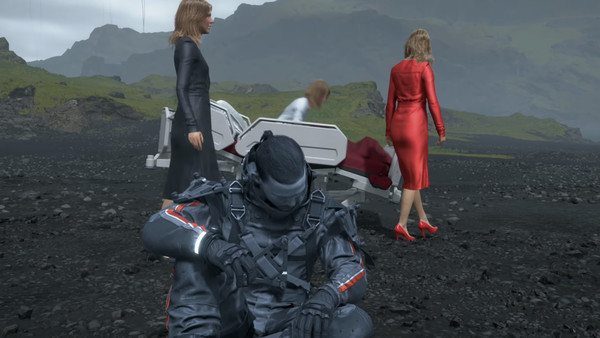
This is where Higgs comes in. Though he was initially a porter working with Fragile, he was seduced by Amelie, who gave him DOOMs and the power over the Beaches and BTs (via the creepy doll that acted as a physical connection to Amelie's Beach), manipulating Sam into thinking he had his sister hostage.
She counted on him coming to save her, but she didn't count on him, and the likes of Die-Hardman, Deadman, Mama and others, becoming so committed to the cause of rebuilding America and finding genuine connections along the way.
Consequently, she offers Sam a choice: join her for the final moments of existence and end the suffering, or let the Death Stranding extinction event play out over the course of thousands of years, with the inevitable demise she trigged doomed to eventually happen.
Putting his weapon down, Sam hugs her, and after commenting on the resilience of the human spirit to persevere and come together in spite of how bad things got, she agrees to stay on her Beach alone, and sacrifice the connections she'd made in order to postpone the extinction as long as possible.
It's a tragic fate, and she doesn't initially know why Sam would want to live in a world doomed to die, as existence in general is nothing more than a fluke in her eyes, and Death Strandings will keep happening to 'fix' it.
Of course, the reason is that in real life everyone knows they're going to die eventually, and it's about what you do in the time you have available, and the relationships you forge along the way, that defines the human experience and makes life worth living in the face of death.
Sam is pulled from Amelie's beach by the rest of his team, who locate him because he still has Die-Hardman's revolver. He leaves forever, as Amelie sees five figures - the same five figures from Death Stranding's first trailer - in the sky away from the shore: the five other Extinction Entities who came before her.
1. Lou, Sam And The Future
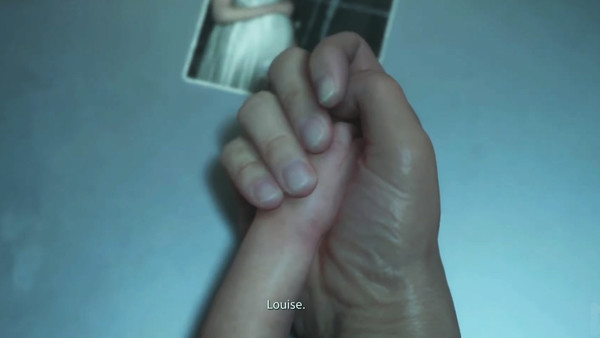
While Amelie's world might be over at that point though, the land of the living is going to exist for another couple thousand years, and the question returns to just what humanity is going to do in the face of inevitable doom.
Essentially, the answer is to live.
Just because the end of the world has been postponed doesn't mean a utopia has come out the other side though; humanity might be reconnected and together, but hierarchies are still in place, some information isn't made public knowledge after Die-Hardman becomes President, and even Sam, while he's learned to embrace some personal connections, hasn't shaken off his nomad ways. The point isn't about things being perfect though, but individuals - individuals with dark pasts - trying to be better and now having the time to be better.
This comes through perfectly in the game's final mission: taking Lou to the incinerator to be disposed of. All the way through the story the BB's days have been numbered; because of the state they exist in, they're not expected to last more than a year, and because they're viewed as equipment, they're disposed of as soon as they've served their purpose.
Of course Sam, the player, and even Deadman have formed a connection with Lou over the course of the journey, and aren't going to let her go so easily. A handy flashback quickly reminds the player that taking a BB out of its pod has a 70% chance of failure, but against the odds Lou survives, and Sam takes her with him to raise her as his own in place of the daughter he lost years ago.
Lou's survival kind of sums up Death Stranding's entire point: the odds were overwhelmingly not in favour of this going well, but it was the hope in that 30%, and the desire to gamble on a successful outcome despite knowing tragedy was more likely that, makes the human spirit destined to overcome anything.