Double Fine: All Games Ranked Worst To Best

17 games over the past 10 years, but which are the best?

Founded over ten years ago in July of 2000 by Tim Schafer, Double Fine Productions initially consisted of just a handful of ex-LucasArts employees who had all grown dissatisfied with the company€™s shift away from traditional adventure games in favour of endlessly milking the Star Wars license. Alongside former colleagues David Dixon and Jonathan Menzies, Schafer began to put together a small team of personnel, most of which he had previously worked with at LucasArts on titles such as Grim Fandango and Full Throttle. Working out of a clog shop in Los Angeles, the team would continue to grow in size over the next few years as development continued on the game that would eventually become Psychonauts. Though sales were initially disparaging, Psychonauts was universally praised by critics for its wit and personality, earning it a cult-following that has only continued to flourish since the game€™s release. Now, over ten years later, Double Fine is one of the most cherished developers in the world, responsible for some of the most critically acclaimed and imaginative games on the market. Unfortunately, for every feast there€™s a famine, and for every Costume Quest or Broken Age there€™s a Kinect Party and a Spacebase DF-9. Double Fine€™s track record has been far from spotless, but for the most part they€™ve had a pretty respectable output. With that said, I invite you to join me as we travel through the entirety of Double Fine€™s collective works and rank everything they€™ve ever developed from the worst, to the absolute best.

17. Spacebase DF-9

One of several ideas greenlit by Double Fine's Amnesia Fortnight 2012 project (a project in which senior members of the company pitched concepts for games to the public in the hope of getting them made), Spacebase DF-9 wasted a lot of interesting potential. Essentially a base management game, DF-9 saw players take control of a space station as they fended off alien attacks and managed resources to keep their human inhabitants happy and healthy. The game was also built around random events similar to those seen in FTL: Faster Than Light, adding a degree of spontaneity and unpredictability to the gameplay. Though the game was received positively, the lack of sales on Steam forced Double Fine to somewhat abandon the project in 2014. As you would expect, fans were outraged by Double Fine€™s sudden loss of interest in the project, especially considering the game€™s unpolished and incomplete state. Spacebase DF-9 currently maintains a 23% rating based on 2,879 user reviews on Steam. Moral of the story? Don€™t promise what you can€™t deliver.

16. Happy Action Theatre (2012)

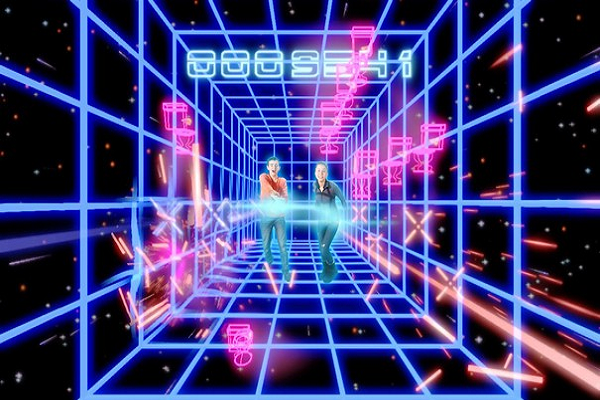
Distributed by Microsoft Game Studios for XBLA, Happy Action Theatre is a collection of eighteen modes that take full advantage of the Xbox 360€™s most underwhelming peripheral; the Kinect motion-sensor. Though the game was received mostly positively by reviewers, it€™s simply design and lack of depth becomes tiresome quickly for anyone over the age of about six or seven. As far a family games go, it€™s not the worst thing in the world. There€™s almost no barrier for entry, meaning anyone can pick it up and start having mild amounts of fun with absolutely no skill or experience necessary. It works well for a Kinect game, responding to your actions fairly instantaneously with no obvious latency issues. Your five year-old son or daughter will probably have a blast with it, but they€™d probably enjoy playing in an empty box too, so that€™s hardly anything to boast about.

15. Middle Manager Of Justice (2012)

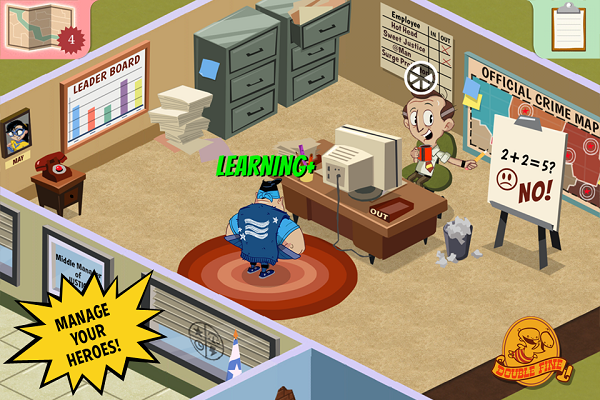
Like Spacebase DF-9, Middle Manager of Justice is another game to come out of Double Fine€™s Amnesia Fortnight. Unfortunately, that€™s not the only similarity it shares with DF-9 as both games also happen to be incredibly underwhelming. At least this one was finished. A free-to-play simulator developed for iOS, the game sees players middle manage the hiring, firing and training of a small group of superheroes. Instructed to keep various quadrants of the city free from crime, players must earn money to improve facilities and unlock better equipment for their gang of superhuman do-gooders. It€™s fairly addictive and doesn€™t contain any micro-transactions, so it has that going for it. The trouble is that it just lacks that Double Fine humour and charm, boiling down to just another mediocre management game for iOS (of which there are quite literally hundreds).

14. Kinect Party (2012)

The successor to Happy Action Theatre, Kinect Party is an equally simply and inoffensive game that utilises the titular motion-sensor. Like its predecessor, the game is designed to be enjoyed principally by children, offering little in the way of challenge to anyone hoping for a more competitive experience. It€™s fairly enjoyable, but like Happy Action Theatre, it lacks any kind of depth or nuance to retain your prolonged investment. What sets it apart from its predecessor is purely the amount of content of offer, as the game boasts an impressive thirty-six game modes over the original eighteen that were available beforehand. Though there hasn€™t been much of an improvement in terms of complexity, the sheer amount of variety here is commendable to say the least.

13. Sesame Street: Once Upon A Monster (2011)
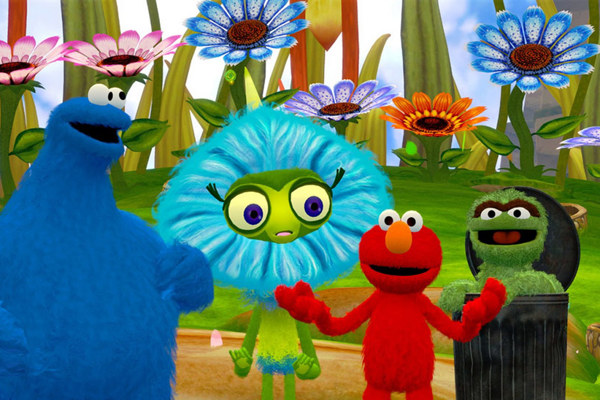
The first game by Double Fine to be based on a licensed property, Sesame Street: Once Upon a Monster is yet another motion-controlled game developed for the Xbox Kinect. Thankfully, Double Fine seemed to have stopped making these, but for a time they seemed absolutely captivated by Microsoft€™s glorified webcam. I€™ll say this, Double Fine probably make the most functional Kinect games of anyone; by that I mean that it actually works. Of course, I shouldn€™t be too harsh, the game is for children after all. It certainly has a lot more going for it than Kinect Party or Happy Action Theatre. I can genuinely see a young child really enjoying this one. I don€™t though, so moving on...

12. Dropchord (2013)

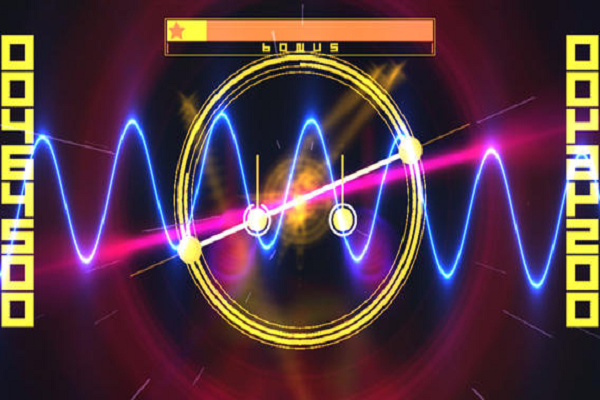
A motion controlled music-based puzzle game developed for Windows and OSX, Dropchord certainly can€™t be faulted for its originality. Using just two fingers, the player must form separate glowing circles and navigate a beam of light around various obstacles that appear inside those circles. Coming into contact with the objects damages the player€™s health, but at the end of each song players receive a small health boost to keep them going. The objective of the game is just to survive past the last song. The simplicity here works to its advantage, creating a compelling experience with a large amount of replay value. If you€™re the kind of person who gets easily addicted to these kinds of games then you€™ll probably find yourself coming back again and again. Though it€™s not the greatest game you€™ll ever play by any stretch of the imagination, it will sap away all your free time if you let it.

11. Iron Brigade (2011)

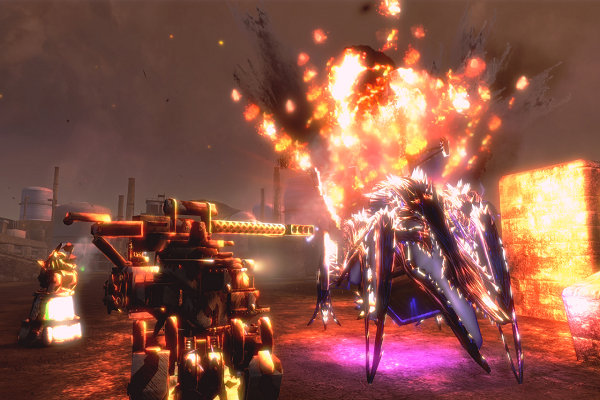
Yet another game to come out of Double Fine€™s Amnesia Fortnight, Iron Brigade is a strange hybrid of various genres merged together. The game is based primarily around tower defence, but it also contains elements of third-person shooters and RPGs. Your objective is simple: take control of a mechanised mobile tank unit (known as a trench) and defend your base from increasingly difficult waves of robotic invaders (monovisions). Along the way, make repairs, upgrade your equipment and continue the fight until there€™s no fight left to continue. The game ends when your base is overrun. As you would expect, the writing is witty and the game is characteristically charming for something made by Double Fine. On the down side, it does get incredibly repetitive pretty quickly; though there are plenty of upgrades to unlock and different enemies to encounter, the core mechanic is one that doesn€™t lend itself well to replayability. You€™ll have a good time with it, but you€™ll quickly find yourself putting it down and moving on.

10. Hack 'N' Slash (2014)

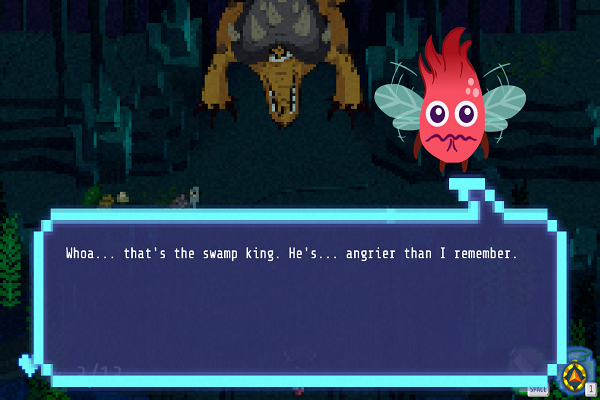
A testament to the general quality of Double Fine€™s projects, everything from this point onward on the list is at least good, and we€™re only at number ten. Essentially a twist on the conventional titular formula, Hack 'n' Slash allows players to €˜hack€™ various elements of the world in order to solve puzzles and advance in the story. This includes modifying enemies€™ stats (setting their health to zero or turning them friendly) and ever altering certain functions of the game entirely. As you progress, more and more of the game is open to manipulation, meaning that you can eventually start making some serious changes to the way the game is structured. From adjusting parts of the game€™s code to purposely forcing the game to crash, you€™re given a pretty daunting amount of control. The inventiveness here is what really makes the game something worth picking up. In fact, it€™s probably worth buying purely for its concept alone. Besides Else Heart.Break(), there isn€™t anything that has attempted to do what Hack €˜N€™ Slash very nearly succeeded in doing. Unfortunately, despite its uniqueness, the game suffers in terms of accessibility and execution, which is most likely the reason it currently holds a user review score of 58% on Steam. Don€™t get me wrong, it€™s clever and it€™s ambitious, but it€™s also riddled with game breaking bugs (unintentional ones) and it has a tendency to put off players who are unfamiliar with LUA scripts and basic coding.

9. Brütal Legend (2009)

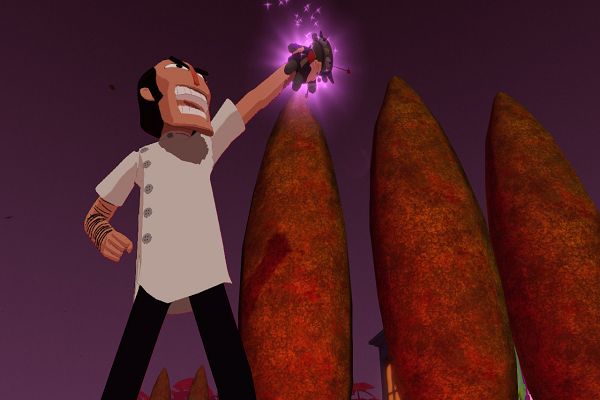
You might have thought that Brutal Legend would appear a little higher on this list. After all, people have a tendency to either love it or hate it, leaving very little room for middling opinions that float somewhere in between. I happen to think Brutal Legend is alright. Not fantastic by any means, but fun enough. The game is essentially one third action-adventure, one third real time strategy and one third sandbox. You play as Eddie Riggs (Jack Black), a roadie who is transported to a heavy-metal inspired rock dimension by a demon named Ormagöden. With an army of metalheads at his side, Eddie must overcome various factions (including a goth faction named Drowning Doom) and defeat the demonic emperor of The Tainted Cloth, Doviculus. As you can imagine, the game is heavily inspired by heavy-metal music, which is why it shouldn€™t come as any surprise that many notable musicians appear including Ozzy Ozbourne, Rob Halford, Lemmy and Lita Ford. That game also seems to have been influenced by classic fantasy, taking stylistic cues from works like Conan the Barbarian. When it comes to capturing the grandiosity of heavy-metal music, Brutal Legend is spot on. Partly self-aware, the game really does capture the unapologetic ostentatiousness of the genre, complete with giant mullets and electric guitar solos. On the downside, the variation of gameplay styles does mean that it can feel like there€™s a lack of focus at times. The combat can get pretty repetitive and, while the open world is beautifully crafted, it also feels remarkably hollow with little in it to do.

8. Stacking (2011)

Stacking is an adventure puzzle game about Russian dolls that came out of Double Fine€™s Amnesia Fortnight project. The game was written, lead developed and directed by Lee Petty, and sees players take on the role of Charlie Blackmore, a tiny child labourer who sets out to save his family from the clutches of The Baron. Spread across multiple unique environments, the player must solve puzzles by utilising the unique abilities of certain dolls in order to clear paths and surmount obstacles. As the smallest of the Russian dolls, Charlie must take control of the larger dolls around him by stacking them one inside the other, eventually allowing Charlie to control even the largest dolls in each of the five areas of the game. The puzzles themselves are well-crafted and it can be challenging trying to find the right doll for each given situation. Some dolls have very specific functions and others are entirely useless, but part of the fun comes from discovering and collecting the many unique dolls that can be found wandering around the game.

7. Costume Quest 2 (2014)

Set on the night of Halloween, Costume Quest sees players assume the role of either Wren or Reynold, two siblings trick-or-treating around the neighbourhood and exploring with their friends, as you do. The trouble is: the sinister Dr Orel White has unleashed hordes of monsters in an attempt to end Halloween forever, because he€™s a dentist and dentists hate sweets. Coincidentally, this is the not the last evil dentist that we will encounter on this list; evidently Tim Schafer must have had a bad experience at some point in his childhood. The gameplay involves collecting costumes that unlock new abilities in combat. For example, the werewolf costume will turn your character into a giant wolf, and the ghost costume will turn you into a horrifying phantom, and the mummy costume€ You get the idea. It€™s fun, it has that Double Fine sense of humour and, because of the costumes, the gameplay is varied and avoids becoming repetitive. Though there are a few issues here and there, the humour and inventiveness of the game easily outshines any tiny niggling criticisms. There€™s very little to complain about, honestly. Go play it.

6. The Cave (2013)

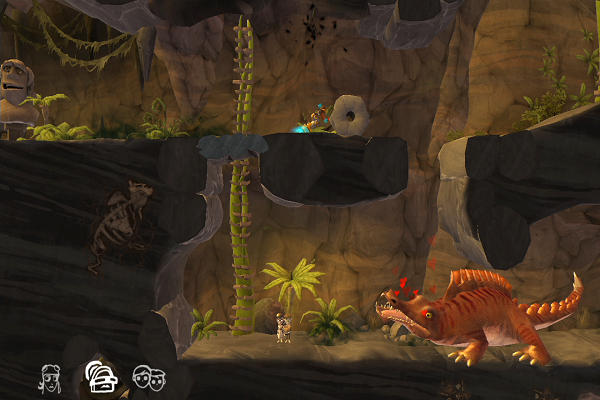
A puzzle platformer published by SEGA, The Cave is an interesting metroidvania style game in which the player picks from seven optional characters to explore the cavernous reaches of The Cave. Utilising adventure-game elements, players must collect objects and combine them with parts of the environment in order to solve puzzles and advance further into the murky depths. Each character has a dark secret and some mysterious motivations for wanting to take on the challenge of navigating The Cave. The Knight for instance is looking for a precious gem, and The Hillbilly is looking to impress his crush, the amazing two-legged lady. Parts of The Cave can only be explored by certain characters, meaning that the game does expect you to replay the campaign multiple times with different combinations in order to uncover everything. Though the game has been criticised for its lack of challenge, the real appeal of The Cave isn€™t necessarily in its difficulty, but rather the way it tells its story. In order to get the full picture, the player must tackle The Cave from different angles again and again, slowly unearthing new details and secrets about the characters, piecing together the riddle one clue at a time.

5. Massive Chalice (2014)

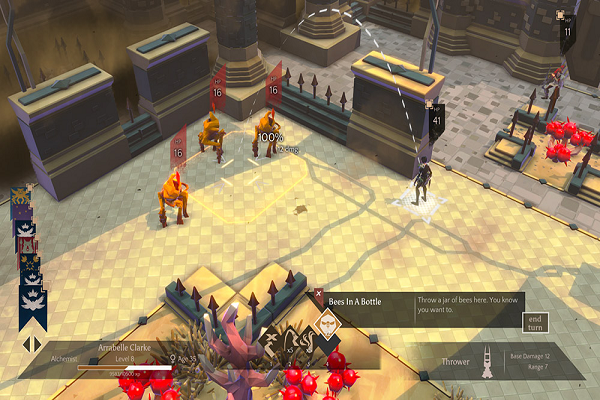
A turn-based strategy game, Massive Chalice was the second game that Double Fine successfully funded through Kickstarter after their success with Broken Age. With Brad Muir (lead developer of Iron Brigade) at the helm, the game went on to achieve relative success on Steam before later being released on Xbox One. The game itself is divided into two sections. The first section involves players interacting with The Massive Chalice itself and making decisions that will play out over the next few hundred years, spending energy to vanquish evil or regulate the population. The second section of the game grants players control over a small group of warriors as they fight in turn-based battles against enemy forces. The player must decide where and when to send his warriors, create bloodlines to ensure a healthy stock of future heroes and prevent The Cadence (the bad guys) from corrupting the land. What makes Massive Chalice so compelling is that it gives you multiple levels of control. You€™re the general figure making the important decisions that will effect generations to come, but you€™re also the soldiers on the ground engaging first-hand with the enemy. In terms of investment, it€™s a great way to ensure that the player is fully immersed into every facet of the story. In a way, it€™s kind of like what Brutal Legend was attempting, only it doesn€™t spread itself too thin trying to accommodate other extraneous elements of gameplay.

4. Broken Age (2014)

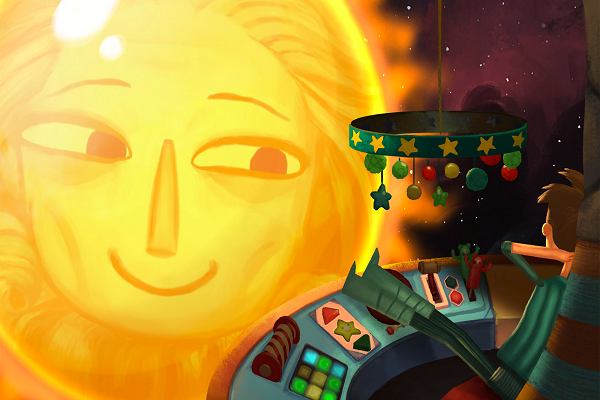
Tim Schafer€™s first point-and-click adventure-game since 1998, Broken Age had a lot of people excited, and for good reason. Funded through Kickstarter, the game raised over $3,000,000 despite the original goal being only $400,000. At the time, it was the most successful Kickstarter campaign of all time and helped establish crowdfunding as a viable funding method for developers. Thankfully, Broken Age managed to live up to the hype, pleasing both newcomers and diehard adventure-game fans alike with its imaginative story and engaging characters. The player takes control of Vella and Shay, two loners that occupy vastly different worlds with no apparent connection to one another. Vella, a young women growing up in the Badlands under constant threat from the monstrous Mogs, is motivated by her desire to end the sacrificing of young women to these giant creatures. Shay on the other hand is the only passenger aboard the Bossa Nostra, a starship run by an overprotective artificial intelligence that keeps Shay from exploring (or escaping) the ship. The gameplay revolves around switching between each character and solving puzzles using combinations of objects found around the game. Though these can be incredibly simple, the appeal of the game is principally its story and characters, at least for me as someone who isn€™t necessarily an adventure-game aficionado. Both Vella and Shay have some depth to them and some clear motivations. There€™s a good degree of intrigue that keeps the story interesting, and the switching between characters prevents you from growing tired of either one. As a story, Broken Age is nothing short or excellent.

3. Costume Quest (2010)

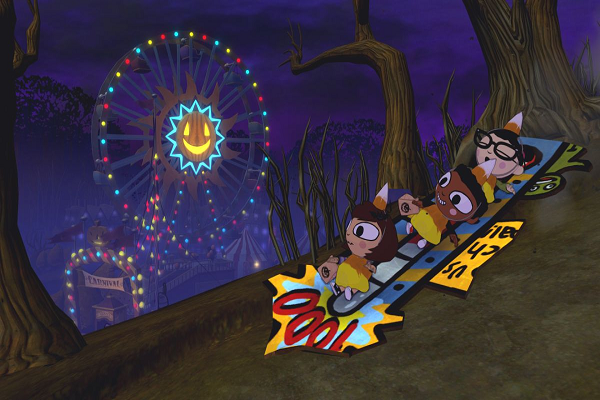
An RPG centred on collecting costumes to unlock new abilities, Costume Quest is a shining example of Double Fine at their absolute best. Set on the night of Halloween, players take control of fraternal twins Wren and Reynold as they trick-or-treat their away around the neighbourhood gathering candy. The game is pretty open for exploration, allowing players to wander about collecting quests from other characters and accumulate rewards. Depending on which sibling you choose to play as, the plot revolves around your brother or sister (dressed as candy-corn) being kidnapped by a strange monster. You must befriend other characters to form a party of up to four heroes, collect costumes to unlock new abilities and save your sibling before curfew. Though Costume Quest certainly has some gameplay issues, its uniqueness and its story is what really helps it stand out as a great game. I understand that praising a Double Fine game for its story is like praising a cow for producing milk, but Costume Quest really is one of the best exemplifiers of their unique style of storytelling. It€™s almost the quintessential Double Fine game, perfect for anyone unfamiliar with their back catalogue of titles and looking for a place to jump in.

2. Grim Fandango: Remastered (2015)

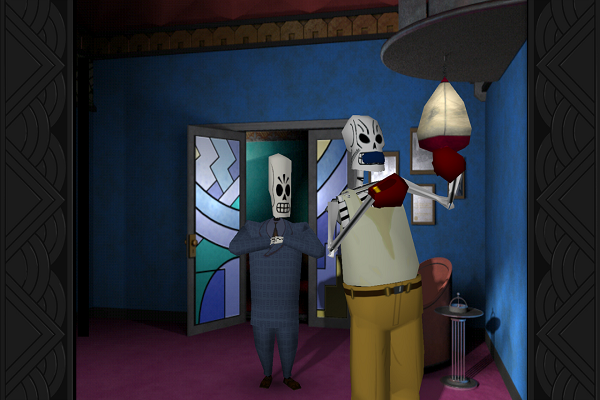
Originally developed by Schafer and co. while they were still working for LucasArts, the rights to Grim Fandango were attained by Double Fine back in 2013. Due to issues tracking down the original files, Double Fine went to great lengths to recreate aspects of Grim Fandango that had been lost or destroyed, even going as far as to contact ex-LucasArts employees and ask them for copies of certain game files. Work began almost immediately on a remastered version of the classic adventure-game, with plans to overhaul everything from the lighting and the tank-controls to the score. With the help of PC modders and ex-employees of LucasArts, Double Fine managed to do just that, implementing a better control scheme and new dynamic lighting to give the game a more richly detailed atmosphere. The soundtrack was also rerecorded by Peter McConnell, fully orchestrated by the Melbourne Symphony Orchestra for the remastered addition of the game. Set in the Land of the Dead, players assume the role of Manny Calavera, a deathly travel-agent who helps secure passage for departed souls to the Ninth Underworld. However, after discovering a sinister conspiracy, Manny must undertake the four year journey himself, travelling through the Land of the Dead in order the reach his final destination. The game itself involves solving complex puzzles by using various objects found throughout the world and using those objects to interact with characters and the environment. Beautifully written with complex and relatable characters, well-orchestrated, intelligently designed with plenty of head-scratching puzzles, Grim Fandango is one of the best examples of the adventure-game genre. It deserves to be played. Go play it.

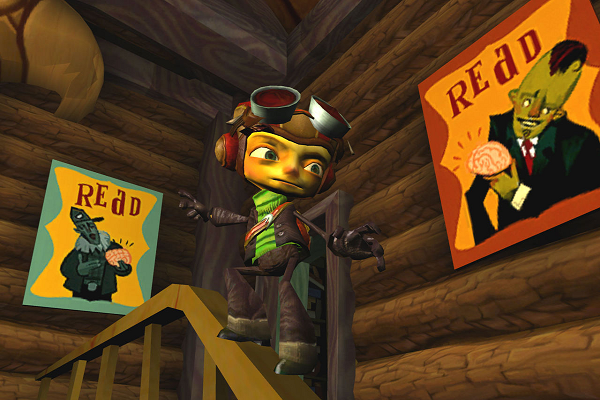
1. Psychonauts (2005)

Imaginatively told with interesting characters and plenty of laugh-out-loud dialogue, how could anything else top this list but Psychonauts? Originally released in 2005, the rights to Psychonauts were reacquired by Double Fine back in 2011. Though the game initially sold poorly on Xbox, Windows and Playstation 2, it has slowly cultivated a following over the years to become one of the most cherished video games of all time. If you€™ve played it, you probably love it, and if you haven€™t then you should get on that right away. The game is set at Whispering Rock, a summer camp for psychically gifted individuals where they can hone their abilities and harness their psychic powers. The player assumes the role of Raz, a runaway from the circus who infiltrates the camp and begins to master the ways of the Psychonauts, taking part in classes and earning merit-badges for his achievements. Set across multiple levels that are themed around the various supporting characters, each one takes place in a new character€™s mind. You access each using a literal door that can be attached to a character in the game, granting Raz access to climb inside and start solving their problems, cleaning up their mental cobwebs and organising their emotional baggage. This is where a lot of the humour comes into play. Each level is designed around the personalities of the character whose brain you€™re currently exploring. For instance, the mind of the grizzled war-vet Coach Oleander is a warzone, and the mind of the paranoid conspiracy theorist Boyd takes the form of an eerie neighbourhood of men in trench coats who are poorly concealing themselves as housewives and grieving widows. There€™s a lot to love about Psychonauts. It€™s a lovingly told coming-of-age story about a psychic and an evil dentist with a penchant for stealing brains. If you do nothing else today, buy Psychonauts and experience one of the greatest games of all time. You won€™t regret it. What's your favourite game from the minds of Schafer & co.? Let us know in the comments!

Contributor
Contributor

Formerly an assistant editor, Richard's interests include detective fiction and Japanese horror movies.