EA's Project Atlas Vs. Google Stadia: What You Need To Know
Who will be first to dominate this new space?

As time passes, new technological innovations are introduced globally in hopes of advancing our way of living.
This trope is no different when it comes to the world of video games. An extremely competitive market constantly pushes the boundaries of what consoles and hardware can do, as well as going as far as to redefine what a video game is.
Regardless of our opinions, the move to cloud-based gaming and streaming service models seems inevitable.
Microsoft and Sony have both released monthly subscription services for their consoles, with PlayStation Now experimenting with streaming games. However, EA and Google are both making strides towards fully cloud-orientated services which will entirely negate the need for a console or gaming PC in order to play.
Before jumping into the ins and outs of each of these new services, it’s important to give a brief run-down of what they actually are.
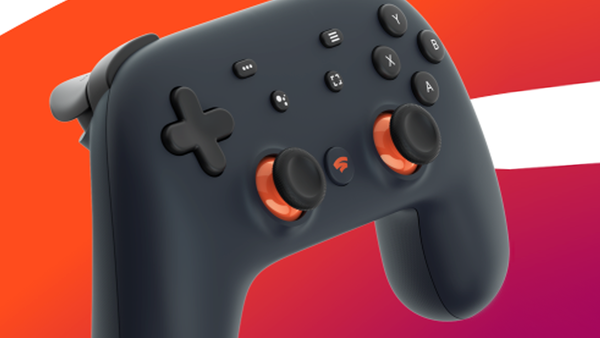
We’ll start off with the Google Stadia. Despite being announced almost six months after EA’s cloud service, Project Atlas, the Stadia has undeniably been the more discussed (for better or worse) of the two since its revelation in March 2019.
Stadia is a cloud-based gaming service in which players will be able to access their games through a web browser on a computer, TV, tablet, phone- basically anything with a screen and a strong enough connection. Games will be entirely streamed and stored in the cloud, so there will be no need for a physical disc, or even a download in order to access them. Stadia is set to release in November 2019.
Now, if we have a look at Project Atlas, it’s clear that EA’s model is going to be extremely similar to that of the Stadia. The announcement, made in October 2018, spoke of gaming on any device, in any location, as well as all of the possibilities for future innovation that come along with fully online play. The reason that Project Atlas has picked up so much traction online recently is that EA are soon to be allowing users to test the service via their EA accounts.
This beta test will allow players to experience FIFA 19, Need For Speed: Rivals, Titanfall 2 and Unravel via their cross-play and cross-save enabled cloud service.
Sadly, this test will only be available for US users. An exact date for this is yet to be set, but with the announcement being made earlier this month, it looks to be in the very near future.
Cont.
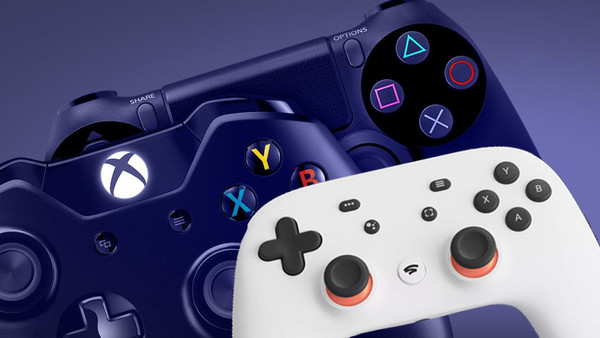
So, with Google Stadia set to launch in November 2019 and EA’s Project Atlas announcing imminent external user testing, we could potentially see both of these services available just in time for Christmas.
This is likely not a coincidence on either side’s part. Much like the console launches of previous years, these two services look as if they’ll launch in fierce competition with one another and neither will want to miss out on 2019’s biggest sales season. These unlikely companies may even find themselves contesting the next generation of Xbox and PlayStation by hitting the ground early on an entirely new gaming model.
Competition breeds modernisation as companies strive to keep ahead.
With PlayStation’s exclusives arguably pushing the PS4 way ahead of the Xbox One, we can see how much things slow down when two competitors aren’t tightly matched. The greatest advancements come when rivals are forced to keep working in order to stay in the game, so these two new releases have the potential to produce some great new content for their respective audiences.
However, is it possible that modernisation is moving too quickly? Are consumers able to keep up with the requirements, financial or otherwise, needed to run these new services? Whilst we don’t yet know the specs for Project Atlas, we have been made aware that Stadia will require between 10 and 35 Mbit/s minimal internet speed in order to run games, dependent on the speed and picture quality of said games. This causes a multitude of issues when it comes to accessibility.

Firstly, not everyone has access to internet speeds at this rate. Certain areas, especially those which are more rural, would struggle to produce a connection that would make this service a viable option. Then we should consider that, whilst they may be available for most at home, the data usage and minimum requirements will create considerable limitations in regard to playing anywhere and on any device, as advertised. There’s also a problem when it comes to countries such as Australia, where internet usage is capped at a certain amount. Without unlimited internet, running games via the cloud would eat up the allocated monthly usage extremely quickly.
The issues with data usage are likely to be temporary as technology continues to evolve. With the introduction of services like fibre and 5G, faster online access is becoming more and more available to the public. Political landscapes also regularly change, so hopefully unlimited internet usage will continue to spread globally, alleviating some of the aforementioned pressures in the future.
Until such a time, it’s likely that between Google and EA, whoever manages to get around these challenges first will have a considerable leg up over their counterpart.
Cont.

A genuine question that we as gamers will need to ask ourselves when considering these new iterations is, do we trust these companies? This may come across like the paranoid ramblings of a crazy old man in the future, but with EA’s extreme monetisation protocols and Google’s reputation for dropping support for products they don’t deem as successful, do we trust them with our money?
The reason we need to ask these questions is that cloud ownership is ownership with a BIG asterisk. If we buy a game where, not only do we have no physical copy, but we also have no downloaded version to play offline, we need to put all of our trust into the continued support of that game. If Stadia or Project Atlas drop online support for a game, or even collapse entirely, it’s not just the case of having to source a replacement console, or accepting that our game will no longer be updated or playable online; we lose all ability to play that game again- despite having paid for it and “owning” it.
The easiest way around this for Google or EA would be either to offer at least X amount of years’ support, with a guaranteed refund should the offer not be honoured, or to allow customers to exchange ownership of a no longer supported game for a new one.
Both organisations will need to work out the best way to reassure customers that their money will be well spent and that their purchases will be secure.

It may make sense for Stadia or Project Atlas to adopt a monthly subscription model, rather than attempting to sell outright ownership of games on their platforms. The introduction of Xbox Games Pass and PlayStation Now have proven that this service is popular with audiences and it would likely help these new platforms come across as more trustworthy. EA already have something similar set up with their very reasonably priced EA Access, so it’s evidently an idea that’s been toyed with. It’s almost a certainty that the first platform to properly land the Netflix-for-video-games service that we’re clearly headed toward will rake in billions.
Cont.
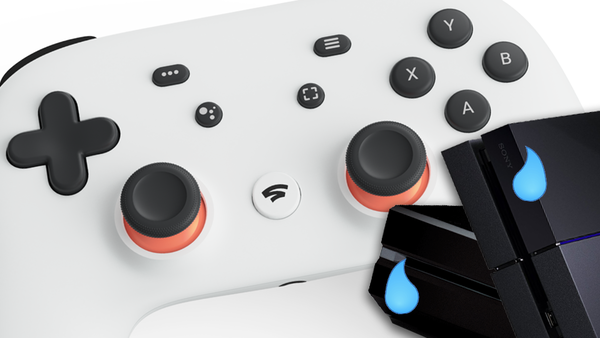
Another point of interest to be raised in relation to these services is that of exclusive titles. This is a topic of conversation not limited to cloud-based gaming, but for all aspects of the video game industry. With the console wars between Sony and Microsoft, the PC Master Race, and Nintendo continuing to be extremely cool by just doing their own thing, everyone has titles that are exclusive to their own name.
The exclusivity factor is more concerning on the side of EA. Like them or hate them, they publish some of the biggest triple-A titles every year. With what could amount to essentially being their own competitive “console” with Project Atlas, could we see them denying future titles to other platforms? It would be very ballsy risk, given the massive cross-platform popularity of franchises such as FIFA and Battlefield, but EA have never been known to shy away from the opportunity to increase their profits.
On the other hand, EA exclusivity may actually push more gamers toward Stadia. Even if Project Atlas holds every EA title, if that’s all that it holds, it’s likely to fail in comparison. Google are not currently tied to any particular gaming IPs and therefore have free reign to bid for existing properties, whilst also investing in developing their own original content. Customers won’t want to be limited to only having access to EA publications, so Google could jump at this opportunity by offering a wider array of options.
Cont.

The last point for us to consider as we move inevitably closer to a future in the cloud, is the way that ongoing support for games will affect how they're produced.
EA mentioned in their Project Atlas announcement that their new service will allow them to innovate on the Frostbite Engine, due to fewer limitations, in order to deliver smoother games that can be updated and patched with far more ease than they are on current systems. This is great news for gamers who are open to moving to cloud-based products, but could be damning for those who prefer physical media.
Whilst Sony and Microsoft have both promised that their next consoles will still provide the option to use discs, physical copies of games are undoubtedly on their last legs. What we may find is that the physical versions of games, initially designed for the cloud, will be of sub-par quality in comparison and receive fewer updates and patches as time goes on. We’ve seen similar practices when games have released at the beginning of a console's life-cycle and lesser versions of those games have also been released for the previous console.
Unfortunately, hardware can only take us so far and we’ll have to accept that we’re probably entering the last generation of physical media. This will have a negative impact on second-hand stores and on gamers’ collections, but will considerably reduce production costs and should lead to a better gaming experience, with online support being far more regular and accessible.
We should remain positive and embrace this as an exciting time in technological experimentation, but we should also approach these innovations with a reasonable amount of scepticism and make sure these companies know our wants and fears in regard to cloud-based gaming.
That’s pretty much all of the information we have on the Stadia and Project Atlas at the moment, but keep an eye out for Apple’s latest project, Skynet, dropping in 2022. We’ve heard it’ll change the world.