Elder Scrolls 6: 10 Phenomenal RPGs Bethesda Must Learn From
Inspiration is out there, and here's where to look.
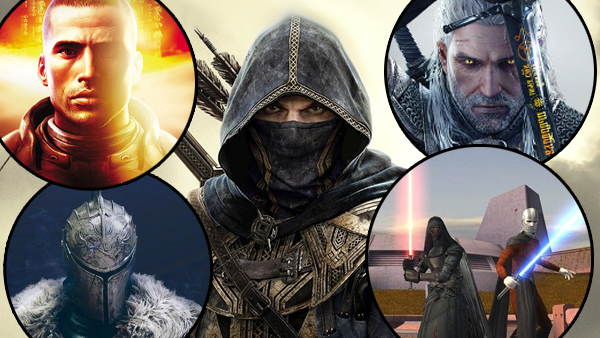
News about Bethesda's sixth instalment to their Elder Scrolls series is certainly being kept well under wraps at present. With Skyrim's Special Edition heading to the newest generation of gaming machines later this year and with questions about The Elder Scrolls VI's release date being avoided, the only thing we really know, is that the game is currently in some early stage of development.
So, as we await further news about the next entry to the series and the re-release of Skyrim, how can we satiate ourselves with Elder Scrolls-y goodness? Well, why not consider some of the immensely impressive RPG titles that have a thing or two to teach Bethesda's next instalment?
The Elder Scrolls V: Skyrim was a truly exceptional game, but everyone knows it wasn't perfect. A few flaws and issues persisted, with a few features of the series also starting to appear tired and stale with age. For The Elder Scrolls VI, Bethesda will want to solve these problems as they seek to produce an improvement on its predecessor, and I know just where they should look for inspiration.
Here we have ten phenomenal RPGs that Bethesda need to learn from as they develop The Elder Scrolls VI!
--
10. Give Us Unorthodox Solutions To Avoid Broken Quests - Divinity: Original Sin

For a large number of players the issue of broken quests in Skyrim became an almost game-breaking frustration. Whether by inadvertently killing an important NPC, losing a key item or getting stuck in a problematic dialogue loop, players could find themselves locked out of certain quests and unable to complete them.
In truth, this is always a potential outcome for any game that lets you interact so fully and freely with the open world, but there is a way to cut the problems down. Essentially, it entails having more completion options available, and Bethesda can look to Divinity: Original Sin as an inspiration for this.
Since Larian Studios' game was built around co-operative gameplay and options, there always had to be inventive or unorthodox ways of solving quests. Essentially, with another player able to impact the game and kill a vital NPC or disagree with your actions, the kind of quest-breaking issues from a game like Skyrim were actually encouraged.
Taking Divinity: Original Sin's approach to having multiple solutions for such quests would be a solid step toward eliminating broken quests in The Elder Scrolls VI.
9. Make The Puzzles In Caves And Dungeons More Challenging - Legend Of Grimrock
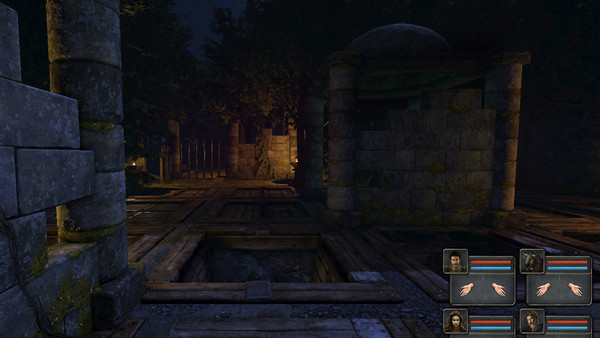
Legend of Grimrock is a 2012 game that stands out as one of the best developer debuts of this century. Almost Human's four man team self-financed almost all of the development, and the resultant product was a wonderful mix of old schools RPGs and dungeon crawlers.
What this game can teach The Elder Scrolls VI is how to implement complex and inventive puzzles into a more modern, action-oriented game. Skyrim was full of caves and dungeons hiding all manner of treasures, but the vast majority of these were worked through with little more than an aggressive swinging of the player's chosen weapon.
Dwarven temples and hidden caves would be made more interesting in the next instalment if there was a more challenging puzzle element to them, rather than just basic item placement or statue turning. Legend of Grimrock features a multitude of enticing challenges that lean heavily on classic RPG tropes, and the rewards for solving the toughest of them feel genuinely worth working for. The Elder Scrolls VI needs more of this!
8. Find A Useful Combination Of First And Third Person Perspectives - Deus Ex: Mankind Divided

The fact that both first and third person perspectives can be utilised in games like Skyrim and Oblivion has always been somewhat divisive of late. For every player who loves having the choice readily available, someone else will argue that Bethesda would've been better served honing just one of the views to perfection.
There aren't an awful lot of games that really pull both off, but it is not impossible. Deus Ex's Human Revolution and Mankind Divided both put players in control of a perspective mechanic that flips between the two for different sections, and it's a great system. General exploration and gameplay takes place in first person, while cover-shooting and certain stealth aspects push the camera back to reveal a third person view.
The Elder Scrolls VI could adopt a similar - perhaps optional - system that highlights what situations in the game each style is suited to. Exploration and stealth options are better with third-person perspectives thanks to the extra field of view, while combat and puzzle solving would benefit from the personal touch of a first person perspective.
Since a lot of players wouldn't want this handholding, the option would probably have to be optional, though newer players or those who've yet to branch out of their comfort zone could benefit from the tutorial-esque switching.
7. Give Players A Narrative That Can Really Drive The Experience - Planescape: Torment

While the story of the Dragonborn in Skyrim sounded like a pretty awesome premise, the resulting narrative didn't quite manage to capitalise on a lot of early promise. The biggest appeal for the game quickly became the exploration of a gorgeous land, and the main thread of the story fell too easily by the wayside for some players.
Exploration of the open world is always going to be an enticing feature for many RPG fans, regardless of when they take up that challenge. Adding a genuinely enticing narrative for the main quests would be a great step forward from Skyrim, and Bethesda should look to Planescape: Torment for a shining example.
The combat of this RPG is far from prominent, meaning very little of the game falls to simple hacking and fighting like that of Skyrim. Instead, players move through various planes to recover the memories and identity of their tormented hero, the Nameless One. It's a genuinely fascinating quest, and one that encourages exploration of the game and its mechanics as a part of the story, rather than in spite of it.
6. Increase The Difficulty For Gamers Who Want A Gruelling Challenge - Dark Souls

Over the last few years there's been a genuine call for much more challenging games to hit the market. Players don't want so many easy rides anymore, and gruellingly tough experiences are being snapped up as quickly as the industry can throw them at us.
The Dark Souls series is a shining example of this, and it brings its immense difficulty nicely to the RPG genre. Hulking creatures and mysterious spectres haunt the planes in Dark Souls' trilogy, and the combat challenges that face a player entering each stage can be gleefully infuriating.
Skyrim had a pretty fluid and liberal approach to letting players pick their own difficulty, but even the so-called toughest settings become easy to get around after very little exposure to them. Adding a higher cap to the potential difficulty would entice players who are looking for a tougher game and even extending the longevity of what will most likely already be a pretty big game.
5. Give The Protagonist A History Within The Lore - Star Wars: Knights Of The Old Republic

For years now, the story of our hero in Elder Scrolls has only been as deep as the game itself. Shallow history means that our protagonist awakes at the beginning of the game with virtually no context or history to pick up the trail of.
This needs to change, and inspiration can be taken from Bioware's Star Wars: Knights of the Old Republic. The big revelation about the history of the player and their life as Darth Revan remains as one of gaming's greatest plot twists, and it was so impressive that the writers were able to totally wrap the events of the game around the player's well-crafted history.
It may be difficult to successfully weave a new hero into a franchise as established as this, but if anyone is able properly alter the lore of their series then Bethesda certainly can. Waking up as an amnesia-ridden prisoner or refugee and forging a strange new life under minimal context just isn't quite cutting it anymore.
And, while we're on the subject, the protagonist's role can stand for further overhauling as well...
4. Add A Genuine Personality To Our Hero As Well - The Witcher 3: Wild Hunt
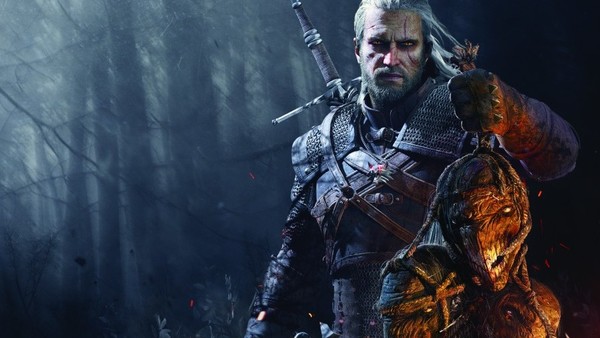
As well as adding to the historical heritage of the new hero in The Elder Scrolls VI, building a bit of a personality would be a definite improvement. While we'll inevitably end up crafting our hero from the identikit options we normally get, at least having something concrete to build on would be nice.
The Witcher's Geralt of Rivia is an awesome example of an RPG hero, and its from this model that inspiration needs to be taken. Whether it's just the race we choose leading to particular behaviours or biases or a full-blown personality type that can be opted for (brash, timid, measure - you get the picture), something that helps us feel like our hero isn't a lifeless model is sorely needed.
Obviously we're never going to get a fixed protagonist like Geralt, but at least giving something in the way of behaviour or personality would be an improvement over the faceless nobodies of the likes of Oblivion and Skyrim.
3. Dial Up The Action - Mass Effect

The Elder Scrolls' combat system undertook a bit of an overhaul in between Oblivion and Skyrim, but it was still lacking enough polish to make the action feel really exciting. Add to this the fact that the so-called war taking place in Skyrim seemed painfully placid, and Skyrim was definitely an action adventure that was light on spectacle.
Starting with humble RPG roots, Bioware's Mass Effect series took on a focus shift in between its first and second entries, with Mass Effect 2 becoming every bit the exciting action game and solid RPG. We have to hope that the combat system will be further improved, but if it doesn't then an increase in meaningful action has to be the least we hope for.
If the story again takes place in a war-torn land, players need to feel like they're really struggling through the conflict. Even Oblivion's siege of Kvatch was a better battle than anything that took place in Skyrim, but some more compelling sequences like the ones in Mass Effect 2 could improve on this while still suiting the RPG mould.
2. Make The Inevitable DLC Into Something Truly Worthwhile - The Witcher 3: Wild Hunt

DLC is virtually an inevitability for most big games these days, and we've sadly had to get to grips with it as consumers. What we don't have to stand for, however, is bad DLC. Some recent add-ons have proved that extra content isn't just a money-grabbing campaign anymore, and the additions can genuinely be meaningful.
I've already called on CD Projekt RED's work a little earlier, but that's hardly surprising given how masterfully they created an Elder Scrolls competitor with The Witcher 3: Wild Hunt last year. Well you won't be surprised to hear how incredible the DLC they brought to this game was, then, and it's with work like this that we can really find the worth in additional paid content.
Blood and Wine was an incredible addition to Geralt's story, the kind of thing that makes itself essential for the series' fans without feeling like its events are essential to the initial game's story.
If DLC is truly an inevitability for The Elder Scrolls VI, then we have to hope it's as well-crafted as this.
1. Don't Be Afraid To Build Around What Works - Fallout 4

With some of the criticism levelled at Fallout 4 highlighting the fact that it didn't deviate massively from the formula of its successful predecessors, Bethesda may be reluctant to make that same mistake twice. They'd be foolish to do so, however, even if critics would have them believe otherwise.
Fallout 4 was the continuation of Bethesda's other mammoth series, and it arrived on a wave of critical and commercial success. A few consumers felt as though there were too many core similarities between this and older Fallouts 3 and New Vegas, but when the older versions are so good, then what's the harm in replicating some of the successful formula?
The Elder Scrolls VI has an immediately comparable standing, but shying away from mirroring a lot of Skyrim's successes could do more harm than good. Sure, I've highlighted problems that need to be fixed, but so much was good about Skyrim that a sequel offering polished versions - or 'more of the same' - would still be enough to see it labelled a triumph.
--
Which RPGs do you think have lessons to teach Bethesda ahead of The Elder Scrolls VI? Join the discussion in the comments!