Fallout 76: 10 Things Bethesda MUST Learn From Fallout 4
Please, retire the Brotherhood of Steel.
Ever since Bethesda shipped Fallout 4 back in 2015, fans have been clamouring to know about the next step of the franchise. Although many players speculated that they'd have a long wait ahead of them before the series was revisited, Bethesda themselves have gotten out in front of E3 to announce Fallout 76 to the world.
That's all the concrete information they've given us so far though, and while details on the spinoff's plot and gameplay are properly starting to take formation thanks to some eagle-eyed fans as well as some substantiated leaks from inside the development studio itself, nobody has been able to assess for themselves how the latest Fallout project is shaping up.
That said, players already know what Bethesda need to do to make the sequel a worthy successor to Fallout 4. While that game was still solid in its own right, it was arguably a step backwards from the third title, boasting a myriad of problems that need to be solved going forward. If they aren't, and Fallout 76 is plagued with the same issues, then it could extinguish the remaining hope fans are clinging onto.
10. Crafting Shouldn't Replace Unique Items
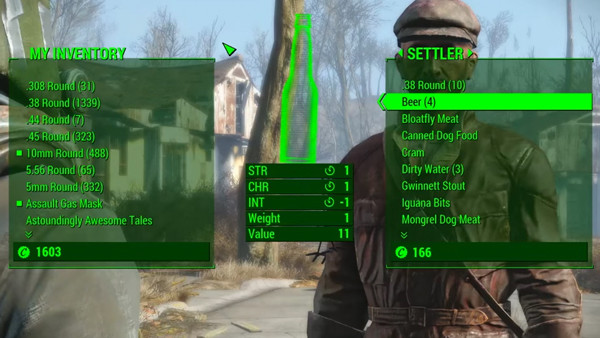
The beefed-up crafting system in Fallout 4 revolutionised the way players interacted with Bethesda's open world. Instead of having to scour through rubbish in an attempt to find the one bit of loot you could use, everything in the world was a vital resource that could be used to craft weapons, items or defences.
Consequently, it meant that it was up to you to create the best gear in the game. Awarded with expansive options to tinker with items until your heart was content, the customisation was certainly far better than in any other game in the series, but it did come at a cost: there was a huge decline in unique loot to find in the world.
Because the best items were often the ones you made from scratch, there was little interesting to actually look for. Instead of keeping an eye out for special unique weapons or cool pieces of armour, everything was pretty much standardised. Sure, you could create some interesting things yourself, but there should have been just as many specialised items to find in the world.
9. DLC That Rivals The Main Game

Bethesda detailed a pretty expansive season pass of DLC for Fallout 4 even before the game came out, but unfortunately these expansions didn't feel like they were quite as substantial as the ones the developer had released for their previous RPGs.
Focusing on divisive elements rather than playing to their strengths, the likes of Automatron worked fine as extra missions, but the larger expansions, which introduced entirely new areas, lacked the polish and quality players were used to.
Consequently, while Fallout 76 will no doubt have a wealth of DLC planned to keep players around long after it launches (after all, rumours suggest the title is going to be marketed as a "games as service" release), these content drops need to build upon the quality of the base game.
They should feel substantial and make the original experience itself even better, rather than be entirely self-contained experiments.
8. Mods Present At Launch

While mods are present in all console versions of Bethesda's current RPGs, it took one hell of a rollercoaster ride to get there.
First they were seemingly only going to be available on Xbox One, with Sony putting up something of a fight against the idea. The company eventually allowed them on their console, but the selection was even more limited than that found on Microsoft's machine. Of course, all this drama was occurring over a mod system which was far inferior to the one found on PC anyway.
Still, in one form or another they got there in the end, and now mods have breathed new life into Bethesda's games. Consequently, the devs need to ensure that their hard work wasn't for naught, and when Fallout 76 hits, it needs to have the same support at launch.
How this would work with the supposed online-focus of the title is anyone's guess, but if there is a straight single-player mode, it should have immediate access to this unique fan-created content.
7. No Excuses For Game-Breaking Bugs

While Bethesda used to be able to blame the myriad of bugs that haunted their games on the sheer scale and ambition of the projects, other developers have since proven that you can have expansive open-world RPGs that actually work when you boot them up.
Though it's always funny to point out the wacky glitches that pop up in Fallout games, at this point Bethesda have run out of excuses, and the problem has grown far beyond a joke. There's no reason why certain versions of these games don't work at launch, or why there's so many game-breaking bugs that Bethesda either take too long to fix, or don't fix at all.
Especially if Fallout 76 is going online and has to accommodate players from across the globe, the developers need to ensure that their game engine is as polished as ever, and won't crumble under the weight of such an intensive vision. Patience with Bethesda is slowly starting to wane, and they need to solve this major issue that's dogged them for well over a decade now.
6. Stop Leaning On Super Mutants And The Brotherhood Of Steel

Unlike other developers who have worked on the Fallout franchise, Bethesda seem to be far more preoccupied with the Brotherhood of Steel and Super Mutants.
Making characters from both these worlds prominent in the main and side quests of Fallout 3 and 4, the developers have seemingly been afraid to break away from these narratives and try new things - something which Obsidian enjoyed such success with while creating New Vegas.
Fortunately, the timeline of 76 itself might force Bethesda to get a little creative with the crutches they usually lean on. Assuming the title takes place in 2101, Super Mutants have only just been created, so you probably won't run into many of them out in the wasteland.
Likewise, the Brotherhood of Steel is in its infancy, still mostly situated in their Californian roots rather than exerting their dominance over the whole of the US.
Thankfully, this set up should result in either the developers being forced to come up with a new creative hook for both of these franchise staples, or do away with them altogether and focus on new, original stories.
5. Change The Skills And Perk System
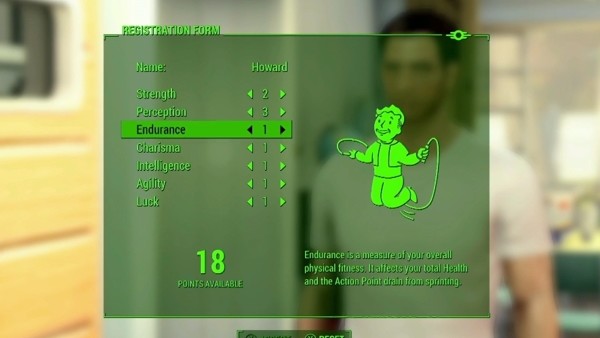
One of the most controversial changes Bethesda made to the regular Fallout formula going into 4 was doing away with conventional skill trees and completely overhauling the perk system.
While the latter was usually reserved for increasing accuracy with VATS or giving you the slim chance of calling in a "mysterious stranger" to help you out in firefights, in the fourth game it mostly became a way for players to incrementally increase their base skills.
It was uninspired to say the least, and it lacked the charm and variety that fans usually expect from the developer's RPGs. Going forward, Fallout 76 should embrace the classic perk and skill systems, rather than trying to streamline them further.
These titles are all about choice and creating your own specific character build, something which is far more difficult when you can't tweak specific stats.
4. No Relying On Radiant Quests

Fallout 4 had more content packed into it than any of Bethesda's RPGs so far, but it's also arguably the Bethesda game with the least compelling missions. There was a huge array of them, sure, but a huge chunk were procedurally generated, always following the same formula and lacking any real narrative hook.
In fact, this system was so prevalent that the main giver of radiant quests, Preston, essentially became a meme overnight. Constantly getting you to do busywork and littering your journal with quests that never stop coming, fans quickly tired of this content, and it became clear that Bethesda used these missions to make up numbers rather than create substantial side quests.
The devs need to limit the focus on this kind of content with the next game, returning to the authored array of missions that have defined their previous releases.
3. Dialogue Options Need To Be More Robust

Of course, the biggest mistake Bethesda made with the most recent entry in the franchise was replacing the regular text-based dialogue system of previous games with a new, fully-voiced protagonist.
While that could have been a great change in theory, the way the devs implemented it, by taking out the expansive responses and replacing them with basic replies, absolutely tanked the role-playing possibilities of the sequel.
While fans still don't know for sure that Fallout 76 will have quests in the conventional sense, or substantial character interactions in general, the devs still need to figure out the best way to tweak their dialogue system.
Though many would prefer text-only options, and keeping the voiced protagonist could be divisive whichever way you cut it, going with the latter approach could still work as long as the focus is still on role playing.
2. Base Building Should Actually Be Worthwhile

Though it wasn't as bad as its harshest critics would have you believe, the base building system in Fallout 4 was admittedly a little pointless. Yeah, it was cool to build little structures in your settlement and make a home for your companions, but these settlement features could be completely ignored and you wouldn't lose anything from the main experience.
If Bethesda aren't just going to get rid of the system altogether with Fallout 76 (which seems to be the case if the leaks are to be believed), then they need to find a way to properly integrate it into the game.
Thankfully, the spinoff is said to be entirely based around a mission to rebuild society, as well as surviving in a harsh, post-apocalyptic landscape, which should hopefully make managing settlements vital in achieving that goal.
1. Survival Mode Needs To Be Better Balanced

If the rumours are true and Fallout 76 turns out to be a survival-focused RPG, then Bethesda need to have looked at what they did well, and what they dropped the ball on, when they shipped the survival mode for the fourth game.
The new way to play gave fans a more hardcore post-apocalyptic experience, but it wasn't quite as balanced as many fans hoped for. Unlike the hardcore mode which was bundled with New Vegas, Fallout 4's alternate offering was far more punishing, in a way that the game wasn't exactly made for.
It was still an engaging way to play, but it definitely felt like a tacked-on addition rather than a fully-formed idea. Consequently, moving into the spinoff, the devs should look towards other games (as well as other releases in their own franchise) for a way to tweak this mode to give it more congruity with what the series does best.