Final Fantasy Vita: 5 Things It Must Have
 The Final Fantasy series has long been the poster child for games of the RPG genre. Ever since it achieved breakout success worldwide with the release of Final Fantasy VII, it has attracted a large fan base, many of whom claim it to be the greatest videogame series of all time, let alone the greatest RPG series. Whilst that is a debate for another time, with the broadening horizons of the PlayStation Vita, it is clear that a Final Fantasy release on the portable console needs to be something special, especially after the series has lost some of its most hardcore fans with the release of Final Fantasy XIII. If I'm honest, I can't imagine a world in which the first Final Fantasy release on the PS Vita won't be a huge success, it is likely to sell a large amount of copies regardless of what aspects it includes, simply because of the quality of the series and the name that Square Enix has built for it. But, this is obviously not going to equate to the quality of the game, and for me there are a number of things that must be included in order for Final Fantasy to really be as big of a success on the Vita as it truly deserves to be. Read on to find out exactly what these things could be...
5. A World Map
 Each entry in the Final Fantasy series used to incorporate a large, intricate world map, which your characters would traverse en route to their next destination. However, ever since Final Fantasy X the world map has been missing from each instalment, with developers supposedly believing that they are a relic of the past and are not necessary to the gameplay, instead creating seamless divides between each town and dungeon that the party visits. Despite the fact that this new option was always presented successfully, a portable edition of the series would surely benefit from the re-introduction of the world map, especially when you remember that you could save wherever, and whenever, you wanted whilst crossingthe map, something which would allow gamers to make progress in the game no matter how long they played it for. Say, for example, you take a short bus trip and decide to play Final Fantasy on your Vita during the journey. After making progress in an area of the game, you reach your destination but cannot save because there seems to be no save point in site, forcing you to either carry on playing until you reach one, or to just give up and go right back to where you started the next time you decide to play. A world map would go a large way to alleviating these fears, mainly because the only time you cannot save on the world map is during a random encounter, and even then you can save your game as soon as it is over. Then, of course, there is the sheer scale that a world map portrays every time you step onto it. Anytime you feel like you are getting stronger and making a significant progress in the story, you step out onto the world map and realise just how much there is left to explore. They also allow for multiple modes of transport, keeping the pace fresh as boats, airships and, of course, chocobos are introduced at varying parts of the story. One final positive of the world map screen is just how much space they create for...
4. Hidden Magic And Characters
 One of my favourite aspects of the Final Fantasy series, which has also been mostly forgotten in the Final Fantasy XIII series is the hidden magic, summons and characters that could be found strewn throughout the game or for besting certain foes in battle, not to mention the ultimate weapons that could only be gained in this same way. I used to love nothing more than searching every nook and cranny of the game to find every single spell or accessory that I could find to aid me in my journey, something which was explored especially well in Final Fantasy 7, in which particularly powerful summon spells such as the Knights of the Round were kept at arms length until you had figured out exactly how to reach them, which then made you a much more formidable fighter. Final Fantasy 8, like much of the series, also had a standout feature in that some of the Guardian Forces were hidden away, forcing you to search for them and then best them in battle before they would join your cause. These features made the games more exciting and gave players a sense that they were really taking part in a story, giving themselves an original experience with the game that would be different to anyone else who was also playing at the same time. The non-linear gameplay and freedom to explore as much of the game as you wanted, but rewarding all the time and patience that was put in, made for a longer, more satisfying experience. Hidden characters are also a series mainstay for the most part, injecting even further reward for those willing to look for it, in the form of entirely new characters that not only give you more options in battle, but also flesh out the story further, forcing far more emotion on you as they near their impending fate than you may care to admit. Whilst sometimes these hidden characters can be nothing more than light relief and a battle option, such as Quina from Final Fantasy 8, in the case of Final Fantasy 7 the two hidden characters are both much more than that, with their own involving stories, of which Vincent's actually ties in with Sephiroth's and that of Shinra. Adding Yuffie to your party even leads you to the completely new events in Wutai, which in turn rewards the player with stronger weapons and even a new summon materia. So, with all of this compelling evidence for just how much hidden magic and characters add to Final Fantasy, it is almost impossible to suggest that they should not be present in some way in a portable version of the series.
3. An Involving Story
 A part of me knows that it goes without saying that involving, emotional, stories are the backbone of not only the Final Fantasy series, but the RPG genre in general. However, this is also exactly why an involving story is a 100% must-have for Final Fantasy Vita, without it the game just wouldn't be able to connect with audiences and, I daresay, wouldn't be able to draw gamers in for the entire length of the game. Many fans of the Final Fantasy series were disappointed with Final Fantasy XIII because of its largely linear path through much of the game, but also because the story itself, whilst emotional, was unnecessarily complicated, whilst it also lacked a truly menacing villain, one of the strongest aspects of the series to date, with antagonists such as Kefka, Kuja and Sephiroth in particular holding a place in the hearts of Final Fantasy fans as the most memorable aspects of their specific series entries. This was alleviated somewhat with the introduction of Caius in Final Fantasy XIII-2, who was a complex villain that the story sorely lacked, but it could not fully atone for the fact that the story and mythology built around Final Fantasy XIII just didn't seem as strong as it could have been, which was especially ironic as Square Enix had pointed out that they planned for it to have the best story from the entire series. Maybe my memory is a little fuzzy, I did actually thoroughly enjoy the story at the time of playing through the game, but I would definitely not be inclined to suggest that it was better than many of the previous Final Fantasy games. The truth remains that if gamers cared as much about the plot as they were supposed to, there wouldn't have been as many complaints about the non-linear aspect of much of the game. This just adds weight to the fact that a Final Fantasy entry on Vita must have a strong story to keep gamers enthralled and playing further, as opposed to losing interest in the characters relationships and moving onto a new RPG series. This is especially true of the whole series now that the release ofNi No Kuni on PlayStation 3 is nigh, an RPG of which early reviews suggest an incredibly strong story, hardly surprising given that it has been developed by Level 5 and Studio Ghibli.
2. Touch Pad Integration
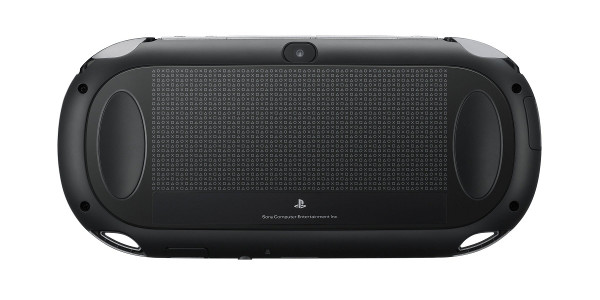 The touch pad has already been a divisive aspect of the PS Vita, but it is undoubtedly a step in a positive direction that will eventually get gamers much more involved with the games they are playing, and what better game to demonstrate exactly how effectively the touch pad can be integrated into gameplay than Final Fantasy? Now I'm not suggesting that it should take over every aspect of the game, I have recently played Final Fantasy 3 on the Ipad and controlling characters movements via the touch screen is nowhere near as intrusive as I expected it to be, which I must admit I do see as a possibility for the touch pad. However, I feel like the touch pad could serve a much more useful and interesting feature if used during battles. Look back at Final Fantasy 8's Guardian Forces for a moment, all of those that caused damage to enemies also came with a learnable Boost ability, which would allow you to power up the Guardian Force during its animation, causing more damage to the enemy, but not at the risk of being too greedy and eventually leaving your Guardian Force doing less damage than it may have done originally, if not rectified in time. The touch pad could thus serve this same purpose in a Vita game, or a similar function at least. Maybe each summon that Final Fantasy Vita included could also learn a similar ability, but would have a different pattern that needed to be traced on the touch pad in order to power the summon up significantly, or at least they could all simply involve tracing your fingers across the pad. I feel as if this would keep you genuinely involved in battles, rather than just inputting a command and watching it take place in front of you, you would have to stay focused and perform the correct commands to make your attacks stronger and ensure you win battles. Having said that, the Final Fantasy series has always been renowned for, often crazy, mini-games, more on which in a moment, that would definitely suit the touch pad , in fact there are so many different contexts the pad could be used in that it basically seems a given that it will definitely be used in one form or another.
1. Mini-Games
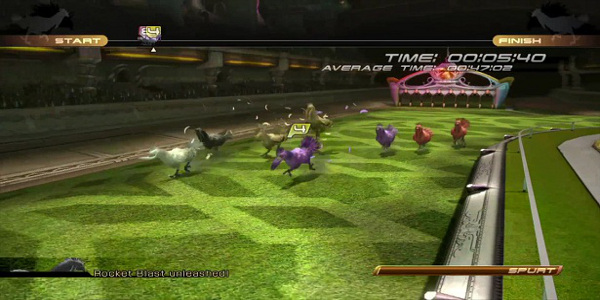 Originally I was going to devote the top spot of this list to an aspect of the battle system itself, a job system for example, but if I really ask myself if I want the developers to rehash a battle system from one of the older entries in the series, the answer is probably a no. Whilst I love the job system, which worked especially well in Final Fantasy 3, and would love to see a return of materia from Final Fantasy VII, I would much rather see a brand new battle system developed by some of the most creative minds in the whole world. So then, onto the real top point of this list, mini-games, a feature that has always been integral to the Final Fantasy series, at least for those completionists among us who absolutely have to complete everything a game has to offer. Over the years the series has thrown some incredible mini-games at gamers, many of which are rewarded with a substantial reward, such as the Battle Square in Final Fantasy VII where Cloud's omnislash limit break resides, or the catcher chocobo race in Final Fantasy X where you can earn Tidus's ultimate weapon, as well as a vital component to unlock its true potential. Whilst that latter mini-game infuriated many a gamer, I always enjoyed trying to better my time and found it to be a surprisingly addictive addition to the main game. Final Fantasy Vita has a chance to really give fans of the series some great service, perhaps by including an area similar to the Golden Saucer from Final Fantasy VII, but which has mini-games from many of the different past games in the series, even going so far as to put you into the shoes of the characters that originally took part in the mini-games in the entry in which they first appeared. Personally, I would love to have another go at the submarine warfare,from Final Fantasy VII in HD, and as a re-make seems a long way off yet, this may be the best opportunity that we get, something Square Enix should not pass up! Of course there would also have to be some original mini-games included as well, but as the console is portable, they would be the perfect fit for quick gameplay, something proven by the quick-fire mini-games of the successful Frobisher Says. Sometimes when you don't have the time to play a sprawling RPG, you'd love a blast on a retro style mini-game, so a game where you could effectively do both at the same time would be perfect! So, what do you think? Anything missing here that you think a Final Fantasy Vita release just has to include? Or disagree with anything I've said? Leave a comment and let me know!