Ghost Of Tsushima: 8 Tiny Details That'll Blow Your Mind
Yes, you can pet the fox!
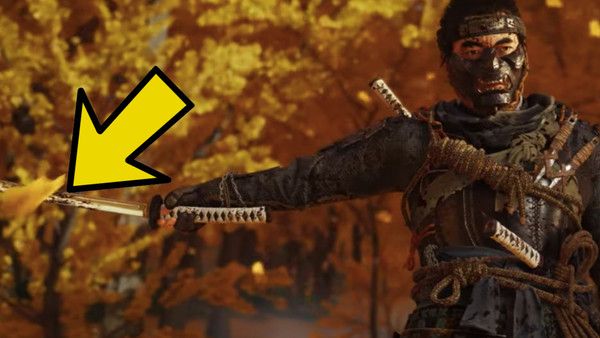
Ghost of Tsushima might not be the most graphically impressive game to grace the PlayStation 4, but in terms of art direction and sheer visual beauty, it's by far one one of the most unique.
Sucker Punch Production's latest effort doesn't provide the perfect samurai story, but it does possess plenty of little flourishes that help distinguish it from other AAA titles of the current console generation. Whether it's the fact Jin can play the flute to change the weather, or follow foxes and birds to nearby points of interest rather than having to utilise tried and tested forms of open world navigation - i.e., a waypoint - the studio have found more than a couple of ways to help mitigate the sense of familiarity that comes with approaching an open world title in 2020.
Ghost of Tsushima doesn't end up reinventing the wheel quite as dramatically as some may have hoped, but it does the basics extremely well, with a ridiculous level of attention being paid to even the most minute of details.
Whether it's wiping the blood off Jin's katana, outstretching your hand through the tall grass as you roam the countryside, or even just taking the time to cuddle a fox, Tsushima has loads of little details that help make it feel like more than just another open world game.
8. Jin Brushes His Hand Through The Tall Grass While On His Horse
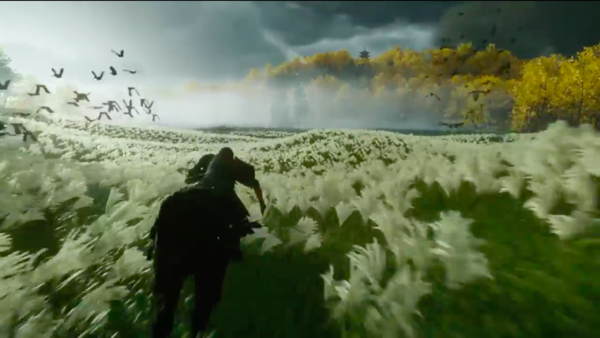
Starting off with a small but perhaps evocative detail now. When Jin is galloping at full speed on his horse, or just leisurely strolling through a field of tall grass or flowers, he'll lean his hand over, outstretched, to feel the foliage brush against his finger tips.
You actually see him first do this in the game's intro, and it hammers home his reverence for Tsushima extremely well. There are plenty of opportunities for Jin (and by extension the player) to take in Tsushima's beauty, and the simple act of him dangling his hand into the island's fields illustrates but one way the game forces players to adjust their gaze and focus on something other than the next objective.
Ghost of Tsushima's introduction is suitably cinematic and filled to the brim with highlights, but when it ends, and the world opens up, seeing Jin reach into the fields and be enveloped by nature truly is a sight to behold.
7. Blood Sprays Everywhere Accurately
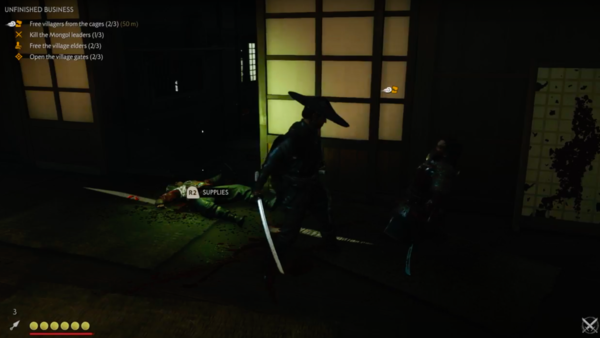
Ghost of Tsushima blends together filmic myth and historical reality to impart its own take on feudal Japan, an approach that manifests most obviously in its combat.
Tsushima's swordplay is excellent, and is rooted in real life technique. Jin can switch between several different stances to get an advantage over his opponents, and when blows hit, they really hit. The Sakai katana isn't just another over-glorified baseball bat or blunt instrument; it's sharp, deadly, and cuts through people like a hot knife through butter.
In typical cinematic fashion, depending on where you make contact with your opponent, blood will jet and gush in various but specific directions. Land one against their neck, for instance, and the spray will erupt from that specific body part and spill on to the environment in gruesome fashion. Stab someone in the chest, and blood will jet from the exit wound and land behind them.
The cherry on top of this blood-themed cake? When swiping right on the touchpad to sheathe Jin's katana, he'll either wipe it off on his clothes, or flick the blood onto the ground - and it doesn't disappear!
6. You Can Pet Foxes After Visiting Their Shrines
Tsushima island is a character in and of itself, and one of the friendliest faces you'll encounter as a player are the island's many foxes.
Encounter one of their dens, and they'll lead you to a nearby Inari shrine, which you can then honour to gain or strengthen charms. Some may even stick around for the chance of a good chin scratch, which - OBVIOUSLY - you have to do.
Over the course of playing Tsushima, I estimate I must've petted 90% of the foxes I encountered. Sure, it's the same old animation over and over, but who could say no to those wonderful little faces? They're great, and do a great job of reiterating that every AAA game simply must provide opportunities for players to pet cute animals.
5. There's Accurate Limb Dismemberment
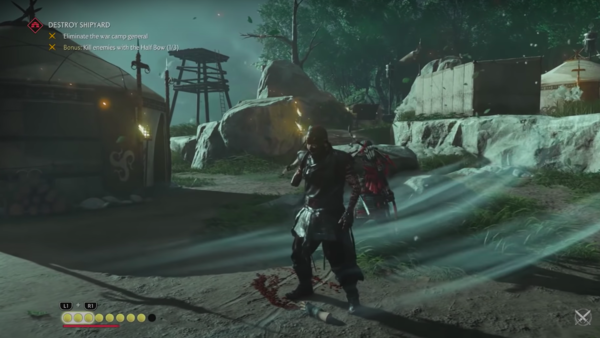
Most encounters in Ghost of Tsushima are stylistically violent. What I mean by that is that they rarely ever devolve into a gib-filled bloodbath where limbs are flying and and the whole screen turns red - but that isn't to say they don't have the potential to skirt into that territory.
As you play and develop Jin's skillset, you'll develop increasingly lethal kinds of attacks and stances. Eventually, you'll be able to dismember and even decapitate certain targets, and - much like aforementioned streams of blood - it's all reflective of where you make contact with your sword.
I'll avoid going into more detail for the sake of spoilers, but let it be known you can dismember opponents and no punches are pulled in the process.
4. Mongol Eagles Mourn Their Owners

One thing you'll notice whilst progressing through Tsushima is that your enemies get a lot tougher. Some will adapt so that stand-offs aren't as easy to perform, while new enemy types and weapons also get thrown in for good measure.
One of the more interesting - but potentially less developed - foes Jin will encounter are Mongol eagles. As the game explains (if you're diligent enough to seek out and collect its many Mongol artefacts), some Mongol soldiers actually have eagles they use to scout out enemy positions and relay messages.
They raise these eagles from a young age until it's time to take them into the field, and if you were already torn up about the fact you have to kill those loveable, moustachioed dogs that give away your position (seriously, this AND The Last of Us II in the same year?), then you're going to want to boogie on over to a different location as soon as you've killed an eagle's owner.
If you've opted to spare an eagle, but not the owner, and have dispatched the other Mongols present, the eagle will actually fly back to its master and mourn them for a brief while, before flying off to start a new life under a new name and identity.
3. Crabs, Frogs And Other Wildlife
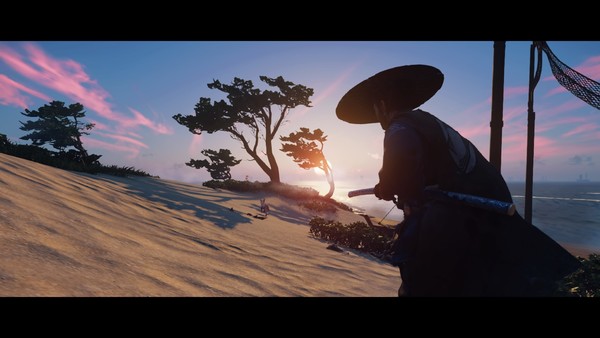
Thankfully - as opposed to most games - most of the wildlife in Tsushima isn't out to get you. Bears can be provoked but most often you'll find them getting into tussles with Mongol soldiers or bandits. Deer, meanwhile, roam the countryside freely and you are encouraged to leave them alone. But there are also other animals in the game that players may neglect if they don't pay close attention.
If you decide to comb Tsushima's beaches, you'll actually be able to spot crabs moving in the sand. They're low poly and disappear and reappear in a flash, but they're a neat touch to convey the island's biodiversity.
Likewise, moving further north into the wetlands, and you'll be able to spot all sorts of animals. Frogs hop and jump through ponds, and you'll also be able to spot pelicans and other birds dotted across the regions.
Better still, while the most common bird you'll encounter in the game is a yellow coloured songbird, other birds will actually mark out key locations on your map. Haiku sights, for instance, can always be identified by the sight of some white birds circling overhead.
2. The Ghost Armour Shows Jin's Evolving Arsenal
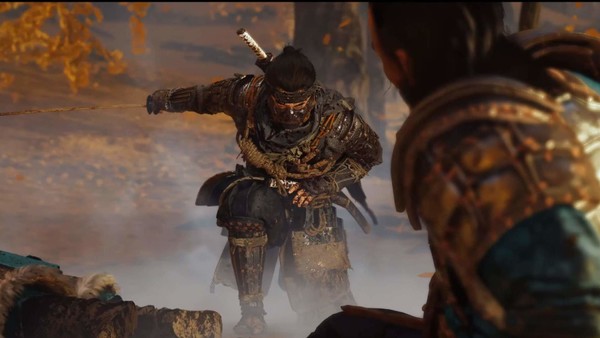
Ghost of Tsushima comes with a LOT of cool armours and outfits for Jin to wear, so much so that it's easy to lose track of all the various hats, bandanas, masks, dyes and cosmetic upgrades that come with each one. However, there is a standout armour in the game, and that is of course the Ghost Armour.
Featured prominently throughout Tsushima's marketing, Jin's custom battle armour is reflective of the journey he undertakes in game. Whereas before most of his armours were emblematic of his principled approach to combat, boasting only protection and belts for his katanas and bows, the Ghost Armour finds a place for every part of his evolving arsenal.
The first and most notable thing about Jin's change in garb is the rope slung across his chest. Jin gains access to this ability towards the end of the game's first act and it becomes a vital tool in him taking on a more innovative approach to combat, utilising verticality and deception to turn the tide against the Mongol army.
Likewise, the armour also finds a place for Jin's kunai, a weapon commonly adopted by ninja, who emerged as a major force in Japan a few centuries after the Mongol Invasions. These throwing weapons stagger and can even kill opponents, and are very un-samurai in nature.
Equipping the Ghost Armour also provides Jin with an additional tanto blade that's positioned on his right-hand shoulder. It... doesn't really serve a purpose, but more swords ups the stylish factor even more.
1. 'Kurosawa Mode' Is More Than Just A Filter

The functional qualities of Ghost of Tsushima's 'Kurosawa Mode' are a tad difficult to assess, mainly because Tsushima is itself one of the most vibrant and colourful looking games I've ever encountered. Filtering that out in black and white seems like an odd, if not novel choice, particularly when players need to utilise colour to navigate the environment.
All that said, it's clear that Sucker Punch have put effort into the mode, and that it's not just a filter that turns everything black and white. If you do wish to dabble in the mode, you'll notice a change in audio. According to Sucker Punch's Jason Connell (in a conversation with EW), the studio's audio team "had an internal tool that mimicked sounds of old TV and, specifically, megaphones, radios, TVs back to the ’50s,” to better convey that cinematic feeling.
Players will also notice film grain and other such effects that attempt to hammer home the game's filmic sensibilities even more.
There's no denying the effort that has gone into it, but I would also just like to awkwardly tack-on that the best way to play the game is still in full colour, taking in the full rainbow of saturated palettes that distinguish Tsushima from its contemporaries. 'Kurosawa Mode' might be fun to flick on for a couple of minutes or so to get that perfect shot in photo mode, but don't let it wash out Tsushima's beauty.
Plus, if you are after a hearty dose of black and white samurai action, you could do a lot worse than to just watch Kurosawa's films instead! Rashomon and Seven Samurai are both great places to start, and feature Toshiro Mifune doing Toshiro Mifune things as an unreliable outlaw and maverick ronin respectively.
--
READ NEXT - Ghost Of Tsushima: 10 Samurai Films You NEED To Watch First
