Ghost Of Tsushima REVIEW: 7 Ups & 2 Downs
Sucker Punch's samurai epic is another huge win for PlayStation.
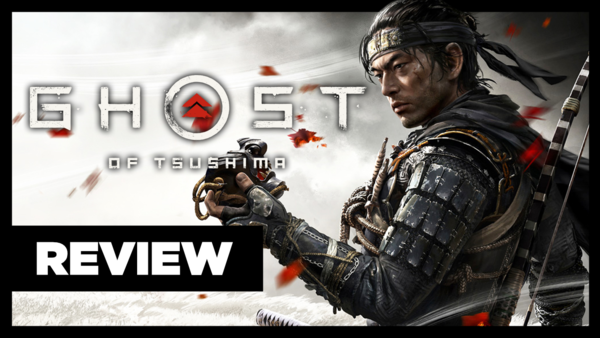
Ghost of Tsushima is the latest effort from Infamous developers Sucker Punch Productions, and only their second full release to grace the PlayStation 4 since 2014's Infamous: Second Son. That's a lot of years to spend crafting the ultimate samurai experience, and while Ghost of Tsushima isn't without its faults, it's another superb first-party offering for Sony's current gen console.
Set in 13th century feudal Japan, in the midst of the Mongol Invasions, Tsushima puts players in the shoes of Jin Sakai, a samurai who - faced with insurmountable odds - is forced to abandon his honourable ways and become the 'Ghost', a ninja-like spectre who utilises every dirty trick in the book to force the Mongols off his homeland.
It's a wonderfully realised journey - a case where the gameplay illuminates the narrative just as much as the cutscenes - and it's likely still that players will find themselves just as torn up about the decisions they make in combat as Jin is. He's a samurai. He should be better. But what do you do when an enemy doesn't respect you? Do you stand your ground and be principled, or do you make a sacrifice and fight on their level? It's a compelling question that Tsushima levels from start to end, and one that makes the game as much a tragedy as it is a war epic; equal parts Throne of Blood, than just purely Yojimbo.
It isn't flawless, but Ghost of Tsushima is another rousing effort from Sucker Punch, and a fine bookend to the PlayStation 4...
Ups...
7. The Art Direction And Presentation Is Phenomenal
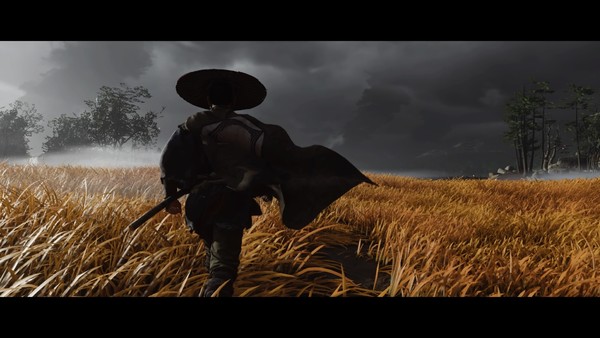
There comes a point in every open world game where the map 'opens up' and invites you to explore its every nook and cranny. Ghost of Tsushima's occurs at the conclusion of the game's intro, and made the hair stand on the back of my neck.
Sucker Punch's latest game is stunningly realised and steeped in the traditions of classic samurai movie fare, to the point where players can actually choose to play the entire story in a black-and-white, subtitled 'Kurosawa mode'. Its visual cues go beyond just the cinematic too; Tsushima island looks like an oil painting come to life, and Sucker Punch knows how good it looks, mapping the game's photo mode button to the d-pad for quick access.
There are occasions where Tsushima can look a little rough around the edges - not every character model is as intricately detailed as the lead cast, for instance - but it is perhaps the most vibrant open world I've ever encountered. Fields of tall grass sway gracefully in the wind, blossom twists and turns as it falls from trees, and the sea crashes against the island's rocky cliffs without relent.
It is such a beautiful game, no matter the weather. From dawn 'til dusk, come rain or shine, Sucker Punch have created an artistic marvel on the current gen, making Ghost of Tsushima one of the most unique looking open world titles to have released over the previous seven years.
That cinematic approach manifests across both gameplay and cutscene, and while the transition between either could be smoother (be prepared for a lot of 'fade-to-black' transitions and static camera angles), the game makes you want to savour every moment.
At the time of writing, I'm actually yet to indulge in Ghost of Tsushima's Kurosawa mode, so refreshing and colourful is the game's recreation of 13th century Japan. No doubt it'll add to the cinematic flavour even more, but for now, playing the game in full colour, Japanese dialogue and English subtitles has been brilliant enough.
6. Combat Is Deep, Satisfying And Suitably Cinematic
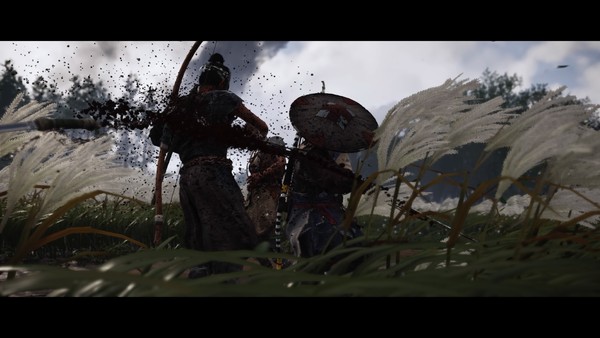
Possibly the most surprising about Ghost of Tsushima is how deep the combat goes. It's very much of the post-Souls era, and has a lot in common with the combat system Respawn Entertainment opted to go with in last year's Star Wars Jedi: Fallen Order, only deeper.
Just as you feel as though you've gotten to grips with Jin's arsenal and skill-set, or the range of enemies on offer, Sucker Punch always manage to throw a wrench into proceedings. There were times where playing the game I worried that combat would start to feel repetitive, but just as that was about to happen, out came a new enemy, combat stance or mechanic to consider. It keeps the player on their toes, and it must be said that the combat itself is fantastic.
Sucker Punch took instruction from sword expert David Ishimaru to lend another layer of authenticity to the game's swordplay mechanics, and it truly shows. Animations are fluid, bloody and well-paced, with players utilising a variety of stances, attacks, dodges and parries to gain the upper hand over the bandits and Mongols terrorising the island. Each stance has its own skill tree and each is effective against a specific enemy type. When all are coming at you at once and you manage to switch between all four, effortlessly dispatching your foes with different strikes, Tsushima is at its frenetic best.
It's also up to the player as to how they approach combat too. Do they embrace the way of the Ghost and utilise stealth, deception, explosives and poison, or do they approach the enemy head on and initiate a stand-off? Both have their bonuses and drawbacks, but executing the latter is ridiculously satisfying, and illustrates yet another way Sucker Punch have crafted no ordinary open world title.
5. Jin's Journey From Samurai To Ghost Is Handled Expertly
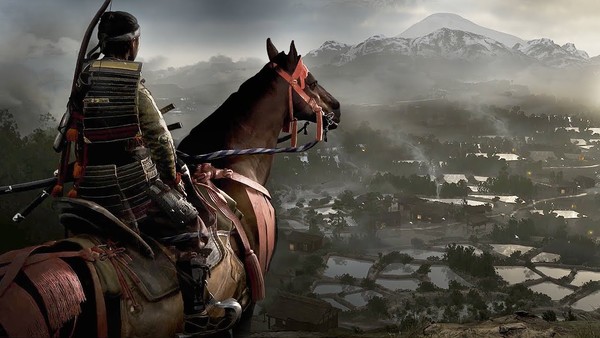
Before Ghost of Tsushima, Sucker Punch had carved out a niche with Infamous in embracing morality systems and multiple choice mechanics in their titles, forcing the player to make sometimes difficult decisions that would lead them on the path to becoming a hero or villain.
Tsushima does away with such a morality system, and fully embraces Jin's transition from samurai to the Ghost of the people. Some may bemoan the lack of player freedom in this instance, but it only enhances the tragedy of the story, and the crushing sense of inevitability that, no matter how much you try to honour Jin's clan, you're only a stealth-kill away from continuing his descent.
Sporadically, if you choose to kill your enemies by stabbing them in the back, or shooting them from afar, or even poisoning them, you'll be treated to flashbacks of Jin training with his Uncle Shimura as a young child. It emphasises that the choices you're making aren't made without pain, and when the time comes for Jin to fully adopt the way of the Ghost, you'll be surprised at how affecting it actually is.
I can't talk too much about the story (anything after the second act is strictly prohibited), but it is superb, and engages with the feudal setting brilliantly. Jin is a lord, a samurai, rescued by a peasant thief at the beginning called Yuna, who encourages him to realise the futility of his honour-bound code and who also coins the Ghost legend to rally the island, as well as to spread fear among the Mongol ranks.
There's a fascinating conflict and dynamic that arises as a result of Jin's transformation into the Ghost and his partnership with Yuna, but I can't really say anything more than that without getting too deep into spoilers.
4. The Open World Is Jam-Packed With Stuff To Do

This is both a positive and a negative, but Tsushima island is filled to bursting point with content - most of it good, but sometimes forgettable.
Tsushima island is a large, expansive setting, but it's also deceptively large. Side missions, or 'tales', are hidden around every corner, and it's frequently the case that, on the way to explore a specific objective, you'll encounter all sorts of bonuses and missions almost by accident. Sometimes this is great, but it can occasionally prove frustrating when you've set your mind to a given objective.
Of course, in sheer value for money terms, the amount of stuff to do in Ghost of Tsushima is sure to be a boon to many players. Sucker Punch have estimated the whole game will take up to 50 hours to complete, and given the sheer array of content on offer, that doesn't seem that inaccurate an estimate. The game always encourages you to explore every path, thanks in-part to the use of environmental cues and the various exploration mechanics found within, and a lot of the side tales truly enhance the main story.
It's something to be savoured, not rushed. And while the constant stumbling into shrines, enemy encampments, duels and other such activities and locales can sometimes prove disorienting, it was rare that one didn't pique my interest. There's a clear sense of reward with each encounter, and while there will undoubtedly be a creeping sense of familiarity with a lot of the open world fare found across the game, Tsushima's innovations are still plentiful.
3. There's A Wealth Of Customisation Options
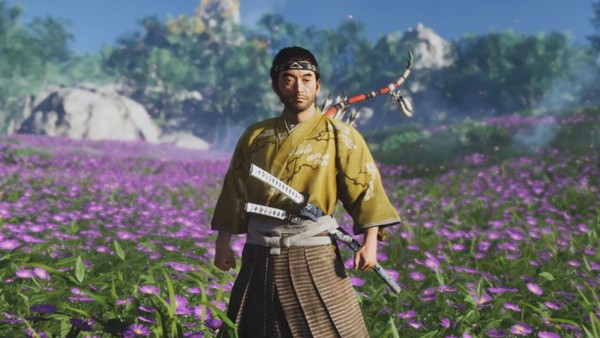
Of course, Tsushima has the style to match the substance - so much so that I've spent untold hours customising my version of Jin to adopt all sorts of different outfits during my time in the game.
The customisation in Tsushima is simple, but layered. Various template outfits can be found and upgraded and come with their own unique benefits. Equip the Traveller's outfit, for instance, and you'll have less armour but will clear more fog off the map, whereas more armoured outfits provide more defence at the expense of stealth. (It's also worth noting that, while upgrades change the overall look of a given outfit, players can choose which cosmetic iteration of which garb to use and retain all the benefits of the upgrade.)
Collecting flowers will give access to different dyes to change the colour of Jin's garb, and composing Haikus (a standout feature, honestly), provides new headbands to wear too. Add to that various hats, helmets, masks, bandanas, bows and katana sets, and you have all the materials you need to craft your own perfect samurai.
It would be remiss to omit the various presentation and photo mode options when discussing customisation too. Players can elect to play the game with English or Japanese dialogue, or even play entirely in black and white with English subtitles. I started off with English, but switched to Japanese soon after. Still, it's disappointing to see that animations are only lip-synced to the English voice acting, and an argument could be made that Sucker Punch should've committed to making the Japanese version the default option.
Either way, the photo mode is a major highlight. As was the case with Insomniac's Spider-Man, I am so excited to see what players come up with when the game releases.
2. It's A Breath Of Fresh Air
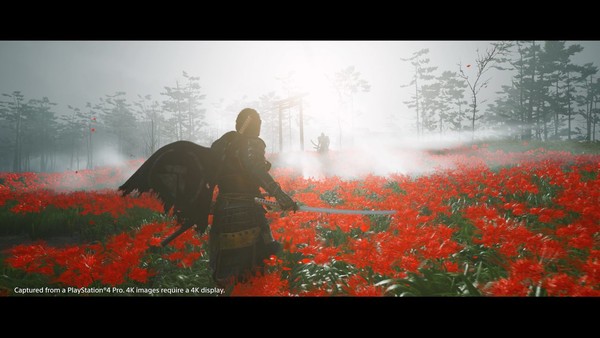
I would be lying if I said there weren't times while playing Tsushima that I was worried the game would devolve into a typical open world title. There are camps to liberate and collectibles to find, but it's the way the game goes about integrating those elements that prevents any kind of malaise from setting in.
Playing Tsushima felt like opening the windows and letting in a cool, refreshing breeze. The industry has seen some tremendous as well as forgettable open world titles over the current console generation, but few play like Tsushima does.
The emphasis on environmental storytelling has paid off tremendously, if not for the fact it divests from clunky UI and the kind of icon mania that has typified many current-gen open world offerings, then because it actually indulges in my love of flowers and bird watching. Songbirds will frequently appear and lead the player to points of interest, and well, it's just plain nice to admire the flora from time to time (the golden forest is a particular highlight).
It's just a wonderfully composed experience, and one that should be relished. Exploring shrines, temples and even just the various vistas dotted across the open world is just as satisfying as the combat. Granted exploration can be a bit finicky at times (scaling up and down cliffs doesn't feel as fluid as it should be), but reaching your destination is always worth it.
1. Mythic Tales Are A Major Highlight

Ghost of Tsushima has some seriously brilliant main tales and side tales, but arguably the highlight are the Mythic Tales.
As Jin travels Tsushima, he'll encounter a musician called Yamato. Yamato also moves around the island, telling tales of ancient warrior techniques, weapons and armour for Jin to try and find and recover. All are engaging, and the introductory cutscenes are suitably stylish, modelled on sumi-e paintings rather than being modelled using in-engine footage.
Whereas some of the other side tales in the game can feel a little so-and-so compared to the main quests, the Mythic Tales are almost certainly just as good.
Downs...
2. Exploration Sometimes Lacks Achievement
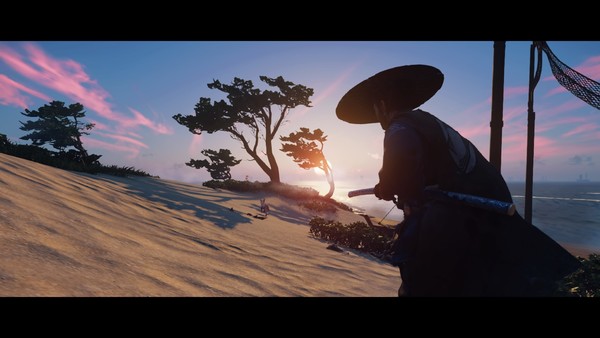
However, even though Tsushima having a lot of things to do is undoubtedly great in terms of getting more bang for your buck, the density of content can prove off-putting after a while.
When Tsushima's environmental cues work, they really work. There's nothing quite like following a fox to honour a nearby shrine, and then to pet said fox, or following a bird to a nearby onsen or bamboo post to strengthen your sword arm. It's just that sometimes with the sheer amount of content on offer, it can prove difficult to get a peaceful thought; you'll be following your best mate, the fox, to a nearby shrine, only to rescue a peasant and then trigger another side mission, all the while your other friend, the bird, will be nagging you to go somewhere else.
There've been plenty of occasions while playing the game where I've set out to do a side mission I've been neglecting, only to encounter another one on the way there and get distracted. Meanwhile, in the process of actually doing said mission, I'll encounter a fox or bird or other environmental cue and feel compelled to go ahead and stop everything and follow them. This is without actually doing much exploration, so that sense of achievement sort of gets lost in translation.
Players are sure to appreciate the wealth of content Tsushima has to offer, but the sheer density of tales available can be frustrating to navigate.
1. There's A Frustrating Lack Of Proper Cutscenes In Most Tales
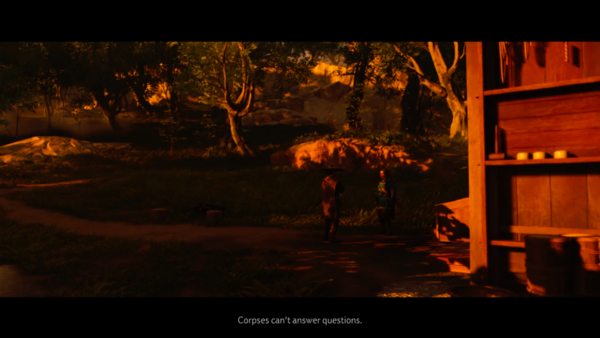
For all that Tsushima is one of the most cinematic games I've ever encountered, that mantra can be lost in translation in and out of gameplay.
Generic, fade-to-black cutscenes where Jin and an NPC talk while the camera switches between three fixed positions are common, and are really at odds with Tsushima's filmic sensibilities. Actual cutscenes are extremely well presented, but they don't form the bulk of your interactions with the many characters you'll encounter while playing the game.
Likewise, while other studios have long since mastered the art of seamlessly making the transition from cutscene to gameplay, or by including unique animations so as to keep the player immersed in the experience, Sucker Punch always seem to spring for a quick fade-to-black instead. It feels more than a little dated, and - when everything else about the game is presented so immaculately - more than a little disappointing.
--
All that said however, Tsushima marks a strong return for Sucker Punch, and a fine way for Sony to close the book on the PlayStation 4. There might be clear areas to improve, but Jin Sakai's story is uniquely compelling, and one that shouldn't be missed.
Final Rating - ★★★★☆
Watch Next
PlayStation 25th Anniversary Quiz - How Well Do You Remember Sony's First Console?
