Google Stadia: 7 Reasons It's The Future Of Gaming (And 4 Reasons It's Not)
Do you like owning your games?
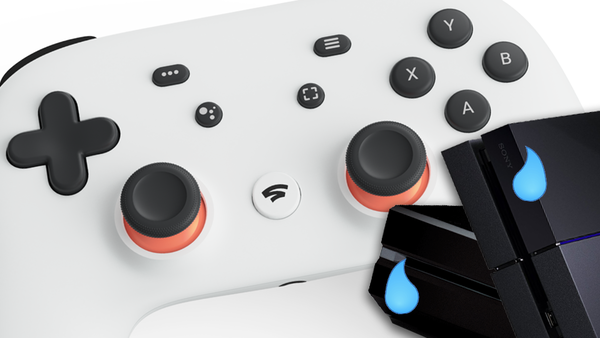
After months of secrecy, leaks and rumours, the Google Stadia "console" has finally been unveiled to the world. Shown off at an extensive press conference at GDC, the tech giant is aiming to deliver a gaming experience few others have ever even attempted, a far cry away from the regular console and PC status quo fans are used to.
Instead of selling a powerful box that requires games to be installed on it to play, the Stadia is instead pursuing an experience where all you have to do is press a button and a game will be streamed directly to your TV, laptop or mobile instantly.
Saying it's "Netflix for games" is a little reductive, but that's really the only service it's comparable to.
Though it sounds like a pipe dream (and so many other streaming-focused gaming systems have crashed and burned), Google's showing looked damn impressive. Highlighting just how easy and quick it is to jump into a game on any device thanks to their network of data banks streaming it in, if it works as intended, Stadia could usher in a whole new era for the industry as a whole.
But that's a big "if"...
Reasons It's The Future...
7. The Specs Are Insane

One of the most impressive things about the Stadia's design is how it's not looking to simply replicate the experiences already found on PC and consoles via streaming. Instead, Google are planning for the future, and have build a system that will deliver "next-gen" level titles that are way more powerful than those on the market now.
In fact, the company even provided a direct comparison, explaining how the GPU powering Stadia is more powerful than the Xbox One X's and PS4 Pro's combined, coming in at a whopping 10.7 teraflops. This tech going to act as the backbone of the 4K/60fps gaming dream they're support at launch, with 8K compatibility coming post-launch.
Consequently, despite streaming being more tasking than simply reading an installed game, releases on Stadia should eclipse their console counterparts when it comes to sheer performance.
6. The Cloud Will Lift Limitations On Multiplayer And Single-Player

While this GPU architecture is impressive, it will be working hand in hand with the "limitless" memory of the fabled Cloud, which Google says could take away limitations currently hindering developers on PC and consoles.
By utilising this technology, the company said that battle royale games running on the Stadia, for instance, could see their player count move up from a hundred into the thousands. Obviously, more players doesn't equal a better experience, but the option will be good for developers in the long run when it comes to crafting new and unique titles.
Another perk touted was the ability to create a detailed open-world game that was fully destructible. That sounds tantalising on paper, but we shouldn't forget that Microsoft said the every same thing about Crackdown 3, and none of those features turned up in the final product.
Still, you'd hope Google will have learned from those mistakes, and hopefully wouldn't advertise features they couldn't deliver on.
5. Playing With Friends (And Strangers) Will Be Even More Intimate

One of the Stadia's major features, unsurprisingly considering it's Google making it, is the integration with YouTube. The company spent a bunch of time describing its Crowd Play system, which will allow people merely watching a game to jump into that very same session at the push of a button.
It's very much targeted towards making the streamer/audience relationship more intimate, allowing fans and content creators to play together if they're into that kind of thing. The streaming world may not want that level of interaction, but if they do, it will change the dynamic entirely and offer an experience that a competitor like Twitch simply can't.
What's perhaps more tantalising for the hardcore crowd though, is even more options for multiplayer games. Google explained how the streaming service will be able to beam another person's game into your own session. Consequently, you'll be able to see exactly what your friend is doing while you play together.
Not everything will benefit from this, but in a high-stakes game like Rainbow Six: Siege, for instance, it would add an extra layer of depth and tactical communication. Either way, it points towards a future where the gaming experience is even more shared than it already is.
4. Full Cross-Platform Play
Though they didn't dwell on it all that much, it's clear that Google have the support of plenty of developers and publishers, and it was stated that the Stadia would provide full cross-platform play. Of course, it's up to the console owners to enable this themselves, but with Microsoft's recent partnership with Nintendo, it doesn't seem unfeasible.
Sony have always been the holdout when it comes to implementing this feature across the board, but even they're starting to crack, and with added pressure from Google to change with the times, they might have to.
The barriers between gaming machines have slowly faded away across this generation, and no longer are players being limited by which device they actually own. Implementing cross-play across the board wouldn't take away the idea of exclusivity or the benefits that come with it, but would make the industry as a whole far more accessible. Speaking of which...
3. Streaming Is Hugely Accessible

Perhaps the most obvious selling point of the Stadia is just how accessible it is. Games at the moment are tethered to hardware, and there's a relatively steep barrier to entry before you can even get started. First you need a console and TV to connect it to, both of which will set you back a hefty chunk of change before you even pick up the games, controllers, and online services. The PC experience is a little more streamlined, but there's still a lot of hoops you need to jump through before you can enjoy playing anything.
Compound this with this generation's move away from the pick-up-and-play experience, with games needing lengthy instals and usually major patches before they can even be booted up, and you can see where an instantaneous system like the Stadia can thrive.
Google are selling a dream where not only can you be playing the latest games five seconds after watching a trailer, but where that experience isn't tethered to one specific machine. Gaming on the go will undoubtedly get a huge boost from this, building on the formula which made the Nintendo Switch so successful.
2. It Could Get More People Playing Games

Perhaps the biggest pro to streaming games on any device anywhere is just how many new people will be exposed to the medium. There's a huge amount of fans out there who either don't have the interest, or the financial resources, to pick up every new game and console, and instead resort to watching them be played by popular personalities on YouTube.
With the Stadia though, the implication is that even a person who only has a passing interest in the game they're watching could try it for themselves, instantly.
We don't know a pricing model yet, but the fear of dropping $60 on a new release you might end up not liking should be eliminated entirely, which will lead to more games being experienced by more people. Gaming will be opened up to more people around the globe, and that accessibility can only be a good thing for the industry as a whole.
1. The Library Could Be Endless

Currently Xbox Games Pass is succeeding in essentially being the gaming equivalent of Netflix. Players have been given access to a wide variety of titles, with a substantial amount of Microsoft's back catalogue being available. It's impressive, but Stadia's library could completely eclipse what Microsoft currently has to offer.
Not only will jumping into games be faster as you don't actually have to download them, but them merely being streamed from a data bank should open the door to a larger variety of titles to choose from, across generations.
Whether it's the game itself or an emulated version of it, it should be easier for Google to retrofit these experiences to be playable on the Stadia than it would for other console makers to make their own machines backwards compatible.
Reasons It's Not The Future...
4. Game Ownership Becomes A Thing Of The Past

One of the biggest issues with Stadia, of course, is that it could lead to a future where players don't actually own the games they play. The joy of picking up a title and physically (or digitally) having it to keep has endured even as the entire world moves to streaming services like Spotify and Netflix, but that raises a few issues when it comes to video games.
For one, Microsoft already pissed people off back in 2013 when they considered tinkering with their licensing agreements so that, despite paying full price, players didn't really own the titles they were picking up.
Stadia will circumvent that by (presumably) not asking for as much money, but in an era where so many video games already get lost thanks to servers being switched off or copies going out of print, a focus on streaming could only exacerbate matters. The industry is moving into an increasingly digital zone, and that only puts more power - and more restrictions - in the hands of publishers.
3. The Minimum Requirements Alienate So Many Players

Google's dream with the Stadia is an intoxicating one, but there are worries over how realistic it is. The internet infrastructure is better than ever, but the idea that the majority of players will be able to reliably stream high-end games at 4K just doesn't seemed rooted in the real world.
It's been touted that the Stadia will only require a 30mbps connection to stream 4K titles at 60ps, but even that would be out of reach for a huge chunk of players. That's in the countries Google are targeting first as well (the UK, USA, Europe and Canada), with the problem being far worse in countries like Australia, with strict data caps and no Google server farms. For people living in these conditions, a console will always be superior.
The world just doesn't seem ready for a system like this. Which is frustrating, because as mentioned, Stadia could open up gaming to a brand new audience of millions, but there could be just as many people locked out because their internet isn't up to snuff.
2. Latency Will Always Be An Issue

As PS Now has proven, streaming video games is a precarious business. Even with a high-speed connection, a game as old as Sly Cooper will suffer latency issues which make it pale in comparison to the disc version. With that in mind, properly experiencing games that require quick responses like Street Fighter or Counter Strike seems impossible.
Google stressed that they've taken every single step to minimise latency, with the games being streamed via their databanks rather than through public broadband, limiting interference as much as possible. The responsiveness of the titles looked great on the show floor from a distance, but even those have been scrutinised frame by frame, and it's clear that lag is still present.
It's all well and good being able to stream the latest titles at a ridiculous resolution and a silky-smooth framerate, but if the actual experience of playing said games feels unresponsive or even a touch off compared to the console versions, then it's dead in the water.
1. Longterm Game Preservation And History Will Be Impacted

As alluded to earlier, the game industry has a real problem with preserving titles. Whether it's because of a lack of backwards compatibility, video game licenses running out or servers being shut off, there's a huge chunk of releases that have simply been rendered unplayable, doomed to be forgotten as the indsutry as a whole moves forward.
There's been an attempt to remedy this through remasters and remakes, but even that robs the medium of its history, and the context in which these titles were originally released. On the surface, Stadia would be an excellent answer to this problem, as it could keep updating its library and provide a wealth of games to players from different consoles.
But what happens once Google shuts these servers down? Especially when it comes to the first-party titles released exclusively for the system, with no boxed, physical release those experiences will be restricted from future generations.
Tying everything to a license which can eventually disappear isn't the direction the industry should go as a whole, especially considering how poorly gaming's history has been preserved so far.