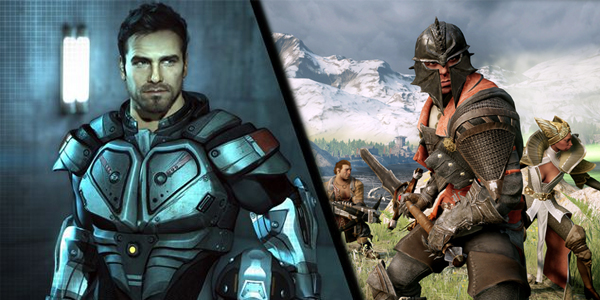
Mass Effect 3 was one of Biowares most controversial games. Following the near universal acclaim for Mass Effect 2, expectations were incredibly high for Bioware to deliver the spectacular ending fans were promised. While Mass Effect 3 was a good game in its own right, certain design choices were clearly influenced by corporate interests, and this left many fans feeling betrayed. For the first time faith in the developer was shaken. Some of the more extreme fans even declared that they would never purchase another of their games again.
Enter Dragon Age: Inquisition. In a time where the video game industry is being infested with shameful business practices and a lack of transparency, Inquisition is a reminder of why people play video games. In terms of sheer scope and wealth of things to do it is the biggest game of 2014. Its diverse characters and world building are second to none. Not only is it one of the best games of the year, in many ways it is one of Biowares best games. What does this have to do with Mass Effect you may ask? Well, if Inquisition is anything to go by, then the Mass Effect series appears to be in more than capable hands. For anyone still sore over the Mass Effect 3 debacle, playing Inquisition is a must. It shows that, even with all the changes that have transpired over the years, Bioware continues to make some of the best video games. Dragon Age: Inquisition is so good that the next Mass Effect could learn a thing or two from its design choices. Given the sour note the series last left off on, a lot is riding on the success of the upcoming Mass Effect 4. Here are some of the things the next Mass Effect should learn from Dragon Age: Inquisition in order to make the best game possible.
10. Don't Limit Players To Humanity
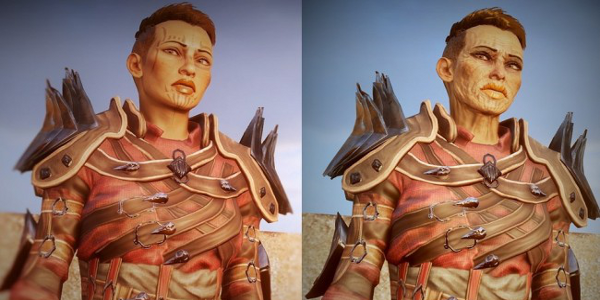
One thing Dragon Age: Inquisition has over the Mass Effect series is being able to choose which race you are. Unlike Mass Effect, where you have to be human, Inquisition allows you to be a human, Elf, Dwarf, or Qunari. Granted, there was a story reason for why Shepard had to be human in the original trilogy, so being limited to humanity made sense in that context. Nevertheless, Inquisition demonstrates how fun it is to have these options available. It makes you feel even more connected to your custom Inquisitor. Mass Effect 4 doesnt have to be restricted by the confines of its story, so now would be a perfect time to take a cue from Inquisition and give players the option to choose which species they want to be. Obviously not all alien species would be available to choose from, but the most humanoid species, such as Asari, Turian, and Quarian, would all be viable options. Many Mass Effect fans have dreamt about playing as a species other than human. Not only would it be a fresh addition to the series, but it would extend the amount of customization options available, which is always a good thing. Players respond positively to freedom of choice in video games. Its doubtful youll find a Mass Effect fan that would be against this addition.
9. Inventory Management Is Still Annoying
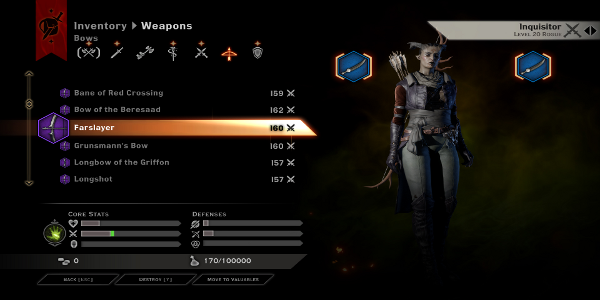
Dragon Age: Inquisition may be a fantastic game, but it isnt without its flaws. One minor quibble with the game is its inventory system. While it works fine enough, it simply isnt much fun. Many RPGs suffer the same issue. The game only allows you to carry a limited amount of things, and when combined with the pack rat mentality all gamers share, this leads to too much wasted time fretting over which items are worth destroying or discarding in order to make space. Frankly, its a chore navigating the inventory menu in an attempt to keep track of which characters carry which items. So while Mass Effect 4 should follow Inquisitions lead in most aspects of design, this isnt one of them. This doesnt mean an inventory system ought to be thrown out altogether, as resource management is often a major aspect of the open world RPG genre. If anything Bioware should increase the amount of resource management from Mass Effect 3, but the management system itself should be streamlined so as to be as simple and intuitive as possible. The less amount of time a player spends in a menu system the better. Menu screens arent immersive; they break immersion. Its not a huge issue; if it was Inquisition wouldnt be as enjoyable as it is. And even if Mass Effect 4 did copy Inquisition to the point where it did contain the exact design it would still be a great game. Thats a testament to how good the whole of Inquisition is. But there are still areas to improve upon, and with Mass Effect 4 Bioware has the chance to do so.
8. Paragon/Renegade Is Pointless
One area in which the Dragon Age series is better than Mass Effect is the subtlety of the choices you are forced to make. Mass Effect judges the player along a paragon/renegade gradient, and in doing so influences and pushes players to pick a side. While one can see the reasoning behind this design, in many ways it rings false. A players decision within the game shouldnt be explicitly judged by the design because, by knowing this, a player will game the system in order to get the best outcome. On the other hand the Dragon Age series, including Inquisition, doesnt categorise choices along an arbitrary measurement of morality. In Inquisition you are presented with many difficult choices to make, and they arent colour coded or named. This simple design choice force players to make a decision based on context and reasoning. Siding with Templars or Mages isnt a paragon or renegade choice; its just a choice. Its up to you to decide which one is the right one. Playing Inquisition highlights just how useless that paragon/renegade system was in the Mass Effect series. When you really think about it the games wouldnt lose anything if it hadnt been there. If anything the system limited player choice, as failing to consistently choose paragon or renegade responses would close off crucial dialogue options. Its time the series got rid of it. Players dont need colours to guide them through difficult choices. If the Dragon Age series doesnt need a system of morality measurement to guide players, than Mass Effect doesnt either. Removing paragon/renegade choices would bring more nuance and subtlety to the series while making your choices feel more organic and personal.
7. If You're Going To Do Multiplayer, Do It Right
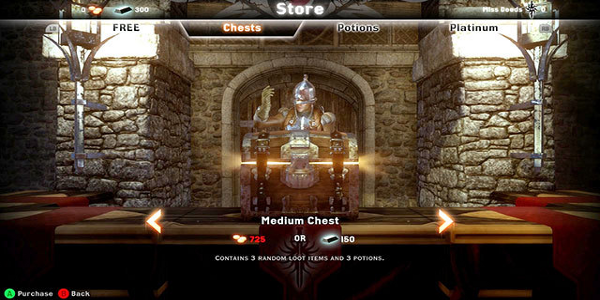
Inquisitions single player campaign may be a knock-out in nearly every aspect, but its multiplayer is half-baked. The potential for a cooperative multiplayer experience in the Dragon Age universe is extremely compelling, but what is presented in Inquisition feels like a throw away experience in order to generate a little extra cash. With only 3 maps, the experience gets very repetitive very fast. But the worst part is the microtransactions, which, unless you are willing to grind, bar your progress. It doesnt come close to what could have been. Thankfully the single player is good enough that you can pretty much ignore multiplayer and not lose any value. The Mass Effect series actually did multiplayer first, and did it better. While many fans would agree that it was needless, especially if it took any resources away from the single player, it was still actually fun for what it was. Its unfortunate that the Dragon Age series took a step back in this regard. If Mass Effect 4 is to have multiplayer, which is most likely will, they should not follow the Dragon Age model. Like Dragon Age, the potential for multiplayer in the Mass Effect universe is near endless in its potential. Imagine being able to travel the galaxy and explore planets with your friends. That would be incredibly engaging and would allow Bioware to release new planets on a regular basis. And no microtransactions please. No one likes them. The point is that if youre going to do multiplayer, you should do it right. Inquisitions feel like its just there because every game needs multiplayer. Mass Effect 4s inevitable multiplayer needs to be a bit more ambitious if its to justify its existence.
6. Delay If You Have To
Dragon Age: Inquisition may be a fantastic game, but it does have its fair share of bugs and glitches. Erratic NPC behaviour, random audio drops, floating bodies, and conversations that fail to progress are just some of the glitches that you are bound to run into at least once. Most of them are minor, but some of them are so bad that you have to reload your save. All this is to say that, while Inquisition was already delayed once, it still could have used another month or two to address these issues. The game is extremely polished in most areas, which makes your encounter with glitches and bugs all the more jarring. Sure it would have been annoying to have to wait even longer, but the game would have been better for it, and that is what matters in the end. Nobody wants to see the next Mass Effect suffer from these kinds of glitches, and so while it may be painful, Bioware should not be afraid to delay it if necessary. Weve seen what happens when a Mass Effect game is rushed. To evade a similar fate Bioware should take their time, which it seems they are, and thats good. Inquisitions bugs may not be as crippling as the recent debacle Assassins Creed Unity, but encountering them is still an unpleasant and immersion breaking experience. Every game would benefit from having as little bugs as possible, and Mass Effect 4 is no different. If delaying it at some point is necessary to accomplish this then so be it.
5. Keep Improving The Romance System
Inquisitions romance system is a huge improvement over Mass Effects. It feels deeper, more natural, and less rigid. Whereas the romantic plotlines in the Mass Effect series were all about the build up to the obligatory sex scene, Inquisition continues relationships beyond that. It is more loosely structured, with some characters willing to get right into the heat of things well before the climax of the story. You can also start and stop romantic relationships at any time. If you changed your mind about being with one character you can break it off at various points and pursue another. Most impressive though is how diverse the various romantic plotlines are. Some, like Josephine, are touching, while others, such as Iron Bull, are just plain dirty and hilarious. They are all excellently written, even by Bioware standards. The Mass Effect series may have popularised and set the standard for player driven romantic plotlines, but Inquisition is a refinement and a step in the right direction. Going into Mass Effect 4, Bioware needs to take what they did in Inquisition and refine it even more. Given the improvements in Inquisition, there is no reason not to expect this. The romances continue to be one of the most popular and user requested elements of Biowares RPGs; they make players feel more personally invested in their stories. It would be foolish not to take these improvements beyond the Dragon Age series and into Mass Effect.
4. The Importance Of The Dialogue Wheel
One of the greatest sins of Mass Effect 3 was the reduction of the dialogue wheel, one of the most integral tools for role-playing in that series. Where once you had input into everything Shepard said, Mass Effect 3 had tons of auto-dialogue, and when you did get input the options were more limited than ever. It severed the feeling of player agency, and the conclusive chapter of the trilogy suffered for it. If Dragon Age: Inquisition is your first Bioware title since that game, youll be pleasantly surprised to discover that the beloved dialogue wheel is back in top form. Once again you have three progressive options on the right and investigative options on the left, the combination of which can lead to conversations of surprising depth. In many ways it even improves on what came before it. Inquisition confirms just how important the dialogue wheel is to these types of games. Even the slightest reduction has nothing but negative consequences. The fact that Bioware made Inquisition the way they did gives one hope that they heard the complaints regarding Mass Effect 3. Hopefully they will implement the same system in Mass Effect 4 while continuing to refine and polish it.
3. Side Quests Should Be Meaningful
Mass Effect 3 completely dropped the ball with its side quests. While previous games gave every side quest its due, the third game simplified most of them into fetch quests with no context. Shepard would unintentionally eavesdrop on someone complaining about their problem, your mission log would automatically update with where to go, and youd travel to a planet, scan it, pick it up, and return it. There was no who or why about most of them. Underwhelming would be putting it lightly. In contrast, Dragon Age: Inquisition not only has way more side quests, but every one of them is given proper treatment. Yes, many of them are also fetch quests, but at least Inquisition has you do more than hover over the icon of an area, press a button, and automatically pick it up. Every side quest requires effort on your part to traverse the world. This highlights why side quests are so important; they are supposed to give you reason to explore the world. Mass Effect 4 needs to follow Inquisitions footsteps and give the player a plethora of meaningful side quests. Every one of them should be accomplished in real time and exist as a means of fleshing out the world. This isnt new ground for Mass Effect, but given the unfortunate nature of the last games side quests, Inquisition should be the standard for which the next game follows.
2. World And Characters Matter More Than Plot
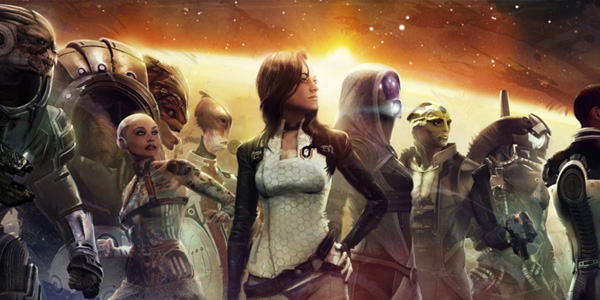
Inquisitions plot is very good, but its nothing that hasnt been done a thousand times in the fantasy genre before. In the most basic sense, its about a bad guy with a god complex that wants to take over the world with magic, so you must gather a diverse cast of characters and set out on a quest to stop him. Again, nothing special, but with Biowares quality writing it works. With that being said, the main plot of Inquisition isnt what makes you want to keep playing well beyond reason. Its the world and the characters that inhabit it. Its characters like Varric, Dorian, and Iron Bull. Its the mythology of the world itself; finding artifacts and exploring ruins that delve deeper into the history of Thedas. This is why the side missions are often the meatiest and most meaningful aspects of the game. They explore the elements that you are the most emotionally invested in. The Mass Effect series has always been the same. While saving the galaxy from the Reapers was a solid plot to anchor three games around, it was the galaxy itself that everyone remembers so fondly. Whenever the series focused on the characters or various conflicts across the galaxy it rarely faltered. Mass Effect 2 may have had the weakest plot of the trilogy, but it also had the most diverse and interesting cast of characters, hence why so many consider it the best. What this all means is that world building and creating a sense of place populated by characters that feel real is way more important than the main plot itself. Mass Effect 4 doesnt need another galactic threat that you must stop. In fact, it would be refreshing if it didnt. A personal, more intimate story set against the vast openness of space is the perfect set up for the next installment.
1. Exploration Matters
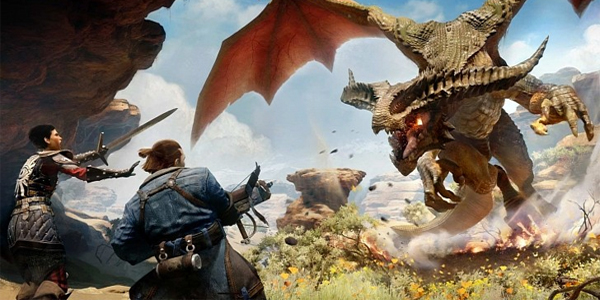
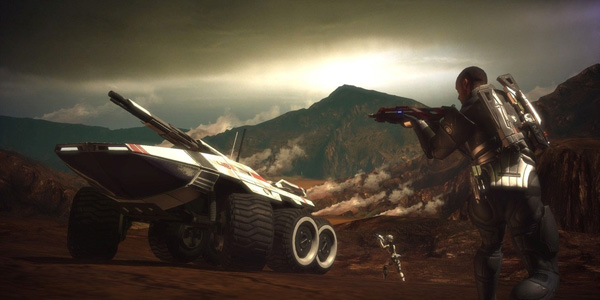
The amount of exploration in Inquisition is overwhelming. While it may not be an open world like Skyrim, every area you explore is large and diverse enough that you are never lacking in things to do. There are people to help out, ruins to explore, artifacts to discover, camps to set up, and landmarks to claim. There are even a few surprises to be found. And who can forget the dragon slaying? All of this contributes to the hours upon hours of gameplay that feels near endless. Some may complain that many of these activities are filler, but they are fun and flesh out the world, especially for newcomers. This kind of filler is welcome. In the beginning Mass Effect was focused on exploration. You were able to land on many planets and discover any secrets hidden on the surface. The problem was that most the of the planets recycled environments, and thus it wasnt very fun. Regardless, the effort was appreciated. But as the series went on, exploration was deemphasised considerably until by the time Mass Effect 3 arrived it was practically non-existent. Inquisition is a glorious return to form in this respect, and if there is one thing to take away from its success into Mass Effect 4 its the importance of exploration. Now is the time for Bioware to take the concept of galactic exploration experimented with in the first game and fine-tune it to perfection. Like Inquisitions areas, all the planets you explore need to be full of things to do and discover. Thankfully Bioware has already stated that exploration is indeed the top priority for Mass Effect 4, so they appear to be on the right track. If they can do what Inquisition did, Mass Effect 4 could easily end up being the best entry in the series. Have you played Dragon Age: Inquisition? Looking forward to the next Mass Effect? Share your thoughts in the comments below.